
Amazing Dining Room Table: The Complete Selection & Styling Guide
Everything you need to find, evaluate, and style a dining room table that becomes the heart of your home. From proportions and materials to finishing touches, this guide turns research into confidence.
Why this guide matters: A dining room table is one of the largest and most-used pieces of furniture in your home. Choosing an amazing one is not about following trends — it is about matching proportions, durability, and design to the way you actually live. Below, you will find clear frameworks, comparison tables, and practical checklists to help you decide with confidence before you buy.
What Makes a Dining Room Table Truly Amazing?
An amazing dining room table is more than a surface for meals. It anchors the room, sets the tone for gatherings, and must withstand years of daily use. Three qualities separate a great table from an average one: proportion, material integrity, and design coherence.
Proportion ensures the table fits your room and seats your household comfortably without crowding walkways. Material integrity means the construction — joinery, frame, and surface — is built to last. Design coherence means the table's style harmonizes with your chairs, lighting, and flooring. When all three align, the result is a table that feels intentional and effortless.
If you are starting from scratch, our guide to identifying a good-quality dining table breaks down construction signals to look for. For those who already know their preferred aesthetic, exploring a modern art dining table or an elegant wood dining table can help narrow the field quickly.
Proportion & Fit
The table must suit the room's scale and seat your household with comfortable clearance for chairs and walkways.
Material Integrity
Solid joinery, reinforced frames, and surfaces suited to daily use determine how long the table stays beautiful.
Design Coherence
A cohesive style across table, chairs, lighting, and flooring makes the dining room feel deliberately designed.
Choosing the Right Size for Your Dining Room
Size is the single most consequential decision. A table that is too large overwhelms the room and blocks circulation; one that is too small leaves guests cramped. Use these working guidelines as a starting point, then measure your actual room before committing.
Allow roughly 24 inches of table width per seated person and 36 inches of clearance around the table for chair pull-out and walkway traffic. For rectangular tables, a 72-inch length comfortably seats six, while a 96-inch length seats eight. Round tables promote conversation and work well in square rooms; oval tables soften narrow spaces. Our dining table height guide explains standard heights so your chairs and table work together.
| Table Shape | Best For | Typical Seating | Room Fit |
|---|---|---|---|
| Rectangular | Formal dining rooms, large families | 6 to 10 people | Long or open-plan rooms |
| Round | Conversation-focused meals, square rooms | 4 to 8 people | Compact or symmetrical spaces |
| Oval | Softening narrow rooms, flexible seating | 6 to 8 people | Narrow or transitional rooms |
| Square | Intimate dining nooks, small households | 4 people | Compact, balanced layouts |
| Extendable | Everyday use with occasional hosting | 4 to 10 people (extended) | Multi-purpose dining areas |
Pro tip: Always tape out the table footprint on your floor before buying. This simple step reveals whether walkways remain comfortable and whether the table crowds doorways or sideboards. If you are working with a tight footprint, a small oval dining table set or a sturdy round dining table often solves the problem elegantly.
Material Selection: Durability Meets Design
The material you choose affects durability, maintenance, and the visual weight of the table in the room. Solid hardwoods remain the most versatile option, offering repairability and warmth. Stone surfaces deliver a premium, cool aesthetic with high scratch resistance. Glass opens up compact spaces but requires more frequent cleaning. Understanding these trade-offs is central to choosing an amazing table.
For a wood-focused approach, compare a solid oak farmhouse dining table with a walnut wood dining table — oak is harder and lighter in tone, while walnut brings rich, darker character. If stone appeals to you, an oval marble dining table or a travertine table top delivers a designer look. For glass, a full glass dining table keeps sightlines open in compact rooms.
| Material | Tier Positioning | Durability | Maintenance | Best For |
|---|---|---|---|---|
| Solid Oak | Mid-range to premium | High — dense, repairable | Low — oil or wax periodically | Family homes, everyday use |
| Walnut | Premium | High — stable, refined grain | Low — gentle polish | Elegant, contemporary dining rooms |
| Marble | Luxury | High — scratch-resistant, seal required | Moderate — reseal annually | Formal, statement dining spaces |
| Glass | Essential to mid-range | Moderate — tempered for safety | Moderate — streak-free cleaning | Compact rooms, modern aesthetics |
| Travertine | Premium to luxury | High — porous, needs sealing | Moderate — seal and wipe | Textured, organic design schemes |
Tier guidance: Entry-level tables often use veneers over engineered cores, which are stable but less repairable. Mid-range tables typically introduce solid wood legs or edges. High-end and luxury tiers commonly use full solid hardwood, thick stone slabs, or premium tempered glass with reinforced frames. Choose the tier that matches your expected years of use and maintenance willingness.
Style Directions: From Modern to Farmhouse
Style is where an amazing table becomes personal. The most successful dining rooms choose one dominant direction and support it consistently. Modern tables favor clean lines, pedestal bases, and minimal ornamentation. Farmhouse tables lean on trestle bases, painted or washed finishes, and generous proportions. Transitional designs blend both, offering timeless flexibility.
Consider a modern round pedestal dining table for contemporary spaces, a white and brown farmhouse dining table for warm, relaxed rooms, or a transitional dining table set when you want a look that ages gracefully. For a bolder statement, a luxury black dining table creates dramatic contrast in bright rooms.
- Match the table's visual weight to the room — heavy bases need generous space
- Coordinate wood tones with flooring and adjacent cabinetry
- Choose a base style that leaves legroom for every seat
- Confirm chair seat height aligns with the table apron
- Plan lighting before finalizing the table's placement
- Leave room for a centerpiece without blocking sightlines
Styling Your Table for Everyday and Occasions
An amazing table looks intentional even when it is not set for a formal dinner. Start with a simple runner or placemats to define the surface, then layer in a centerpiece with height variation. Keep everyday styling minimal — a bowl, a candle, or a small vase — and reserve fuller tablescapes for hosting.
For design inspiration, explore modern white rectangular dining table setups or a washed wood dining table styled with natural textures. If your room features a pendant, our round dining table pendant light guide explains how to balance fixture size with table diameter. For a coastal or relaxed look, a coastal counter height dining table pairs well with light linens and woven accents.
Styling tip: A centerpiece should occupy no more than one-third of the table's width and should not exceed 12 inches in height for seated conversation. This keeps sightlines open while still providing visual interest.
Placement, Flow, and Room Harmony
Placement determines how the dining room functions day to day. Center the table on the room's main axis when possible, and maintain at least 36 inches between the table edge and walls or furniture. If your room is open-plan, use the table to define the dining zone without blocking traffic to adjacent areas.
Rug placement matters too: a rug should extend at least 24 inches beyond the table on all sides so chairs remain on the rug when pulled out. If you are working with a large room, a large extendable round dining table or a 72-inch wood dining table can anchor the space effectively. For smaller rooms, a round black dining table for 8 offers surprising capacity in a compact footprint.
Recommended Amazing Dining Room Tables
⚠️ AFFILIATE DISCLOSURE: This website contains affiliate links. As an affiliate Associate, we earn from qualifying purchases. If you make a purchase through these links, we may receive a small commission at no additional cost to you. Read our full affiliate policy.

71-87 Inch Extendable Dining Room Table, Rustic Wooden Kitchen Table 6-10 | STHOUYN Expandable Dining Table, Farmhouse Rustic Style, Rectangular Wooden Top, Seats 6-10, Brown Kitchen or Dining Room
Check price on Amazon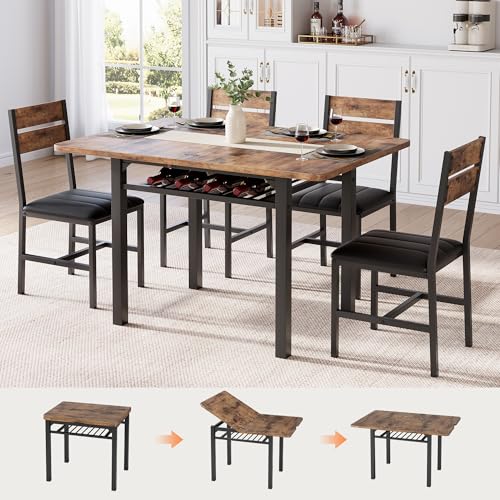
MapleGrace Extendable Dining Table Set for 4 with Built-in Shelf Rack Brown | Kitchen Table Set with 4 PU Leather Upholstered, Wood Dining Room Chairs for Dining & Small Spaces
Check price on Amazon
Tribesigns 63" Dining Table for 4 to 6, White and Gold Kitchen Table | Modern Large Rectangular Dinner Table Kitchen & Dining Room Furniture with Faux Marble Tabletop and Geometric Legs
Check price on Amazon
Garvee 70.8″ Dining Table for 6-8 People, Large Industrial Dinner Kitchen Tables with Sturdy Metal Frame, Multi-Use for Dining Room, Living Room, Office Desk, Brown (Only Table)
Check price on Amazon
LEYAOYAO Extendable Dining Table for 4-6,63"–79" Kitchen Table (Brown) | Farmhouse,Wood,Rectangular,Sturdy Construction,Easy Assembly,Versatile for Kitchen,Living Room,Dining Room,Home Office
Check price on Amazon
Jocoevol Round Dining Table for 4,Kitchen Dining Room Circle Dinner Pedestal Table,Space Saving Wood Kitchen & Dining Room Furniture (Vintage, 46In)
Check price on Amazon
Tribesigns 47.24" Black Round Dining Table for 4-6 People | Modern Fluted MDF + Metal Base Kitchen Table, Sturdy Circle Dining Room Furniture, Easy Assembly, Black
Check price on AmazonContinue Exploring Dining Room Tables
- Amazing Dining Room Table Guide
- Custom Dining Room Table
- Solid Wood Slab Dining Table
- High-End Marble Dining Table
- Modern Solid Oak Dining Table
- Large Live Edge Dining Table
- Traditional Dark Wood Dining Table
- Pedestal Extension Dining Table
- Solid Oak Trestle Dining Table
- Designer Extendable Dining Table
- European Oak Dining Table
- Premium Dining Table Guide
Frequently Asked Questions
What makes a dining room table amazing?
An amazing dining room table balances proportion, durable materials, and a design that fits your lifestyle. It should comfortably seat your household, match your room's scale, and use materials suited to daily use — qualities that matter more than any single trend.
How do I choose the right size dining room table?
Allow about 24 inches of table width per seated person and 36 inches of clearance around the table for chair movement. Measure your room and walkways before choosing a rectangular, round, or oval shape, and tape out the footprint on the floor to confirm the fit.
Which dining table material is most durable?
Solid hardwood, stone, and tempered glass are among the most durable options. Solid oak, walnut, and teak offer long-term resilience and repairability, while marble and quartz provide scratch-resistant surfaces for high-traffic dining rooms.
Should I choose a round or rectangular dining table?
Round tables promote conversation and work well in square or compact rooms. Rectangular tables suit longer rooms and larger households. Oval tables offer a middle ground, softening narrow spaces while providing flexible seating.
How much clearance should I leave around the table?
Leave at least 36 inches between the table edge and walls or furniture to allow chairs to pull out comfortably and for walkway traffic. If the table doubles as a workspace, allow slightly more on the working side.
Ready to Choose Your Amazing Dining Room Table?
Use the guidelines above to shortlist shapes, materials, and styles that fit your room and lifestyle. When you are ready, explore our curated selection and compare features side by side.
Explore Table Options