
Dining Table Apron Guide: Structure, Design & Buying Tips
Understand the hidden rail that holds your table together — how apron depth, joinery and material affect stability, legroom and long-term durability.
JUMP TO BUYING CHECKLIST1. What a Dining Table Apron Is and Why It Matters
A dining table apron — also called a skirt, rail or apron rail — is the horizontal frame member that runs between the legs just under the tabletop. On a classic four-legged table, there are usually four apron rails forming a rectangle. On larger tables, a center stretcher or cross rail may be added to prevent the long sides from bowing.
The apron performs three structural jobs at once. First, it ties the legs together so they cannot splay outward under load. Second, it supports the tabletop and distributes weight away from the fasteners. Third, it resists racking — the side-to-side twisting motion that makes a table feel loose and wobbly when someone leans on a corner. Without an apron, most four-legged tables would flex noticeably.
Beyond structure, the apron shapes how the table feels in use. A deep apron looks substantial and traditional, but it eats into the space where knees and chair arms need to go. A slim apron looks lighter and more modern, but it demands better joinery and thicker legs to stay rigid. Choosing well means understanding both roles.
If you are still mapping out the full structure of a table, start with our overview of dining table frame construction and then return here for the apron specifics. The apron is one part of a system that also includes legs and the top itself.
2. Anatomy of an Apron: Rails, Corners and Joints
Most aprons share a common set of components. Knowing the names helps you read product specifications and ask the right questions.
- Long rails: the front and back aprons spanning the length of the table. These carry most of the visual detail and are the most likely to bow on oversized tables.
- Short rails: the end aprons at the head and foot of the table. They are shorter and stiffer, which is why some designs omit them on trestle or pedestal bases.
- Corner blocks: triangular or L-shaped reinforcements glued and screwed into the inside corners where two aprons meet a leg. Good corner blocks greatly reduce racking.
- Center stretcher or cross rail: an extra rail across the middle on long tables, sometimes paired with a center leg, to stop the long apron from sagging.
- Apron-to-top fasteners: figure-eight clips, z-clips or slotted screws that allow the solid wood top to expand and contract without cracking.
One subtle but important detail is how the apron sits relative to the tabletop edge. A flush apron aligns with the tabletop's outer edge and gives a clean, built-in look. A setback apron sits slightly inside the top's overhang, which protects knees and creates a shadow line. An overhanging top with a recessed apron is common on modern tables because it lets chairs tuck in further.
3. Apron Depth and Height: Balancing Strength and Legroom
Apron depth is measured vertically from the bottom edge of the tabletop to the bottom edge of the apron. This single dimension drives most of the trade-offs buyers care about.
Shallow aprons of roughly 2 to 3 inches keep legroom generous and suit modern, minimal and Scandinavian-style tables. They rely on thicker legs, corner blocks or metal reinforcement to stay rigid. Mid-range tables commonly use aprons around 3 to 4 inches deep, which is a balanced tier for most households — enough stiffness for everyday use without crowding knees.
Deep aprons of 4 to 5 inches or more are typical of farmhouse, rustic and traditional designs. They add significant stiffness and often carry decorative routing, but they reduce the vertical clearance under the table. That matters if anyone in the household is tall, if diners use chairs with arms, or if the table doubles as a desk or homework station.
| Apron Tier | Typical Depth | Best For | Trade-Off |
|---|---|---|---|
| Slim / entry-level | ~2 to 3 in | Modern, Scandinavian and small-space tables | Needs stronger joinery or thicker legs to resist racking |
| Balanced / mid-range | ~3 to 4 in | Everyday family dining and most four-legged tables | Moderate legroom reduction; good all-round compromise |
| Deep / premium | ~4 to 5 in or more | Farmhouse, rustic and traditional designs | Less knee clearance; may clash with armed chairs |
There is also an absolute floor to respect. Most adults need roughly 24 to 26 inches of clearance from the floor to the underside of the apron to sit comfortably with their legs forward. If the apron hangs lower than that, chairs may not tuck in, and the table feels cramped even when the top is generously sized. Pair apron height with the guidance in our dining table and chair height guide so the two measurements work together.
4. Apron Joinery Types and What They Mean for Durability
The way an apron meets the leg is the single strongest predictor of how long the table will stay tight. Fasteners alone loosen over time; interlocking joinery does not.
- Mortise-and-tenon: the gold standard. A tenon cut on the apron end fits into a mortise in the leg, often secured with glue and a pin. This joint resists racking extremely well and is common on premium and high-end tier tables.
- Dowelled joints: wooden dowels align the apron to the leg. Stronger than screws alone and common in mid-range furniture where full mortise-and-tenon would be too labor-intensive.
- Pocket screws: angled screws driven through the apron into the leg. Fast to assemble and acceptable on entry-level tables, but prone to loosening with heavy use unless paired with corner blocks.
- Corner blocks: not a joint on their own, but reinforcements that glue and screw into the inside corner. A table with simple joints plus solid corner blocks often outperforms one with fancy joints and no bracing.
- Metal brackets or plates: sometimes used on flat-pack or commercial-grade designs. Effective when thick and well-fastened, but a sign to inspect carefully on lighter tables.
When comparing tables, do not rely on the marketing name of a joint. Look for visible evidence: corner blocks, dowel pins, or the absence of exposed screw heads on the outside face of the apron. If the apron is joined to the leg with nothing but a couple of screws and no bracing, expect the base to loosen faster under daily family use.
The apron also interacts with how the top is attached. Solid wood tops need to move, so quality tables use slotted fasteners or z-clips through the apron rather than rigidly gluing the top down. This detail is covered further in our guide to frame and top attachment methods.
5. Apron Materials and Finishes
Aprons are usually made from the same species as the rest of the base, but not always — and the difference matters.
Solid hardwood aprons
Oak, maple, walnut, teak and similar hardwoods hold joinery well and tolerate seasonal movement. Solid aprons are the standard on premium and luxury tables. Species choice affects weight and how the apron responds to humidity; our solid oak dining table guide and walnut dining table guide explain the practical differences.
Engineered and veneered aprons
Some mid-range tables use engineered wood cores with veneer on the visible faces. These can be stable and well-finished, but check that the apron is thick enough to hold fasteners and that the veneer edges are sealed. If the apron is very thin or hollow-sounding, the joint strength is likely compromised.
Metal aprons
Industrial and commercial-grade tables sometimes use steel or aluminum apron rails. Metal aprons are extremely rigid and resist racking very well, but they transfer impacts differently and can feel cold or visually heavy. They pair naturally with metal dining table designs.
Finish on the apron
The apron finish should match the leg and top finish system. Matte and oiled finishes are forgiving and easy to touch up; glossy and lacquered finishes look crisp but show scratches. Our guides to matte finishes and oiled finishes explain how each behaves on high-contact rails. Because aprons get bumped by knees and chair backs, a finish that can be refreshed locally is a practical advantage.
6. How the Apron Affects Seating, Chairs and Benches
The apron is the part of the table your guests' knees and chairs actually meet. Overlook it and the table can be structurally sound but uncomfortable in daily use.
On the sides of a table, chairs slide under the apron. If the apron is deep and the chair arms are high, the arms will collide with the rail before the seat reaches the table. Measure the height of your chair arms and compare it with the distance from the floor to the bottom of the apron. Armed chairs generally need a shallower apron or a taller table.
Benches are more forgiving because they have no arms, but a very deep apron can still limit how far a bench tucks in. For mixed seating plans, read our dining bench seating guide alongside the apron measurements.
At the ends of the table, the short apron and corner blocks create a tighter zone. If you plan to seat someone at the head of the table, check that the end apron is not reinforced with bulky corner blocks that block their knees. Some designs use a narrow center stretcher instead of a full end apron for exactly this reason.
Finally, the apron affects chair count in a subtle way. A table whose apron is set back from the edge gives a few extra inches of effective tuck-in space, which can make the difference between a comfortable six-seater and a cramped one. Use our dining table size chart to cross-check seating capacity against apron depth before finalizing.
7. Decorative Apron Styles and Design Languages
Once structural needs are met, the apron becomes a design element. The style you choose should match the table's overall language.
- Plain, flat aprons: clean and modern. They suit contemporary and Scandinavian interiors and are easy to clean. The visual simplicity puts more emphasis on leg shape and top material.
- Beaded or routed aprons: a shallow groove or bead adds shadow and detail without much extra depth. Common on transitional and farmhouse tables.
- Raised-panel aprons: a framed panel sits proud of the rail, creating a traditional furniture look. These aprons are usually deeper and heavier.
- Turned or carved aprons: decorative carving or shaping along the rail. Beautiful on traditional and antique-inspired tables, but harder to dust and to repair if damaged.
- Open or slatted aprons: vertical slats or an open frame replace a solid rail. These look lighter and improve airflow but must be designed carefully to keep rigidity.
Decorative detailing rarely changes the structural performance of an apron, but it does change maintenance. Carved and panelled aprons collect dust along their recesses, so plan for a soft brush or vacuum attachment during routine cleaning. Our routine upkeep guide covers the tools that work best on detailed rails.
If you are matching the apron to a broader interior scheme, the styling guides for modern, rustic and farmhouse tables show how apron detail fits into each look.
8. Warning Signs of a Weak or Poorly Built Apron
Most apron problems are visible or audible before purchase. Use these checks during showroom visits or unboxing.
- Visible movement when you press a corner: a well-built table should feel solid when you push down on one corner. Any rocking or twisting suggests weak joints or missing corner blocks.
- Exposed screw heads on the outer apron face: a sign that the joint relies on screws alone rather than interlocking joinery. Acceptable on entry-level tables only if corner blocks are present.
- Rattling or clicking when lifted: loose aprons or fasteners. On a new table this is a red flag; on an older table it is usually fixable with our wobbly table fix guide.
- Very thin apron stock: an apron under about an inch thick in solid wood is more prone to bowing on long spans. Check whether a center stretcher compensates.
- Apron that does not meet the leg cleanly: gaps or misaligned joints indicate rushed assembly or poor quality control.
- Over-tight top attachment: if the top is rigidly screwed through the apron with no slotted holes, seasonal movement can crack the top or split the apron.
If you are buying a used or vintage table, inspect the apron joints first. Restoration guides such as our vintage restoration guide explain how to tighten and reinforce loose aprons without damaging the original finish.
Recommended Dining Tables with Solid Apron Construction
⚠️ AFFILIATE DISCLOSURE: This website contains affiliate links. As an affiliate Associate, we earn from qualifying purchases. If you make a purchase through these links, we may receive a small commission at no additional cost to you. Read our full affiliate policy.

Signature Design by Ashley Basinger Dining Table, 86 Inch, Medium Brown | Seats 8 with 25.88-inch legroom, Hardwood solids and mango wood veneer, Rustic turned legs, Farmhouse design
Check price on Amazon
Tabletop Crumb Scraper, Silver Aluminum Restaurant Cleaner with Clip | Curved Shovel Design, One-Hand Operation, Suits Tablecloths and Bar Tops for Fine Dining or Home Meals
Check price on Amazon
East West Furniture OXT-AWA-T Oxford Square Kitchen Dining Table for Small Spaces, 36x36 Inch, Antique Walnut
Check price on Amazon
Signature Design by Ashley Rowanbeck Minimalist Dining Table for 8 People, Black
Check price on Amazon
KEIKI Extendable Solid Wood Dining Table with Fluted Apron, Natural | 72.24-90.55 Inch Kitchen Table for 6-8 with Rounded Corners & Rubberwood Legs, Mid-Century Modern Style, for Dining Rooms
Check price on Amazon
Merax Farmhouse Dining Table for 4-6, 60" Rectangle Kitchen Table, Natural | Solid Wood Dining Table with Parquet Accent Tabletop, Rounded Edges & Reinforced Legs, Multi-Use for Living Room Office Desk
Check price on Amazon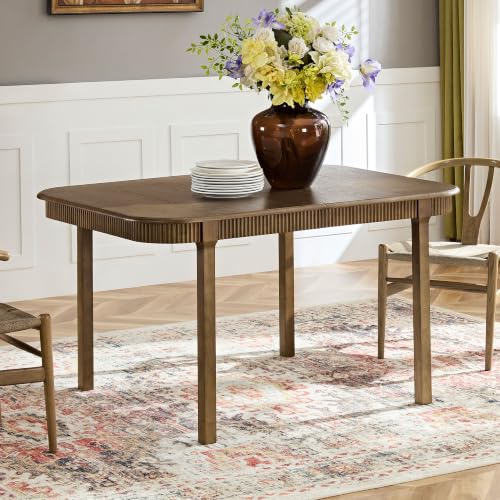
KEIKI Extendable Solid Wood Dining Table with Fluted Apron, Light Brown | 72.24-90.55 Inch Kitchen Table for 6-8 with Rounded Corners & Rubberwood Legs, Mid-Century Modern Style, for Dining Rooms
Check price on Amazon
Furniture of America Clyde Rustic Wood Round Dining Table in Natural Tone
Check price on Amazon9. Dining Table Apron Buying Checklist
- Measure the floor-to-apron clearance and confirm at least 24 to 26 inches for comfortable legroom.
- Check that the apron depth suits your chair type — especially if your chairs have arms.
- Look for corner blocks or other bracing at every leg junction.
- Confirm the apron-to-leg joint type; mortise-and-tenon and dowelled joints outlast screws alone.
- Verify the tabletop is attached with slotted fasteners or z-clips to allow wood movement.
- Press down on each corner and listen for rattles or creaks.
- Inspect the apron finish for sealed edges and consistency with the rest of the base.
- For long tables, check whether a center stretcher or center leg is present.
- Match apron style to your interior language — plain for modern, detailed for traditional.
- Cross-check seating capacity against apron setback using a size chart before you finalize.
Ready to Compare Tables?
Use the checklist above to filter options quickly. Start with the recommended tables in the section above, then compare apron depth, joinery and seating clearance side by side.
Explore Shopping & Reviews10. Frequently Asked Questions About Dining Table Aprons
What is a dining table apron?
It is the horizontal rail that connects the legs just below the tabletop. The apron stiffens the base, supports the top and often carries the table's decorative detailing.
How deep should a dining table apron be?
Most dining tables use aprons between roughly 2 and 5 inches deep. Deeper aprons add stiffness but reduce legroom and can interfere with chair arms, so depth should be matched to the table size and seating plan.
Does a dining table need an apron?
Not always. Pedestal and trestle tables often rely on other bracing instead. However, on four-legged tables an apron is the most common way to prevent racking and keep the base rigid.
Can a dining table apron be removed?
On tables with bolted or screwed aprons it is technically possible, but removing it usually weakens the frame and voids the structural intent of the design. Only remove an apron if the manufacturer confirms the base remains stable without it.
Why does my table wobble even though it has an apron?
Wobble usually comes from loose apron joints, missing corner blocks or an uneven floor. Check the joints first, then the floor. Our surface leveling guide walks through the diagnosis step by step.