
Dining Table Moving Safely Guide: Protect Your Table
Moving a dining table without scratches, cracks, or a twisted frame is entirely possible with the right preparation. This guide walks you through every step—from measuring doorways to wrapping a marble top—so your table arrives at its new home in the same condition it left.
1. Pre-Move Assessment & Preparation
The most common moving injuries to dining tables happen before the table even leaves the room. A few minutes of planning prevents dents, gouges, and structural damage—and keeps you and your helpers safe.
Measure the path, not just the destination
Walk the entire route from the dining room to the moving vehicle. Measure every doorway, hallway width, stairwell turn, and elevator opening. The critical measurement is not the tabletop's width—it is the tabletop's depth and height when carried on its edge, plus the diagonal clearance around corners. Write these numbers down and compare them to your table's dimensions before deciding whether disassembly is mandatory.
Clear the route
- Remove rugs, floor runners, and anything that could trip a helper.
- Open and secure doors, or take them off their hinges if clearance is tight.
- Protect door frames, banisters, and wall corners with folded blankets or corner guards.
- Lay down floor protection along the full path—cardboard or moving blankets work well on hardwood, and a breathable mat prevents condensation on concrete.
Gather supplies before you start
Assemble everything in one place so you are not hunting for tape mid-lift. A standard moving kit for a dining table includes:
- Moving blankets or thick quilted pads (at least two for the tabletop)
- Stretch wrap (plastic film) to hold padding in place
- Bubble wrap for legs, edges, and corners
- Painter's tape or low-tack moving tape
- Labeled zip-top bags for screws, bolts, and brackets
- A furniture dolly or hand truck rated for the table's weight
- Work gloves and non-slip footwear
- Screwdrivers or an Allen key set matching your table's hardware
Measure twice, lift once. If the tabletop cannot pass through a doorway on its edge with at least a few centimeters of clearance on each side, disassembly is not optional—it is the only safe route.
2. Disassembly: When and How
Not every table needs to come apart, but most large, extendable, pedestal, and glass-topped tables move far more safely in pieces. Disassembly reduces weight, prevents the frame from twisting under stress, and dramatically improves clearance through narrow spaces.
Tables that should always be disassembled
- Extendable tables with leaves, sliding mechanisms, or butterfly extensions
- Pedestal tables, where the top and base are separate components
- Glass and stone-topped tables, where the top must be carried separately from the frame
- Ten-seater and larger tables, which are too heavy and unwieldy for a two-person carry
- Any table with removable legs secured by bolts or brackets
Tables that can often move in one piece
- Small two-seater dining tables and compact nesting tables
- Lightweight folding dining tables with folding legs
- Drop-leaf tables with the leaves folded down and secured
Step-by-step disassembly
- Photograph the table before touching a single screw. Take wide shots and close-ups of the underside, leg brackets, and extension mechanism. These photos become your reassembly blueprint.
- Clear the tabletop completely and remove any centerpieces, runners, or pads. Set them aside in a separate box.
- Flip the table onto a padded surface. Use two people and lower it gently onto a moving blanket so the top is face-down and the underside is accessible.
- Remove the legs or pedestal base first. Support the tabletop with blocks or a helper's hands as you loosen the final bolts so it does not drop.
- Remove extension leaves and sliding hardware if present, following the manufacturer's sequence. Never force a stuck mechanism—apply a penetrating lubricant and wait.
- Bag and label all hardware. Place screws, bolts, washers, and brackets in a zip-top bag, write the table model and location on the bag, and tape it to the underside of the tabletop.
- Wrap each component separately before moving anything out of the room.
Hardware discipline matters. Lost bolts are the single most common reason a reassembled table wobbles. Tape the labeled hardware bag directly to the tabletop so it cannot be separated from the furniture during transport.
3. Material-Specific Moving Tips
Different tabletop materials fail in different ways during a move. Understanding your table's material—and its weak points—determines how you pad, lift, and transport it. If you are unsure what your table is made of, our materials and finishes hub breaks down the common options.
| Material | Primary Risk | Best Handling Approach |
|---|---|---|
| Solid wood (oak, walnut, teak) | Scratches, edge dents, frame twisting | Disassemble legs, wrap top in a quilted blanket, carry on edge, never drag |
| Marble and granite | Cracking under point load, chipping at edges | Two-person lift from underneath, keep vertical, never lay flat with weight on top |
| Glass | Shattering from impact or flexing | Remove from frame, wrap in cardboard then blanket, carry vertically with gloves |
| Veneer and MDF | Moisture swelling, edge chipping, delamination | Keep dry, pad all edges, avoid stacking heavy items on the surface |
| Metal and steel | Scratches, bent legs, paint chips | Wrap legs individually, secure hardware, protect finish with soft padding |
| Concrete | Extreme weight, edge chipping | Professional movers strongly recommended; use a dolly rated well above the table's weight |
Wooden tables
Wood expands and contracts with humidity, so avoid moving a solid wood table in freezing rain or leaving it in a damp garage. Wrap the top in a breathable moving blanket rather than sealing it in plastic, which can trap moisture against the finish. For guidance on protecting the surface after the move, see our wood wax and polish guide and the broader solid oak dining table guide.
Marble, granite, and stone tables
Stone tops are strong in compression but brittle under point loads and flexing. Always lift a stone top from underneath with two people—never by the edges alone. Keep the top vertical during transport; laying it flat invites cracking if anything is stacked on it. Our marble dining table guide and granite dining table guide cover surface care in more detail.
Glass tables
Remove the glass top from its frame before moving. Wrap it in cardboard first, then a blanket, and carry it vertically with gloved hands. Never carry glass flat on a dolly without full edge support. After the move, clean and inspect the glass using our glass dining table cleaning guide.
Extendable and folding tables
Lock or remove extension leaves and secure sliding mechanisms with tape so they cannot open mid-carry. For tables with butterfly leaves, follow the manufacturer's sequence exactly. Our extendable dining table guide explains the mechanism types in detail.
Metal-framed tables
Wrap legs individually to prevent metal-on-metal scratching, and check that all bolts are accounted for. If the frame uses welded joints rather than bolts, avoid twisting forces by carrying the table on its side rather than diagonally.
4. Wrapping and Padding Techniques
Proper wrapping is what separates a scratch-free move from a repair job. The goal is to create a cushioned barrier that stays in place and protects edges, corners, and the top surface.
Wrapping the tabletop
- Lay a moving blanket flat on the floor or a padded work surface, larger than the tabletop in every direction.
- Place the tabletop face-down in the center of the blanket, with a second helper supporting the far edge as you lower it.
- Fold the blanket over the edges and overlap the corners, then secure the entire bundle with stretch wrap wound around the tabletop two or three times.
- Add corner protectors—cardboard triangles or foam corner guards—before the final wrap layer. Corners take the hardest impacts and are the most visible repair points.
- Label the wrapped top with "TOP—DO NOT STACK" using painter's tape so movers know which side faces up.
Wrapping legs and hardware
- Bundle matching legs together with bubble wrap and tape so they cannot rattle against each other.
- Wrap each leg from end to end—legs are narrow and prone to chipping at the foot and the mounting bracket.
- Place all hardware in a labeled zip-top bag and tape it to the underside of the wrapped tabletop.
- Wrap the pedestal base separately and clearly label it as a heavy, unstable component.
Avoid plastic directly against finished wood. Plastic wrap can trap moisture and react with some lacquers. Always place a breathable blanket or soft cloth between the finish and any plastic film.
5. Safe Lifting and Carrying
Most dining table injuries—to the table and to the people moving it—come from poor lifting mechanics. A few non-negotiable rules keep everyone safe.
- Two people minimum for any four-seater or larger table. Larger tables and stone tops need three or more, or a professional crew.
- Lift with your legs, not your back. Bend at the knees, keep the load close to your body, and stand up smoothly with a straight spine.
- Never drag a table across the floor. Dragging twists the frame, shears leg joints, and scratches flooring. Lift and carry, even for a short distance.
- Carry the tabletop on its edge, not flat. An edge carry keeps the top rigid and lets you pass through doorways more easily.
- Use verbal signals. Agree on "ready, lift, walk, set down" before you begin, and use them at every threshold.
- Use a furniture dolly for long corridors. Strap the wrapped tabletop vertically to a dolly rated above the table's weight, and have one person steady it from behind.
Navigating stairs and tight corners
Carry the table on its edge with the heavier end uphill, and keep the load balanced between helpers. For tight turns, set the table down, reposition, and lift again rather than pivoting under load. Never carry a table up or down stairs with only one person at the top—one helper should be at each end, with a third spotter on blind corners. If the stairwell is narrow or curved, disassemble the table completely and carry the top separately.
When to call professional movers
Call a professional crew if any of the following apply: the table is concrete or thick stone; the table seats eight or more; the route includes a spiral staircase or a narrow elevator; or you cannot safely lift the wrapped top with two people. Professional-grade moving services exist for exactly these situations, and a damaged stone top often cannot be repaired.
6. Transport and Loading
Loading is the final risk point. A table that survives the house can still be damaged in the vehicle if it is not secured properly.
Loading the vehicle
- Place the heaviest components lowest and closest to the cab to keep the vehicle balanced.
- Stand the tabletop on its edge against a wall of the cargo area, with padding beneath it and straps over the top—never lay it flat and stack boxes on it.
- Strap everything down. Use ratchet straps or cam straps over padded contact points. The table should not shift when you push it firmly by hand.
- Keep the hardware bag inside the cab with you, not in the cargo area where it can be lost or crushed.
- Protect glass and stone tops from vibration with a blanket beneath and a second blanket over the top edge where straps contact it.
Weather and duration
Cover the load if traveling in rain or snow, and avoid leaving a wrapped wood or veneer table in a vehicle for extended periods in extreme heat or cold—rapid humidity changes stress joints and finishes. If the trip is long, check the straps at every stop.
7. Reassembly and Post-Move Checks
Once the table is inside its new room, unwrap it and inspect every surface before reassembly. Do this on a padded surface with good lighting.
- Inspect the top, edges, and legs for chips, scratches, or cracks. Photograph any damage immediately for insurance or warranty purposes.
- Lay out all hardware from the labeled bag and compare it against your pre-move photos.
- Reattach the legs or pedestal base loosely first, then tighten all bolts in a diagonal sequence—this keeps the frame square and prevents wobble.
- Reinstall extension leaves and test the mechanism through its full range before placing anything on the table.
- Flip the table upright with two people and set it in place gently—never drop it onto its legs.
- Check for wobble by pressing each corner in turn. Minor wobble can be fixed with the methods in our wobbly dining table fix guide or the broader surface leveling guide.
- Clean the surface with the appropriate method for its material—wood, stone, and glass each need different care, as covered in our routine upkeep guide.
If you find minor scratches after the move, our scratch touch-up guide and DIY repair guide walk through the fixes. For anything deeper than a surface mark—especially on stone or glass—consult a professional before attempting repair.
Wait before placing heavy items. Give the table a day to settle at room temperature and humidity before placing heavy centerpieces or stacked dishes on it, especially if it moved between climate zones.
Recommended Products for Safe Dining Table Moving
⚠️ AFFILIATE DISCLOSURE: This website contains affiliate links. As an affiliate Associate, we earn from qualifying purchases. If you make a purchase through these links, we may receive a small commission at no additional cost to you. Read our full affiliate policy.

Furniture Movers Set - Heavy Duty Equipment with Lifter | Reduce Scratches Safely Set, for Bed Frames Large Refrigerators Dining Tables Washing Machine
Check price on Amazon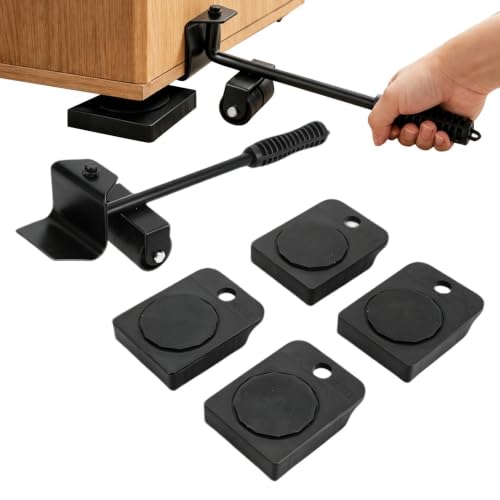
Furniture Sliders - Floor Furniture Sliders, Wheels Furnitures Moving Tools | Furniture Moving Sliders Furniture Sliders With Wheels Scrat For Homeowners Dining Tables Large Refrigerators Washing Machine
Check price on Amazon
Cereal City Guide: London: Design-forward London guide to coffee, galleries, hotels, and neighborhoods.
Check price on Amazon
Furniture Sliders with Wheels Heavy Duty Equipment with Lifter | Furniture Moving Sliders for Sofas Bed Frames Dining Tables Washing Machine Homeowners
Check price on Amazon
Furniture Moving Kit with Heavy Duty Lifter and Rolling Sliders | Heavy Duty Moving Set, Smooth Rolling Mechanism Bed Frames Large Refrigerators Dining Tables Washing Machine Relocation
Check price on Amazon
Furniture Sliders with Wheels Floor Protection High Weight Capacity | Furniture Moving Sliding Wheels for Sofas Bed Frames Dining Tables Washing Machine Homeowners
Check price on Amazon
nesrt 9'x12' Boho Jungle Area Rug for Living Room, Soft Washable Extra Large Indoor Bedroom Rug, Low Pile Stain Resistant Non-Slip Large Carpet for Under Dining Table Farmhouse Home Decor (Dark Green)
Check price on AmazonFrequently Asked Questions
Should I disassemble my dining table before moving it?
Disassembly is recommended for most large tables, especially extendable, pedestal, and glass-topped models. Removing legs, aprons, and leaves reduces weight, lowers the risk of twisting the frame, and makes doorways and staircases far easier to navigate. Keep all hardware in a labeled bag taped to the underside of the tabletop.
How do I protect a marble or glass dining table during a move?
Wrap marble and glass tops in moving blankets or thick cardboard, then secure with stretch wrap. Never lift a stone or glass top by the edges alone—support it from underneath with two people. Keep stone and glass tops vertical during transport rather than flat, and never place heavy items on top of them.
Can I move a dining table by myself?
Only small, lightweight tables—such as two-seater folding or nesting models—should be moved solo. Most four-seater and larger tables require two people, and heavy solid wood, marble, or ten-seater tables may need professional movers. Never drag a table across the floor; always lift and carry.
How should I secure table legs and hardware during a move?
Group legs together, wrap them in bubble wrap or a blanket, and tape the bundle so they cannot rattle or scratch the tabletop. Place screws, bolts, and brackets in a sealed bag labeled with the table model, and tape that bag to the underside of the tabletop so it travels with the furniture.
What is the safest way to move a dining table through a narrow doorway?
Remove the legs and door hardware if possible, then carry the tabletop vertically on its edge with one person on each side. Measure the doorway beforehand and remove the door from its hinges if clearance is tight. Protect the door frame with a folded blanket and move slowly with clear verbal signals between helpers.
Ready to Plan Your Move?
Use our related guides to protect your table before, during, and after the move.
Explore Care & Maintenance Guides