Solid Oak Dining Table Guide: Everything You Need to Know
Solid oak is one of the most trusted materials for dining tables — prized for its strength, natural grain, and ability to age gracefully. This guide explains oak grades, construction methods, finishes, and care so you can choose with confidence.
Why solid oak deserves your attention: Oak is a hardwood with a dense, closed grain that resists dents, scratches, and everyday wear far better than softer woods. Whether you are furnishing a family dining room or a compact kitchen nook, a well-built solid oak table is a long-term investment that can be sanded and refinished for decades. Explore our broader materials and finishes hub for comparisons with other wood types.
What "Solid Oak" Really Means
A solid oak dining table is constructed from oak wood throughout the thickness of its main components — typically the tabletop, aprons, and legs. This differs from oak veneer, where a thin oak layer is bonded over a core of plywood, MDF, or particleboard. Both approaches can produce attractive tables, but solid oak offers distinct advantages: it can be sanded and refinished multiple times, it develops a natural patina, and repairs to scratches or dents are more straightforward.
When shopping, check the product description and specification glossary carefully. A table labelled "oak finish" or "oak effect" is usually veneer or laminate, not solid wood. Genuine solid oak tables are typically described as "solid oak," "100% oak," or "oak hardwood." Our dining table spec glossary explains these terms in detail.
Types of Oak Wood Used in Dining Tables
Two main oak species dominate the furniture market, and they behave differently under different finishes and environments.
White Oak
White oak is dense, water-resistant, and has a tight grain with subtle ray flecks. It is the preferred choice for dining tables in humid climates and busy family homes because it resists moisture penetration better than red oak. Its natural tone ranges from pale straw to warm honey, and it takes both oil and lacquer finishes beautifully.
Red Oak
Red oak has a more open grain and a warmer, slightly pinkish tone. It is slightly less moisture-resistant than white oak but remains a durable hardwood suitable for indoor dining tables. Red oak often shows a stronger, more pronounced grain pattern, which suits rustic and farmhouse styles. See our distressed finish guide for styling ideas.
Some tables combine oak with other materials — for example, an oak top on a metal frame. Our metal dining table guide and dining table frame guide cover mixed-material construction in more depth.
Oak Grades and Construction Quality
Not all solid oak tables are equal. Construction quality varies significantly, and understanding the tiers helps you judge what you are getting.
Tier
Typical Construction
Best For
Entry-level
Oak veneer over engineered core, or thin oak planks with basic joinery
Occasional use, rental spaces, decorative setups
Mid-range
Solid oak top with kiln-dried planks, reinforced aprons, mortise-and-tenon or dowel joinery
Everyday family dining, long-term home use
Premium
Thick solid oak planks, finger-joint or butterfly joinery, hand-finished edges, premium hardware
Wide single-slab or book-matched oak tops, artisan joinery, custom finishes, reinforced pedestal or trestle bases
Statement dining rooms, collector-grade furniture
Key construction details to inspect include the thickness of the tabletop (thicker planks resist warping better), the type of joinery used at the corners, and whether the wood has been kiln-dried to a stable moisture content. Our dining table apron guide and dining table leg guide explain the structural components in detail.
Oak Dining Table Shapes and Seating Sizes
Solid oak works well across virtually every table shape and seating capacity. The right choice depends on your room dimensions, household size, and hosting habits.
Rectangular oak tables — the most versatile option, fitting neatly along walls and accommodating larger groups. Popular in 4, 6, and 8-seater configurations.
Round oak tables — sociable and space-efficient for compact rooms. Oak's density makes round pedestal tables stable and durable.
Oval oak tables — soften a room's lines while offering generous seating. A good fit for long dining rooms.
Square oak tables — ideal for breakfast nooks and smaller households, often in 4-seater sizes.
Extendable oak tables — practical for hosting; look for solid oak leaves rather than veneered inserts.
The finish determines how your oak table looks, feels, and wears over time. Oak accepts finishes well, but each option has trade-offs.
Oiled Finish
Oil penetrates the wood rather than sitting on top of it, enhancing the natural grain and giving a soft, matte touch. Oiled oak is easy to spot-repair but needs periodic re-oiling. See our oiled dining table guide for maintenance routines.
Lacquered Finish
Lacquer forms a protective film over the surface, resisting spills and stains with minimal upkeep. It is a practical choice for busy households, though deep scratches are harder to repair invisibly. Learn more in our lacquered dining table guide.
Matte Finish
Matte surfaces hide fingerprints and minor marks better than gloss, making them a favourite for modern oak tables. Our matte finish guide explains the difference between matte and satin.
Waxed Finish
Wax gives oak a warm, traditional lustre and is simple to refresh. It offers less moisture protection than lacquer, so it suits careful households. Pair with our wood wax and polish guide.
How to Care for a Solid Oak Dining Table
Solid oak is durable, but regular care keeps it looking its best for decades.
Dust frequently with a soft, dry cloth to prevent grit from scratching the finish.
Wipe spills promptly using a slightly damp cloth, then dry immediately. Avoid leaving standing water on the surface.
Avoid harsh cleaners — abrasive or ammonia-based products can dull the finish. Use a mild wood-safe cleaner.
Re-oil or re-wax periodically depending on the original finish. Our routine upkeep guide outlines a maintenance schedule.
⚠️ AFFILIATE DISCLOSURE: This website contains affiliate links. As an affiliate Associate, we earn from qualifying purchases. If you make a purchase through these links, we may receive a small commission at no additional cost to you.
Read our full affiliate policy.
HIPIHOM Farmhouse Square Oak Dining Table, 31.5 Inch Steel Legs for 2-4 | Natural Oak Grain, Smooth Curved Corner, Stain And Spill Resistant Surface, Cross Braced Anti Wobble Reinforced Steel Legs
⚠️ Note: The purchase links above are affiliate links. As an Amazon Associate, we earn from qualifying purchases at no additional cost to you.
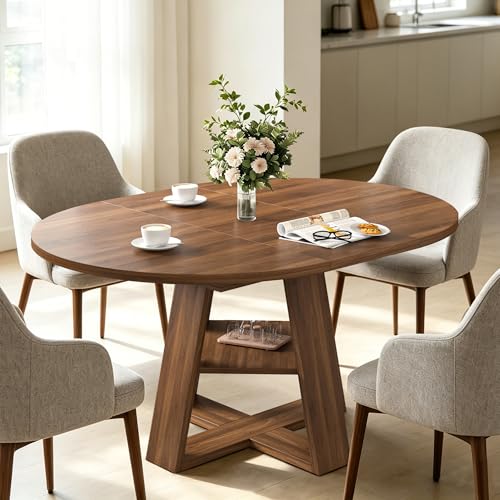
43.3"-59" Extendable Round Oval Dining Table for 4-8 with Storage Shelf | Modern Kitchen Oval Dining Table with Removable Leaves,Space Saving Extendable Table Wood Base for Kitchen Living Room Walnut
⚠️ Note: The purchase links above are affiliate links. As an Amazon Associate, we earn from qualifying purchases at no additional cost to you.
HIPIHOM Farmhouse Round Oak Dining Table, 31.5 Inch Steel Legs for 2-4 | Natural Wood Tone, Space Saving For Rental Tiny Kitchen, Stain And Spill Resistant MDF Top, Stable Anti Wobble Steel Legs
⚠️ Note: The purchase links above are affiliate links. As an Amazon Associate, we earn from qualifying purchases at no additional cost to you.
IBF Round Dining Table for 4-6, Dining Room Table for Kitchen, Oak, 47 Inch | Modern Circle Dining Table with Wood Top, Wood Dinner Table with Wooden Pedestal Base for Dining Room, Living Room,Office
⚠️ Note: The purchase links above are affiliate links. As an Amazon Associate, we earn from qualifying purchases at no additional cost to you.
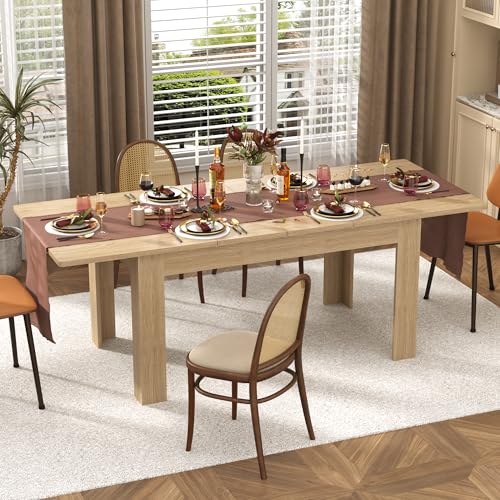
jiteentarou Extendable Dining Table for 6-8 People from 59in to 86in, 86inch Long Expandable Tables for Small Spaces, Wooden Adjustable Tables for Dining Room, Kitchen, Living Room, Oak
⚠️ Note: The purchase links above are affiliate links. As an Amazon Associate, we earn from qualifying purchases at no additional cost to you.
Frequently Asked Questions About Solid Oak Dining Tables
Is solid oak a good material for a dining table?
Yes. Solid oak is one of the most durable and timeless dining table materials. Its dense grain resists wear and scratches well, it accepts refinishing, and it suits both traditional and modern interiors.
What is the difference between solid oak and oak veneer?
Solid oak is made entirely from oak wood throughout the thickness of the tabletop. Oak veneer is a thin layer of oak bonded over a core material such as plywood or MDF. Solid oak can be sanded and refinished many times, while veneer requires more careful handling.
How do I care for a solid oak dining table?
Dust regularly with a soft cloth, wipe spills promptly, avoid harsh chemical cleaners, and re-oil or re-wax the surface periodically depending on the finish. Keep the table away from direct heat and prolonged sunlight.
Which finish is best for a solid oak dining table?
Oiled finishes offer a natural look and can be spot-repaired, while lacquered finishes provide a more protective, low-maintenance surface. Matte and satin finishes are popular because they hide minor marks better than high-gloss surfaces.
Can a solid oak dining table be refinished?
Yes. One of the key advantages of solid oak is that it can be sanded down and refinished multiple times over its lifetime. This makes it a genuinely long-term investment compared with veneered or laminate alternatives.
Disclaimer
The information provided on DiningTablePicks is for educational and informational purposes only. We are not professional interior designers or furniture technicians, and our content should not replace professional advice. Always consult with a qualified expert regarding furniture safety, material durability, or technical concerns. Some content may use AI assistance. Always check product warranties and safety standards before purchasing. If you do not agree, please do not use this website.
Read the full disclaimer.
We use cookies to provide you with a better browsing experience. By continuing to use our site, you consent to our cookie settings.
Learn more