
Pedestal Extension Dining Table: The Complete Buying Guide
A pedestal extension dining table combines the clean, leg-free footprint of a central base with the flexibility of removable or self-storing leaves. This guide explains how the mechanism works, which base type suits your room, what materials hold up best, and how to size the table before you decide.
Explore Recommended ModelsWhy this guide matters: A pedestal base keeps the table perimeter free of corner legs, so chairs tuck in easily and guests never bump their knees. Adding an extension mechanism means the same table can seat a household of four on a weekday and a dinner party of eight on a weekend. The trade-off is complexity: leaf storage, base stability, and apron clearance all need to be checked before purchase. This article walks through each decision point in the order a buyer actually faces them.
What Is a Pedestal Extension Dining Table?
A pedestal extension dining table rests on one or more central columns rather than four corner legs. The extension function adds a leaf (or several) between the table halves, increasing the top length or diameter when you need extra seating. The combination is popular in dining rooms and open-plan kitchens because the base stays out of the way when the table is fully extended.
Buyers usually arrive at this category for one of three reasons. First, they want a table that can grow for holidays without a permanent footprint that dominates the room. Second, they dislike corner legs because they interfere with chair placement. Third, they want a round or oval silhouette, which pairs naturally with a central pedestal. If you are still comparing shapes, the modern round pedestal dining table guide covers the non-extending version in more depth.
It helps to separate two features that are often confused. A pedestal base describes the support structure. An extension mechanism describes how the top grows. You can have a pedestal table without an extension, and you can have a leg table with an extension. This guide focuses on the overlap: tables that offer both.
Single vs. Double Pedestal Bases
The base type determines how stable the table feels when extended, how much legroom each diner gets, and how heavy the table is to move. There are two main configurations.
Single Pedestal
A single central column, usually with a wide foot, suits round and small oval tables. It gives the cleanest look and the most flexible chair placement. The limitation is length: a single column becomes unstable as the top grows beyond roughly 60 inches, so single-pedestal extension tables are typically compact and better suited to four to six diners. The 60-inch round dining table set is a useful reference point for how large a single base can comfortably carry.
Double Pedestal
Two columns connected by a stretcher beam support longer rectangular and oval tops. They distribute weight across the table and stay steady when one or two leaves are inserted. Double-pedestal tables generally seat six to ten people and are the standard choice for formal dining rooms. A well-known example is the 72-inch pedestal dining table, which is a common size for six to eight diners before extension.
| Base Type | Best For | Typical Seating | Watch Out For |
|---|---|---|---|
| Single pedestal | Round and compact oval tables, small dining nooks | 4 to 6 | Wobble when extended; limited top length |
| Double pedestal | Rectangular and oval dining rooms, formal settings | 6 to 10 | Stretcher beam can limit footroom at the ends |
| Trestle base | Farmhouse and rustic styles, long tops | 6 to 10 | End diners may straddle the trestle legs |
If your room is long and narrow, a double pedestal is usually the better fit. If the room is square or you want a sociable round table, a single pedestal keeps the layout open. The custom pedestal dining table option is worth considering when standard base proportions do not match your room.
Leaf and Extension Mechanisms Explained
The extension mechanism is where pedestal tables differ most, and it is the part most likely to cause frustration after purchase. There are four common systems.
1. Removable Leaf (Manual Insert)
The table splits in the middle and a separate leaf drops into a gap. This is the most common design on pedestal tables because it is simple and durable. The leaf must be stored somewhere — a closet, under a bed, or in a dedicated felt-lined sleeve. Entry-level and mid-range models usually use this system. Check that the leaf has alignment pins or dowels so it sits flush.
2. Self-Storing Butterfly Leaf
The leaf is hinged and folds inside the table body when not in use. You pull the halves apart, flip the leaf up, and push the halves back together. No separate storage is needed. This mechanism is more complex and appears most often on mid-range and premium tables. It is convenient for households that extend the table frequently, but the folding hardware should be inspected for smoothness.
3. Drop-Leaf
Hinged sections on one or both sides fold down against the table body. Drop-leaf tables are usually smaller and work well in apartments. They are technically an extension mechanism, though most drop-leaf pedestal tables are compact rather than formal. The drop-leaf dining table guide covers this style in detail.
4. Telescoping or Gear-Driven Slide
The table halves glide apart on metal tracks, sometimes with a crank or gear mechanism. This is the smoothest system and is common on high-end and commercial-grade tables. It handles wide leaves well and keeps the top aligned. The trade-off is weight and a higher position in the market.
Practical tip: Ask how many leaves the table accepts and where the leaf is stored. A table that accepts two leaves but stores neither is a table you will stop extending after the first season.
For a broader comparison of extendable styles, see the modern extension dining table guide and the wooden extendable dining table for four to six overview.
Materials and Surface Durability
The top material affects how the table ages, how much maintenance it needs, and how well it suits a household with children or frequent entertaining. The base material affects stability and weight.
Solid Wood Tops
Solid oak, walnut, ash, and pine are the most common pedestal table tops. Solid wood can be refinished if it scratches, which makes it a long-term investment. Oak and ash are harder and resist dents better; walnut is softer but has a richer grain; pine shows marks sooner. The solid oak trestle dining table and the walnut dining table guides cover grain and finishing differences.
Veneer Tops
A veneer is a thin layer of real wood over a stable core. It resists warping better than solid wood in humid rooms and is common on mid-range tables. The limitation is that veneer cannot be sanded down repeatedly. Check the edge banding — a well-made veneer table has matching edges that hide the core.
Stone and Ceramic Tops
Marble, travertine, and ceramic tops are heavy and cold to the touch but very resistant to heat and stains. They pair well with a double pedestal base because the weight is centered. The oval marble dining table and travertine dining table top guides explain sealing requirements. Stone tops are usually premium or luxury tier and require periodic sealing.
Glass Tops
Glass keeps a pedestal table visually light and is easy to wipe clean. It shows fingerprints and needs a base that is visually substantial so the table does not look fragile. Tempered glass is the minimum safety standard. See the full glass dining table guide for thickness and edge-finish considerations.
Base Materials
Wood bases are traditional and warm. Metal bases — steel or aluminum — are stiffer and allow thinner columns. A cast-iron or steel foot adds stability to a single pedestal. Look for a base with a wide, flat foot and felt or rubber pads to protect flooring.
| Top Material | Durability | Maintenance | Best For |
|---|---|---|---|
| Solid oak / ash | High — refinishable | Occasional oil or wax | Family dining, long-term use |
| Walnut | Medium-high — softer grain | Oil or wax, avoid heat | Formal rooms, warm tones |
| Veneer | Medium — cannot resand deeply | Damp cloth, coasters | Humid rooms, balanced tier |
| Marble / stone | High — stain and heat resistant | Periodic sealing | Formal and luxury settings |
| Glass | Medium — chips at edges | Glass cleaner, frequent wiping | Compact and modern spaces |
Sizing and Seating Capacity
Extension tables are sized in two states: closed and fully extended. Buy for the closed state first, because that is how the table will sit most days, then confirm the extended state fits the room and the guest list.
Seating Rules of Thumb
- Allow about 24 inches of table edge per diner for comfortable place settings.
- A 60-inch round table seats four to six; a 72-inch round seats six to eight.
- A 72-inch rectangular table seats six; each 12- to 18-inch leaf adds one to two seats.
- Double-pedestal tables typically accept two leaves and reach eight to ten seats.
Extended-Length Planning
Measure the fully extended length, not just the closed length, and confirm there is still walkway clearance behind the chairs. A table that fits when closed can block a doorway when extended. The dining table size chart and the dining table height guide are useful references for standard dimensions.
If you expect to seat eight regularly, start with an 8-person oak dining table as your baseline and treat the extension as overflow capacity. If you rarely exceed six, a 72-inch wood dining table with one leaf is often the more efficient choice.
Stability, Clearance, and Safety
Pedestal tables concentrate weight in the center, so stability depends on the size of the foot and the rigidity of the column. When the table is extended, the top overhangs the base, and any wobble becomes more noticeable.
What to Check
- Foot width: A wider foot spreads the load and resists tipping when someone leans on the extended end.
- Column rigidity: Metal columns and thick laminated wood columns flex less than thin single posts.
- Stretcher beam: On double pedestals, a solid beam connecting the columns prevents the halves from twisting apart.
- Leveling glides: Adjustable feet compensate for uneven floors, which is the most common cause of a rocking table.
- Leaf alignment: Pins, dowels, or a sliding track keep the leaf flush with the main top and prevent a lip that catches plates.
Pedestal bases leave the corners open, which is a safety advantage for households with young children because there are no sharp leg corners to collide with. The trade-off is that a child can push against an extended overhang, so a wide foot matters. If the table will sit on a rug, confirm the rug is large enough that all chairs stay on it when pulled out — see the dining table rug placement guide.
Stability test in the store: Extend the table fully, then press down firmly on one extended end. A well-built double pedestal should show minimal flex. A single pedestal should not lift at the opposite foot.
Matching the Table to Your Room
Pedestal tables work in more layouts than leg tables because the base does not dictate where chairs can go. That flexibility is the main design advantage.
Open-Plan Kitchens
A pedestal base reads as a single sculptural element rather than a cage of legs, which keeps sightlines open between kitchen and living areas. A round or oval top softens a rectangular room. The open concept dining layouts guide covers traffic flow in more detail.
Narrow Dining Rooms
In a narrow room, a rectangular double-pedestal table placed along the long axis keeps walkways clear because there are no corner legs to catch a chair. Confirm the extended length still leaves clearance at both ends. The narrow dining room furniture layout guide is a useful companion.
Formal Dining Rooms
Double-pedestal oval tables are a classic formal choice. Stone or dark wood tops with a substantial base suit traditional interiors, while a slim metal double pedestal suits modern rooms. The traditional dark wood dining table and luxury black dining table guides show how finish changes the mood.
Compact Spaces
A single-pedestal round table is the most space-efficient pedestal option. A drop-leaf or butterfly-leaf version adds seats without a permanent footprint. For very small rooms, the small oval dining table set and 3ft by 4ft dining table references show realistic dimensions.
Care and Maintenance Basics
An extension table has moving parts, so maintenance covers both the surface and the mechanism.
Surface Care by Material
- Wood: Wipe with a damp cloth, dry immediately, and re-oil or wax every few months depending on finish. Avoid silicone polishes that build up.
- Veneer: Keep humidity stable and avoid standing water. Use coasters and trivets.
- Stone: Reseal every six to twelve months and wipe spills promptly, especially acidic liquids.
- Glass: Use a glass cleaner and a microfiber cloth; check edge chips periodically.
Mechanism Care
- Keep leaf alignment pins and tracks free of dust and crumbs.
- Apply a dry lubricant (not oil) to metal slides if the mechanism stiffens.
- Store removable leaves flat, not on edge, to prevent warping.
- Extend and retract the table a few times each season to keep the mechanism moving freely.
For deeper guidance, see the dining table care and maintenance hub and the wood dining table wax and polish guide. If a table develops a wobble, the wobbly dining table fix guide explains how to tighten and level it.
Buying Checklist
Use this list before finalizing a choice. It reflects the questions that most often lead to returns or regret after purchase.
- Closed dimensions: Does the table fit the room in its everyday state?
- Extended dimensions: Does the fully extended table still leave walkway clearance?
- Seating target: Does the closed table seat your household, and does the extended table seat your largest regular gathering?
- Leaf storage: Where will the leaf live when not in use, and is a storage sleeve included?
- Mechanism type: Is a manual leaf, butterfly leaf, or sliding track the right fit for how often you will extend it?
- Base stability: Is the foot wide enough for the extended top, and does the base have leveling glides?
- Top material: Does the surface suit the household’s cleaning habits and the room’s humidity?
- Chair clearance: Do your chairs tuck under the apron without hitting the pedestal column?
- Floor protection: Does the base have felt or rubber pads, and is the table heavy enough to need two people to move?
- Tier expectations: Entry-level tables use simpler leaf hardware; mid-range tables add smoother mechanisms and better veneers; premium and luxury tables offer gear-driven slides, solid stone tops, and heavier bases.
Tier guidance: If you extend the table only a few times a year, an entry-level manual leaf is sufficient. If you extend it weekly, a mid-range butterfly leaf or a premium sliding mechanism reduces daily friction. Luxury and commercial-grade tables are appropriate for formal dining rooms and heavy use, where the base and hardware are built to commercial tolerances.
Frequently Asked Questions
Is a pedestal extension table stable when fully extended?
A well-built double pedestal with a stretcher beam and a wide foot is stable when extended. Single pedestals are stable within their size range, which is generally up to about 60 inches. The key checks are foot width, column rigidity, and whether the leaf sits flush. A table that wobbles when extended usually has an uneven floor or loose leveling glides rather than a design flaw.
Can I use a pedestal table in a small dining room?
Yes. A single-pedestal round or drop-leaf table is one of the most space-efficient options because there are no corner legs. Measure the closed dimensions against your walkway clearance, and confirm the extended length still allows chairs to pull out without blocking a doorway.
How many people can a double pedestal extension table seat?
A typical double pedestal table seats six closed and eight to ten when fully extended with one or two leaves. Capacity depends on leaf width and top length. Allow about 24 inches of edge per diner and confirm the extended length still fits the room.
Where do I store the leaf?
Removable leaves should be stored flat in a dry room, ideally in a felt-lined sleeve. Self-storing butterfly leaves fold inside the table and need no separate storage. If storage space is limited, prioritize a butterfly-leaf or drop-leaf design.
Which top material is best for a family with children?
Solid oak or ash is the most forgiving because scratches can be sanded and refinished. Stone and ceramic resist stains but can chip at edges. Glass shows fingerprints and needs frequent wiping. Veneer is a reasonable mid-range option if the household uses coasters and avoids standing water.
Do pedestal tables work with benches?
Yes, and they often work better than leg tables because there is no corner leg to interrupt the bench length. A bench can slide fully under a pedestal table. Confirm the bench height matches the table apron height, and see the dining bench seating guide for clearance details.
Ready to Compare Pedestal Extension Tables?
Browse recommended models below, filtered to the pedestal extension category, and check availability before you decide.
View Recommended ModelsRecommended Pedestal Extension Dining Tables
⚠️ AFFILIATE DISCLOSURE: This website contains affiliate links. As an affiliate Associate, we earn from qualifying purchases. If you make a purchase through these links, we may receive a small commission at no additional cost to you. Read our full affiliate policy.

weselon 42"-105" Extendable Dining Table for 4-12, Expandable Oval Dining Room Table with Fluted Pedestal Base & Reinforced Metal Support Leg, Large Modern Kitchen Table for Dining Room (Walnut)
Check price on Amazon
41 in-78 in Extendable Dining Room Table for 4-8, Round Expandable Kitchen Table with Fluted Base, Modern Farmhouse Oval Dinner Tables for Dining Room Kitchen Living Room (Walnut)
Check price on Amazon
FavourLife 40''-55'' Extendable Round to Oval Dining Table with Storage for 4-6, Expandable Pedestal Transformer Dining Table with Leaf Extension for Kitchen & Dining Living Room Apartment(Natural)
Check price on Amazon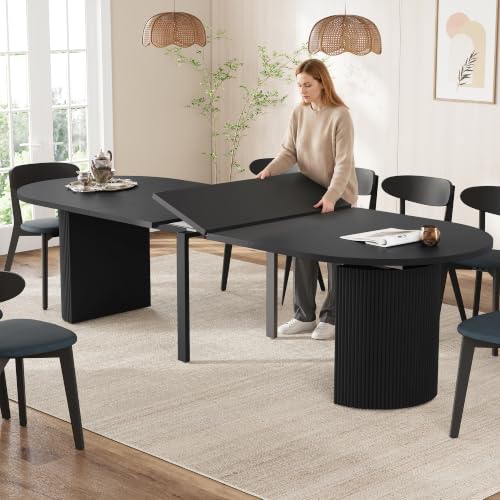
weselon 42"-120" Extendable Dining Table for 4-14, Expandable Oval Dining Room Table with Fluted Pedestal Base & Reinforced Metal Support Leg, Extra Large Modern Kitchen Table (Black)
Check price on Amazon
East West Furniture AVT-SBR-TP Avon Kitchen Dining Table - an Oval Wooden Table Top with Butterfly Leaf & Pedestal Base, 42x60 Inch, Saddle Brown
Check price on Amazon
Coaster Florence 126-Inch Extension Dining Table Distressed Black 115531 | Two 16-inch removable leaves; 94 to 126-inch length; double-pedestal trestle base
Check price on Amazon