
Pine Dining Table Guide: A Complete Buyer's Handbook
Everything you need to know about pine dining tables — from wood grades and construction details to style pairings, finish options, and long-term care. Make a confident, well-informed decision for your dining space.
Why pine deserves a closer look: Pine is one of the most approachable solid woods for dining furniture. It is easy to work with, takes paint and stain beautifully, and carries a warm, natural character that suits farmhouse, cottage, Scandinavian, and rustic interiors. But pine is not a single uniform material — its grade, cut, moisture content, and finish determine how well a table will perform over years of daily use. This guide walks you through each factor so you can evaluate any pine table with confidence.
What Makes Pine Different From Other Dining Table Woods
Pine is a softwood, which means it comes from coniferous trees rather than deciduous hardwoods like oak or walnut. This distinction matters for dining tables because softwoods are generally lighter in weight and softer in density than hardwoods. A pine table top will show impressions from sharp objects more readily than an oak top, but it also offers advantages that hardwoods do not: pine is lighter to move, easier to repair and refinish, and more responsive to paint and stain.
Within the pine family, several species are used for furniture. Eastern white pine is prized for its clean, straight grain and light color. Southern yellow pine is denser and heavier, with a more pronounced grain pattern. Radiata pine, widely used in modern furniture production, offers consistent quality and fewer defects. Each species behaves slightly differently, which is why species identification is a useful first question when comparing pine tables.
If you are still weighing different wood species, our dining table materials and finishes hub provides a broader comparison, and the solid oak dining table guide and walnut dining table guide offer contrast points for hardwood alternatives.
Pine Wood Grades and What They Mean for a Dining Table
Pine is graded by the number and size of knots, the presence of sapwood versus heartwood, and overall visual consistency. The grade affects both appearance and structural reliability. When you shop, ask which grade the table top uses — it is one of the clearest signals of quality.
| Grade | Visual Characteristics | Best For |
|---|---|---|
| Clear / Premium | Very few or no knots; uniform grain; minimal sapwood | Formal dining rooms, painted finishes, contemporary interiors |
| Select / High-end tier | Small tight knots; consistent color; good structural stability | Balanced family dining tables with a clean look |
| Common / Knotty | Prominent knots, some color variation, visible grain character | Rustic, farmhouse, and cottage styles |
| Utility / Entry-level | Large knots, potential splits, mixed sapwood | Budget-conscious or temporary setups; not ideal for daily heavy use |
A knotty pine top is not automatically lower quality — many buyers deliberately choose knotty grades for their visual warmth. The key is that knots should be tight, sound, and free of cracks. Loose or cracked knots can weaken the surface over time, especially around the edges where impact is more likely.
Construction Details That Determine Durability
Two pine tables can look similar in a showroom yet perform very differently over time. The difference usually comes down to construction. Pay attention to these elements:
Solid wood versus veneer
Solid pine boards run through the full thickness of the table top. Veneered pine uses a thin pine layer over a substrate such as MDF or particleboard. Solid pine is more repairable and can be sanded and refinished multiple times. Veneer can look excellent and resist warping in some conditions, but it cannot be refinished as deeply and is vulnerable to moisture at the edges. For a dining table expected to handle decades of meals, solid pine is the more resilient choice.
Board width and glue-up quality
Wider boards mean fewer glue lines and a more seamless look, but they also move more with humidity changes. Well-made pine tables use narrow-to-medium boards arranged to balance grain direction, reducing the risk of cupping or bowing. Inspect glue lines for tight, even joins.
Apron, legs, and support
The apron connects the legs and stabilizes the top. A reinforced apron with corner blocks or a center support prevents the table from wobbling and keeps the top flat. Our dining table apron guide and dining table frame guide explain these structural elements in more detail. Leg thickness matters too — thicker legs on a pine table usually signal a sturdier build, and the dining table leg guide covers profile and joinery options.
Base type
Leg tables and pedestal tables are both common in pine. Pedestal designs offer more legroom and are popular for round and oval pine tables. The dining table pedestal guide compares base styles for stability and seating flexibility.
Moisture Content and Wood Movement
Pine is more dimensionally active than most hardwoods. It expands and contracts with seasonal humidity, which can lead to gaps between boards, slight cupping, or visible movement over time. This is normal behavior for solid wood, but proper drying and construction minimize the impact.
Reputable manufacturers kiln-dry pine to a moisture content appropriate for the destination climate, typically in the 6–10 percent range. Asking about moisture content and acclimation is a reasonable question. Equally important is how the table is finished — a properly sealed surface slows moisture exchange and reduces movement. If your home experiences wide seasonal humidity swings, review our dining table humidity care guide for practical management tips.
Quick check
Look for tables described as kiln-dried and made with boards oriented to balance grain. Avoid tables with large knots near the edges or visible cracks along glue lines — these are signs that wood movement was not well managed during construction.
Pine Dining Table Styles and Room Pairings
Pine's warm tone and visible grain make it a natural fit for several interior styles. The finish you choose can shift its character significantly.
Farmhouse and cottage
Knotty pine in a natural or lightly whitewashed finish pairs with bench seating, woven runners, and painted chairs. A long rectangular pine table is the classic farmhouse centerpiece, and our dining bench seating guide covers how to mix benches with chairs for a relaxed, layered look.
Scandinavian and modern
Clear-grade pine in a pale oiled finish works well in light, airy rooms. Slim tapered legs and simple lines keep the look contemporary. Round and oval pine tables soften tight spaces — see the round dining table guide and oval dining table guide for sizing and placement advice.
Rustic and industrial
Distressed pine finishes with visible knots and a matte surface suit rustic interiors. Pairing a pine top with metal legs creates an industrial edge; our metal dining table guide explains how mixed-material bases are constructed. The distressed dining table guide covers the techniques used to create aged finishes.
Painted pine
Pine takes paint exceptionally well. A lacquered or painted finish can create a crisp, modern look while hiding knots. If you plan to paint or refresh a pine table, our dining table paint refresh guide walks through preparation and application.
Finishes: Protection Versus Natural Feel
The finish on a pine dining table determines how it ages, how easy it is to clean, and how much of the natural grain remains visible. Each finish type offers a different balance.
| Finish | Look | Protection Level | Maintenance |
|---|---|---|---|
| Oiled | Natural, matte, grain-forward | Moderate | Periodic re-oiling; easy spot repair |
| Lacquered | Smooth, slightly reflective film | High | Low day-to-day; professional repair for deep damage |
| Matte polyurethane | Natural look with a protective film | High | Wipe clean; avoid harsh solvents |
| Painted | Opaque, uniform color | Depends on topcoat | Touch-ups for chips; avoid abrasive cleaners |
| Glossy | Reflective, formal | High | Shows smudges; gentle cleaning required |
Oiled pine is popular because it preserves the natural texture and can be spot-repaired without refinishing the whole top. Our oiled dining table guide and matte dining table finish guide explain the trade-offs in more detail. If you prefer a film finish, the lacquered dining table guide covers durability and repair considerations.
Caring for a Pine Dining Table
Pine is forgiving but not indestructible. A few consistent habits keep a pine table looking its best for years:
- Use coasters and placemats. Pine is softer than hardwood, so heat and moisture marks appear more easily. A dining table pad offers extra protection during heavy use.
- Wipe spills promptly. Standing water can penetrate seams and cause swelling. The dining table stain removal guide covers common spill scenarios.
- Control humidity. Keep indoor humidity relatively stable, especially in winter. The winter moisture control guide and summer heat protection guide cover seasonal strategies.
- Address scratches early. Light scratches on oiled pine can often be blended with a touch-up product. See the scratch touch-up guide.
- Refresh oiled finishes periodically. Re-oiling every six to twelve months maintains protection and deepens the grain. The wood dining table wax and polish guide explains the process.
For a full routine, the routine upkeep guide and care and maintenance hub collect all of these practices in one place.
Pine Dining Table Buying Checklist
Before committing to a pine table, run through these questions. They cover the details that separate a well-made table from a short-lived one.
- Species and grade: Which pine species is used, and what grade is the top? Clear or select grades suit formal rooms; knotty grades suit rustic styles.
- Solid or veneer: Confirm whether the top is solid pine or veneered. Solid is more repairable and refinishable.
- Board construction: Are boards narrow-to-medium width, with balanced grain and tight glue lines?
- Support structure: Does the table have a reinforced apron, corner blocks, or a center support? Does it feel stable when leaned on?
- Moisture content: Is the wood kiln-dried and acclimated for your climate?
- Finish type: Does the finish match your maintenance preferences — oiled for natural feel and easy repair, lacquer or poly for lower day-to-day upkeep?
- Size and seating: Does the table size fit your room and seating needs? Use our dining table size chart and the 4-seater, 6-seater, and 8-seater dining table guides for capacity planning.
- Room clearance: Allow enough walkway space around the table. The walkway clearance guide and space planning guide explain the measurements.
- Chair pairing: Pine tables pair well with wood, upholstered, and bench seating. The dining chair selection guide and chair height guide help match proportions.
- Warranty and aftercare: Check what the manufacturer covers and whether replacement parts or refinishing guidance are available.
For a broader pre-purchase review, the first dining table checklist and dining table buying mistakes articles cover pitfalls that apply to any material, including pine.
Pine Dining Table Pros and Cons at a Glance
| Advantages | Considerations |
|---|---|
| Warm, natural appearance that suits many styles | Softer than hardwood; dents and scratches more easily |
| Lighter weight than hardwood tables; easier to move | More dimensionally active with humidity changes |
| Excellent paint and stain acceptance | Knots vary widely in quality; grade matters |
| Easy to repair and refinish | Entry-level grades may have loose knots or cracks |
| Good value within the solid-wood category | Requires consistent care habits to age well |
For many households, the trade-offs are worth it. Pine delivers a warm, characterful solid-wood table at a more accessible tier than most hardwoods, and its repairability means minor wear becomes part of the table's story rather than a permanent flaw.
Related Dining Table Guides
Pine is one option among many. These guides help you compare materials, shapes, and care approaches before finalizing your choice:
- Dining table types overview — shapes, sizes, and specialty formats
- Materials and finishes hub — compare wood, stone, glass, metal, and composite options
- Solid oak dining table guide — a harder, denser hardwood alternative
- Mango wood dining table guide — another warm-toned solid wood option
- Teak dining table guide — moisture-resistant hardwood for humid climates
- Extendable dining table guide — flexibility for hosting
- Drop-leaf dining table guide — compact space solutions
- Dining table refinishing guide — restore or refresh a pine top
- Antique wood dining table revival — bringing vintage pine back to life
- Dining table centerpiece guide — styling ideas for pine tabletops
Frequently Asked Questions About Pine Dining Tables
Is a pine dining table durable enough for daily family use?
Yes, provided the table is well constructed and finished. Select or clear grades with sound knots and a protective finish hold up well to daily meals. Pine is softer than hardwood, so expect some surface patina over time — many owners consider this a desirable characteristic rather than a defect.
Will a pine table warp or crack?
Properly kiln-dried pine with balanced board orientation is unlikely to warp significantly. Some seasonal movement is normal. Cracking is more common in poorly dried wood or tables exposed to rapid humidity changes. Controlling indoor humidity and using a protective finish reduce the risk.
Can I paint or refinish a pine dining table?
Pine is one of the easiest woods to paint and refinish. Sanding removes old finish readily, and the wood accepts new stain or paint evenly when properly prepared. Our paint refresh guide and refinishing guide cover the steps.
What is the difference between knotty pine and clear pine?
Knotty pine includes visible knots and more color variation, giving a rustic look. Clear pine has few or no knots and a more uniform appearance. Clear grades are usually more stable and better suited to formal or painted finishes; knotty grades are chosen for character.
How often should I re-oil a pine dining table?
For oiled finishes, re-oiling every six to twelve months is typical, depending on use. A table that sees daily meals and cleaning may need more frequent attention. The surface should feel dry rather than tacky before re-oiling.
What size pine table fits my dining room?
Size depends on room dimensions, seating needs, and walkway clearance. Our size chart and space planning guide provide measurements for common layouts and seating capacities.
Recommended Pine Dining Tables & Essential Accessories
⚠️ AFFILIATE DISCLOSURE: This website contains affiliate links. As an affiliate Associate, we earn from qualifying purchases. If you make a purchase through these links, we may receive a small commission at no additional cost to you. Read our full affiliate policy.

Signature Design by Ashley Valebeck Extendable Dining Table, Farmhouse | Seats Up to 8 with 16.5 in Removable Leaf, Rustic Two-Tone Pine Wood, Veneer and Engineered Wood, Sturdy Trestle Base
Check price on Amazon
Frienda 2 Pcs 9 ft Christmas Cedar Garland Table Runner Decoration Set | Artificial Real Pine Swag Greenery Garland, Xmas Table Runner, Mantel Styling, Winter Home Dining Porch Centerpiece Decor
Check price on Amazon
DM Furniture 55-71'' Extendable Dining Table for 4-8 People, Reclaimed Pine Wood Extending Dining Table w/Removable Leaves for Dining Room/Kitchen/Office, Space Saving, Brown
Check price on Amazon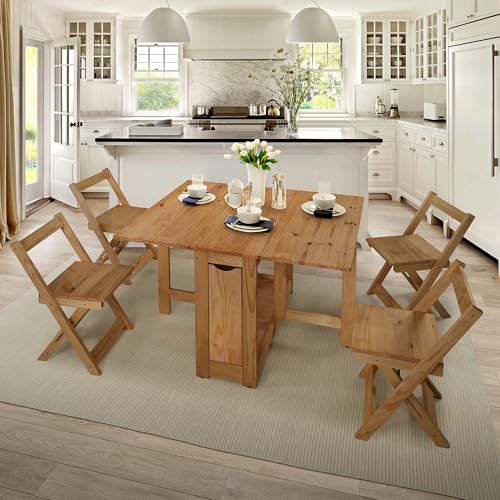
SECONIQUE Santos Butterfly Folding Dining Table Set with 4 Chairs – Space-Saving Table with Nesting Chairs and Storage Shelf – Rustic Pine Finish
Check price on Amazon
DM Furniture 59"-71" Reclaimed Solid Wood Extendable Kitchen Table, Walnut | FSC Certificated, Farmhouse Rectangular Expandable Dinner Table with Leaf Extension for 6-8 | Dining Room/Gathering/Party
Check price on Amazon
Signature Design by Ashley Counter Height Dining Table with Storage | Pine Wood, Veneers and Engineered Wood, Farmhouse Style, Wine Rack, 4 Lined Drawers, 2 Shelves, Valebeck Series
Check price on Amazon
LemonRoad 6 Pcs 18" Christmas Cedar Placemat Large Greenery Berry Placemats | 18 Inch Round, Pine Cone Berry Wreath Placemat, Heat Resistant, Festive Dining Table Mats for Holiday Party Home Decoration
Check price on Amazon
Rick Steves Italy (Rick Steves Travel Guide)
Check price on AmazonReady to Choose Your Pine Dining Table?
Use this guide as your checklist. Compare grades, construction, and finishes, then confirm sizing and clearance for your space before you decide.
Explore Shopping & Reviews