
Solid Wood Slab Dining Table: The Complete Guide
Everything you need to know about choosing, living with, and loving a solid wood slab dining table — from wood species and live edge design to durability, care, and long-term investment value.
Why a solid wood slab dining table stands apart: Unlike tables built from narrow joined planks, a solid wood slab is cut from a single thick section of a tree trunk. That means one continuous grain pattern, a natural one-of-a-kind silhouette, and structural integrity that only improves with proper care. For buyers researching this category, the decision usually comes down to wood species, edge style, thickness, and base design — all of which we break down below.
What Exactly Is a Solid Wood Slab Dining Table?
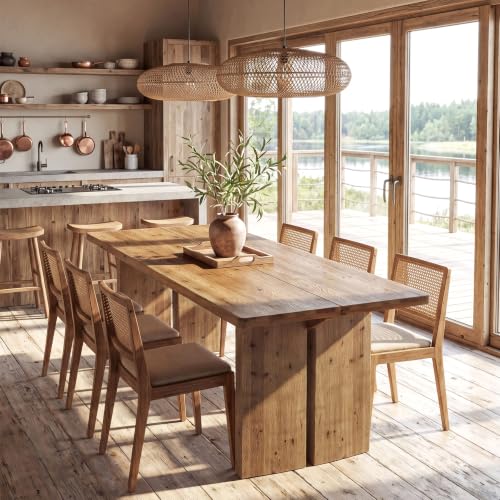
A solid wood slab dining table is crafted from a single, substantial piece of wood milled from a large tree trunk. Instead of assembling the top from many narrow boards glued edge-to-edge, the maker slices a thick section from the log — typically 1.5 to 2.5 inches thick — and preserves its natural form. The result is a tabletop with uninterrupted grain flow, organic character marks, and a presence that assembled tops simply cannot match.
Slab tables sit at the premium and high-end tier of the dining table market because of the material yield required. A single large, well-figured log produces only a limited number of usable slabs, and the drying, flattening, and finishing process is more demanding than standard plank construction. If you are comparing this category against other statement pieces, our guide to the solid oak trestle dining table and the large live edge dining table offers useful parallels in construction and styling.
Buyers typically choose slab tables for three reasons: the organic aesthetic, the heirloom-level durability of thick solid wood, and the uniqueness of owning a piece that cannot be exactly duplicated. A slab table is less furniture and more functional art — and it rewards buyers who understand what they are getting.
Live Edge vs. Straight Edge: Which Slab Style Suits You?
The single most visible design decision in this category is the edge treatment. Both approaches use a continuous slab top, but they deliver very different visual results.
Live Edge Slabs
Live edge tables preserve the natural outer contour of the tree — the undulating line where bark once sat. This produces an organic, sculptural silhouette with irregular widths and a strong connection to nature. Live edge works beautifully in rustic, farmhouse, and modern organic interiors. It is also the more demanding option in terms of room layout, because the irregular edges require more clearance for chairs and walkways.
Straight Edge Slabs
Straight edge slab tables trim and square the outer edges while retaining the single-piece top and continuous grain. The result is a cleaner, more geometric look that fits modern, transitional, and minimalist dining rooms. Straight edge slabs are easier to pair with benches and make space planning more predictable. If your dining room has tight dimensions, a straight edge slab is often the more practical choice.
A useful middle ground is the resin live edge dining table, which fills natural voids with resin while keeping the organic edge profile — a popular option for buyers who want live edge character with a smoother, more uniform surface.
Choosing the Right Wood Species for Your Slab Table
Wood species determines grain character, color, hardness, and how the table ages. Each species brings a distinct personality to a dining room.
Oak Slab Tables
Oak is the workhorse of the slab world: hard, abundant, and rich in prominent grain. White oak offers a cooler, more contemporary tone, while red oak leans warmer. Oak slabs take oil and wax finishes beautifully and hold up well to daily dining. For a closer look at oak construction and styling, see our modern solid oak dining table guide and the European oak dining table overview.
Walnut Slab Tables
Walnut is the premium choice for buyers who want depth and warmth. Its chocolate-brown heartwood and subtle figure make it a natural fit for mid-century and contemporary interiors. Walnut is softer than oak but machines and finishes exceptionally well. Our wood walnut dining table and solid wood dining table walnut articles explore grain patterns and care in more detail.
Maple, Ash, and Elm Slabs
Maple offers a pale, clean look with fine grain — ideal for bright, minimalist spaces. Spalted maple adds dramatic dark line patterns from natural fungal activity, producing one-of-a-kind figure; see the spalted maple dining table guide. Ash is hard, light-colored, and visually similar to oak but with straighter grain. Elm brings wild, interlocking grain and a warm tone, covered in our elm wood dining table and elm dining table articles.
If you prefer a lighter Scandinavian palette, the ash oak dining table comparison is a helpful starting point for weighing the two species side by side.
Thickness, Dimensions, and Seating Capacity
Slab thickness is both an aesthetic and structural decision. Thinner slabs in the 1.25-inch range suit modern, floating-base designs and lighter visual spaces. Thicker slabs of 2 inches or more deliver a substantial, rustic presence and resist cupping more effectively over decades of use. Most buyers land in the 1.5 to 2 inch range as the sweet spot between elegance and durability.
For dimensions, seating capacity drives the top size. A 72-inch slab comfortably seats six to eight diners, while larger slabs of 96 inches or more accommodate eight to ten. Our 72 inch wood dining table and wood dining table for 10 guides break down exact clearances. If you are working with a compact footprint, the 3ft x 4ft dining table and 60 inch round dining table and chairs articles show how slab-style construction adapts to smaller rooms.
Height matters too. Standard dining height is 30 inches at the tabletop; our height of a dining table in inches reference covers the full range from standard to counter height, which is essential when pairing a slab top with a custom base.
Base and Support: The Hidden Engineering of a Slab Table
A thick slab top is heavy — often 150 pounds or more depending on species and dimensions. The base must distribute that load while allowing the wood to move naturally with seasonal humidity changes. Poorly designed bases cause cupping, wobbling, and cracking.
Trestle bases are the most common pairing for slab tops because they provide wide, stable support and leave generous legroom. Pedestal bases offer a cleaner footprint and work well in smaller dining rooms; our custom pedestal dining table and pedestal extension dining table guides explain the trade-offs. Metal bases — steel or iron — are increasingly popular for industrial and modern organic looks and are covered in the iron round dining table reference.
Whatever the base, the attachment method matters: look for slotted or oversized mounting holes that allow the slab to expand and contract without splitting. This is one of the most important details to verify before purchase, and it separates professional-grade construction from entry-level assembly.
Durability, Care, and Long-Term Investment
Solid wood slab tables are a long-term investment. With proper care, a quality slab will outlast most other furniture in your home and can be refinished decades later to look nearly new. That durability is a major reason buyers accept the premium tier positioning of slab tables.
Routine Care
- Dust with a soft, dry cloth weekly to prevent grit from dulling the finish.
- Wipe spills promptly — moisture is the primary enemy of solid wood.
- Use coasters, placemats, and trivets to protect against heat and condensation.
- Reapply wood-safe oil or wax every six to twelve months depending on use.
- Maintain indoor humidity between 40 and 60 percent year-round.
- Keep the table out of direct sunlight to prevent uneven fading.
Our good quality dining table guide and premium dining table overview go deeper into construction checks and finish quality. For outdoor slab-style options, the teak and metal outdoor dining table and outdoor deck dining table articles cover weather-resistant materials.
Market Tiers: What to Expect at Each Level
Slab dining tables span a wide range of construction quality. Using relative tier language helps frame expectations without tying the conversation to any specific market figures.
Entry-Level Tier
Thinner slabs (around 1.25 inches), simpler bases, and standard kiln drying. Good for buyers testing the slab aesthetic in a compact dining space.
Mid-Range Tier
Thicker slabs with more pronounced figure, reinforced base joinery, and improved finishing. A balanced choice for daily family dining.
Premium Tier
Hand-selected slabs with exceptional grain, precision flattening, and premium oil or hard-wax finishes. Built for long-term ownership.
Luxury Tier
Rare species, book-matched or highly figured slabs, custom bases, and bespoke sizing. Often treated as statement furniture and heirloom pieces.
As a rule, mid-range models typically offer noticeably smoother base mechanisms and more consistent flattening than entry-level options, while premium and luxury tiers focus on slab selection and finish quality. Our highest rated dining tables and editor's choice dining tables collections are organized using the same tier logic.
Slab Table Comparison at a Glance
The table below compares common slab table configurations by category and best-use scenario. Tiers are relative positioning indicators, not absolute rankings.
| Category | Tier | Best For |
|---|---|---|
| Live edge oak slab, trestle base | Mid-range | Rustic and farmhouse dining rooms |
| Straight edge walnut slab, pedestal base | Premium | Modern and transitional interiors |
| Spalted maple slab, steel base | Premium | Statement pieces in open-concept spaces |
| Book-matched luxury slab, custom base | Luxury | Formal dining rooms and collectors |
| Thin oak slab, entry-level base | Entry-level | First-time slab buyers and compact spaces |
Ready to Explore Slab Table Options?
Browse our curated collection of solid wood and live edge slab dining tables, filtered by style, species, and seating capacity.
Explore OptionsFrequently Asked Questions
What is a solid wood slab dining table?
A solid wood slab dining table is crafted from a single, thick piece of wood cut from a large tree trunk rather than from smaller joined planks. This construction gives the table a continuous grain pattern and a natural, organic appearance that cannot be replicated by assembled boards.
How thick should a solid wood slab dining table be?
Most solid wood slab dining tables range from 1.5 to 2.5 inches in thickness. Thinner slabs around 1.25 inches suit minimalist modern spaces, while thicker slabs of 2 inches or more provide a more substantial, rustic feel and greater structural stability over time.
Do solid wood slab tables warp or crack over time?
Solid wood naturally moves with humidity changes, but properly kiln-dried slabs with adequate sealing and a well-designed base minimize warping and cracking. Maintaining indoor humidity between 40 and 60 percent and avoiding direct sunlight significantly extends the stability of a slab table.
What is the difference between live edge and straight edge slab tables?
Live edge slab tables retain the natural, irregular contour of the tree's outer edge, creating an organic silhouette. Straight edge slab tables have the outer edges trimmed and squared for a cleaner, more geometric look while still using a single continuous piece of wood.
How do I care for a solid wood slab dining table?
Dust regularly with a soft cloth, wipe spills promptly, and reapply a wood-safe oil or wax finish every six to twelve months depending on use. Avoid harsh chemical cleaners and always use coasters or placemats to protect the surface from heat and moisture.
Recommended Solid Wood Slab Dining Tables
⚠️ AFFILIATE DISCLOSURE: This website contains affiliate links. As an affiliate Associate, we earn from qualifying purchases. If you make a purchase through these links, we may receive a small commission at no additional cost to you. Read our full affiliate policy.
63-Inch Solid Wood Dining Table with Double Slab Legs for Dining Room | Farmhouse Dinner Table for 4-6, Rectangular Kitchen Table with Heavy-Duty Base for Dining Room (Chair Not Included, Brown)
Check price on Amazon
Farmhouse Live Edge Dining Table, Solid Wood Dining Table, 55.1*27.5*29.5IN | Wood Slab Industrial Live Edge Desk with 2" Table Top & Metal Base for Kitchen & Dining Room 2,4,6 People
Check price on Amazon
Bme Hevea Solid Wood Butcher Block Countertop, Unfinished, 48" x 30" x 1.5" | 4 Layer Packaging Protection - Multiple Sizes - Customizable/DIY - Natural Grain
Check price on Amazon
Farmhouse Live Edge Solid Wood Dining Table(Wood, 63*31.5*29.5IN) | Wood Slab Industrial Live Edge Desk with 2" Table Top & Metal Base for Kitchen & Dining Room 2,4,6 People
Check price on Amazon
Furniture of America Nazaen III Modern Dining Table, Walnut | 82.5-inch Solid Wood Live Edge Table with X-Frame Base, Steel Support, Seats up to 8 for Dining Room
Check price on Amazon
Howizz 60 x 25 in. Solid Wood Table Top, Teak Stained Acacia Desktop for Standing Desk/Office Tabletop/Countertop, 0.7in. Thick
Check price on Amazon
BingLTD 6FT Acacia Butcher Block Countertop (72" x 25" x 1.5"), Unfinished Solid Wood Table Top for Kitchen Counter, Laundry Room, Workbench, Desktop
Check price on Amazon
Walnut Solid Wood Table Top, 38x25 | Live Edge Slab, Desktop, Countertop, Laundry, Dining, RV, Fully Finished, Scratch Resistant
Check price on AmazonContinue Your Research
Explore related guides to refine your choice: the large live edge dining table overview, the solid oak farmhouse dining table breakdown, the custom oak dining table process, and the reclaimed wood square dining table article for sustainable alternatives.
For styling and layout, the amazing dining room table feature and the custom dining room table guide will help you plan the surrounding space. If your dining room is short on space, the small oval dining table set and round pedestal dining table modern pages illustrate how slab-inspired forms adapt to compact layouts.