
Elegant Wood Dining Table: The Complete Buying & Styling Guide
Everything you need to choose a wood dining table that blends timeless craftsmanship, everyday durability, and refined dining room style — from wood species and finish selection to sizing and long-term care.
EXPLORE RECOMMENDED PICKSWhy this guide matters: An elegant wood dining table is one of the most significant furniture investments you will make for your home. It anchors the dining room, sets the tone for every meal and gathering, and — when chosen well — can serve your household for decades. If you are in the research stage and already know you want a wood table but are unsure which species, finish, or configuration suits your space, this guide walks you through every decision point so you can buy with confidence.
What Makes a Wood Dining Table Elegant
Elegance in a wood dining table is rarely about ornamentation. It comes from proportion, grain quality, finish clarity, and how the piece relates to the room around it. A well-proportioned table with a clean silhouette and a beautifully finished top will read as more elegant than an ornate piece with mismatched proportions or a dull, uneven surface.
Several factors separate an elegant wood dining table from an ordinary one:
- Grain continuity and character: Premium tables use book-matched or carefully sequenced boards so the grain flows naturally across the top. Visible, tight grain with subtle variation reads as refined; erratic color patches and wide, loose grain often read as less polished.
- Proportion and thickness: A top thickness in the range of 1 to 1.5 inches (about 2.5 to 3.8 cm) is typical for elegant solid wood tables. Thinner tops can feel insubstantial, while overly thick tops can feel heavy unless the base is designed to match.
- Finish clarity: A satin or hand-rubbed oil finish typically highlights grain depth and feels warm to the touch. High-gloss lacquer can look elegant in formal settings but shows dust and fingerprints more readily.
- Joinery and base design: Precision joinery, clean leg profiles, and a stable base contribute as much to perceived quality as the top itself. Trestle, pedestal, and tapered-leg designs each carry a distinct elegance profile.
- Harmony with the room: The table's wood tone should complement the floor, lighting, and surrounding furniture. Cool-toned woods pair well with modern palettes; warm-toned woods suit traditional and transitional interiors.
If you are comparing table styles across categories, our modern art dining table guide and traditional dark wood dining table overview offer useful contrasts to the elegant wood aesthetic described here.
Wood Species Comparison
The species you choose affects grain appearance, hardness, color over time, and how the table responds to humidity. The table below summarizes the most common species used for elegant wood dining tables.
| Wood Species | Grain & Appearance | Durability Profile | Best For |
|---|---|---|---|
| White Oak | Tight, straight grain with subtle rays; light to medium brown | High hardness; excellent dent and wear resistance | Everyday family dining, transitional and modern interiors |
| Walnut | Rich chocolate-brown tones; flowing, often figured grain | Medium-high hardness; stable when properly finished | Formal dining rooms, luxury and mid-century settings |
| Cherry | Smooth, fine grain; warm reddish-brown that deepens with light exposure | Medium hardness; durable but prone to denting under heavy use | Traditional and colonial-style dining rooms |
| Maple | Fine, uniform grain; pale blonde to light amber | High hardness; excellent shock resistance | Modern, Scandinavian, and minimalist interiors |
| Teak | Golden-brown with straight grain and natural oils | Very high durability; naturally moisture-resistant | Humid climates and indoor-outdoor dining spaces |
| Ash | Bold, open grain with light tan color; visually similar to oak | High hardness; resilient under daily use | Contemporary and farmhouse-inspired rooms |
| Pine | Prominent knots and straight grain; pale yellow to honey | Lower hardness; best for lighter-use or rustic settings | Farmhouse, cottage, and casual dining spaces |
For a deeper look at specific species, our guides on the solid oak farmhouse dining table, walnut wood dining table, modern solid oak dining table, and ash oak dining table explore how each wood behaves in real dining rooms.
If you are drawn to distinctive grain character, also explore spalted maple and elm wood options, which offer unique visual stories within the elegant wood category.
Finishes That Elevate the Look
The finish determines how the wood feels, how it ages, and how much daily maintenance it requires. For an elegant wood dining table, the two most common paths are a hand-rubbed oil or wax finish and a satin lacquer or polyurethane finish.
Hand-Rubbed Oil Finish
- Penetrates the wood rather than forming a film on top
- Highlights natural grain depth and produces a soft, warm sheen
- Easy to spot-repair and refresh over time
- Requires periodic re-oiling, typically once or twice a year
- Less resistant to standing water and heat than film finishes
Satin Lacquer or Polyurethane Finish
- Forms a protective film that resists moisture, heat, and stains
- Satin sheen reads as refined and minimizes visible fingerprints
- Lower maintenance day to day, but more involved to repair if scratched
- Well-suited to households with children or frequent entertaining
Distressed and Washed Finishes
Distressed and washed finishes create a softer, lived-in elegance. A washed wood dining table brings a light, airy quality to coastal and farmhouse-inspired rooms, while a reclaimed wood square dining table adds texture and history to the space. These finishes trade some uniformity for character, which suits relaxed elegant interiors.
Shapes, Sizes & Seating Capacity
The shape and size of your table should be driven by the room's dimensions and how you actually dine. A table that is too large crowds the space; one that is too small undermines both comfort and elegance.
| Table Shape | Typical Seating | Room Fit | Elegance Profile |
|---|---|---|---|
| Rectangular | 4–10+ | Long, narrow, or open-plan dining rooms | Classic and formal; suits trestle and tapered-leg bases |
| Round | 2–8 | Square or compact rooms; encourages conversation | Sociable and balanced; pedestal bases look especially refined |
| Oval | 4–8 | Rectangular rooms needing softer edges | Graceful and traditional; excellent for formal dining |
| Square | 2–4 | Small dining nooks and kitchen corners | Clean and modern; works well in pairs or against walls |
For rooms with limited footprint, a 60-inch round dining table and chairs set or a 63-inch round dining table offers generous seating without long edges that crowd walkways. If your room is long and narrow, a 72-inch wood dining table is a versatile middle-ground size that seats six comfortably.
For larger households or frequent entertaining, explore an 8-person oak dining table, a wood dining table for 10, or a large oval dining table to accommodate extended family and guests.
Clearance Rules of Thumb
- Allow at least 36 inches (about 90 cm) of clearance around the table for chair pull-out and walkway traffic.
- Plan for roughly 24 inches (about 60 cm) of table edge per seated diner.
- Leave at least 18 inches (about 45 cm) between the table edge and any wall or large furniture piece when the chairs are pushed in.
Base and Pedestal Styles
The base you choose shapes both the visual weight of the table and how people sit around it. Four base families dominate elegant wood dining tables:
Trestle Base
A trestle base uses two sturdy supports connected by a central stretcher. It delivers a strong architectural presence and leaves the ends of the table open for seating. A solid oak trestle dining table is a quintessential elegant wood choice, and trestle designs pair well with bench seating on one or both sides.
Pedestal Base
Pedestal bases centralize the table's support, maximizing legroom and giving round and oval tables a sculptural quality. A custom pedestal dining table or 72-inch pedestal dining table lets you tailor the pedestal profile to your room's style — from a simple turned column to a more architectural split pedestal.
Tapered Legs
Tapered legs bring a lighter, more modern elegance. They suit mid-century and transitional interiors and work especially well on walnut and maple tables. Tapered legs offer more open floor visibility, which helps smaller dining rooms feel less crowded.
Live Edge and Slab Bases
Live edge and solid slab tables celebrate the natural silhouette of the tree. A solid wood slab dining table or large live edge dining table makes a statement in a contemporary or organic-modern dining room. These designs suit buyers who value one-of-a-kind character over strict symmetry.
Styling Your Elegant Wood Table
A wood table's natural grain is its strongest design asset — styling should frame it rather than compete with it. The most elegant dining rooms typically follow a few consistent principles:
- Keep the centerpiece restrained: A low bowl of seasonal fruit, a simple ceramic vase, or a pair of candlesticks usually reads as more elegant than a crowded arrangement. Let the wood grain remain visible.
- Choose linens that echo the wood tone: Warm woods pair beautifully with ivory, oatmeal, and soft terracotta linens. Cooler woods like maple and ash suit stone-grey and soft white palettes.
- Coordinate chairs without matching exactly: A wood table styled with upholstered chairs, a bench on one side, or a mix of chair silhouettes often looks more curated than a fully matched set.
- Use lighting to flatter the grain: A pendant or chandelier positioned roughly 30 to 36 inches above the tabletop casts warm light that highlights grain depth without glare.
- Anchor with a rug: A rug sized at least 24 inches beyond the table edge on all sides grounds the table and protects the floor beneath.
If you are refining the overall look, our guides on the transitional dining table set and amazing dining room table explore how wood tables integrate with broader room styling decisions.
Care & Longevity Essentials
Wood is a living material that responds to its environment. A few consistent habits will keep an elegant wood dining table looking refined for decades:
- Manage humidity: Keep indoor relative humidity between roughly 40% and 60%. Wood expands in humid conditions and contracts in dry air; extreme swings are the leading cause of cracks and joint separation.
- Use coasters and trivets: Standing water and hot dishes are the two most common causes of ring marks and finish damage. Even a film finish can be compromised by prolonged heat.
- Wipe spills promptly: Blot rather than rub, and avoid leaving damp cloths on the surface.
- Dust regularly with a soft cloth: A slightly damp microfiber cloth followed by a dry cloth is usually sufficient for daily cleaning.
- Re-oil oiled finishes periodically: Follow the manufacturer's guidance, typically once or twice a year, to maintain the finish's depth and water resistance.
- Keep the table out of direct sunlight: Prolonged UV exposure can fade or shift the wood's color unevenly. Use window treatments during peak sun hours.
For deeper maintenance guidance, our good quality dining table overview covers construction and care standards that help a wood table age gracefully.
Market Tiers & What to Expect
Elegant wood dining tables span a wide range of construction standards. Rather than focusing on figures, it helps to understand what each tier typically delivers in materials, joinery, and finish quality.
| Tier | Typical Construction | Wood Quality | Best For |
|---|---|---|---|
| Entry-Level | Simplified joinery; some veneered panels; basic hardware | Mixed solid and veneer; consistent but less distinctive grain | First apartments, light-use dining spaces, temporary setups |
| Mid-Range | Solid wood tops with veneered aprons; reinforced joinery | Solid primary wood; good grain matching; durable finish | Everyday family dining; long-term household use |
| Premium | Full solid wood construction; precision joinery; hand-finished surfaces | Carefully selected boards; book-matched grain; premium finish systems | Formal dining rooms and design-focused interiors |
| Luxury | Bespoke or heirloom-grade construction; custom sizing and detailing | Rare or figured woods; artisan finishing; exceptional grain continuity | Statement dining rooms and long-term heirloom investment |
Mid-range and premium tiers usually offer the most balanced combination of solid construction, refined appearance, and long-term durability for most households. If you are comparing broader options, our premium dining table overview and custom oak dining table guide explain how bespoke construction differs from standard production tables.
Recommended Elegant Wood Dining Tables
⚠️ AFFILIATE DISCLOSURE: This website contains affiliate links. As an affiliate Associate, we earn from qualifying purchases. If you make a purchase through these links, we may receive a small commission at no additional cost to you. Read our full affiliate policy.

Tribesigns Modern Dining Table for 6 to 8 People, 71" Large Kitchen Dining Table with Wood Pedestal Base, Rectangular Long Dinner Table for Kitchen, Dining Room, Living Room, Rustic Brown
Check price on Amazon
Squireewo 71 Inch Solid Wood Dining Room Table, Walnut | Rustic Kitchen Table, Large Wooden Rectangular Dinner Table for Dining Room, Home Office, Living Room
Check price on Amazon
EliteEdge 71" Oval Farmhouse Compact Dining Table for 6 People, Natural | Rustic Wood Double Pedestal Base, Spacious Kitchen & Dining Room Table for Home or Office
Check price on Amazon
Plank+Beam Classic 72 Inch Dining Table, Rectangular, Pecan Wirebrush | Non-Toxic Finishes, Versatile Design, Farmhouse Design, Elegant Details, Easy Assembly, Quick Setup, Solid Wood
Check price on Amazon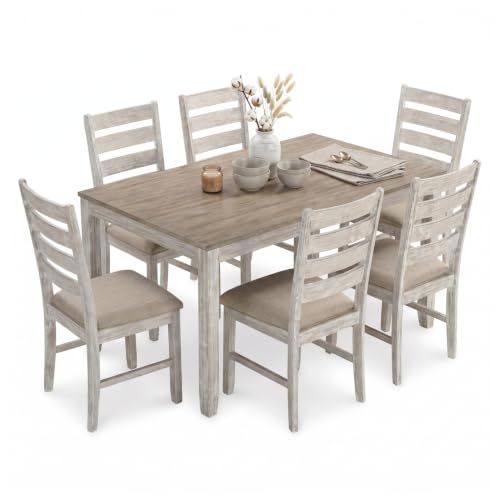
Signature Design by Ashley Skempton 7-Piece Dining Table Set for 6 | Solid Wood, Engineered Wood & Acacia Veneer Construction, 60-In Table, Cushioned Polyester Seating, Two-Tone Finish
Check price on Amazon
Garvee 71" Wood Dining Table for 2/4/6/8, Large Rectangular Kitchen Table | Anti-Collision Curved Corner Dinner Table with Recessed Footrest for Dining Room, Study & Home Office, Walnut Brown & Black
Check price on Amazon
T4TREAM 47" Fluted Round Dining Table for 4-6, Marble & Natural Oak | round dining table, engineered wood construction, reeded pedestal base, mid-century modern, seats 4
Check price on AmazonFrequently Asked Questions
What is the most elegant wood for a dining table?
Walnut and white oak are the two most widely regarded elegant wood species for dining tables. Walnut offers rich, flowing grain and deep color that suits formal rooms, while white oak delivers tight, refined grain with excellent durability for everyday use. Cherry is another classic choice for traditional interiors, developing a warmer patina over time.
Is solid wood better than veneer for an elegant dining table?
Solid wood is generally preferred for premium and luxury tables because it can be refinished, repaired, and ages with character. High-quality veneer over a stable engineered core can still produce an elegant table and is often more dimensionally stable in fluctuating humidity, but it offers less long-term refinishing flexibility.
How thick should an elegant wood dining tabletop be?
A top thickness between roughly 1 and 1.5 inches (about 2.5 to 3.8 cm) is typical for elegant solid wood dining tables. Thinner tops can read as insubstantial, while thicker tops can look heavy unless the base is proportioned to match. Trestle and pedestal bases often support a slightly thicker top visually.
What finish is best for a wood dining table used daily?
A satin polyurethane or lacquer finish offers the most practical daily protection against moisture, heat, and stains, making it a strong choice for households with children. Hand-rubbed oil finishes are more elegant in feel and easier to spot-repair, but require more frequent re-oiling and careful use with standing water.
How much space should I leave around an elegant wood dining table?
Allow at least 36 inches (about 90 cm) of clearance around the table for chair pull-out and walkway traffic. Plan for roughly 24 inches (about 60 cm) of table edge per seated diner, and leave at least 18 inches (about 45 cm) between the table edge and any wall when the chairs are pushed in.
Can a wood dining table be used outdoors?
Solid wood dining tables are best suited to indoor environments unless they are specifically constructed and finished for outdoor use. Teak and certain treated hardwoods can withstand covered outdoor settings, but standard indoor wood tables are vulnerable to moisture, UV exposure, and temperature swings. If you are considering outdoor dining, explore dedicated teak and metal outdoor dining tables or outdoor deck dining table options designed for the elements.