
Traditional Dark Wood Dining Table: A Timeless Centerpiece
Rich tones, heirloom craftsmanship, and enduring style. Discover everything you need to choose a traditional dark wood dining table that anchors your home for generations.
Explore the GuideWhy traditional dark wood? A traditional dark wood dining table brings warmth, gravitas, and a sense of heritage to any dining room. Deep mahogany, walnut, and stained oak tones absorb light softly, flatter candlelit dinners, and pair beautifully with classic upholstery, brass accents, and Persian-inspired rugs. This guide walks you through wood species, joinery, finishes, sizing, and long-term care so you can invest with confidence.
Recommended Traditional Dark Wood Dining Tables
⚠️ AFFILIATE DISCLOSURE: This website contains affiliate links. As an affiliate Associate, we earn from qualifying purchases. If you make a purchase through these links, we may receive a small commission at no additional cost to you. Read our full affiliate policy.

Merax 78.7" Dining Table with Framed Wood Top and Turned Legs, Walnut | Traditional Rectangular Dining Table, Solid Wood Farmhouse Dining Table, Walnut Fininsh Kitchen Table for Dining Room
Check price on Amazon
Garvee 71" Wood Dining Table for 2/4/6/8, Large Rectangular Kitchen Table | Anti-Collision Curved Corner Dinner Table with Recessed Footrest for Dining Room, Study & Home Office, Walnut Brown & Black
Check price on Amazon
Signature Design by Ashley Basinger Dining Room Table, Seats 8, Brown | Hardwood Solids, Mango Wood Veneer and MDF Substrate, Chunky Turned Legs, Rustic Farmhouse Design
Check price on Amazon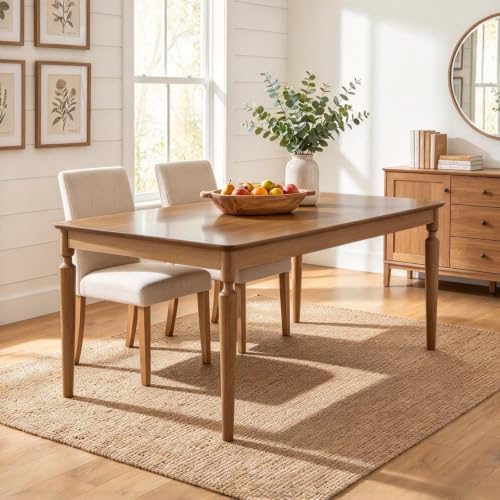
chairus 59" Solid Wood Dining Table for 4-6, Farmhouse Dinner Table, Walnut | 59 inch Solid wood, turned legs, walnut finish, 59" dining table for 4-6, farmhouse kitchen table, dining room & family meals
Check price on Amazon
East West Furniture Jackson 36" Traditional Wood Dining Table in Mahogany
Check price on Amazon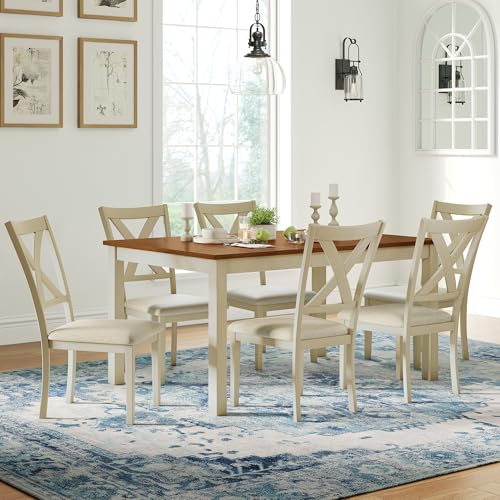
AMERLIFE 7-Piece Farmhouse Solid Wood Dining Table Set for 6, Rustic Cream | 60" Solid Wood Table, 6 Upholstered Chairs, Space-Saving Design, Rustic Dining Set, Dining Room and Kitchen
Check price on Amazon
Steve Silver Company Tournament Round Dining Table, Hardwood Solids, Traditional Style, Pedestal Base w/Fluted Design, 48" D x 48" W x 30" H, Cherry Brown
Check price on Amazon
International Concepts 42" Round Dual Drop Leaf Pedestal Table
Check price on AmazonWhat Defines a Traditional Dark Wood Dining Table
A traditional dark wood dining table is more than a furniture piece; it is an architectural anchor for the dining room. The style is characterized by rich, low-luminosity wood tones, generous proportions, and detailing that references centuries of furniture-making heritage. Understanding these defining traits helps you separate genuine heirloom quality from pieces that merely mimic the look.
First, the tone. Traditional dark wood tables draw from a palette that includes deep mahogany, chocolate walnut, espresso-stained oak, and near-black cherry. These tones are intentionally warmer than painted black surfaces and reveal grain and patina over time. If you are considering a darker statement piece, our guide to a luxury black dining table explores how near-black finishes compare to true dark wood tones.
Second, the silhouette. Traditional tables favor substantial aprons, turned or carved legs, pedestal bases, and sometimes trestle constructions. Decorative elements such as reeded edges, scalloped aprons, and brass or bronze hardware are common. Third, proportion. Traditional dining tables typically seat six to twelve and are built with a sense of permanence; they feel grounded and heavy in the best possible way.
Finally, the intent. Traditional design is not trend-driven; it is generational. Many families choose a dark wood table precisely because it can be refinished and passed down. That long-term mindset shapes everything from wood selection to joinery, which we cover in the sections below.
Best Wood Species for Dark Traditional Tables
The species of wood determines not only the color but also the grain character, hardness, and long-term stability of the table. Here are the most common choices for traditional dark wood dining tables.
Mahogany
Mahogany is the archetypal traditional dark wood. Its deep reddish-brown tone, fine interlocking grain, and excellent workability made it the standard for fine dining furniture from the 18th century onward. Genuine mahogany (Swietenia species) is a premium-tier material; many modern pieces use African mahogany or sapele as close alternatives. Mahogany takes a hand-rubbed finish beautifully and develops a rich patina over decades.
Walnut
Walnut offers a cooler, chocolate-to-purple-brown tone with dramatic grain and occasional figure such as crotch or burl. It is dense, stable, and highly prized for traditional and transitional interiors alike. A wood walnut dining table is a classic choice when you want dark warmth without the red undertones of mahogany. Black walnut is the most common traditional variety in North America.
Cherry
Cherry starts as a medium reddish-brown and darkens significantly with exposure to light, eventually reaching a deep mahogany-like tone. This photosensitivity is a hallmark of traditional cherry furniture. Cherry is slightly softer than walnut or oak, so it benefits from protective table pads.
Stained Oak
Oak is extremely durable and widely available, with prominent ray-fleck grain on quarter-sawn boards. While natural oak is light, a dark espresso or Jacobean stain transforms it into a convincing traditional dark wood. Stained oak is often the most forgiving option in the entry-level to mid-range tier and can be refinished if the stain fades. For more on oak options, see our guide to an European oak dining table.
Elm and Ash
Elm and ash can be stained to rich dark tones and are common in country-style traditional tables. They offer bold grain and excellent value within the mid-tier. Explore an elm wood dining table if you want character-rich grain at a competitive tier.
Species Comparison at a Glance
| Species | Tone | Durability | Best For |
|---|---|---|---|
| Mahogany | Deep reddish-brown | High | Formal heirloom dining rooms |
| Walnut | Chocolate brown | High | Traditional and transitional spaces |
| Cherry | Warm reddish-brown that darkens | Medium-High | Colonial and American traditional |
| Stained Oak | Espresso to near-black | Very High | High-traffic family dining rooms |
| Elm / Ash | Dark-stained, bold grain | Medium | Country and rustic traditional looks |
Finishes and Surface Treatments
The finish is what transforms raw wood into a usable, enduring dining surface. Traditional dark wood tables typically use one of four finish families, each with distinct advantages.
Hand-Rubbed Oil and Wax
This is the most traditional finish for mahogany and walnut. Oil penetrates the grain and wax adds a soft sheen. It feels natural to the touch and can be spot-repaired by any owner. The trade-off is that it requires periodic re-waxing and is less resistant to water rings. Oil finishes are common in premium-tier and custom pieces.
Lacquer
Lacquer forms a hard film on the surface and can be built up to a satin or high-gloss sheen. Traditional lacquered tables often feature a subtle sheen that highlights grain without a plastic look. Lacquer offers good protection but can be vulnerable to heat and alcohol; coasters and trivets are essential. Our guide to a lacquered dining table covers this finish in depth.
Conversion Varnish and Catalyzed Finishes
These are the most durable film finishes used in production furniture. They resist moisture, heat, and wear far better than traditional lacquer and are common in mid-range to premium tiers. A satin conversion varnish is an excellent choice for families with children.
Distressed and Antiqued Finishes
Traditional dark wood tables sometimes feature deliberate distressing, rub-through edges, or antiqued glazes that simulate decades of use. This hides minor scratches and suits country and French traditional styles. Our distressed dining table guide explains how these finishes are produced.
Matte vs Glossy
Matte finishes read as more contemporary-traditional and hide dust and smudges. Glossy finishes are more formal and reflect light, making dark rooms feel brighter but showing fingerprints. For a balanced approach, see our comparison of matte and glossy finishes.
Shapes, Sizes and Seating Capacity
Traditional dining rooms typically favor rectangular tables, but round and oval shapes are equally valid in classic settings. Choosing the right size is the single most important decision after wood species.
Rectangular Tables
Rectangular is the default for formal traditional dining. A standard six-seater measures roughly 72 inches long; an eight-seater runs about 84 to 96 inches; a ten-seater typically starts around 96 inches. For scale reference, our guide to a 72 inch wood dining table explains how that length behaves in a typical dining room.
Round Tables
Round tables encourage conversation and suit square rooms. A 60-inch round comfortably seats six; a 72-inch round seats eight. Traditional round tables often feature pedestal bases, which free up legroom. See our round pedestal dining table guide for how pedestal geometry affects seating.
Oval Tables
Oval tables soften a rectangular room and are strongly associated with traditional and French country styles. An oval gives you the length of a rectangle with the flow of a round. Explore a wooden oval dining table set for a coordinated traditional look.
Extendable Options
Traditional dark wood extendable tables use leaves or butterfly mechanisms to go from everyday to formal. Our wooden extendable dining table guide covers how extension systems work and what to check before buying.
Seating Capacity Quick Reference
| Shape | Typical Size | Comfortable Seating | Best For |
|---|---|---|---|
| Rectangular | 72 in length | 6 | Formal dining rooms |
| Rectangular | 84–96 in length | 8 | Large families, holidays |
| Round | 60 in diameter | 6 | Square rooms, conversation |
| Round | 72 in diameter | 8 | Grand traditional dining rooms |
| Oval | 84–96 in length | 8 | Long narrow rooms |
Always leave at least 36 inches of clearance between the table edge and walls or other furniture, and 42 to 48 inches where a walkway passes behind seating. Our dining table space planning guide provides detailed clearance rules.
Joinery and Build Quality Signals
A traditional dark wood table should outlive its first owner. Build quality determines whether it will. Here is what to inspect, whether in person or through product documentation.
Frame and Apron Construction
Look for mortise-and-tenon joinery at the apron-to-leg connection. This is the gold standard for traditional furniture and far outlasts doweled or screwed joints. Reinforced corner blocks add rigidity. A heavy, well-braced apron reduces wobble and supports leaves in extendable models.
Legs and Pedestals
Solid wood legs are preferable to veneered hollow legs, though high-quality veneer over a stable core is acceptable in mid-range pieces. Pedestal tables should have a wide, weighted base and steel reinforcement plates where the column meets the top. Our dining table pedestal guide explains the different pedestal styles.
Tabletop Construction
Solid wood tops are the traditional choice but require proper breadboard ends or floating construction to allow seasonal movement. Veneered tops over plywood or MDF are stable and can be beautifully finished; high-grade veneer is common in premium traditional reproductions. Inspect edges for consistent grain wrapping and look for a sealed underside to prevent moisture imbalance.
Hardware and Mechanisms
On extendable tables, the leaf mechanism should glide smoothly and lock firmly. Brass or bronze hardware is traditional; steel is acceptable if well finished. Avoid plastic glides on premium-tier pieces. For a broader framework, see our dining table frame guide.
Weight and Stability
A traditional dark wood dining table should feel substantial. A table that shifts when you lean on one corner will only worsen over time. Push-test the corners and check for level feet with adjustable glides.
Styling a Dark Wood Table in a Traditional Room
Dark wood is visually heavy, so styling should balance rather than compete. The goal is layered warmth: let the table anchor the room while textiles, lighting, and decor soften its presence.
Chairs
Traditional dining chairs often pair dark wood frames with upholstered seats and backs in linen, leather, or velvet. A popular approach is a mix of host chairs and side chairs, or a bench on one side for a relaxed traditional feel. Our dining chair selection guide and dining bench seating guide cover pairing options.
Rugs and Flooring
A patterned oriental or vintage-style rug adds color and texture that lifts a dark table. Choose a rug large enough to extend 24 inches beyond the table edge on all sides so chairs stay on the rug when pulled out. Our dining table rug placement guide explains the measurements.
Lighting
A chandelier or pendant centered over the table is the traditional choice. Warm 2700K bulbs flatter dark wood and make the grain glow. Hang the fixture so the bottom sits 30 to 36 inches above the tabletop. See our dining table lighting placement guide for details.
Table Decor
Keep centerpieces low so guests can see across the table. A runner in a warm neutral, a pair of candlesticks, and a low bowl of greenery is a classic combination. Our dining table centerpiece guide and dining table runner guide offer seasonal variations.
Wall and Room Palette
Traditional dark wood pairs beautifully with warm whites, sage greens, deep blues, and muted golds. If the room feels too dark, use lighter wall colors and mirrors to bounce light. Our dining table color harmony guide walks through palette options.
Care, Maintenance and Longevity
Dark wood shows dust, water rings, and heat marks more readily than light wood. A consistent care routine keeps the finish intact and the color deep.
Daily Care
Dust with a soft microfiber cloth. Wipe spills immediately with a barely damp cloth and dry with a clean towel. Avoid all-purpose spray cleaners, which can dull film finishes and strip wax. Our dining table routine upkeep guide provides a weekly and monthly schedule.
Protection
Use coasters, trivets, and placemats. Felt pads under decorative objects prevent scratches. A fitted table pad protects the surface during holidays and craft sessions; our dining table pad protection guide explains the options.
Stain and Mark Removal
Water rings, heat marks, and scratches are usually repairable. Our water ring removal guide, heat mark repair guide, and scratch touch-up guide cover the most common issues step by step.
Seasonal Considerations
Wood expands and contracts with humidity. Keep indoor relative humidity between 40 and 60 percent and avoid placing the table near heating vents or direct sunlight. Our dining table humidity care guide and sunlight fade prevention guide explain how to protect dark finishes.
Long-Term Refinishing
Oil-finished tables can be re-oiled and re-waxed indefinitely. Film-finished tables may eventually need professional refinishing. A well-maintained traditional dark wood table can serve for generations and become an heirloom.
Buying Checklist and Common Mistakes
Use this checklist to evaluate any traditional dark wood dining table before you commit. It is organized around the questions that matter most at the research stage.
Pre-Purchase Checklist
- Measure the room and doorway. Confirm the table fits with 36-inch clearance and that it can be delivered through your door and stairwell.
- Confirm the wood species and construction. Solid wood, veneer over stable core, or a mix? Ask for the species name, not just the color.
- Verify the finish type. Oil, lacquer, conversion varnish, or distressed? Match the finish to your household's durability needs.
- Inspect joinery. Look for mortise-and-tenon construction, reinforced corners, and solid legs.
- Check extendable mechanisms. If applicable, confirm the leaf system locks securely and stores conveniently.
- Review the seating capacity. Count comfortable seats, not just maximum seats.
- Plan chair pairing. Ensure chair seat height works with the table apron and top thickness.
- Confirm care instructions and warranty. A long-term investment deserves documented care guidance.
Common Mistakes to Avoid
The most common mistake is underestimating visual weight. A very dark, very large table in a small room can feel oppressive; balance it with lighter walls, rugs, and upholstery. The second is ignoring clearance; a table that fits the room but blocks walkways will frustrate daily use. The third is choosing a finish that does not match your lifestyle; a delicate oil finish in a household with young children will require constant attention. Finally, do not overlook delivery logistics; traditional dark wood tables are heavy and often require two people and careful stairwell planning.
If you are still narrowing your options, our good quality dining table guide and dining table buying mistakes article provide additional frameworks. For a broader look at premium traditional pieces, see our premium dining table overview.
Frequently Asked Questions
Is a traditional dark wood dining table suitable for a small dining room?
Yes, with care. Choose a round or oval shape and a moderate size, and balance the dark tone with lighter walls, a patterned rug, and upholstered chairs. Avoid very heavy pedestals in tight spaces and confirm at least 36 inches of clearance on all sides.
Which wood is best for a traditional dark wood dining table?
Mahogany and walnut are the most traditional choices for their color, grain, and workability. Stained oak is the most durable option for high-traffic households. Cherry is ideal if you love the way wood darkens with age.
How do I prevent water rings and heat marks on dark wood?
Use coasters and trivets consistently, and keep a fitted table pad for heavy-use occasions. Wipe spills immediately. If marks appear, they are usually repairable with targeted techniques; consult our water ring and heat mark guides.
Should I choose solid wood or veneer?
Solid wood is the traditional and most refinishable option. High-quality veneer over a stable core is a legitimate choice in the mid-range and can be beautifully finished. The key is the quality of construction, not the label alone.
Can a dark wood table work in a modern room?
Absolutely. A dark traditional table can be a striking anchor in a modern room when paired with minimalist chairs, a neutral rug, and contemporary lighting. The contrast between traditional wood and modern surroundings is a popular design choice.
How often should I re-oil or re-wax the table?
For oil-and-wax finishes, re-wax every two to three months and re-oil annually, or when the surface starts to look dry. Film finishes such as lacquer and conversion varnish require only cleaning and occasional polishing.
Choose a Table You Will Pass Down
A traditional dark wood dining table is one of the few furniture purchases that can genuinely become an heirloom. Focus on species, joinery, finish, and fit, and you will have a centerpiece that anchors family dinners, holidays, and everyday moments for decades. Use the recommended picks above to compare current options, and revisit the checklist before you commit.
For more inspiration, explore our guides to an elegant wood dining table and a solid wood dining table in walnut to see how different wood selections change the character of a traditional dining room.