
Dining Table Runner Guide: Sizes, Fabrics & Styling Tips
Everything you need to know before choosing a dining table runner — from length and width rules to fabric selection, color pairing, and layout ideas for rectangular, round, and oval tables.
In This Guide
What Is a Dining Table Runner?
A dining table runner is a long, narrow strip of fabric or woven material placed down the center of a dining table. It is one of the simplest and most versatile pieces of dining table decor — it adds color, texture, and a sense of occasion without covering the entire tabletop. Runners are used on rectangular, oval, square, and round tables, and they pair naturally with placemats, centerpieces, and candles.
Unlike a full tablecloth, a runner leaves the edges of the table exposed, which allows the natural beauty of the table surface to remain visible. This makes runners especially popular on tables with distinctive finishes — a solid oak table, a walnut table, or a marble table all benefit from a runner that frames rather than hides the surface. If you are still exploring the broader category, our dining table setup and accessories hub provides the full context for how runners fit into a complete tablescape.
Runners serve both practical and decorative purposes. Practically, they create a defined center zone that protects the tabletop from hot dishes and centerpiece scratches. Decoratively, they act as the visual anchor for a tablescape, tying together placemats, centerpieces, and dinnerware into a cohesive look.
Runner Size & Length Guide
Getting the size right is the single most important decision when buying a runner. A runner that is too short looks awkward, while one that is too long puddles at the ends or drags on the floor. The general rule is to choose a runner that extends 6 to 12 inches (about 15 to 30 cm) beyond each end of the table for a standard, balanced look.
Length Recommendations by Table Size
| Table Seating | Typical Table Length | Recommended Runner Length | Best For |
|---|---|---|---|
| 2 to 4 seats | 36–48 inches | 54–72 inches | Compact dining nooks |
| 4 to 6 seats | 48–60 inches | 72–84 inches | Everyday family dining |
| 6 to 8 seats | 60–84 inches | 84–96 inches | Standard dining rooms |
| 8 to 10 seats | 84–108 inches | 96–120 inches | Formal dining rooms |
| 10+ seats | 108 inches and up | 120 inches and up | Grand and event dining |
Width Recommendations
Standard runners are 13 to 16 inches wide (about 33 to 41 cm). A 14-inch runner is the most common choice for everyday dining because it leaves enough room on either side for place settings. Wider runners of 18 to 20 inches work well on large tables or when you want a more dramatic center strip, but they can crowd place settings on smaller tables.
If your table is unusually wide or narrow, measure the distance between your place settings before buying. The runner should sit comfortably between the placemats without overlapping them.
Fabric & Material Options
Runner materials range from casual natural fibers to luxurious formal fabrics. The right choice depends on how often you use the table, whether you have young children or pets, and the style of your dining room.
Natural Fiber Runners
Essential tierCotton and linen runners are the workhorses of everyday dining. They are breathable, easy to wash, and develop a relaxed texture over time. Linen wrinkles naturally, which suits casual and rustic styles; cotton blends hold their shape a little better. These runners are the go-to choice for families who use the table daily. For a more textured, rustic look, jute and woven seagrass runners add warmth to farmhouse and coastal settings, though they are harder to clean and better suited to covered tables or low-traffic use.
Blended & Synthetic Runners
Mid-tierPolyester and polyester-cotton blends resist stains and wrinkles and hold vivid prints well. They are a practical option for households that want a polished look without the upkeep of natural fibers. Many printed and patterned runners — florals, geometrics, and seasonal designs — use these blends because they reproduce color reliably. If you entertain often, a mid-tier synthetic blend offers a good balance of durability and easy care.
Premium Decorative Fabrics
High-end tierSilk, velvet, brocade, and embroidered runners are reserved for formal dining and special occasions. Velvet adds depth and warmth in cooler months, while silk and brocade bring a luminous, celebratory quality to holiday tablescapes. These fabrics are typically dry-clean only and should be stored flat or rolled to avoid creasing. Treat them as a long-term investment for the moments when the table is dressed to impress.
| Material | Tier | Durability | Care Level | Best For |
|---|---|---|---|---|
| Cotton | Essential tier | Good | Machine washable | Everyday family dining |
| Linen | Essential tier | Good | Machine washable, wrinkles | Casual and rustic styles |
| Jute / Seagrass | Essential tier | Moderate | Spot clean only | Rustic and coastal decor |
| Polyester blend | Mid-tier | High | Machine washable | Busy households, prints |
| Velvet | High-end tier | Moderate | Dry clean recommended | Formal and holiday dining |
| Silk / Brocade | High-end tier | Delicate | Dry clean only | Formal occasions |
If your table has a delicate surface — for example, a marble dining table or a glass dining table — choose a runner with a soft backing or add a protective pad underneath to prevent scratches. Our dining table pad protection guide explains how to layer protection without ruining the look.
Color & Pattern Pairing
A runner is one of the easiest ways to shift the mood of a dining room without repainting or replacing furniture. Think of it as a seasonal accent that can be swapped in minutes.
Matching the Runner to Your Table Material
- Wood tables: Cream, oatmeal, sage, and rust runners complement warm wood tones. A solid oak table pairs beautifully with natural linen, while a darker walnut dining table benefits from lighter, high-contrast runners.
- Stone tables: On marble and granite, choose runners in soft neutrals or muted blues and greens to avoid competing with the veining. Explore granite dining table surfaces for more pairing ideas.
- Metal and industrial tables: Bold stripes, charcoal, and deep jewel tones hold their own against metal frames. See the metal dining table guide for complementary styling.
Patterns and Seasonal Rotation
Solid runners are the most versatile foundation and can be dressed up with centerpieces and candles. Striped runners add rhythm and work well on long rectangular tables. Florals and botanical prints suit spring and summer tablescapes, while plaids, damask, and deep-toned solids carry autumn and winter. Keeping two or three runners in rotation — one neutral, one patterned, one seasonal — gives you flexibility without clutter.
For coordinated table styling, pair your runner with complementary dining table placemats, a centerpiece, and candle arrangements that share a color family rather than matching exactly.
Runners for Different Table Shapes
Rectangular Tables
Rectangular tables are the classic runner canvas. A single runner down the center, oriented along the length, is the standard layout. On very long tables, consider two shorter runners placed end to end with a centerpiece bridging the gap, or a full-length runner for a continuous, formal line.
Round Tables
On a round dining table, runners are usually placed as a single strip across the center, or as two crossing strips forming a plus shape for a more layered look. Circular and octagonal runners also work well as a decorative base beneath a centerpiece. Keep the runner width modest so it does not crowd the curved edge.
Oval Tables
An oval dining table accepts a standard rectangular runner along its long axis. Because the table narrows at the ends, choose a runner that stops before the curve tightens, or allow a slightly longer overhang for a graceful drape.
Square Tables
On a square dining table, a single runner down the center works, but a crosswise runner or a square center mat can look more balanced. For small square tables, a short runner or a set of two crossing strips keeps the proportions right.
Extendable Tables
If you own an extendable dining table, your runner length needs to change when the table is extended. The practical solution is to buy for the extended length and fold or gather the excess when the table is compact — or to keep two runners and layer them when the table is at full size.
Layering with Placemats & Tablecloths
Runners rarely live alone. The most polished tablescapes use a runner as the center layer between the bare table and the place settings.
- Runner over a tablecloth: A runner adds contrast and a defined center line on top of a full cloth — a classic formal layering technique.
- Runner with placemats: Placemats sit at each seat, while the runner runs between them. Keep the runner narrower than the gap between placemats so the setting stays uncluttered. Our placemat guide covers coordinating shapes and sizes.
- Runner under a centerpiece: A runner visually anchors the centerpiece and protects the table beneath vases and candle holders.
- Runner as a base for a tablescape: For holidays and events, layer a runner with a tablecloth, charger plates, and seasonal decor. The dining table tablecloth guide explains how to combine the two without visual conflict.
Spacing matters as much as layering. Leave enough room between the runner and each place setting for diners to rest their hands and set down glasses. If your dining room is tight, review the walkway clearance guide before adding bulky centerpieces on top of the runner.
Care & Maintenance Tips
Runners take more wear than they appear to — they sit under hot dishes, candle wax, and spilled drinks. A few habits keep them looking fresh:
- Wash according to fabric: Cotton and polyester blends are usually machine washable on a gentle cycle; linen benefits from line drying; silk and velvet should be dry cleaned.
- Treat stains promptly: Blot spills rather than rubbing, and follow the fabric care label. Our stain removal guide covers common food and drink stains.
- Rotate regularly: Alternate between two or three runners so each one has time to recover and you avoid uneven fading.
- Store flat or rolled: Folding along the same crease for months creates permanent lines. Roll formal runners around a cardboard tube.
- Protect from heat: Never place hot serving dishes directly on a decorative runner; use trivets. The heat mark repair guide explains what to do if a mark appears on the table beneath.
- Mind seasonal humidity: Natural fiber runners can absorb moisture in humid months. Store them dry and air them out seasonally — see the humidity care guide.
For a complete routine that covers the table and its textiles, see the dining table routine upkeep guide and the broader care and maintenance hub.
Quick Buying Checklist
Before you add a runner to your cart, run through these points:
- Measure the table length and add 12 to 24 inches total for overhang.
- Check the width against the space between your placemats — 13 to 16 inches is the everyday standard.
- Match the fabric to your lifestyle — machine washable for daily use, dry clean for formal occasions.
- Consider the table surface — soft backing for marble, glass, and polished wood.
- Choose a color family that complements your table material and dining room palette.
- Plan the layer — will the runner sit alone, over a cloth, or with placemats?
- Decide on rotation — one neutral runner plus one seasonal option covers most of the year.
If you are assembling a full tablescape from scratch, start with our first dining table checklist and the shopping and reviews hub for guidance on what to buy first.
Recommended Dining Table Runners
⚠️ AFFILIATE DISCLOSURE: This website contains affiliate links. As an affiliate Associate, we earn from qualifying purchases. If you make a purchase through these links, we may receive a small commission at no additional cost to you. Read our full affiliate policy.

Crochet Table Runners & Placemats: A Beginner-Friendly Guide to Beautiful Stitch Patterns, Modern Designs, Seasonal Table Décor, and Handmade Projects for Every Occasion
Check price on Amazon
Wolkemer Farmhouse Black Table Runner Dining Table Runners 48 Inches Long | Coffee Table Runner 12X48 Inch, Black Table Runners, Runner for Dresser Living Room Bedroom Holiday Party Banquet Table
Check price on Amazon
Rhyslinm 100% Natural Cotton Linen Table Runner, 14x72in Natural Linen | Pre-Washed Medium Weight Linen, Organic Slubby Texture, Mitered Corner, Soft Breathable, Modern Farmhouse Kitchen Table Decor
Check price on Amazon
Rhyslinm 100% Natural Cotton Linen Table Runner, 14x90in Natural Linen | Pre-Washed Medium Weight Linen, Organic Slubby Texture, Mitered Corner, Soft Breathable, Modern Farmhouse Kitchen Table Decor
Check price on Amazon
FAVE Woven Vinyl Table Runner 90x12 Inch Black with Gold Threads | Wipeable Heat-Resistant Table Mat for Dining Table, Wedding, Banquets, Party, Restaurant Decor (Black,12"x90")
Check price on Amazon
Wolkemer Farmhouse Navy Blue Table Runner Dining Table Runners 48 Inches | Coffee Table Runner 12X48 Inch, Navy Blue Table Runners, Runner for Dresser Living Room Bedroom Holiday Party Banquet Table
Check price on Amazon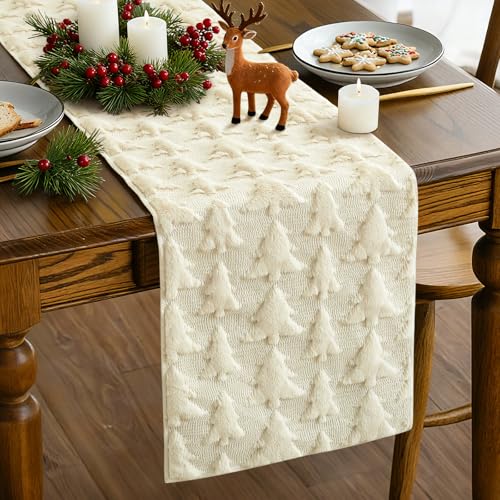
Artscope Christmas Tree Table Runner 13x72 Inch-Beige | Winter Holiday Kitchen Dining Table Decoration for Christmas Home Party Decor,Soft Plush Faux Fur Jacquard Xmas Table Runner
Check price on Amazon
Softalker Christmas Checkered Tartan Table Runner, Red, 13 x 70 Inch | Buffalo Plaid Xmas Stain Resistant Washable Winter Table Decoration for Dining Parties Holiday Indoor Outdoor Decor
Check price on AmazonReady to Style Your Dining Table?
Pair your new runner with the right table, chairs, and accessories. Explore our full library of dining table guides to complete the look.
Explore Setup & AccessoriesFrequently Asked Questions
What is the standard length of a dining table runner?
A standard dining table runner is typically 72 inches long, which fits most tables seating six to eight people. However, the ideal length depends on your table size and how much overhang you prefer at each end.
Should a table runner go all the way across the table?
Most runners are designed to span the length of the table with a moderate overhang of 6 to 12 inches at each end. Full-length runners that reach the floor are a more dramatic, formal choice rather than the everyday standard.
What fabric is best for a dining table runner?
Linen and cotton blends are popular for everyday use because they are durable and easy to clean. For formal settings, silk, velvet, or brocade runners add visual richness. For casual or outdoor dining, polyester and jute offer practical durability.
Can I use a table runner on a round dining table?
Yes. On round tables, runners are often placed as a single strip across the center, or as two crossing strips forming a plus shape. Round table runners can also be circular or octagonal pieces that sit in the center as a decorative base.
How do I keep a runner from sliding on a smooth table?
Use a runner with a non-slip backing, or place a thin non-slip gripper pad underneath. On polished surfaces like glass or lacquered wood, a rubberized shelf liner cut to size works well and protects the surface at the same time.
Related Dining Table Guides
Continue building your dining space with these related guides:
- Dining Table Placemat Guide — coordinate placemats with your runner.
- Dining Table Centerpiece Guide — anchor the center of your runner.
- Dining Table Candle Styling Guide — safe candle placement and styling.
- Dining Table Tablecloth Guide — layer a runner over a full cloth.
- Dining Table Space Planning Guide — plan the table and its surrounding clearance.
- Dining Table Types — compare table shapes and styles before styling.
- Materials & Finishes Hub — understand the surface you are decorating.