
Drop Leaf Dining Table Guide
Everything you need to know about drop leaf dining tables: how the folding mechanism works, which materials hold up best, how to plan a compact dining space, and how to choose a table that adapts to your home.
On This Page
What Is a Drop Leaf Dining Table?
A drop leaf dining table is a table with one or two hinged sections, called leaves, that fold down along the sides. When the leaves are lowered, the table shrinks to a narrow console-like footprint. When they are raised, the table expands into a full dining surface. This dual personality is why drop leaf tables have remained popular for generations in apartments, small kitchens, and compact dining rooms.
Unlike an extendable dining table that adds a separate leaf from storage, a drop leaf table keeps its extension permanently attached through hinges. That means no storing a leaf in a closet and no assembly when guests arrive. You simply swing the leaf up, and the table is ready.
The concept overlaps with folding dining tables, but there is an important distinction: a folding table typically collapses entirely for storage, while a drop leaf table usually remains in place as a piece of furniture. It is a space-saving solution rather than a portable one.
How the Drop Leaf Mechanism Works
The folding action depends on the support system beneath the leaf. There are three common designs, and understanding them helps you judge build quality before you buy.
Gateleg Support
Gateleg tables use a swing-out leg assembly that hinges outward to support each leaf. This is the most stable design and the one most often recommended for daily dining. The gatelegs lock into place when fully extended and fold flat against the apron when the leaf is down. Look for solid hardwood gatelegs with metal hinges rather than thin plywood arms.
Sliding or Pull-Out Support
Some tables use a support arm that slides out from under the tabletop to hold the leaf level. These are compact and easy to operate, but the support arm carries the full load of the leaf. Mid-range and premium models reinforce this arm with metal brackets for long-term stability.
Hinged Leg Support
Entry-level designs sometimes use a leg that folds down directly beneath the leaf. These are the simplest mechanism and the least stable under heavy weight. They suit light use, occasional dining, and secondary spaces, but they are not the best choice for a family that eats at the table every day.
Who Should Choose a Drop Leaf Table?
A drop leaf table is not the right answer for every home, but it excels in specific situations. Consider it if any of the following describes your space or lifestyle:
- Small dining rooms and kitchen nooks. With the leaves down, the table frees up walking space. When guests arrive, it expands into a full dining surface.
- Apartments and studios. A drop leaf table can double as a desk or console during the day and a dining table in the evening.
- Homes with mixed seating needs. A two-person household that hosts four to six people occasionally gets the best of both worlds.
- Narrow or awkward layouts. If your dining area has a tight walkway or a doorway nearby, the slim profile of a folded drop leaf table helps maintain clear circulation.
- Multi-purpose rooms. In an open-plan living space, a drop leaf table can sit against a wall and only claim floor space when it is actually needed.
On the other hand, if you regularly seat six or more people and never fold the table down, a fixed rectangular dining table or a dedicated extendable table may offer more stability and a cleaner look. Drop leaf tables are a compromise between compactness and capacity, and that compromise is exactly what makes them valuable in the right setting.
Types of Drop Leaf Tables
Drop leaf tables come in several configurations, each suited to a different room shape and seating arrangement.
Single-Leaf Drop Leaf Tables
One hinged leaf on a single side. These work well against a wall, where the fixed side sits flush and the leaf opens into the room. A single-leaf table is the most compact option and is often used as a kitchen table or a small desk that converts for meals.
Double-Leaf Drop Leaf Tables
Leaves on both sides, often with a central fixed section. When both leaves are up, the table reaches its full seating capacity. Double-leaf models are the most versatile and the most common choice for a primary dining table in a small home.
Drop Leaf Console and Sofa Tables
Narrow tables designed to sit behind a sofa or against a hallway wall, with leaves that open to create a dining or workspace. These blur the line between console table and dining table, which makes them useful in studios and open-plan layouts.
Round and Square Drop Leaf Tables
Drop leaf designs are not limited to rectangles. A round dining table with folding leaves offers a sociable shape when open and a compact profile when closed. A square dining table with drop leaves works well in corner placements. Shape affects both the seating layout and the way the table fits into a room, so match it to your floor plan.
Materials & Construction
The hinge mechanism takes the stress in a drop leaf table, but the material of the top and frame determines how well the table ages. Here is how the common options compare.
| Material | Tier | Best For | Notes |
|---|---|---|---|
| Solid oak | premium | Daily family dining | Dense grain, holds hinges well, ages gracefully. See the solid oak dining table guide. |
| Walnut | premium | Design-led interiors | Rich tone, stable, slightly softer than oak. Covered in the walnut dining table guide. |
| Pine | entry-level | Occasional use, casual spaces | Lighter and softer; choose reinforced hinges. See the pine dining table guide. |
| Mango wood | mid-range | Textured, rustic looks | Durable with striking grain. Details in the mango wood dining table guide. |
| Engineered wood with veneer | entry-level | Light use, secondary spaces | Consistent finish; check that hinges are anchored into solid blocking, not just the veneer. |
Beyond the top, inspect the frame and apron. A solid hardwood frame with metal hinges and reinforced corner blocks will outlast a frame built from particleboard. If you are comparing surface treatments, the materials and finishes hub explains how matte, lacquered, and oiled finishes behave over time. For a low-sheen natural look, an oiled finish is easy to refresh; for a harder, more protective surface, a lacquered finish is worth considering.
Sizing & Seating Capacity
Drop leaf tables are measured in two states: folded and extended. Always check both dimensions, because the folded width determines whether the table fits your wall or nook, while the extended dimensions determine how many people can sit comfortably.
As a general guide:
- Both leaves down: typically seats two, or functions as a console or desk.
- One leaf up: usually seats three to four diners.
- Both leaves up: most models seat four to six, with some larger designs reaching six comfortably.
Allow roughly 24 inches of table width per seated diner and at least 12 inches of clear space beyond the table edge for a chair to pull out. If you are planning a specific headcount, the 4-seater dining table guide and 6-seater dining table guide break down the dimensions that work in practice. For a broader reference, the dining table size chart maps common table sizes to seating capacity.
Space Planning & Placement
Placement matters more with a drop leaf table than with a fixed table, because the folding action needs room to operate. Follow these principles:
- Leave clearance for the leaf swing. The leaf needs open floor space to fold down. Avoid placing the table so close to a wall or cabinet that the leaf cannot fully lower.
- Plan the walkway first. The walkway clearance guide explains the minimum path width you should preserve around a dining table. In tight rooms, the folded position is your walkway.
- Use lighting to define the zone. A pendant or chandelier centered over the extended table position anchors the dining area even when the table is folded. The lighting placement guide covers spacing and height.
- Consider narrow rooms carefully. In a narrow dining room, a single-leaf table against the wall often works better than a double-leaf model. The narrow dining room layout guide walks through the options.
- Think about traffic flow. If the table sits on a path between kitchen and living room, the folded position should keep that route clear. The flow and traffic planning guide explains how to test this before you commit.
For a full room-by-room method, the dining table space planning guide covers measuring, layout, and furniture placement in detail.
What to Check Before Buying
Once you know the size and material you want, use this checklist to separate a well-built drop leaf table from a fragile one.
- Hinge quality. Metal hinges with a smooth action and a locking mechanism are the baseline. Avoid hinges that feel loose or grind when operated.
- Support design. Gateleg support is the most stable. Sliding support arms are fine when reinforced. Hinged legs directly under the leaf are best reserved for light use.
- Weight rating. The extended leaf should feel solid when you press down on its outer edge. A slight flex is normal; noticeable sag is not.
- Frame and apron construction. Look for solid wood corner blocks, glued and screwed joints, and hinges anchored into solid material rather than veneer alone.
- Edge profile and finish. Rounded edges are safer in family homes. The edge profile guide explains the options; the finish should be smooth and evenly applied, with no drips around the hinge area.
- Seating compatibility. Confirm that your chairs fit under the apron when the leaves are up. The chair height guide helps you match seat height to table height.
- Assembly and moving. Some drop leaf tables ship partly assembled. If you plan to move it between rooms, check the weight and whether the leaves lock for transport. The moving safely guide has practical tips.
If this is your first dining table purchase, the first dining table checklist and the common buying mistakes guide are useful companions to this page.
Recommended Drop Leaf Dining Tables
⚠️ AFFILIATE DISCLOSURE: This website contains affiliate links. As an affiliate Associate, we earn from qualifying purchases. If you make a purchase through these links, we may receive a small commission at no additional cost to you. Read our full affiliate policy.

POWERTEC Metal Drop Leaf Table Supports 4PK, Sliding Hardware for Folding Kitchen and Dining Tables, RV Bracket (71426-P2V)
Check price on Amazon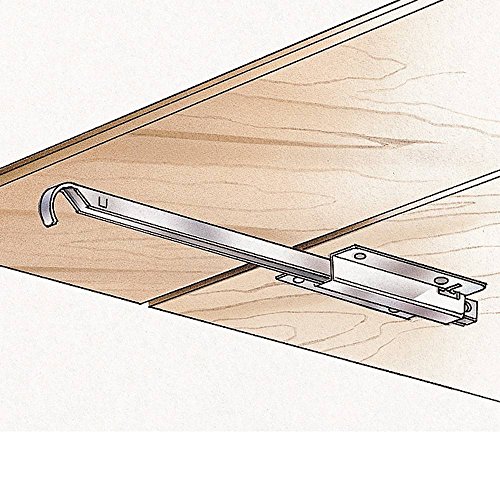
Metal Drop Leaf Support
Check price on Amazon
YIUWLMN 4Pcs Drop Leaf Table Support Folding Table Hinge 180°Folding Cross Spring Hinges with Mounting Screws
Check price on Amazon
Steel Table Leaf Leveler with Screws | Pack of 12 | Table Leaf Hardware | TT5-S
Check price on Amazon
Small Steel Drop Leaf Table Support with Finger Pull | Mechanism for Folding Table Leaf Support, Lock | Drop Leaf Table Hardware | TT3-S
Check price on Amazon
LC LICTOP Table Leaf Hardware, Horizontal Leveling Straps, 30Pcs | Dual Buckle Design, For Furniture Chairs Cabinets Dining Table Expansion, Zinc Plated Iron, Screws Included
Check price on Amazon
Best Choice Products 42in Round Drop Leaf Dining Table W/ Shelf - Chestnut | Solid wood expandable table for 4, a space saving choice for kitchen, dining room & small spaces
Check price on AmazonCare & Maintenance
A drop leaf table has one extra maintenance concern compared with a fixed table: the hinge and support mechanism. Keep it working smoothly and the table will last for years.
- Lubricate hinges sparingly. A small amount of suitable lubricant once or twice a year keeps the action smooth. Wipe away excess so it does not attract dust.
- Check screws and bolts periodically. Vibration from folding and unfolding can loosen fasteners over time. Tighten them as part of a routine check.
- Protect the surface. Use placemats and a table pad for hot dishes, and follow the cleaning routine in the routine upkeep guide.
- Treat stains and scratches early. The stain removal guide and scratch touch-up guide cover the most common repairs.
- Watch for wobble. If the table starts to rock, address it promptly. The wobbly table fix guide explains how to diagnose the cause.
- Manage humidity. Solid wood expands and contracts with moisture. The humidity care guide explains how to keep the table stable through seasonal changes.
For a complete reference, the care and maintenance hub collects every cleaning, repair, and protection guide in one place.
Frequently Asked Questions
What is a drop leaf dining table?
A drop leaf dining table has hinged sections that fold down when not in use. With the leaves lowered it takes up minimal floor space; with the leaves raised it becomes a full dining surface. It is a space-saving design common in apartments, kitchens, and small dining rooms.
Are drop leaf tables sturdy enough for daily dining?
Yes, provided you choose the right support design. Gateleg tables and reinforced sliding-support tables are stable enough for daily use. Entry-level hinged-leg models are better suited to occasional dining. Check hinge quality and how the leaf feels when you press on its edge.
How many people can a drop leaf table seat?
Most models seat two with both leaves down, three to four with one leaf up, and four to six with both leaves extended. Always confirm the extended dimensions against your seating needs.
Is a drop leaf table the same as a folding table?
Not quite. A folding table typically collapses completely for storage. A drop leaf table usually stays in place as a piece of furniture and only folds its side sections. Both save space, but they serve different purposes.
Can a drop leaf table be used as a desk?
Yes. With the leaves down, many models work well as a compact desk or console. This dual use is one of the main reasons drop leaf tables are popular in studios and open-plan apartments.
What material is best for a drop leaf table?
Solid hardwood such as oak or walnut holds hinges best and lasts the longest. Mango wood is a durable mid-range option. Pine and engineered wood suit lighter use, but check that hinges are anchored into solid material rather than veneer alone.
Ready to Choose Your Drop Leaf Table?
Use the guides on this site to compare table types, materials, and layouts before you decide. Start with the table types hub or explore the shopping and reviews section for curated picks.
Explore Table Types