
What Is a Nesting Dining Table?
A nesting dining table is a table system where two or more tables of graduated sizes slide underneath one another. The smaller table tucks beneath the larger one when not in use, and pulls out when you need extra surface area or seating. Unlike a extendable dining table that uses leaves or mechanisms within a single frame, a nesting set relies on separate, interlocking pieces.
The concept is closely related to drop-leaf dining tables and folding dining tables, but the key difference is that nesting tables remain fully assembled at all times. There are no hinges to fold, no leaves to store, and no hardware to operate. You simply slide the smaller table in or out.
Most nesting dining sets consist of a primary table and one or two secondary tables. Some are designed as side tables that double as dining surfaces, while others are purpose-built dining tables where the larger top serves as the main eating area and the smaller ones extend the seating capacity.
How Nesting Dining Tables Work
Understanding the mechanics helps you evaluate quality and usability. A typical nesting dining table operates on one of three principles:
- Height-differentiated nesting: The secondary table is slightly shorter than the primary table, allowing it to slide completely underneath. This is the most common design for dining use.
- Width-differentiated nesting: Tables are the same height but different widths, so the narrower table tucks under the wider one. This works well when you want a consistent surface height.
- Modular nesting: Multiple tables of similar height but varying footprints interlock in a puzzle-like arrangement. These are less common for dining but popular for flexible spaces.
In all cases, the critical measurements are the leg clearance, apron height, and the overall footprint of each table. A well-designed nesting set allows the smaller table to slide in smoothly without scraping the larger table's frame or legs. The dining table frame guide explains how frame design affects stability and nesting compatibility.
Who Should Consider a Nesting Dining Table?
Nesting tables are not for everyone, but they excel in specific situations:
- Apartment dwellers: When floor space is limited, a nesting set keeps the dining area compact during daily use and expands for occasional hosting.
- Small dining rooms: Rooms that cannot accommodate a permanent 6-seater dining table can benefit from a nesting arrangement that provides 4 seats normally and 6 when needed.
- Multi-purpose rooms: If your dining area doubles as a workspace or play area, nesting tables can be pushed aside quickly.
- Flexible hosts: People who entertain occasionally but do not want a large table dominating their space the rest of the time.
- Open-plan layouts: Nesting tables can help define a dining zone without permanent visual weight. See the open concept dining layouts guide for placement ideas.
If you rarely host and have ample space, a fixed table or a traditional extendable dining table may be simpler and more stable. Nesting tables involve trade-offs in stability and surface continuity, which we cover below.
Key Benefits of Nesting Dining Tables
Space Efficiency
The primary advantage is obvious: you reclaim floor space when the table is not in use. In a small dining room, that reclaimed space can make the difference between a cramped feel and a comfortable one. The dining table space planning guide shows how much clearance you need around a table for comfortable movement.
Flexible Seating Capacity
A nesting set can adapt from a 2-seater dining table configuration to a 4-seater dining table or even a 6-seater dining table depending on the number of tables and their dimensions. This flexibility is valuable for households whose hosting needs vary.
No Storage Hassle
Unlike folding tables that need to be stored in a closet or garage, nesting tables stay in place. There is no assembly, no unfolding, and no risk of losing hardware. This makes them more convenient for frequent transitions between compact and expanded modes.
Design Versatility
Many nesting dining tables are designed with aesthetics in mind. They can serve as a statement piece in a modern dining table styling scheme or blend into a Scandinavian dining table styling interior. The smaller tables can also function as side tables, console surfaces, or display platforms when not in dining use.
Trade-Offs and Limitations
Honest evaluation matters more than hype. Nesting dining tables come with real compromises:
- Surface continuity: When nested tables are pulled apart, there is often a gap or seam between surfaces. This is not ideal for large tablecloths or formal place settings.
- Stability: Individual nesting tables are typically lighter and less rigid than a single large table. Wobble can be an issue, especially on uneven floors. The wobbly dining table fix guide offers solutions if you encounter this.
- Height mismatches: In height-differentiated designs, the secondary table is slightly lower. This can affect chair compatibility and comfort. Check the dining table chair height guide before committing.
- Limited size range: Nesting sets rarely accommodate more than 6 to 8 people comfortably. For larger gatherings, a 8-seater dining table or 10-seater dining table is more appropriate.
- Legroom constraints: The apron and leg configuration of nesting tables can reduce knee clearance compared to a simple fixed table.
Sizing and Capacity: What to Expect
Nesting dining tables vary widely in size, but most fall into predictable ranges. The table below provides general guidance without specific numbers, since exact dimensions depend on the manufacturer and model.
| Configuration | Typical Seating | Best For | Footprint When Nested |
|---|---|---|---|
| Two-table nesting set | 2 to 4 people | Apartments, couples, small dining nooks | Compact, comparable to a small side table |
| Three-table nesting set | 4 to 6 people | Flexible hosting, multi-purpose rooms | Moderate, still significantly reduced |
| Modular nesting collection | 4 to 8 people | Open-plan layouts, occasional large gatherings | Varies, often stackable in a corner |
For precise measurements, consult the dining table size chart and measure your room against the dining table walkway clearance guide to ensure comfortable circulation.
Materials and Construction
The material of a nesting dining table affects its weight, stability, durability, and nesting smoothness. Lighter materials are easier to slide but may feel less solid. Heavier materials feel more stable but can be difficult to move frequently.
Wood
Wood is the most common material for nesting dining tables. Solid oak dining tables offer excellent durability and a classic look, while pine dining tables are lighter and easier to nest. Walnut dining tables provide a premium aesthetic and good density. Wood nesting tables should have smoothly sanded edges and a consistent finish to prevent scraping when sliding. The wood dining table wax and polish guide covers maintenance for wooden surfaces.
Metal
Metal dining tables and steel dining tables are popular for nesting designs because they are strong, thin, and allow for tight nesting tolerances. Aluminum nesting tables are lightweight and rust-resistant, making them suitable for multi-purpose use. See the aluminum dining table guide for details.
Glass and Stone
Glass dining tables can work in nesting configurations, but the edges must be carefully finished and the frames precisely aligned. Marble dining tables and granite dining tables are heavy and less common in nesting sets due to weight and fragility concerns during sliding.
Finish Considerations
A matte dining table finish hides minor scratches better than a glossy dining table finish, which is worth considering if tables will slide against each other. An oiled dining table finish provides a natural feel and can be spot-repaired, while a lacquered dining table finish offers more surface protection.
What to Check Before Buying
Use this checklist to evaluate any nesting dining table you are considering:
- Nesting clearance: Confirm that the smaller table slides fully under the larger one without contact. Ask for the leg and apron height specifications.
- Stability test: If possible, check the table for wobble. Look for adjustable feet or leveling glides, which are common on quality nesting sets.
- Surface height consistency: If you plan to use the tables side by side, check that the heights match or are close enough for comfortable dining.
- Edge finish: Rounded or chamfered edges are safer and less prone to chipping. The dining table edge profile guide explains the options.
- Weight and portability: If you will move the tables frequently, lighter materials and handles or cutouts are helpful.
- Chair compatibility: Check that your dining chairs fit under the tables at the correct height. The dining chair selection guide and dining table chair height guide are useful references.
- Floor protection: Look for felt pads or rubber glides on the table legs to prevent scratching. The dining table pad protection guide covers surface protection options.
- Assembly and maintenance: Review the assembly instructions and care requirements. The dining table routine upkeep guide provides a general maintenance framework.
Nesting Tables vs. Other Space-Saving Options
Nesting tables are one of several strategies for compact dining. Here is how they compare:
| Option | Space Saving | Ease of Use | Best For |
|---|---|---|---|
| Nesting dining table | High | Very easy (slide in/out) | Frequent transitions, compact homes |
| Extendable dining table | Moderate | Moderate (leaf mechanism) | Those who want a single continuous surface |
| Drop-leaf dining table | High | Moderate (folding leaves) | Wall placement, occasional use |
| Folding dining table | Very high | Requires storage and setup | Very tight spaces, infrequent dining |
| Round dining table | Moderate | Simple (fixed) | Social seating in smaller rooms |
If you prefer a single surface with no gaps, an extendable dining table may be a better fit. If you want the simplest possible operation, nesting wins. For wall-adjacent placement, a drop-leaf dining table is often more practical.
Styling and Placement Tips
Nesting tables can look intentional and elegant with the right approach:
- Keep the nested state tidy: When tables are nested, use the top surface for a dining table centerpiece or a simple dining table runner to make the arrangement feel deliberate.
- Use lighting to define the zone: A pendant or chandelier above the nesting set anchors the dining area. The dining table lighting placement guide explains how to position fixtures.
- Consider a rug: A rug can visually unify nesting tables and define the dining zone. See the dining table rug placement guide for sizing advice.
- Mix chair styles: Nesting tables pair well with stackable dining chairs or dining bench seating for a flexible, informal look.
- Keep pathways clear: Even when nested, the table needs breathing room. Follow the dining table flow traffic planning principles.
Care and Maintenance for Nesting Tables
Because nesting tables involve sliding contact, maintenance deserves extra attention:
- Clean and inspect the sliding surfaces regularly to prevent grit from scratching finishes.
- Apply felt pads or protective glides to the legs of the smaller table if they are not already fitted.
- For wood tables, re-oil or wax according to the manufacturer's guidance. The wood dining table wax and polish guide covers this in detail.
- Address wobble promptly with the wobbly dining table fix guide before it worsens.
- For seasonal humidity changes, follow the dining table humidity care guide to prevent warping that could affect nesting fit.
Recommended Nesting Dining Tables
⚠️ AFFILIATE DISCLOSURE: This website contains affiliate links. As an affiliate Associate, we earn from qualifying purchases. If you make a purchase through these links, we may receive a small commission at no additional cost to you. Read our full affiliate policy.
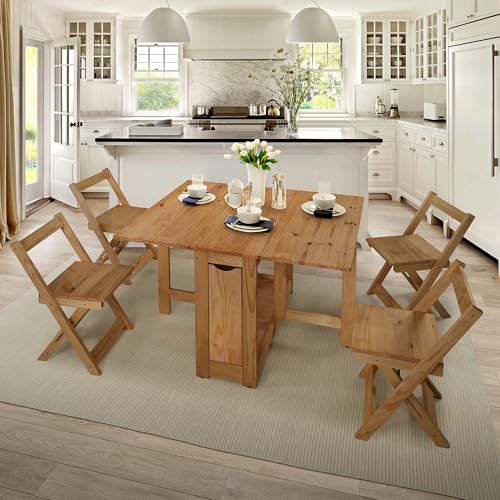
SECONIQUE Santos Butterfly Folding Dining Table Set with 4 Chairs – Space-Saving Table with Nesting Chairs and Storage Shelf – Rustic Pine Finish
Check price on Amazon
VEVOR Nesting Coffee Table Set of 2, Tables Night Stand with Metal Frame | For Living Room, 23.6 inches Round Coffee Table, Nesting Tables for Small Place, with Metal Frame, Office (White and Gold)
Check price on Amazon
What It's Like to Be a Bird: From Flying to Nesting, Eating to Singing--What Birds Are Doing, and Why (Sibley Guides)
Check price on Amazon
PLEMINE Retro-Style Nesting Coffee Table Set. Available in Walnut or Natural Wood finishes. Round Nesting Side Tables with Crisscross Legs. Ideal for Living Rooms and Dining Rooms.
Check price on Amazon
QIANYEWANG Nesting Tables, Coffee Table Set of 2, 27.6 inch Round Coffee Table, Small Coffee Tables Night Stand with Metal Frame, for Living Room, Bedroom, Office (White)
Check price on Amazon
Round Nesting Coffee Table Set of 2, 27.6"+19.7" Indoor Outdoor Black Nesting Side Tables with Woven Edge and Metal Frame, Modern Round End Tables for Living Room Bedroom Balcony Yard Patio (Black)
Check price on Amazon
GIANTEX 6 Pack Stackable Stool, No Assembly 17.5" Stacking School Chair w/Metal Frame & Plastic Seat, Backless Round Nesting Stools, Flexible Seating for Children's Table, Classroom, School (Gray)
Check price on Amazon
DZMAEYFD 30" Lift top Hidden Storage Storage Coffee Table, Nesting Table Tea Table Fluted Wood Grain, Coffee Tables Multi Functional for Living Room, Light Brown
Check price on AmazonFrequently Asked Questions
Are nesting dining tables stable enough for everyday use?
Yes, quality nesting tables are designed for daily use. Stability depends on construction quality, leg design, and floor evenness. Look for tables with solid joinery and adjustable leveling feet. Entry-level sets may feel lighter, while mid-range and premium sets typically offer more rigid frames.
Can I use a nesting table as my only dining table?
Absolutely. Many people use a nesting set as their primary dining table, keeping it nested for daily meals and expanding it for guests. The key is choosing a set with adequate seating for your typical household size and confirming that the expanded configuration is comfortable.
How many people can a nesting dining table seat?
Most nesting sets seat between 2 and 6 people, depending on the number of tables and their dimensions. Two-table sets typically seat 2 to 4, while three-table sets can accommodate up to 6. Larger modular collections may seat more, but they are less common in dining contexts.
Do nesting tables scratch each other when sliding?
They can if not properly designed or maintained. Quality nesting tables have sufficient clearance and smooth finishes to prevent contact. Regular cleaning and protective pads reduce the risk. Avoid sliding tables across gritty surfaces.
What is the difference between a nesting table and a stackable table?
Nesting tables slide underneath one another horizontally, while stackable tables are placed on top of one another vertically. Nesting is more common for dining because it preserves surface usability and requires less lifting. Stackable tables are often used for event seating or outdoor furniture.
Are nesting tables suitable for small apartments?
They are one of the best furniture choices for small apartments. The ability to reduce the dining footprint during daily life and expand it for guests makes them highly practical. Pair with stackable dining chairs for maximum flexibility.
Ready to Choose Your Nesting Dining Table?
Review the recommended options above, compare features, and check availability. Your compact dining solution is one decision away.
VIEW NESTING TABLE OPTIONSFinal Thoughts
A nesting dining table is a smart, practical solution for anyone who needs flexibility without sacrificing style. It is not the right choice for every home, but for compact apartments, small dining rooms, and multi-purpose spaces, it solves a real problem elegantly. Focus on construction quality, nesting clearance, and chair compatibility, and you will end up with a table that serves you well for years.
If you are still exploring table types, start with the dining table types hub or the first dining table checklist. For room-specific planning, the narrow dining room furniture layout guide and the dining table space planning guide will help you get the proportions right.