
Farmhouse Dining Table Styling
Create a warm, welcoming dining room with rustic textures, natural materials, and timeless country charm. Learn how to style your farmhouse dining table from everyday simplicity to holiday-ready elegance.
Explore Styling LayersWhy farmhouse styling endures: The farmhouse aesthetic celebrates honest materials, comfortable living, and a relaxed approach to hospitality. A farmhouse dining table is not a showpiece locked behind glass — it is a gathering place meant to be used daily. This guide walks you through the core principles, layering techniques, and finishing touches that make farmhouse dining tables feel effortlessly beautiful. Once you understand the foundational ideas, you can apply them to any room, whether your space leans traditional, modern rustic, or somewhere in between. If you are still exploring broader aesthetic directions, our dining table style and design hub provides a helpful overview of the major design schools and how they compare.
The Core Philosophy of Farmhouse Dining Design
Farmhouse design is built on a few simple but powerful ideas: honest materials, functional beauty, and comfortable imperfection. Unlike high-gloss modern styling that chases flawless surfaces, farmhouse styling invites character. Wood grain, distressed finishes, woven textures, and handmade pottery are all part of the story. The goal is not to create a museum tableau but a living space that feels genuinely lived in.
This philosophy naturally shapes the way you approach the table itself. A farmhouse table — typically solid wood with visible grain, a sturdy trestle or turned leg base, and a painted or weathered finish — becomes the anchor for everything else. The styling sits on top and around that anchor, reinforcing the same values of warmth, texture, and ease.
If you are comparing different rustic directions, take a moment to read our guide on rustic dining table styling as well, since rustic and farmhouse overlap significantly and understanding the distinctions will help you refine your eye. For a modern counterpart that shares some of the same warmth, our Scandinavian dining table styling guide offers useful contrast.
Choosing the Right Farmhouse Table Foundation
Before you style, the foundation matters. A farmhouse dining table typically features:
- Solid wood construction — oak, pine, mango, and reclaimed timber are common and durable choices
- Visible grain and character — knots, natural variation, and subtle distressing are features, not flaws
- Sturdy base styles — trestle, turned legs, pedestal, or simple square legs with cross-bracing
- Painted or weathered finishes — chalk white, soft sage, warm gray, and natural oiled wood are classic
If you are shopping for a table that fits this description, our wooden dining table buying guide explains how to evaluate construction quality and material durability. You can also explore specific farmhouse-style options in our curated list of 8-seat farmhouse dining tables and farm table dining room ideas. For round layouts, the round farmhouse dining table with leaf is a practical space-conscious option.
Understanding Quality Tiers in Farmhouse Tables
Farmhouse dining tables are available across a wide spectrum of construction quality. The table below uses universal tier descriptors to help you understand what to expect at each level without referencing specific figures.
| Tier | Typical Characteristics | Best For |
|---|---|---|
| Starter tier | Veneer or engineered wood core, painted finish, simpler joinery, lighter overall build | First apartments, casual dining nooks, temporary setups |
| Mid-tier | Solid wood top or thick veneer, reinforced frame, painted or stained finish, sturdy legs | Family homes, daily use, balanced long-term investment |
| High-end tier | Solid hardwood throughout, mortise-and-tenon or similar joinery, hand-applied finish, substantial weight | Frequent entertaining, multi-generational households, heirloom intent |
| Professional-grade | Reclaimed or premium hardwood, reinforced trestle base, commercial-grade finishing, exceptional durability | Design-focused homes, high-traffic dining rooms, long-term statement pieces |
A mid-tier solid wood table will generally offer the best balance for most households, while high-end and professional-grade pieces are worthwhile investments when the table will anchor the home for decades. For guidance on evaluating specific features, the dining table material care guide explains how different surfaces age and how to protect them.
The Five Layers of Farmhouse Table Styling
Think of your table styling in layers, starting from the surface and building outward. This approach keeps the look intentional rather than cluttered and makes it easy to adjust for different seasons or occasions.
- Layer 1: The Base Surface Start with a clean, protected surface. A table runner or full tablecloth sets the tone. For farmhouse style, natural linen, cotton, burlap, or woven jute runners work beautifully. Neutral tones — oatmeal, cream, soft gray, sage — keep the foundation calm and let other elements stand out. For a deeper exploration of surface treatments, see our dining table rug placement guide for guidance on pairing floor textiles with your table palette.
- Layer 2: The Centerpiece Anchor Every farmhouse table benefits from a central anchor piece. This could be a rustic wooden bowl, a galvanized metal tray, a ceramic pitcher, or a collection of candles on a tray. The anchor gives the eye a resting point and makes the arrangement feel deliberate. Keep it low enough that guests can see across the table — a general rule is to keep centerpieces under 12 inches tall for seated dining.
- Layer 3: Natural Texture and Greenery Farmhouse style draws heavily on natural materials. Add greenery through a simple eucalyptus sprig, olive branches, dried wheat, or seasonal foliage. Fresh flowers work too, but keep arrangements loose and organic rather than tightly structured. Our guide to dining table floral centerpiece ideas offers many low-effort, high-impact options.
- Layer 4: Functional Decor Farmhouse tables are meant to be used, so incorporate items that serve a purpose: salt and pepper cellars, a butter dish, a small bread basket, or a set of stacked plates ready for serving. These functional pieces add authenticity and reduce the need for purely decorative clutter.
- Layer 5: The Finishing Touches Finally, add small accents: linen napkins tied with twine, simple flatware, ceramic mugs, or a few scattered candles. These finishing details give the table personality without overwhelming it. For more vignette inspiration, explore our dining table vignette ideas.
Color Palettes That Define Farmhouse Style
Farmhouse color palettes are rooted in nature and nostalgia. They tend to be muted, warm, and layered rather than bold or high-contrast. The most reliable palettes include:
Neutral & Natural
Cream, oatmeal, warm gray, soft white, and natural wood tones. This palette feels calm and timeless and works in nearly any farmhouse setting. Explore our neutral dining table palette guide for detailed combinations.
Sage & Earth
Muted sage green, olive, terracotta, and warm brown. This palette brings the garden indoors and pairs especially well with natural wood finishes and ceramic decor.
Black & White Farmhouse
Crisp white paired with matte black accents — a modern farmhouse staple. Use black in smaller doses (candle holders, chair frames, hardware) to avoid a heavy look. See our two-tone dining table design guide for balance tips.
Seasonal Accents
Start with a neutral base and layer in seasonal color: soft yellows in spring, deep greens in winter, warm ambers in autumn. Our holiday tablescape ideas guide shows how to shift the palette without restyling everything.
Understanding how colors interact is just as important as choosing them. Our dining table color harmony guide explains warm versus cool undertones, and the dining table color psychology article explores how specific hues influence mood and appetite. If you want to experiment with bolder accents, the bold dining table palette guide shows how to introduce stronger tones without losing the farmhouse feel.
Everyday vs. Occasion Styling
One of the best things about farmhouse styling is how easily it shifts between everyday and special-occasion modes. The core elements stay the same; you simply adjust the quantity and formality of the accents.
Everyday Farmhouse Styling
- A simple linen runner or no runner at all
- A wooden bowl or ceramic tray as the centerpiece
- One or two sprigs of greenery or dried stems
- A small stack of everyday plates or a bread basket
- Simple candles or a single hurricane lantern
Occasion Farmhouse Styling
- Full tablecloth or layered runner and placemats
- Elevated centerpiece with fresh flowers or seasonal foliage
- Individual place settings with folded linen napkins
- Coordinated dinnerware and glassware
- Multiple candle heights and a signature accent (e.g., a wreath or garland)
The transition between the two should feel natural — you are adding and adjusting, not completely rebuilding. This is the essence of practical farmhouse living. For more detailed occasion styling, the holiday tablescape ideas guide walks through seasonal variations step by step.
Textures and Materials That Belong on a Farmhouse Table
Texture is arguably the most important element in farmhouse styling. It is what makes a room feel rich and lived-in rather than flat and staged. The following materials are reliable staples:
- Linen and cotton — natural fibers with visible weave, especially in runners, napkins, and tablecloths
- Wood — bowls, trays, cutting boards, and serving pieces in warm, natural finishes
- Ceramic and stoneware — handmade or rustic-glazed plates, mugs, and pitchers
- Metal — galvanized buckets, iron candle holders, brushed brass accents used sparingly
- Woven natural fibers — jute, rattan, seagrass, and wicker in baskets, placemats, or chair seats
- Glass — simple mason jars, clear vases, and amber glass for warm light diffusion
Combine at least three of these textures in any arrangement to create visual depth. For example, a linen runner + wooden bowl + ceramic pitcher + eucalyptus sprigs covers four texture categories and looks complete.
Lighting and Ambiance
Farmhouse dining rooms benefit enormously from warm, layered lighting. Overhead lighting alone tends to feel flat and institutional. Instead, combine:
- A statement fixture — a farmhouse chandelier, pendant, or linear fixture over the table
- Table-level candlelight — taper candles, pillar candles, or lanterns; use unscented or lightly scented candles during meals
- Ambient wall lighting — sconces, a sideboard lamp, or a floor lamp in a corner
- Dimmers — being able to lower light levels in the evening dramatically improves the atmosphere
Warm-white bulbs (around 2700K) are ideal for dining spaces. Avoid cool-white or daylight bulbs in the dining room as they tend to make the space feel clinical. For guidance on fixture placement and sizing, see the dining table lighting placement guide.
Farmhouse Styling for Different Layouts
Every room shape calls for slightly different styling. A few practical considerations:
- Open-concept layouts: Anchor the dining zone with a rug and a clear overhead fixture so it reads as its own space. See open concept dining layouts.
- Compact nooks: Keep styling minimal and vertical — a small centerpiece and wall-mounted accents work better than sprawling arrangements. Explore compact dining nook arrangement.
- Round tables: Round farmhouse tables benefit from a centered circular centerpiece, like a round tray or a low bowl. See our round vs rectangular dining table comparison for how the shape affects flow.
- Long rectangular tables: Use a runner to visually connect the length, and repeat accents (candles, small bowls, greenery clusters) at intervals to avoid a lonely centerpiece.
Pathway clearance around the table is easy to overlook when styling. Our dining table pathway width guide explains how much space to leave around a styled dining table so guests can move comfortably.
Common Farmhouse Styling Mistakes
- Over-cluttering the surface. Farmhouse style can quickly tip into a cluttered look. Limit the centerpiece to three to five objects and keep daily-use items in nearby storage rather than permanently on the table.
- Ignoring scale. A tiny bowl on a long table looks lost; a giant arrangement on a small table blocks conversation. Match the visual weight of your centerpiece to the size of the table.
- Using only one texture. All-wood or all-ceramic arrangements feel flat. Mix materials to create depth, as noted in the texture section above.
- Cool-toned lighting. Farmhouse warmth depends heavily on lighting. Cool bulbs undermine even the most carefully styled table.
- Ignoring the surrounding room. The table does not exist in isolation. Wall decor, rugs, and window treatments should speak the same visual language. Our dining table wall decor guide covers complementary wall styling, and the dining room symmetry guide helps with overall balance.
Seasonal Refresh Ideas
One of the pleasures of a farmhouse table is how naturally it adapts to seasons. A few quick shifts:
- Spring: Fresh tulips, pale linen, light wood tones, ceramic in soft pastels
- Summer: Sunflowers or wildflowers, cotton runners, woven placemats, light glassware
- Autumn: Dried wheat, gourds, amber glass, deeper linens, wooden bowls
- Winter: Evergreen sprigs, white pillar candles, wool runners, iron accents, cozy ceramics
For focused seasonal guidance, the dining table holiday tablescape ideas guide provides complete step-by-step arrangements for major holidays.
Frequently Asked Questions
What is the difference between farmhouse and rustic dining table styling?
Farmhouse styling is a specific branch of rustic design. It emphasizes comfort, painted or weathered wood, linen, and a relaxed everyday feel. Rustic styling can be broader and may lean more heavily toward raw wood, heavy distressing, and lodge-inspired elements. In practice, the two overlap significantly, and many tables work beautifully in both styles. Our rustic dining table styling guide explores the distinctions further.
Do I need a table runner for a farmhouse look?
No, but it helps. A runner provides a natural foundation for the centerpiece and adds texture. Linen, cotton, and burlap runners are classic farmhouse choices. On heavily grained or reclaimed wood tables, you may prefer to skip the runner and let the wood surface show.
How tall should a farmhouse centerpiece be?
For seated dining, keep the centerpiece under about 12 inches tall so guests can see each other across the table. For buffet-style or display-only styling, taller arrangements are fine. When in doubt, go low and wide rather than tall and narrow.
Can I mix farmhouse and modern styles?
Absolutely. Modern farmhouse is one of the most popular hybrid styles. The key is to keep a warm, textured foundation and introduce modern elements through cleaner lines, darker accents, or minimalistic decor. Our modern dining table styling guide covers the crossover approach.
What chairs work best with a farmhouse dining table?
Windsor chairs, cross-back chairs, simple wooden benches, and upholstered linen chairs all pair beautifully with farmhouse tables. For a coordinated look, our dining chair selection guide explains how to balance chair style and table style. If you are considering bench seating, see the dining room table with bench farmhouse inspiration.
How do I protect a farmhouse wood table while styling it?
Always use coasters, trivets, and table pads under hot or damp items. For daily protection, a table runner or placemats reduce wear on high-traffic zones. Our dining table material care guide and dining table pad protection guide cover care routines in depth.
Where can I find farmhouse-style dining table inspiration?
Explore our farmhouse dining table styling ideas alongside curated product picks like 8-seat farmhouse dining tables and round farmhouse dining tables with leaf. Our editor's choice dining tables and community favorite dining tables lists also feature farmhouse-friendly options.
Ready to Bring Your Farmhouse Table to Life?
Start with a solid farmhouse table foundation, layer in natural textures and a warm color palette, and let the styling evolve with the seasons. When you are ready to explore specific tables, our curated recommendations can help you find the right fit for your space.
Browse Farmhouse Dining TablesRecommended Farmhouse Dining Tables for Styling
⚠️ AFFILIATE DISCLOSURE: This website contains affiliate links. As an affiliate Associate, we earn from qualifying purchases. If you make a purchase through these links, we may receive a small commission at no additional cost to you. Read our full affiliate policy.

Plank+Beam Classic 72 Inch Dining Table, Rectangular, Pecan Wirebrush | Non-Toxic Finishes, Versatile Design, Farmhouse Design, Elegant Details, Easy Assembly, Quick Setup, Solid Wood
Check price on Amazon
SLEKVERSA 71" Farmhouse Dining Table for 6-8 Person, Large Rectangular Wood Dining Room Table Only, Rock-Strong Thick Base & Heavy Duty Triangular Legs for Kitchen, Office & Restaurant, Natural Wood
Check price on Amazon
LITTLE TREE 63" Solid Wood Dining Table, Farmhouse Kitchen Table for 4-6 | Rectangular Dining Table with Curved X-Shaped Legs, Rustic Farmhouse Table for Living Room, Dining Room, kitchen, Restaurant
Check price on Amazon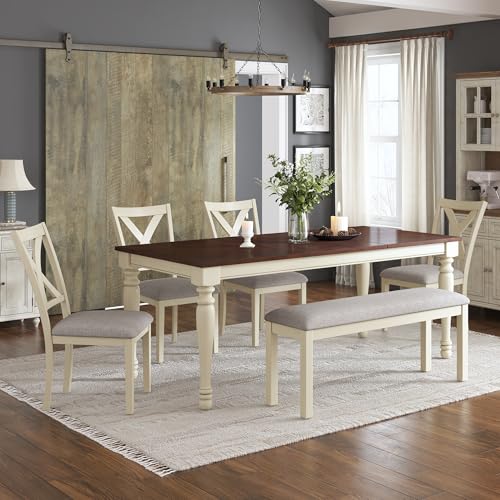
AMERLIFE 6 Piece Farmhouse Dining Table Set with 71" Solid Wood Table | 71" Solid Wood Table, Upholstered Chairs, Bench Included, Seating for 6 to 7, Rustic White Finish
Check price on Amazon
Farmhouse Dining Table for 6, Rectangle Dining Table, Kitchen Table Oak | Large Modern Wood Table for Home Office & Family Gathering - Sturdy Design
Check price on Amazon
Garvee Wood Farmhouse Dining Table for 4-6, Heavy Duty Large Kitchen Table, 63 Inches Long Rectangular Dining Room Tables with Strong Legs, Thickness Tabletop, for Big Family, Dinette, Rustic Brown
Check price on Amazon
Signature Design by Ashley Valebeck Extendable Dining Table, Farmhouse | Seats Up to 8 with 16.5 in Removable Leaf, Rustic Two-Tone Pine Wood, Veneer and Engineered Wood, Sturdy Trestle Base
Check price on Amazon