
Transitional Dining Table Set: Where Classic Warmth Meets Modern Ease
If you love the comfort of traditional furniture but crave the clean lines of contemporary design, a transitional dining table set is your answer. This complete guide walks you through every decision — from silhouette and material to seating and styling — so you can choose with total confidence.
Start With the Buying FrameworkWhy transitional style works so well: A transitional dining table set sits deliberately between two design languages. It borrows the softened edges, warm wood tones, and generous proportions of traditional furniture, then refines them with straight lines, restrained ornamentation, and neutral palettes borrowed from modern design. The result is a dining set that feels timeless rather than trend-driven — flexible enough for a formal dinner party, relaxed enough for a Tuesday breakfast, and neutral enough to survive a decade of changing decor tastes. If you are researching before you buy, this page is written to answer the questions that usually hold shoppers back: which silhouettes read as transitional, how to match chairs to the table, what materials balance durability and warmth, and how to style the set without tipping it too far into either extreme.
Recommended Transitional Dining Table Sets
⚠️ AFFILIATE DISCLOSURE: This website contains affiliate links. As an affiliate Associate, we earn from qualifying purchases. If you make a purchase through these links, we may receive a small commission at no additional cost to you. Read our full affiliate policy.

CARTESIAN 7-Piece Dining Set with Rectangular Table, 78-Inch Cherry Wood Table with Leaf, 6 Grid-Back Chairs, Black Padded Seats, Transitional Style
Check price on Amazon
Stella Mia 5-Piece Dining Table Set for 4 with Upholstered Chairs, Natural
Check price on Amazon
Signature Design by Ashley Langwest 6-Piece Dining Table Set with Bench | Seats up to 6, 60.38 in W dining table, Reverse diamond patterned veneer, Tapered legs, Light beige polyester fabric
Check price on Amazon
Stella Mia 5-Piece 47" Round Dining Table Set with Chairs, Natural | U-Shaped Pedestal Base, Round Tabletop Kitchen Table w/ 4 Upholstered Chairs, Space Saving Dinner Table for Dining Room
Check price on Amazon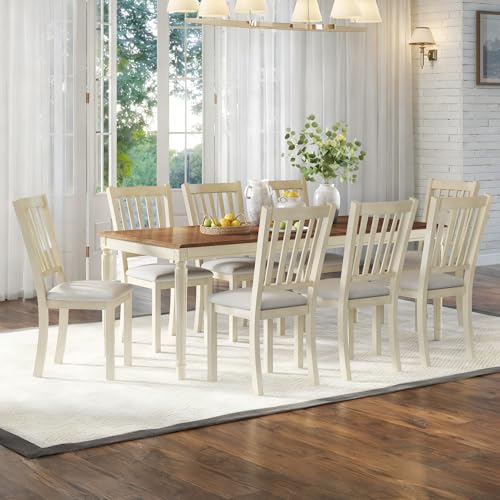
AMERLIFE 9 Piece Farmhouse Dining Table Set with 79" Table, Cream | Solid Rubberwood Frame, 8 Chairs Included, Farmhouse Design, Upholstered Seating, Rustic Cream Finish
Check price on Amazon
AMERLIFE 9 Piece Farmhouse Dining Table Set with 79" Rubberwood Table, Grey | Solid Rubberwood Frame, 8 Upholstered Chairs, Roman Conical Legs, Seating for 8
Check price on Amazon
DM Furniture 5-Piece Round Dining Table Set for 4, 47" Solid Reclaimed Wood Pedestal Kitchen Table with 4 Upholstered Square Rattan Back Chairs, Farmhouse Rustic Circle Dinette Set, Natural/Beige
Check price on Amazon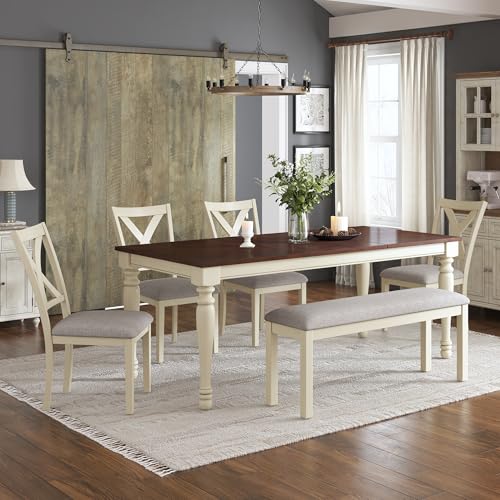
AMERLIFE 6 Piece Farmhouse Dining Table Set with 71" Solid Wood Table | 71" Solid Wood Table, Upholstered Chairs, Bench Included, Seating for 6 to 7, Rustic White Finish
Check price on AmazonWhat Exactly Is a Transitional Dining Table Set?
Transitional design is best understood as a bridge. It does not reject tradition and it does not fully embrace minimalism. Instead, it takes the pieces that people love about classic dining furniture — the warmth of wood, the reassuring weight of a solid pedestal, the comfort of an upholstered chair — and simplifies them. Ornamental carving becomes a subtle curve. Heavy moldings become a clean bevel. A dark formal finish becomes a lighter oak or a softly washed tone.
A transitional dining table set, therefore, is a coordinated group — table plus seating — that carries this balanced aesthetic. It is a set you can place in a home that has traditional architecture (crown molding, wainscoting, hardwood floors) and it will look at home. It is also a set you can place in a newly built open-plan home and it will feel grounded rather than out of place. That versatility is precisely why so many interior designers default to transitional furniture when a client wants a dining room that will not need replacing after five years.
The three signals of a transitional dining set
1. Simplified silhouettes. Look for gentle curves and chamfered edges rather than ornate carvings or stark right angles.
2. Neutral, layered materials. Wood paired with upholstery, or stone paired with metal, in muted tones rather than high-contrast statements.
3. Balanced proportions. Neither chunky and heavy nor ultra-slim. A transitional table usually sits at a comfortable middle weight, with a top that feels substantial and legs that are tapered or gently shaped.
Why a Transitional Set Is a Smart Long-Term Choice
Shoppers researching dining sets usually have a practical concern underneath the aesthetic one: they do not want to buy twice. Transitional furniture is an appealing answer to that concern for several reasons.
- It ages gracefully. Because it avoids extremes, it does not look dated when a trend passes. Ten years from now, a transitional set still reads as considered rather than fashionable.
- It pairs with what you already own. If you have inherited a traditional sideboard or bought a modern pendant light, a transitional set sits comfortably between them rather than fighting either piece.
- It suits both formal and everyday use. A traditional set can feel stiff for casual meals; a strictly modern set can feel cold for holidays. Transitional design holds both moods.
- It is easy to restyle. Because the furniture itself is restrained, you can shift the look dramatically by changing linens, centerpieces, and lighting — without buying new furniture.
- It offers material flexibility. Transitional sets are produced in solid wood, veneer, stone-top, and upholstered combinations, so you can match the set to your household's durability needs.
If you want to see how a transitional set compares with a more clearly contemporary direction, browsing a modern art dining table alongside transitional pieces is a useful exercise — it sharpens your eye for exactly where the transitional midpoint sits.
The Transitional Dining Set Buying Framework
Before you compare individual products, work through the framework below. Each decision narrows the field, so by the end you are choosing between a handful of well-matched options rather than an overwhelming catalog.
Step 1: Lock in the size and seating count
Start with the room, not the furniture. Measure the available floor space and subtract the walkway clearance you need around the table. As a working rule, leave at least 36 inches (about 91 cm) of clearance between the table edge and any wall or doorway so chairs can pull out comfortably and people can pass behind them.
Then decide the seating count. A four-seater suits a compact dining nook or a couple who occasionally host. A six-seater is the most versatile family size. An eight-seater is the natural choice for a dedicated dining room. If your space is irregular or your guest count varies, an extendable table is often the smarter buy — a modern extension dining table can read as transitional depending on the base and finish. For very large rooms or formal settings, an 8-person oak dining table gives you a warm, timeless anchor. And if your dining area is genuinely tight, a small oval dining table set is a graceful transitional-friendly shape because the oval softens corners without the extreme geometry of a round table.
Step 2: Choose the table silhouette
Transitional tables favor shapes that feel familiar but refined. The most reliable options are:
- Rectangular with tapered legs. The most common transitional silhouette. Clean, comfortable, and easy to seat.
- Oval. Softer than rectangular, more sociable than a long narrow table. Excellent in rooms where children or older guests need to navigate.
- Pedestal-based rectangular. A pedestal or trestle base removes the obstacle of corner legs and gives the set a slightly more traditional weight while keeping lines simple. A pedestal extension dining table is a strong transitional candidate.
- Rounded-corner rectangular. A subtle detail that many shoppers overlook but that signals transitional design immediately.
If you prefer a round footprint but need more capacity than a small round allows, a 60 inch round dining table and chairs is a workable compromise — round tables encourage conversation and feel less formal than long rectangles, which fits the transitional mood.
Step 3: Select the material and finish
Material choice is where transitional sets really differentiate themselves. The goal is warmth without heaviness and refinement without coldness.
- Solid wood (oak, ash, walnut, pine). The safest transitional choice. Oak and ash give a lighter, airier feel; walnut gives depth and formality. A wood walnut dining table is a classic transitional anchor when paired with simple upholstered chairs.
- Wood with a washed or whitewashed finish. Lightens a traditional silhouette and blends beautifully with modern rooms.
- Stone or marble tops. Adds a quiet luxury note. An oval marble dining table reads transitional when the base is simple rather than ornate.
- Upholstered or partially upholstered seating. A key transitional signal. Fabric-covered chairs soften a wood table and add comfort.
- Mixed materials. Wood-and-metal combinations are increasingly common and sit comfortably in transitional rooms when the metal is matte rather than polished chrome.
If you are drawn to the lighter end of the transitional spectrum, a white and brown farmhouse dining table can work in a transitional context as long as the surrounding decor stays restrained. At the more formal end, a traditional dark wood dining table can be pulled toward transitional by choosing contemporary chairs and removing heavy ornament from the room.
Step 4: Match the seating to the table
The chairs are where most transitional sets succeed or fail. A simplified table paired with heavily carved chairs tips the set back toward traditional; an ornate table paired with ultra-minimal chairs creates visual tension. Aim for chairs that share the table's restraint:
- Upholstered dining chairs with a clean back. The default transitional chair. Choose a neutral fabric and a frame with a gentle curve.
- Slat-back or ladder-back wood chairs. A classic shape simplified — no finials, no carving.
- Benches for one side. A bench adds a relaxed, modern note and is a common transitional trick in family dining rooms.
Pay attention to seat height relative to table height. A standard dining table sits at roughly 30 inches, and standard dining chairs at roughly 18 inches at the seat. If you are exploring a taller format, be sure to match a counter style dining table with counter-height seating rather than standard chairs. For exact reference figures, this guide on the height of a dining table in inches is a useful bookmark.
Step 5: Decide on the finish and hardware details
Details quietly signal which side of the transitional spectrum a set leans toward. Matte and satin finishes feel more modern; hand-rubbed oils and subtle distressing feel warmer and more traditional. Hardware on any drawers or extension leaves should be simple — slim pulls, knobs with a soft profile, or no hardware at all.
Transitional Set Configurations Compared
Use the table below to compare the most common transitional dining set configurations by tier, category, and best use. Tier descriptors are used instead of numeric ranges so the comparison stays useful regardless of market conditions.
| Configuration | Tier | Category | Best For |
|---|---|---|---|
| Rectangular wood table + 4 upholstered chairs | Entry-level | Compact family set | First homes, small dining nooks, couples who host occasionally |
| Rectangular wood table + 6 mixed chairs | Mid-range | Family set | Everyday family dining with room to host a few extra guests |
| Pedestal table + 6 upholstered chairs | Mid-range | Formal-leaning set | Dedicated dining rooms with a slightly traditional architectural shell |
| Extendable table + 6 chairs + bench | Premium | Flexible family set | Homes where guest counts vary and the dining room doubles as a work space |
| Stone-top table + 8 upholstered chairs | High-end tier | Statement set | Larger dining rooms where the table is a visual focal point |
| Solid oak trestle table + 8 chairs | Top-tier | Heirloom-oriented set | Long-term investment buyers who want a set that can be refinished |
How to Style a Transitional Dining Set
A transitional set is a quiet foundation, which means styling does most of the visible work. The good news is that transitional furniture is forgiving — it can absorb a range of styling directions without looking wrong.
Lighting
A pendant or chandelier above the table anchors the room. For a transitional look, choose a fixture with a classic silhouette in a simplified form — a linear pendant over a rectangular table, or a single drum or lantern-style fixture over a round or oval table. Avoid both heavily crystal-laden fixtures (too traditional) and bare geometric cages (too modern). If you are working with a round table, this guide on round dining table pendant light placement is a helpful reference for height and scale.
Textiles and layering
Layering is where transitional styling shines. Start with a simple linen runner or placemats in a neutral tone, then add one textured element — a woven charger, a ceramic bowl, or a small cluster of seasonal branches. Keep the palette muted: warm whites, oats, soft greys, muted greens, and natural wood tones.
Centerpiece
The centerpiece should be low enough that guests can see each other across the table. A shallow bowl, a trio of candles, or a single sculptural vase all work. Rotate the centerpiece seasonally rather than replacing the whole styling scheme — this is exactly the kind of low-effort refresh a transitional set rewards.
Surrounding furniture
If your dining room has a sideboard or buffet, keep it simple. A transitional room usually pairs one statement piece (the table) with quiet supporting pieces. Avoid adding a second highly decorative item in the same sightline.
Durability and Long-Term Ownership
Research-stage shoppers are often weighing durability as heavily as appearance. A few practical points help here:
- Solid wood frames and tops can be sanded and refinished, which extends service life considerably. Veneered tops are stable and often beautiful but have thinner wear layers.
- Upholstered chairs should use tight-weave fabrics for family dining; performance fabrics handle spills far better than loose weaves.
- Extension mechanisms are the most common failure point on extendable tables. Mid-range and premium sets typically offer smoother, more durable mechanisms than entry-level options.
- Stone tops resist heat and scratches well but can chip at edges; look for eased or bullnose edges on transitional stone tables.
If you want a set that will hold up over many years and can be refinished rather than replaced, a good quality dining table discussion is worth reading before you commit. For a more design-forward finish, a premium dining table tier often includes tighter joinery and better hardware. And if you want the set to feel like it was made for your room, a custom dining room table route lets you specify exact dimensions and finish.
Care basics that keep a transitional set looking new
Wood tops: Wipe with a barely damp cloth, avoid silicone polishes, and use felt pads under heavy objects.
Upholstered chairs: Vacuum weekly and blot spills immediately rather than rubbing.
Stone tops: Use coasters and trivets, and reseal porous stone surfaces on the schedule the manufacturer recommends.
Extension mechanisms: Keep the tracks free of debris and lubricate only with the product specified by the maker.
Common Mistakes to Avoid
- Buying the table before measuring the room. Always confirm walkway clearance first.
- Mixing design languages too aggressively. A transitional set works best when the chairs and table share the same restrained vocabulary.
- Choosing a finish that fights the floor. A warm wood table on a warm wood floor needs contrast (a rug or a lighter top) to avoid looking muddy.
- Overlooking seat height. Standard, counter, and bar heights are not interchangeable.
- Ignoring the extendability question. If your guest count varies at all, an extendable table is usually the more practical long-term choice.
- Styling too heavily. Transitional rooms are defined by restraint; let the furniture breathe.
Frequently Asked Questions
What makes a dining table set transitional rather than traditional or modern?
A transitional set blends softened traditional shapes with modern restraint. In practice, that means simple silhouettes, neutral palettes, and a balance between warm wood and clean lines. It avoids the ornate carving of traditional furniture and the hard minimalism of modern design.
Is a transitional dining set suitable for a modern home?
Yes. Transitional design is deliberately flexible, which is why it is often used in open-plan and newly built homes. It softens the hard edges of modern architecture without introducing heavy traditional ornament.
What seating pairs best with a transitional table?
Upholstered chairs with clean backs, simplified ladder-back wood chairs, and benches are the most reliable pairings. The chairs should share the table's restraint rather than contrast with it.
Should I choose a round, oval, or rectangular transitional table?
All three work. Rectangular with tapered legs is the most common and the easiest to seat. Oval softens corners and works well in irregular rooms. Round is sociable and space-efficient in compact rooms. The right choice depends on your room dimensions and guest count rather than on the style itself.
How do I keep a transitional dining set from looking dated?
Keep the furniture restrained and refresh the styling instead. Rotate linens, centerpieces, and lighting seasonally. Because the set itself is neutral, small styling changes make a large visual difference without requiring new furniture.
What should I check before buying a transitional dining set online?
Confirm exact dimensions, seat height, material and finish specifications, extension mechanism details, assembly requirements, and the return policy. Reading the specification sheet carefully is more useful than relying on listing photos alone.
Ready to Choose Your Transitional Dining Set?
You have worked through silhouette, size, material, seating, and styling. The remaining step is to compare a shortlist against your room measurements and your daily routine. Browse the curated transitional dining sets above, view the full specifications, and select the configuration that fits your space.
View Recommended Transitional Sets