
Premium Dining Table: The Complete High-End Buying Guide
Everything you need to evaluate a premium dining table — from solid hardwood construction and stone surfaces to joinery, proportions, and long-term ownership. Built for buyers who want clarity before they commit.
Explore the GuideRecommended Premium Dining Tables
⚠️ AFFILIATE DISCLOSURE: This website contains affiliate links. As an affiliate Associate, we earn from qualifying purchases. If you make a purchase through these links, we may receive a small commission at no additional cost to you. Read our full affiliate policy.

Dining Room Table Set for 4, 55"-71" Extendable Dining Table with 4 Chairs | 55"-71" Expandable Dining Table with X-Shaped Pedestal Base, Modern Walnut Dining Table with Premium Upholstered Chairs
Check price on Amazon
71" Travertine Sintered Stone Dining Table, Seats 4-8, Luxury Dinner Table | Stone Top Dining Room Table with Premium Matte Tabletop & Heavy-Duty Base, Easy Assembly
Check price on Amazon
RESTACORIN 63 x 32 Inch Kitchen Island with Storage, Heavy Duty Counter Height Marble Dining Table, Premium MDF Tabletop with LED Lights, Shelves & 4 Stools (Black Table Only)
Check price on Amazon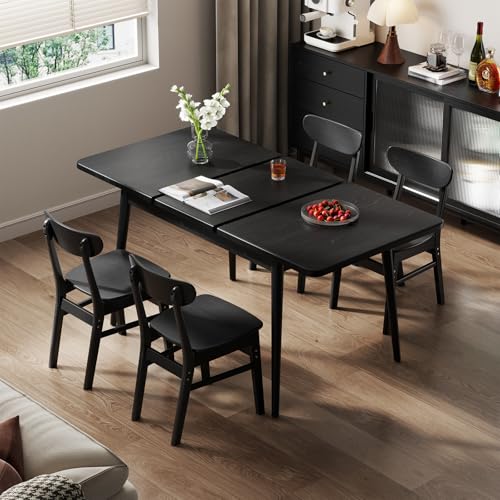
Muwuele 47"-63" Solid Wood Extendable Dining Tables for 4-8, Black | Compact Expandable Kitchen Table, Easy Assembly, Mid Century Modern, Dinner Table for Small Space, Dining Room, Apartment
Check price on Amazon
Garvee 71" Wood Dining Table for 2/4/6/8, Large Rectangular Kitchen Table | Anti-Collision Curved Corner Dinner Table with Recessed Footrest for Dining Room, Study & Home Office, Walnut Brown & Black
Check price on Amazon
Baroyal Faux Leather Placemats Set of 6 Vinyl Washable Wipeable Table Mats for Kitchen Dining Table Heat Resistant Waterproof Modern Indoor/Outdoor Placemats Non-Slip Easy Clean Place Mats (Beige)
Check price on Amazon
Oval Silicone Placemats 18.1" × 12.2" × 0.053" Heat Resistant, Waterproof, Easy to Clean Non-Slip Modern Dining Table Mats – Premium Leather Textured Japandi Kitchen Decor, Chifon Beige, 4
Check price on AmazonWhat Actually Defines a Premium Dining Table
The word "premium" gets used loosely in furniture marketing. In practical terms, a premium dining table is one where the construction method, material grade, and finish system all operate at a level intended for long-term ownership rather than short-cycle replacement. Three criteria matter most:
- Material integrity: Solid hardwood (oak, walnut, teak, ash) or genuine stone tops (marble, travertine, quartzite) rather than printed laminates or thin veneers over particleboard.
- Joinery quality: Mortise-and-tenon, dovetail, and dowel-reinforced joints signal a table built to resist racking and wobble over time. Screws and brackets alone are a mid-tier indicator.
- Finish system: Hand-applied oil, wax, or catalyzed lacquer finishes that can be maintained and repaired, versus factory films that fail in sheets.
Understanding these fundamentals is the first step in distinguishing a genuinely premium table from a mid-range table with premium styling. For a broader material comparison, the materials and finishes hub covers each option in detail.
Premium Dining Table Material Tiers Compared
The table below uses a tier framework to compare common premium and luxury material directions. This classification reflects relative market positioning, construction complexity, and long-term ownership characteristics — not absolute figures.
| Tier | Typical Materials | Best For | Ownership Notes |
|---|---|---|---|
| Premium | Solid oak, walnut, ash, teak | Family dining rooms, daily use | Repairable, ages with character, requires periodic oiling |
| High-End Tier | Marble, quartzite, travertine tops | Formal dining, statement rooms | Sealing required, stain-resistant when maintained |
| Luxury | Live-edge slabs, spalted maple, book-matched stone | Design-led interiors, collectors | Unique pieces, specialist care recommended |
| Professional-Grade | Reinforced hardwood + steel, commercial lacquer | High-traffic households, hospitality | Heavy-duty construction, minimal maintenance |
Within the premium tier, solid oak and walnut remain the most common reference points. A walnut dining table offers a darker, richer tone than oak, while an ash oak table delivers a lighter, more contemporary grain pattern. Stone-led premium tables, such as an oval marble dining table, sit in the high-end tier and demand a different maintenance routine.
Construction Details That Separate Premium From Mid-Range
Two tables can look identical in a showroom and diverge completely within five years. The difference is almost always in construction. Here is what to inspect:
1. Tabletop Core
A premium solid wood top will typically be between 1 and 1.5 inches thick with consistent grain continuity across planks. Watch for veneered tops described as "solid wood" — a premium table should disclose whether the top is solid or engineered.
2. Apron and Support Structure
The apron (the frame beneath the top) transfers load and prevents sagging. Premium tables use hardwood aprons with corner blocks and reinforced joinery. Pedestal tables should have a wide, weighted base — a round pedestal dining table with a properly engineered base will not rock or tip.
3. Leg and Joint Engineering
Look for through-tenons, doweled joints, and mechanical fasteners that allow for seasonal wood movement. A solid oak trestle dining table is a good example of a design where the trestle structure itself is a visible indicator of joinery quality.
4. Extension Mechanisms (If Applicable)
If you need flexibility, a wooden extendable dining table in the premium tier should use metal-reinforced glides or a butterfly leaf system with self-storing leaves. Mid-range extension tables often rely on simpler sliding rails that wear faster.
Premium Dining Table Styles Worth Considering
Style is where personal taste meets room architecture. The premium tier offers several well-established directions:
- Modern: Clean lines, minimal ornamentation, often in oak or walnut. A modern dining table with a rectangular top and tapered legs is the most versatile premium silhouette.
- Farmhouse: Heavier proportions, visible grain, and often a distressed or washed finish. A solid oak farmhouse dining table anchors a room with warmth without feeling rustic in an outdated way.
- Transitional: Blends traditional joinery with contemporary proportions. A transitional dining table set often pairs a classic wood top with a streamlined base.
- Designer / Sculptural: Statement pieces with curved bases or asymmetric tops. A custom pedestal dining table falls into this category and is best suited to rooms where the table is the focal point.
If you are furnishing a complete room, the style and design hub has additional guidance on pairing tables with chairs, lighting, and rugs.
Sizing a Premium Table for Your Room
Buying a premium table in the wrong size is the most common and most expensive mistake in dining furniture. The baseline rules:
- Allow at least 36 inches of clearance between the table edge and any wall or obstruction for chair pull-out and walkway.
- Plan for roughly 24 inches of table width per seated person on a rectangular table.
- For round tables, a 60-inch round dining table and chairs comfortably seats six.
- For larger households, an 8-person oak dining table or a wood dining table for 10 requires a room at least 14 feet long to keep circulation comfortable.
Measure twice, and use painter's tape on the floor to simulate the footprint before ordering. For a deeper breakdown of spacing, see the dining table space planning guide.
Protecting Your Premium Investment
Premium tables are designed to be maintained, not replaced. The care routine varies by material, but the principles are consistent:
- Solid wood: Re-oil or re-wax annually depending on finish type. Use coasters and felt pads. A dining table pad during extended use periods prevents most surface damage.
- Marble and stone: Reseal every 12–18 months. Wipe spills promptly, especially acidic liquids. A marble sealing guide covers the full process.
- Humidity control: Solid wood responds to seasonal humidity changes. Keep indoor relative humidity between 35% and 55% to minimize movement. The humidity care guide explains the practical steps.
For a complete maintenance schedule, the routine upkeep guide is the reference to bookmark.
Premium Dining Table Buying Checklist
Before you confirm a purchase, run through these questions:
- Is the tabletop solid or veneered, and is that disclosed clearly?
- What joinery is used at the corners and where legs meet the apron?
- Does the finish type allow for local repair, or is it a factory film?
- Does the table footprint fit the room with 36-inch clearance on all usable sides?
- If the table extends, is the mechanism metal-reinforced and self-storing?
- Is the table's weight and base width appropriate for the floor surface and household traffic?
- What is the maintenance routine, and are you comfortable performing it?
For a broader set of criteria, see the first dining table checklist and the good quality dining table guide.
Frequently Asked Questions
What makes a dining table premium?
A premium dining table is defined by solid hardwood or high-grade stone construction, joinery methods such as mortise-and-tenon or dovetail, hand-finished surfaces, and a design pedigree that balances durability with timeless aesthetics.
How long should a premium dining table last?
A well-constructed premium dining table, when cared for properly, can last several decades. Solid hardwood tables often become family heirlooms, while stone and metal composite tables offer similarly long service lives with minimal maintenance.
Is solid wood better than veneer for a premium table?
Solid wood offers repairability and ages gracefully, making it a hallmark of premium tier furniture. High-quality veneers over engineered cores can also perform well, but solid hardwood generally represents a superior long-term investment in the premium and luxury tiers.
What size premium dining table fits my room?
Allow roughly 36 inches of clearance on all sides for chair pull-out and walkway flow. For a rectangular table, plan about 24 inches of table width per seated person. Measure your room and test with painter's tape before committing to a size.