
Dining Table Leg Guide: Styles, Strength & Selection Tips
The base is the backbone of your table. Learn how leg style, material, and construction affect stability, style, and seating comfort before you commit.
EXPLORE LEG STYLESWhy the legs matter more than you think: A dining table is only as stable as its base. Legs and pedestals carry the entire load of the top, absorb daily wear, and dictate how many people can sit comfortably around the table. This guide breaks down the most common leg styles, the materials behind them, and the stability factors worth checking before you buy — so your table stays rock-solid for years of family meals.
Common Dining Table Leg Styles
The leg style you choose shapes both the visual character of the table and how it performs in daily use. Here are the most common options you'll encounter when shopping for a dining table type, each with distinct strengths.
Straight Legs
Clean vertical lines with no taper or turning. Straight legs are the workhorse of modern and minimalist dining tables, offering predictable stability and generous legroom beneath the top.
Often built from square or rectangular stock, they pair especially well with rectangular dining tables and industrial-style designs.
Best for: modern, industrial, minimalist spacesTapered Legs
Legs that narrow from top to bottom, creating a lighter visual footprint without sacrificing structural integrity. Tapered legs are common in mid-century and Scandinavian-inspired tables.
The gradual reduction in thickness draws the eye upward and makes compact tables feel less bulky in tight dining rooms.
Best for: mid-century, Scandinavian, compact roomsTurned Legs
Lathe-shaped profiles with curves, beads, and rings. Turned legs bring traditional character and are frequently found on farmhouse and classic dining tables.
Because turning removes material, the thickest sections of the profile determine load capacity — check that the narrowest point is still substantial.
Best for: farmhouse, traditional, country settingsHairpin Legs
Thin bent-metal rods forming a distinctive V-shape. Hairpin legs deliver an airy, retro look and keep sightlines open, which helps small dining areas feel larger.
They work best on lighter tops, as the slender rods are designed for moderate loads rather than heavy stone surfaces.
Best for: retro, industrial, small dining nooksX-Frame & Cross Legs
Diagonal or crossing leg structures that add visual interest and lateral bracing. X-frame bases are popular in rustic and industrial tables.
The cross members contribute to side-to-side rigidity, though they can reduce knee clearance at the table corners.
Best for: rustic, industrial, statement tablesSplayed Legs
Legs angled outward from the top, a hallmark of mid-century design. Splayed legs widen the footprint for stability while keeping the top visually light.
The outward angle can interfere with chair placement at the corners, so measure seating clearance carefully in tight spaces.
Best for: mid-century, contemporary, open layoutsPedestal alternative: Some tables skip individual legs entirely in favor of a central pedestal base. If you're weighing a four-leg design against a single or double pedestal, our dining table pedestal guide explains the trade-offs in legroom, stability, and seating capacity.
Leg Materials & Construction
Material choice determines how a leg handles weight, moisture, and daily bumps. The table below compares the most common options by tier and typical application.
| Material | Tier | Strengths | Watch For | Best For |
|---|---|---|---|---|
| Solid Hardwood | Mid-range to premium | Durable construction, repairable, holds joinery well | Seasonal movement; needs stable indoor humidity | Heirloom tables, heavy tops |
| Engineered Wood | Entry-level to mid-range | Consistent dimensions, resists warping | Limited repairability if veneer chips | Starter tier and flat-pack tables |
| Steel & Iron | Mid-range to commercial-grade | Heavy-duty, slim profiles possible, high load capacity | Check for rust-proof finish on welds and feet | Industrial, modern, high-traffic homes |
| Aluminum | Entry-level to mid-range | Lightweight, rust-resistant | Lower mass means less inherent stability | Portable, outdoor, folding tables |
| Composite & Resin | Essential tier | Moisture-proof, uniform shape | Can feel less premium; check UV resistance | Outdoor and casual dining |
For a deeper dive into how leg materials pair with tabletop choices, see our materials and finishes hub. If you're leaning toward wood, individual guides for solid oak, walnut, and teak cover the grain, hardness, and care differences that matter for table bases.
Stability & Load-Bearing Factors
A leg guide would be incomplete without talking about what keeps the table steady. Four factors matter most:
1. Leg thickness and stock size. Thicker stock resists bowing under load. A solid, square leg in the 2-inch range is a common benchmark for full-size dining tables; slimmer profiles can work but rely more on bracing.
2. Footprint width. The distance between legs front-to-back and side-to-side determines tipping resistance. A wider footprint — common in square dining tables — reduces the chance of rocking or tip-over when someone leans on an edge.
3. Bracing and aprons. Aprons connect legs beneath the top and prevent side-to-side wobble. Heavier tops benefit from stretchers or corner blocks that lock the legs together.
4. Top-to-base ratio. A massive stone top paired with thin legs creates a top-heavy setup. Match the base's mass and footprint to the top's weight — stone and glass tops generally need sturdier legs than wood.
If your table already wobbles, our wobbly dining table fix guide walks through tightening, shimming, and leveling steps before you consider replacing the base.
How Legs Affect Seating & Clearance
Leg design directly impacts how many chairs fit around the table and how comfortable those seats are over a long meal.
Corner leg placement is the classic arrangement for rectangular tables. It keeps the table's footprint predictable and pairs well with standard chair spacing — one reason 6-seater dining table guides usually assume corner legs.
Inset legs (set in from the corners) create a slight overhang on all sides, making it easier to tuck chairs in and giving the top a floating appearance. The trade-off is a narrower footprint and slightly less tipping resistance.
Central pedestals eliminate corner legs entirely, which maximizes legroom and lets chairs sit anywhere along the edge. This is a key advantage for round dining tables and compact spaces.
Clearance tip: Allow roughly 24 inches of knee space per person at the table, and confirm that chairs slide fully under the apron. Check chair seat height against table height using our dining table chair height guide before finalizing your seating plan. For overall room layout, the walkway clearance guide explains how much space to leave around the table's perimeter.
Attachment Methods & Joinery
How legs connect to the table top and apron is a major durability indicator. Here's a quick tier comparison:
| Joinery Method | Tier | Durability | Notes |
|---|---|---|---|
| Mortise & Tenon | Premium to luxury | Excellent | Traditional interlocking joint; strongest option for solid wood legs |
| Corner Blocks | Mid-range | Good | Glued and screwed blocks reinforce leg-to-apron connections |
| Bolted Hangers | Entry-level to mid-range | Good, serviceable | Allows disassembly for moving; re-tighten bolts periodically |
| Screws into End Grain | Entry-level | Basic | Common in flat-pack furniture; weakest long-term hold |
The connecting structure beneath the top — aprons, stretchers, and rails — deserves equal attention. Our dining table apron guide and frame guide explain how these parts work together with the legs to build a rigid base.
Dining Table Leg Buyer's Checklist
Before You Commit to a Base Style
- Confirm the tabletop weight and match it to an appropriately substantial leg or pedestal.
- Check that the footprint is wide enough for your room's traffic flow — measure against our dining table size chart.
- Test for side-to-side wobble by pressing gently on a corner (in-store or via product reviews).
- Verify the joinery method — bolted or mortise-and-tenon beats screws into end grain.
- Make sure the leg style leaves enough knee clearance for your chairs and seating count.
- For metal legs, look for a rust-proof finish on welds and adjustable feet for uneven floors.
- If you move frequently, favor legs that can be detached and re-attached without damaging the joinery.
- Plan for floor protection — felt pads or glides reduce wear and prevent scratching on hardwood.
Frequently Asked Questions
Which dining table leg style is the most stable?
Straight legs with a wide footprint and cross-bracing (aprons or stretchers) generally offer the most predictable stability. X-frame and pedestal bases also perform well when properly constructed. Stability depends more on stock thickness, footprint width, and joinery quality than on the leg style alone.
Are hairpin legs strong enough for a heavy tabletop?
Hairpin legs are best suited to moderate loads such as wood or composite tops. Pairing them with heavy stone or glass tops is not recommended, because the slender rods are not designed for that load class. For heavier tops, choose thicker steel legs or a pedestal base.
How do I know if my table's legs are the cause of wobbling?
Check the floor first, then the leg-to-apron connections, then the leg-to-foot attachments. Loose bolts, missing corner blocks, or uneven feet are the usual culprits. Our wobbly dining table fix guide covers the diagnostic steps in order, and the surface leveling guide explains how to correct an uneven base.
Can I replace the legs on my dining table?
Yes, provided the top and apron allow it. Tables built with bolted hangers or removable leg plates are the easiest to retrofit. Tables with glued or mortise-and-tenon legs are harder to modify without damaging the joinery, so consult a furniture professional before attempting a swap.
Do turned legs weaken a dining table?
Turning removes material, but a well-made turned leg with a substantial narrow point remains structurally sound for normal dining use. The key is ensuring the thinnest section of the profile is still thick enough for the tabletop's weight, and that the leg connects with solid joinery at both ends.
Continue Your Dining Table Research
Recommended Dining Tables with Sturdy Legs
⚠️ AFFILIATE DISCLOSURE: This website contains affiliate links. As an affiliate Associate, we earn from qualifying purchases. If you make a purchase through these links, we may receive a small commission at no additional cost to you. Read our full affiliate policy.

NEWBYTEK 1/4"-20 Furniture Leveling Feet (1" Base) - PTFE Teflon Bottom Adjustable Levelers for Chairs, Tables, Screw-in Leg Glides (8 Pack)
Check price on Amazon
GINOYA Teflon Furniture Sliders, 20pcs 1inch Square Stick Furniture Glides for Carpet Tile Hardwood (Grayish Blue)
Check price on Amazon
4 Pack Adjustable Table Legs (19-30 Inch),Heavy Duty Steel Furniture Legs | 0.8" Increment Height Adjustment, DIY desk legs for Dining Table, Workbench, Office Desk & Kitchen Island (Black)
Check price on Amazon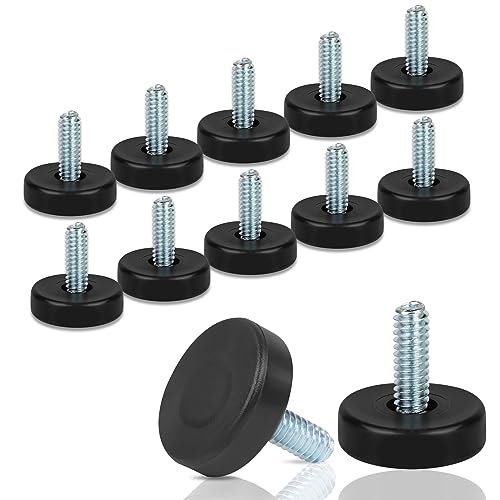
1/4" Thread Furniture Feet Levelers, 12 PCS Adjustable Furniture Feet | Threaded Screw in, Leveling Feet Screw On Furniture Glide Leveling for Table, Cabinets, Chairs, Stool Legs
Check price on Amazon
Holimax 10 Set Adjustable Furniture Leveling Feet, Adjustable Leg Levelers for Cabinets Sofa Tables Chairs, Heavy Duty Height Adjuster Furniture Levelers Foot with T- Nut Kit 3/8"-16 Thread, Black
Check price on Amazon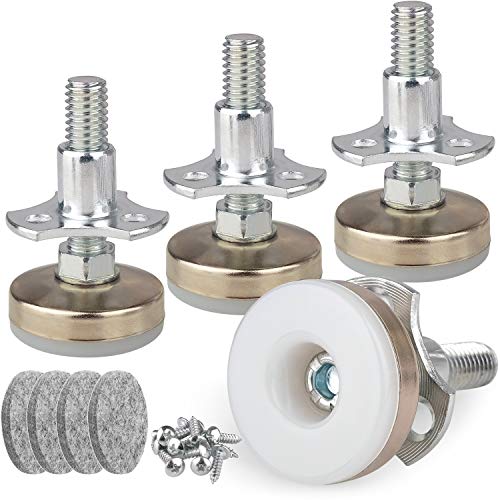
Heavy Duty Furniture Leveling Feet Adjustable Furniture Leg Levelers for Tables Chairs Cabinets Sofa Raiser, Support 1320LBs, T- Nut Kit 3/8”-16 Thread, Large Base,w/ 4 Felt Pads,12 Screws (4 Pack)
Check price on Amazon