
Oak vs Walnut Dining Table: Which Hardwood Belongs in Your Dining Room?
Two of the most respected hardwoods in furniture making go head to head. Compare grain, durability, tone, maintenance, and style to choose the dining table that fits your home and the way you live.
Why this comparison matters: Oak and walnut are both premium hardwoods, yet they behave very differently in everyday use. Understanding their strengths before you buy helps you avoid a dining table that looks beautiful on day one but frustrates you a year later. This guide breaks down the practical differences so you can decide with confidence.
Recommended Oak & Walnut Dining Tables
⚠️ AFFILIATE DISCLOSURE: This website contains affiliate links. As an affiliate Associate, we earn from qualifying purchases. If you make a purchase through these links, we may receive a small commission at no additional cost to you. Read our full affiliate policy.

COLAMY ALVORA 72 Inch Dining Table, Rectangular Wood Dining Room Table for 6-8 People, Modern Farmhouse Kitchen Table, Natural Oak Veneer, Stable Heavy Duty Frame,Walnut
Check price on Amazon
Livinia Canberra 47.2" Rectangular Wooden Dining Table/Mid Century Modern Malaysian Oak Kitchen Table (Walnut) Table Only
Check price on Amazon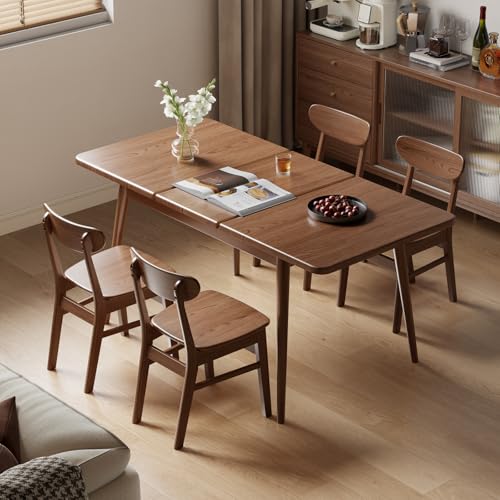
Muwuele 47"-63" Solid Wood Extendable Dining Tables for 4-8, Walnut | Compact Expandable Kitchen Table, Easy Assembly, Mid Century Modern, Dinner Table for Small Space, Dining Room, Apartment
Check price on Amazon
Modway Renwick 79 Inch Oval Oak Veneer Dining Table with Pedestal Base in Walnut
Check price on Amazon
YESWOOD 43.3’’ Round Dining Table for 4, Solid Wood Oak Kitchen Table with Intersecting Pedestal Base, Farmhouse Wooden Kitchen Table, Circle Dinner Table for Dining Room, Living Room, Office, Walnut
Check price on Amazon
Vadisun 39.37''-55.12'' Solid Wood Extendable Dining Room Table, 100% Oak Folding Kitchen Table, Mid Century Modern Dining Table for Kitchen, Living Room, Apartment (Walnut, 39.37''-55.12'')
Check price on Amazon
70.8 Inch Dining Table for 4-6 People, Oval Kitchen Table with Semi-Cylindrical Legs Base, Modern Farmhouse Round Dinner Tables for Dining Room Kitchen Living Room (Walnut)
Check price on Amazon
BAKEVE 4 -6 Person Dining Table, Walnut,55" | FSC-Certified Bamboo, For 4-6-8 Person, Mid Century Modern, Farmhouse Rectangular, For Living Room, Office, Kitchen and Study
Check price on AmazonThe Short Answer: Oak vs Walnut at a Glance
If you want a resilient, family-friendly surface with a bright, open look, oak is the safer bet. If you want a richer, darker, more formal tone with a smoother grain, walnut rewards you with visual depth. Neither is "better" in absolute terms — they solve different design problems. The table below summarizes the core differences so you can see how each wood aligns with your priorities.
| Attribute | Oak | Walnut |
|---|---|---|
| Color & Tone | Light to medium golden-brown; brightens a room | Dark chocolate to deep coffee; adds warmth and drama |
| Grain Pattern | Prominent, open, and expressive; visible cathedral arches | Tighter, smoother, and more subtle; elegant swirls |
| Hardness | Very hard; strong resistance to dents and scratches | Hard but noticeably softer than oak; dents more easily |
| Weight | Heavy; solid pieces require careful moving | Lighter than oak but still substantial |
| Pores | Open pores; accepts stain and oil readily | Closed pores; takes a fine, smooth finish |
| Style Fit | Farmhouse, rustic, Scandinavian, coastal, traditional | Modern, mid-century, formal, industrial, luxury |
| Maintenance | Forgiving; scratches blend into grain | Requires more care; scratches and rings show more |
| Best For | Busy family dining rooms and high-traffic spaces | Formal dining rooms and design-focused interiors |
Color and Grain: The First Thing You Notice
Oak and walnut sit at opposite ends of the hardwood color spectrum. Oak's lighter tone reflects light and makes small dining rooms feel more open. Its grain is bold and highly visible, with dramatic cathedral arches that give the surface a natural, tactile character. Walnut, by contrast, is deep and dark, with a tighter, smoother grain that reads as refined rather than rustic.
The color difference has practical design consequences. Oak pairs easily with white walls, pale linens, and light flooring, which is why it dominates farmhouse and Scandinavian interiors. Walnut anchors a room and pairs well with moody walls, brass accents, and upholstered seating. If you are still deciding on the overall direction of your dining room, our materials and finishes hub maps out how wood tone interacts with the rest of a room's palette.
Will the color change over time?
Both woods shift with age, but in different ways. Oak tends to warm and amber slightly as it oxidizes, especially under natural light. Walnut generally lightens a touch over the years as the surface stabilizes. Neither change is dramatic, but it means the table you receive on day one is not exactly the table you will own a decade later. That patina is part of the appeal for most owners.
Durability and Everyday Performance
Oak is one of the hardest common hardwoods used in dining furniture. Its density makes it naturally resistant to dents, scratches, and the general wear that comes with daily meals, homework sessions, and craft projects. For households with children, oak's resilience is a genuine advantage — small scratches tend to disappear into the busy grain rather than standing out.
Walnut is still a durable hardwood, but it is softer than oak and its smoother, darker surface makes damage more visible. A scratch on a walnut table catches the light; the same scratch on oak may go unnoticed. This does not mean walnut is fragile — it is not — but it does mean walnut rewards careful use. If your dining table doubles as a workspace or a play surface, oak is the more forgiving choice.
Whichever wood you choose, construction quality matters as much as the species. Our guide to the dining table frame explains how joinery and frame design affect long-term stability, while the dining table leg guide covers how leg design influences both strength and traffic flow.
Humidity and movement
Both oak and walnut are natural materials that respond to humidity changes. Oak moves slightly more with seasonal shifts because of its open pores. Walnut is more dimensionally stable, which is one reason it is popular in formal furniture. In homes with wide humidity swings, either wood benefits from stable indoor conditions. Our humidity care guide explains how to protect any hardwood table through seasonal changes.
Finish Options and Surface Feel
Oak's open pores accept oil and stain beautifully, which is why you see so many oiled and distressed oak tables. A matte or oiled finish on oak feels natural and tactile, and it hides minor wear well. Walnut's closed pores take a smoother, more refined finish — satin lacquer and polished surfaces are common — giving it a more formal, furniture-showroom feel.
Finish choice affects maintenance as much as appearance. Oiled tables need periodic re-oiling; lacquered tables need gentle cleaning and occasional touch-ups. If you are comparing surface options in general, our matte finish guide and oiled dining table guide explain the trade-offs in depth.
Style Compatibility: Where Each Wood Shines
Oak is the chameleon of the two. It works in farmhouse kitchens, Scandinavian dining rooms, coastal cottages, and relaxed traditional spaces. Its lighter tone makes it easy to pair with almost any chair material, from woven rattan to upholstered linen. If you want a dining room that feels airy and informal, oak is a natural fit.
Walnut leans more formal and more design-forward. It is a staple of mid-century modern and contemporary interiors, where its dark tone provides contrast against pale walls and light flooring. It also pairs well with metal accents — brass, bronze, and blackened steel — which makes it a favorite for industrial and luxury schemes.
Shape matters here too. A walnut rectangular dining table reads as sleek and architectural, while an oak round dining table feels warm and sociable. Consider the table shape alongside the wood species rather than choosing them independently.
Can you mix oak and walnut in one room?
Yes, and the result can be striking when handled deliberately. A common approach is an oak table with walnut chairs, or the reverse. The contrast adds depth without feeling chaotic, provided the rest of the room stays relatively neutral. Keep metal hardware consistent and avoid introducing a third wood tone, which tends to make the mix look accidental rather than intentional.
Maintenance: What Each Wood Asks of You
Oak is the lower-effort option. Its busy grain camouflages minor scratches, and its hardness resists dents. Routine dusting, prompt spill cleanup, and periodic oiling (for oiled finishes) keep it looking good for decades. For a busy household, that forgiveness is worth a lot.
Walnut demands a little more attention. Because its surface is darker and smoother, scratches, water rings, and heat marks are more visible. Coasters, placemats, and a table pad during heavy use go a long way. Our table pad protection guide covers how to shield a walnut surface without hiding its beauty.
For both woods, the fundamentals are the same: clean gently, avoid harsh chemicals, and address spills quickly. Our routine upkeep guide lays out a simple maintenance schedule that works for any hardwood dining table.
Repair and refinishing
Both woods can be sanded and refinished, which extends their lifespan considerably. Oak's open grain takes stain easily if you ever want to change its tone. Walnut is harder to bleach or lighten, but a refinish restores its deep color beautifully. If you are considering a pre-owned table, our pre-owned dining table guide explains what to inspect before you commit.
Which Wood Fits Your Lifestyle?
Choose oak if your dining table is a workhorse — a place for family meals, homework, hobbies, and gatherings. Its hardness, lighter tone, and forgiving grain make it the practical choice for high-traffic homes. It also suits interiors that lean bright, casual, and relaxed.
Choose walnut if your dining room is a designed space where atmosphere matters as much as utility. Its depth, smoother grain, and formal character make it a statement piece. It rewards careful use with a richness that oak cannot replicate.
If you are still narrowing down your options, our solid oak dining table guide and walnut dining table guide go deeper into each species. And if you are at the very beginning of your search, the first dining table checklist walks you through every decision in order.
Frequently Asked Questions
Is oak or walnut better for a dining table?
Both are excellent hardwoods. Oak is harder and more scratch-resistant, making it a strong choice for busy family dining rooms. Walnut is slightly softer but offers a richer, darker tone and smoother grain that suits formal or contemporary spaces. The better choice depends on your lifestyle, style preference, and maintenance willingness.
Does walnut scratch easily on a dining table?
Walnut is a dense hardwood, but it is softer than oak. It can show scratches and dents more readily under heavy daily use. Protective pads, placemats, and routine upkeep help preserve the surface. Many walnut tables use a protective finish that adds a layer of defense.
Which wood is heavier, oak or walnut?
Oak is generally denser and heavier than walnut. A solid oak dining table can be significantly heavier, which affects moving and assembly. Walnut is lighter by comparison but still substantial and stable for dining use.
Can oak and walnut be mixed in the same dining room?
Yes. Mixing oak and walnut can create visual contrast and depth. A common approach is an oak table with walnut chairs, or vice versa. Balance the tones with neutral decor and consistent metal accents to keep the room cohesive.
How do I maintain an oak or walnut dining table?
Dust regularly with a soft cloth, wipe spills promptly, and avoid harsh chemical cleaners. Use coasters and placemats to prevent rings and heat marks. Reapply oil or wax according to the finish type, and keep the table away from direct sunlight and extreme humidity changes.
Ready to Choose Your Hardwood Dining Table?
Browse our curated selection of oak and walnut dining tables, or explore the broader materials hub to compare wood with stone, glass, and metal options.
Explore Dining Table Reviews