
Two-Tone Dining Table Design: A Complete Style Guide
Learn how to pair colors, materials, and finishes to create a balanced two-tone dining table that anchors your dining room with personality and visual depth.
Why two-tone design works: A two-tone dining table breaks visual monotony without overwhelming a room. By combining two distinct colors or materials — such as a natural oak top with a painted base, or a marble surface with metal legs — you introduce contrast, depth, and a curated feel. This guide walks you through the design principles, the most reliable color pairings, material combinations, and practical buying considerations so you can choose a table that feels intentional rather than accidental.
What Makes a Dining Table "Two-Tone"?
A two-tone dining table deliberately combines two distinct visual finishes in a single piece. The split can occur in several ways: a contrasting tabletop and base, a mixed-material construction (wood plus stone, or wood plus metal), a painted frame with a natural surface, or even a split-surface design where two finishes meet across the top. The goal is contrast with harmony — the two tones should feel like a considered pair, not a random clash.
Two-tone design sits at the intersection of several broader style movements. It shares the warm, layered character of rustic dining table styling, the clean geometry of modern dining table styling, and the purposeful material mixing found in industrial dining table styling. Understanding which tradition your pairing leans toward helps you commit to a coherent direction. You can explore the full range of approaches in our dining table style and design hub.
Color Pairing Strategies That Work
The success of a two-tone table depends on how the two colors relate to each other and to the rest of the room. These are the most dependable pairing frameworks, organized by visual intensity rather than by any commercial tier.
Warm Oak + Soft White
A natural wood top with a white or cream painted base. Gentle contrast that keeps small or low-light dining rooms feeling open and calm.
Walnut + Black Metal
Rich dark wood paired with matte black steel legs. A grounded, architectural look that suits industrial and contemporary interiors.
Marble + Brass or Bronze
A pale stone surface with warm metallic legs. The stone provides visual weight while the metal adds reflective elegance.
Mango Wood + Sage or Olive
Textured natural wood with a muted green painted base. A relaxed, organic pairing that works well in farmhouse and coastal settings.
White Top + Dark Base
A crisp light surface over a deep espresso or charcoal base. Dramatic and graphic — best in rooms with generous natural light.
Two Wood Tones
Pairing a lighter wood top with a darker wood base. Subtle and sophisticated, relying on grain and tone rather than color blocking.
Whichever pairing you choose, treat it as part of a larger palette. Our guides to a neutral dining table palette and a bold dining table palette explain how to extend the table's two tones into walls, seating, and accessories. For a deeper look at how color influences mood, see our overview of dining table color psychology.
Material Combinations Beyond Color
Two-tone design is not limited to paint and stain. Mixing materials is one of the most durable ways to achieve contrast, because the difference is built into the construction rather than applied as a finish. The most common and reliable combinations are:
- Wood + metal: A solid wood top on a powder-coated or brushed steel frame. The warm-cool contrast is versatile and works across styles.
- Stone + wood: A marble or granite top with a wooden base. The stone offers a cool, reflective surface while the wood warms the silhouette.
- Glass + wood or metal: A glass top with a contrasting base. Visually light, though it requires more careful cleaning and styling. Compare the trade-offs in our wood vs glass dining table guide.
- Stone + metal: Marble or granite paired with brass, bronze, or blackened steel. A high-contrast combination common in premium and luxury tier tables. See our marble vs granite dining table comparison for surface-specific guidance.
How to Evaluate a Two-Tone Table Before You Commit
Use this framework to compare two-tone tables across the qualities that matter most. The table deliberately avoids any financial reference and instead uses relative tier descriptors and suitability notes.
| Evaluation Area | What to Check | Best For |
|---|---|---|
| Finish durability | Whether the contrast finish is sealed, lacquered, or oiled; how the two surfaces meet at the joint | Households with daily use and children |
| Material balance | Whether the two materials have compatible expansion and care needs | Long-term investment pieces |
| Color permanence | Whether painted tones are UV-stable and whether wood tones will darken or lighten over time | Sunlit dining rooms |
| Joint construction | How the top and base connect; whether the contrast line is structurally reinforced | Heavy-duty and commercial-grade use |
| Style longevity | Whether the pairing reads as classic or trend-driven | Buyers planning to keep the table for a decade or more |
| Seating harmony | How easily chairs and benches can echo one of the two tones | Open-plan and multi-zone rooms |
If you are still deciding on the table's overall shape and function, our round vs rectangular dining table and extendable vs fixed dining table comparisons will help you narrow the field before you focus on finish. For a shortlist of well-regarded models across styles, browse our highest rated dining tables and editor's choice dining tables collections.
Styling a Two-Tone Table Without Visual Clutter
A two-tone table already carries visual information, so styling should support rather than compete. The most reliable approach is to repeat one tone and introduce the other sparingly.
- Anchor the table with a rug that echoes the base tone, keeping the top tone as the focal point.
- Choose chairs in one of the table's two tones and add a single contrasting accent — a bench, a throw, or a centerpiece.
- Keep the tablescape restrained. A low bowl, a pair of candlesticks, or a simple runner is usually enough. See our dining table vignette ideas for layout inspiration.
- Let the table's contrast line do the talking; avoid busy patterns directly on the surface.
- Use lighting to emphasize the material difference — warmer bulbs flatter wood, cooler light favors stone and metal.
For seasonal styling, our holiday tablescape ideas and floral centerpiece ideas show how to adapt a two-tone table without losing its balance. If the table sits in an open-plan space, the arrangement guidance in our open concept dining layouts and dining room symmetry guide will help you position it so both tones read clearly from every angle.
Common Two-Tone Design Mistakes to Avoid
- Competing contrasts: Pairing a high-contrast table with high-contrast chairs and a bold rug. Let one element carry the contrast.
- Ignoring undertones: A warm wood with a cool gray base can clash unless the room's palette bridges them. Match undertones before matching colors.
- Overlooking finish care: Painted and natural surfaces need different maintenance. Review our dining table material care guide before committing.
- Forgetting the reveal: The joint where the two tones meet should be clean and intentional. Inspect it closely, especially on lower-tier and mid-range models where finishing budgets are tighter.
- Buying before measuring: Confirm walkway clearance with our dining table pathway width guide, and plan the rug with our dining table rug placement guide.
Frequently Asked Questions
What defines a two-tone dining table?
A two-tone dining table combines two distinct colors or materials in its construction — for example, a natural wood top with a painted base, a marble top with metal legs, or a light frame with a dark surface. The contrast is a deliberate design choice, not a manufacturing variation.
Are two-tone dining tables timeless or trendy?
When anchored in neutral pairings and classic material combinations, two-tone designs are timeless. High-contrast color blocking can lean trendy, but mid-tone contrasts, two-wood pairings, and natural material mixes tend to age gracefully.
Which two-tone combination works best in small dining spaces?
Light-toned tops with neutral bases, or subtle contrasts such as warm oak paired with soft white, keep small rooms feeling open while still delivering visual interest. Avoid dark bases in tight, low-light spaces.
How do I coordinate chairs with a two-tone table?
Pick up one of the table's two tones in the seating and use the other tone as an accent. Mixing solid chairs with a bench in a complementary tone is a balanced approach that reinforces the two-tone theme without overmatching.
Recommended Two-Tone Dining Tables & Contrast Designs
⚠️ AFFILIATE DISCLOSURE: This website contains affiliate links. As an Amazon Associate, we earn from qualifying purchases. If you make a purchase through these links, we may receive a small commission at no additional cost to you. Read our full affiliate policy.

Signature Design by Ashley Valebeck Extendable Dining Table, Farmhouse | Seats Up to 8 with 16.5 in Removable Leaf, Rustic Two-Tone Pine Wood, Veneer and Engineered Wood, Sturdy Trestle Base
Check price on Amazon
Signature Design by Ashley 1-Piece Wood Dining Bench, 48" 2-Tone Farmhouse | Sturdy Solid Wood Frame with Mango Veneer and MDF Substrate Seat, Space-Saving 48-Inch Profile, Wildenauer Series
Check price on Amazon
Garvee 70.8″ Dining Table for 6-8 People, Large Industrial Dinner Kitchen Tables with Sturdy Metal Frame, Multi-Use for Dining Room, Living Room, Office Desk, Brown (Only Table)
Check price on Amazon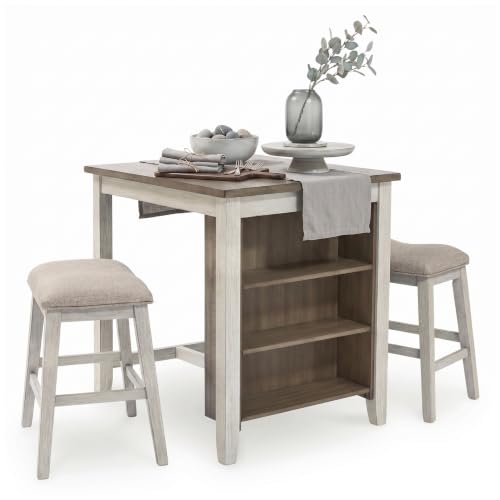
Signature Design by Ashley Skempton 3-Piece Counter Height Dining Table Set | Wood, Acacia Veneer and Engineered Wood, 3 Built-In Open Shelves, 2 Upholstered Stools, Space-Saving Design, Dining Room
Check price on Amazon
Signature Design by Ashley Ralene Wood Extendable Dining Table, Brown | 18-Inch Self-Storing Butterfly Leaf, Veneers, Wood and Engineered Wood, Seats Up to 8 for Family Dining
Check price on Amazon
IDEALHOUSE Small Dining Table Set for 2, 3-Piece Dining Set, Brown | Table and Chairs Set of 2, Two-Tone Splicing Desktop Design, Metal Frame, for Small Spaces, Kitchen, Apartment
Check price on Amazon
63"-78.7" Extendable Dining Table with Butterfly Leaf Seats 6-10, Brown | Two-Tone Spliced Design with Sturdy X-Cross Base, Scratch & Water Resistant Tabletop, for Small Space, Kitchen & Home
Check price on Amazon
Signature Design by Ashley Skempton Counter Height Dining Table Set for 6 | 36 in Counter Height Dining Table, 24.75 in Seat Height, Solid Wood Stool Frames, Two-Tone Wood Design, Cushioned Seats
Check price on AmazonReady to Design Your Two-Tone Dining Space?
Move from inspiration to a confident purchase. Explore our full style and design library, then compare community-loved models before you decide.
Explore the Style & Design Hub