
Bar Height Dining Table Guide
Everything you need to choose, plan, and style a bar height dining table. Understand standard heights, seating pairings, clearance rules, material options, and practical trade-offs so you can buy with confidence.
Explore Bar Height PicksWhy a bar height dining table? Tall dining tables bring a relaxed, pub-style energy to kitchens, breakfast nooks, and open-plan living areas. They create visual interest, free up floor space beneath the tabletop, and let you enjoy meals with a more casual, elevated feel. But they also come with specific height, clearance, and seating requirements that differ from standard dining tables. This guide walks you through every detail so your bar table fits your room and your routine.
Recommended Bar Height Dining Tables
⚠️ AFFILIATE DISCLOSURE: This website contains affiliate links. As an affiliate Associate, we earn from qualifying purchases. If you make a purchase through these links, we may receive a small commission at no additional cost to you. Read our full affiliate policy.

Tribesigns 63" Counter Height Bar Table with Metal Footrest, Rectangular Tall Kitchen Dining Pub Table, Industrial Home Bar Unit for Entertaining, Freestanding, Rustic Brown
Check price on Amazon
Tribesigns 63-Inch Counter Height Bar Table with Metal Footrest | Industrial Rectangle Pub Table, Wood Kitchen Dining Table with Sturdy Metal Frame for Dining Room, Home Bar
Check price on Amazon
Tribesigns 63 Inch Bar Table, Bar Height Counter Table, Brown Black (1) | with Thickened Tabletop & Sturdy Base
Check price on Amazon
LITTLE TREE Farmhouse Bar Table, 55'' Long Counter Height Pub Table | Wooden Tall Bistro Tabletop, Rectangular Home Coffee Bar Unit for Dining Room, Kitchen, Living Room, Basement, Rustic Brown
Check price on Amazon
Vividwood Bar Table with Storage, 62.2 Inch Counter Height Dining Table | High Top Bar Height Table with Metal Footrest, Long Home Bar for Kitchen, Living Room, Dining Room, Bistro, Basement, Brown
Check price on Amazon
YATINEY Round Bar Table, Bar Height Pub Table Set of 2, Black | Round Bar Counter Height Table, Cocktail Table with Iron Frame for Kitchens, Dining Rooms, Cafes, Restaurants
Check price on Amazon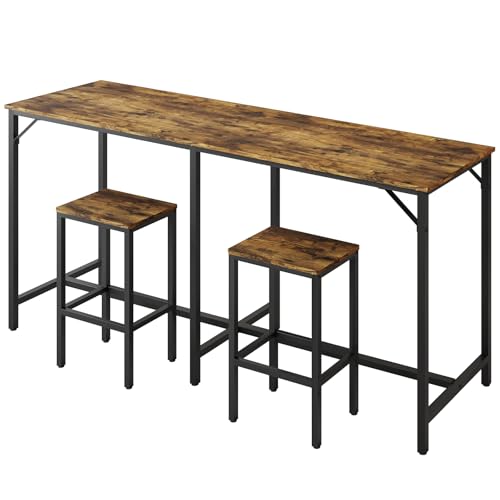
YATINEY 70.9" Bar Table and Chairs Set, Dining Table and Chair Sets, 3 Piece Counter Height Table and 2 Stools, Kitchen Table for Home Restaurant, Bar, Rustic Brown BT09BR
Check price on Amazon
CHOEZON Round Bar Table, 2-Tier High Top & Counter Height Dining Table, for Bistro, Pub, Kitchen, Living Room, Rustic Brown and Black TBT03BF
Check price on AmazonWhat Defines a Bar Height Dining Table?
A bar height dining table is a tall table designed for standing-height or high-stool seating. Where a standard dining table tops out around 30 inches, a bar height table typically sits between 40 and 42 inches from the floor. That extra height changes how you sit, how much space you need around the table, and which chairs work best.
Bar height tables are close cousins to counter height dining tables, which usually measure around 34 to 36 inches. The bar height version is taller, more pub-like, and pairs with longer-legged stools. If you are still deciding which format suits your room, comparing all the dining table types side by side is a smart first step.
Bar Height vs. Standard vs. Counter Height
| Category | Typical Tabletop Height | Seat Height Range | Best For |
|---|---|---|---|
| Standard dining table | 28–30 inches | 17–19 inches | Formal dining rooms, family meals, everyday comfort |
| Counter height table | 34–36 inches | 24–26 inches | Transitional kitchens, casual dining, mixed-age households |
| Bar height table | 40–42 inches | 28–30 inches | Pub-style kitchens, breakfast bars, open-concept entertaining |
Each format has a different center of gravity. Standard tables are the most forgiving for long meals and mixed-age groups. Counter height tables split the difference. Bar height tables deliver the most dramatic silhouette and the most casual, high-energy feel — but they demand more attention to stool fit and clearance.
Choosing the Right Bar Table Height
The single most important decision is matching the tabletop height to your stool height. A bar table that is too tall for its stools forces guests to perch awkwardly; too short and the stools feel buried. The standard rule is to leave 9 to 12 inches of clearance between the seat and the underside of the tabletop.
- 40-inch tabletop: pair with 28 to 29 inch seats. This is a comfortable starter height for most homes.
- 42-inch tabletop: pair with 29 to 30 inch seats. A common commercial-style bar height for a more dramatic look.
- Adjustable stools: useful if household members vary in height, or if you want flexibility between a bar table and a kitchen island.
Measure before you commit: sit on a stool at the actual table height if possible. Check that your knees clear the apron and that your elbows rest naturally on the tabletop. Small comfort differences become very noticeable over a full meal.
Seating and Stool Pairing
Bar height tables live or die by their seating. The right stool makes the table feel intentional; the wrong one makes it feel like a compromise. Beyond seat height, consider back support, footrest placement, and whether the stool tucks under the tabletop.
- Backless stools keep sightlines open and tuck fully under the table — ideal for compact spaces and open-plan kitchens.
- Low-back stools add support without blocking views; a balanced choice for everyday use.
- Full-back bar chairs offer the most comfort for long meals and older guests, but they need more clearance behind the table.
- Footrests are not optional at bar height. Without a footrest, legs dangle and comfort drops quickly. Look for stools with a well-positioned footring.
For a deeper dive into stool and chair matching, see the dining chair selection guide and the dining table chair height guide. If you prefer a bench-style look, the dining bench seating guide covers how benches work at taller tables.
Space Planning and Clearance Rules
Bar height tables occupy less visual floor area than standard tables of the same seating count, but they need just as much — sometimes more — clear space around them for stools to pull out and for people to move comfortably. Plan your layout with these benchmarks:
- 24 inches per person of table edge for comfortable elbow room.
- 36 inches of walkway clearance around the table where stools pull out.
- 12 to 18 inches between the back of a seated person and the nearest wall or cabinet.
- Door swing and drawer clearance should be checked before placing a bar table near a kitchen run.
These numbers come straight from our dining table space planning guide and walkway clearance guide. For tight rooms, the narrow dining room furniture layout article shows how tall tables can work in slim footprints when paired with backless stools.
A compact bar table with two stools can fit into a kitchen corner that a standard four-seater cannot. That is one of the format's biggest advantages — but only if you respect the stool pull-out zone. Skipping that step is one of the most common dining table buying mistakes.
Best Rooms and Layouts for Bar Height Tables
Bar height tables shine in specific settings. Understanding where they work best helps you decide whether this format is right for your home.
Open-plan kitchens
A bar table can act as a visual bridge between the kitchen and living area, echoing the height of a kitchen island or breakfast bar. It creates a casual dining zone without building a full wall or peninsula.
Breakfast nooks
In a small nook, a tall table with backless stools keeps the space feeling open and airy. The vertical emphasis draws the eye upward and can make a low-ceilinged corner feel more intentional.
Entertaining zones
For cocktail-style gatherings, a bar height table doubles as a standing-height surface. Guests can lean, set down drinks, and circulate more freely than around a low table.
Where bar height tables struggle
Formal dining rooms, homes with very young children, and households with guests who have mobility concerns may be better served by standard or counter height tables. Bar height seating is less forgiving for long, multi-course meals. For a gentler middle ground, the counter height dining table guide is worth reading before you decide.
Materials and Finish Considerations
Bar height tables are available in the same broad material families as standard tables, but the taller format places different demands on construction. A tall pedestal or leg assembly carries more leverage, so frame quality matters more than ever.
- Solid wood — warm, repairable, and classic. Oak, walnut, and teak are popular choices; see the solid oak dining table guide and walnut dining table guide for material deep-dives.
- Metal frames — steel and aluminum offer excellent stability at height. The metal dining table guide and steel dining table guide explain frame construction.
- Stone tops — marble and quartz bring a polished, commercial-bar look. Marble needs sealing; see the marble dining table guide.
- Glass tops — visually light and easy to wipe down, but check that the frame is rated for the height. The glass dining table guide covers safety considerations.
At bar height, stability is non-negotiable. Look for wide-set legs or a weighted pedestal base, cross-bracing where visible, and a tabletop that is firmly anchored. A wobbly table at standard height is annoying; at bar height it is a safety concern. If wobble develops later, the wobbly dining table fix guide walks through adjustments.
Finish choice also matters. Matte and oiled finishes hide fingerprints and smudges better on tall tables that are often used casually. The matte dining table finish guide and oiled dining table guide explain the trade-offs.
Frame, Legs, and Base Construction
Bar height tables come in two main structural formats: four-leg and pedestal. Each has distinct advantages at height.
- Four-leg bar tables offer a familiar look and generous footroom. Legs should splay slightly outward for stability, and aprons should be shallow enough not to crowd knees.
- Pedestal bar tables free up legroom on all sides and suit round or square tops. A wide, weighted base is essential; a narrow pedestal at 42 inches can feel tippy.
- Trestle and A-frame bases are common in pub-style tables and can be very stable when well-built.
For a deeper look at how tables are put together, read the dining table frame guide, dining table leg guide, and dining table pedestal guide. If you are choosing a round or square top, the round dining table guide and square dining table guide cover shape trade-offs.
Quality Tiers Without the Price Tag
Bar height tables span a wide range of construction quality. Instead of thinking in numbers, think in tiers. The descriptors below help you compare products on build and materials rather than on transient pricing.
Entry-Level
Basic engineered wood or thinner metal frames. Suitable for light, occasional use. Check for wobble and read assembly instructions carefully.
Mid-Range
Solid wood or reinforced metal construction with better joinery. A solid choice for everyday family use and casual entertaining.
Premium
High-grade hardwood or heavy-duty steel, refined finishes, and stable base designs. Built for frequent use and long-term ownership.
Luxury / Commercial-Grade
Flagship materials, precision joinery, and commercial-rated stability. A long-term investment for design-led or hospitality-style spaces.
Across all tiers, prioritize stability, footrest placement, and finish durability. A mid-range table with a well-engineered base will usually outperform a premium-looking table with a shaky frame. For a broader comparison framework, see the shopping and reviews hub and the dining table spec glossary.
Styling a Bar Height Dining Table
Bar height tables have a strong silhouette, so styling should work with that verticality rather than fight it. A few principles keep the look intentional:
- Keep centerpieces low and narrow. Tall arrangements block sightlines across the table. A slim vase, a low bowl, or a pair of small candles works better than a wide centerpiece.
- Use a runner to anchor the top. A dining table runner visually connects the length of the table and adds warmth without clutter.
- Choose stools that echo the table's material. Wood-on-wood, metal-on-metal, or a deliberate contrast — either reads as intentional if consistent.
- Light from above. Pendant lighting over a bar table is both practical and dramatic. See the dining table lighting placement guide for heights and spacing.
- Layer with placemats and tablecloths sparingly. Tall tables look best with minimal layering; see the dining table placemat guide and dining table tablecloth guide.
For more styling direction, the dining table centerpiece guide, dining table candle styling guide, and dining table vignette ideas are useful next reads.
Care and Maintenance for Tall Tables
Bar height tables are often placed in high-traffic kitchen zones, so routine care pays off. Wipe spills promptly, avoid dragging stools against the frame, and check leg and base fasteners periodically. Because tall tables carry more leverage, loose joints should be tightened early rather than left to worsen.
Surface-specific care matters too. Wood benefits from periodic polishing; stone needs sealing; glass needs streak-free cleaning. The care and maintenance hub collects the relevant guides, including wood dining table wax and polish, marble dining table sealing, and glass dining table cleaning. For general upkeep, see the dining table routine upkeep guide.
If you plan to move the table — for a renovation or a room swap — read the dining table moving safely guide first. Tall tables are more awkward to carry than they look.
Is a Bar Height Dining Table Right for You?
Bar height tables are a strong choice when you want a casual, social dining setup with a compact footprint and a strong visual presence. They suit open-plan kitchens, breakfast nooks, and entertaining zones. They are less ideal for formal dining, long multi-course meals, or households where young children and guests with mobility concerns are frequent diners.
If you are still weighing formats, the counter height dining table guide and the broader dining table types overview are the natural next steps. If you have decided on a bar height table, the dining table size chart and first dining table checklist will help you finalize dimensions and features before you buy.
Frequently Asked Questions
What is the standard height of a bar height dining table?
Bar height dining tables typically measure around 40 to 42 inches from floor to tabletop. This is roughly 10 to 12 inches taller than a standard dining table, which sits at about 30 inches.
What chair height works with a bar height table?
Bar stools and chairs with a seat height of about 28 to 30 inches pair best with bar height tables. The goal is roughly 9 to 12 inches of clearance between the seat and the tabletop for comfortable legroom and reach.
How much floor space does a bar height dining table need?
Plan for at least 24 inches of clear space per seated person along the table edge, plus 36 inches of walkway clearance around the table where stools pull out. A four-seater bar table typically needs a footprint of roughly 5 by 5 feet including seating clearance.
Are bar height dining tables good for small spaces?
Yes, when chosen carefully. Tall tables use vertical space and can suit compact dining nooks or open-plan kitchens. However, they require generous stool clearance, so measure walkways and door swings before committing.
Can I use bar height tables outdoors?
Only if the table is explicitly rated for outdoor use. Indoor bar tables made from wood, engineered wood, or standard finishes can warp, fade, or corrode when exposed to weather. Look for weather-resistant coatings and outdoor-rated materials if the table will live on a patio or deck.
Bottom line: A bar height dining table is a lifestyle choice as much as a furniture purchase. Get the height pairing right, respect the clearance rules, choose a stable frame, and style it with a light touch — and you will have a dining spot that feels relaxed, social, and genuinely useful for years to come.