
Custom Oak Dining Table: The Complete Guide
Everything you need to know about commissioning a made-to-order oak dining table — from choosing the right oak species and grade to selecting dimensions, joinery, and finishes that suit your home.
Start Your ResearchA custom oak dining table is more than furniture — it is a piece built to your exact room dimensions, seating needs, and visual taste. Unlike off-the-shelf tables, a bespoke oak build lets you control the wood species, board selection, edge profile, base design, and finish. This guide walks you through every decision so you can commission with confidence and compare options intelligently.
Oak remains one of the most requested woods for custom dining tables because it balances hardness, attractive grain, and workability. Whether you are leaning toward a modern light oak dining table for a bright space or a European oak dining table with a more muted, refined look, the fundamentals below apply.
Why Oak Works So Well for Custom Dining Tables
Oak is a hardwood with a Janka hardness rating that places it among the more durable domestic species used for dining furniture. Its open grain and prominent ray fleck give it visual character, and it accepts stains, oils, and lacquers predictably. For custom work, that predictability matters: a workshop can match boards, control color, and deliver a consistent result across a large tabletop.
Oak also responds well to both traditional and contemporary design languages. A solid oak farmhouse dining table can lean rustic with a distressed finish and thick apron, while a modern solid oak dining table can use clean lines, a slim top, and a minimal base. The same species serves both directions, which is why it dominates custom commissions.
Quick tip: Ask your maker whether the tabletop will be built from wide planks or narrow strips. Wide planks show more continuous grain but require careful drying; narrow strips are more dimensionally stable but can look busier.
White Oak vs Red Oak: Which Should You Choose?
The two main oak categories behave differently in a custom build. White oak is denser, tighter-grained, and more resistant to moisture, which makes it a strong choice for dining rooms that see daily use. Red oak is slightly softer, more open-grained, and typically shows a warmer, pinkish tone before finishing.
| Attribute | White Oak | Red Oak |
|---|---|---|
| Grain character | Tight, subtle, with prominent ray fleck on quartersawn boards | Open, pronounced, with a coarser texture |
| Moisture resistance | High — naturally water-resistant due to tyloses | Moderate — more porous and less forgiving of spills |
| Color before finish | Light tan to pale brown | Warm pink to reddish brown |
| Best for | Premium and luxury tiers, high-traffic dining rooms | Entry-level and mid-range builds, warmer palettes |
| Finishing behavior | Takes stain evenly, excellent for light and natural looks | Can blotch with stain; benefits from a sanding sealer |
If your priority is longevity and a refined, contemporary look, white oak is usually the better investment. If you want a warmer tone and a more traditional grain pattern, red oak remains a solid choice. For a deeper comparison of oak against other hardwoods, see our guide to the wood walnut dining table and the ash oak dining table.
Oak Grades and Board Selection
Custom makers typically sort oak into appearance grades. The grade affects how much knotting, color variation, and sapwood appears in the finished table.
- Clear grade (flagship tier): Minimal knots and consistent color. Best for formal dining rooms and minimalist designs.
- Select grade (premium tier): Occasional small knots and moderate color variation. A balanced choice for most homes.
- Character grade (mid-range tier): Visible knots, mineral streaks, and color contrast. Suits rustic and farmhouse styles.
- Rustic grade (entry-level tier): Heavy character, larger knots, and mixed sapwood. Best for informal or outdoor-adjacent settings.
Ask to see sample boards before committing. A reputable workshop will let you review the actual lumber or a finished sample panel so there are no surprises about grain and tone.
Choosing Dimensions and Shape for Your Space
Dimensions are the single most consequential decision in a custom build. Start with the room, not the table. Measure the available floor area, then subtract clearance for chairs and walkways. A general rule is to allow roughly 36 inches of clearance around the table where people walk, and at least 24 inches per seated diner along the table edge.
Common seating-planning reference
| Seating Goal | Suggested Length | Suggested Width | Best For |
|---|---|---|---|
| 4 diners | 48–60 inches | 30–36 inches | Compact dining nooks |
| 6 diners | 60–72 inches | 36–40 inches | Everyday family dining |
| 8 diners | 72–96 inches | 38–42 inches | Formal dining rooms |
| 10 diners | 96–108 inches | 40–44 inches | Large gathering spaces |
Shape matters too. Rectangular tables maximize seating efficiency in long rooms. Round tables improve conversation flow and work well in square rooms. Oval tables soften a rectangular footprint and are a popular compromise for traditional interiors. If you are considering a round build, our guide to the round pedestal dining table modern style explains how pedestal bases change legroom and chair placement.
If your room is tight, consider a 3ft x 4ft dining table as a starting reference before scaling up. For larger households, an 8 person oak dining table is a practical benchmark for length and width planning.
Base and Leg Styles for Custom Oak Tables
The base determines both the visual weight of the table and how comfortable it is to sit at. Four-leg designs offer generous legroom at the corners but can crowd diners on the ends. Trestle and pedestal bases free up the corners and are favored for long tables.
- Four-leg: Classic, stable, and easy to move. Best for smaller and mid-size tables.
- Trestle: Strong visual anchor; works well for farmhouse and rustic styles. See our solid oak trestle dining table guide for layout considerations.
- Pedestal: Maximizes legroom and works especially well with round and oval tops. Explore the custom pedestal dining table options for sizing flexibility.
- Double pedestal: Suited to long tables where a single pedestal would leave the center unsupported.
Edge Profiles and Joinery
The edge profile is a small detail that has a large effect on the table's character. Common choices include square edge, eased edge, chamfered edge, and live edge. For a clean contemporary result, an eased or chamfered edge softens the top without adding visual weight. For rustic builds, a live edge preserves the natural silhouette of the board.
Joinery also affects durability. Look for mortise-and-tenon construction on the base, breadboard ends on wide tops to manage seasonal movement, and properly oriented grain to reduce cupping. If the table will be extended, ask how the extension mechanism is supported — a wooden extendable dining table 4-6 style build shows how leaf storage and alignment are typically handled.
Finishes and Protection
Finish choice affects both appearance and maintenance. The three main families are hardwax oil, polyurethane, and lacquer.
- Hardwax oil: Natural look, easy spot repair, good for those who prefer a matte or satin sheen. Requires periodic re-oiling.
- Polyurethane: A protective film that resists moisture and wear well. Ideal for households with children. Can be more difficult to repair locally.
- Lacquer: Smooth, consistent film with a range of sheens. Often used on premium and luxury tier builds for a refined surface.
Matte and satin sheens are the most versatile for oak because they let the grain show without a heavy reflective surface. Gloss finishes can highlight imperfections in the grain and show dust more readily.
The Custom Ordering Process
Commissioning a custom oak table usually follows a predictable sequence. Knowing the steps helps you ask the right questions and set realistic expectations.
- Consultation: Share room measurements, seating needs, and design references. The maker may suggest dimensions and species based on your goals.
- Design and quote: You receive a specification covering dimensions, wood grade, edge profile, base style, and finish. Review it carefully before approving.
- Board selection: Where possible, review the actual lumber or a sample panel to confirm grain and color.
- Build: Construction typically takes several weeks, longer for complex joinery or specialty finishes.
- Delivery and installation: Large tables may arrive in sections. Confirm access routes and whether assembly is included.
Lead times of four to twelve weeks are common. If you have a fixed deadline, confirm the timeline in writing before placing the order.
Caring for a Custom Oak Dining Table
Oak is durable, but it still benefits from consistent care. Use coasters under hot and wet items, wipe spills promptly, and avoid harsh chemical cleaners that can strip the finish. For oiled tables, reapply the recommended oil periodically according to the maker's guidance. For film finishes, a damp cloth and a mild pH-neutral cleaner are usually sufficient.
Humidity swings are the main long-term risk for solid wood. Keep the table away from direct heat sources and maintain indoor humidity within a stable range. Our broader guide to good quality dining table construction explains how grain orientation and finishing affect seasonal movement.
Ready to Compare Custom Oak Options?
Explore our curated selection of made-to-order and solid oak dining tables, vetted for construction quality, finish durability, and design versatility. Each listing includes specification details to help you compare intelligently.
View Recommended TablesFrequently Asked Questions
What is a custom oak dining table?
A custom oak dining table is a made-to-order piece built from oak wood, where the buyer selects the dimensions, shape, edge profile, finish, and base style to match their dining space and design preferences.
Which oak type is best for a custom dining table?
White oak is denser and more moisture-resistant, making it ideal for high-traffic dining rooms. Red oak is more widely available and offers a warm tone. Both work well for custom builds, but white oak is generally preferred for long-term durability.
How long does it take to build a custom oak dining table?
Typical lead times range from four to twelve weeks, depending on the complexity of the design, the workshop's schedule, and the finishing process. Complex joinery and specialty finishes may extend the timeline.
What finish is best for a custom oak dining table?
Hardwax oil and polyurethane are the two most common choices. Hardwax oil offers a natural look and easy spot repairs, while polyurethane provides a more protective film for households with children. Matte and satin sheens are the most versatile.
Can I match a custom oak table to existing chairs?
Yes. Bring a chair or a sample of its finish to the consultation so the maker can match tone and sheen. If you are starting fresh, our guide to the dining chair selection guide covers proportion and comfort considerations.
Related Reading
If you are still narrowing down your direction, these guides may help: the solid wood slab dining table overview for single-plank tops, the ash oak dining table comparison for species alternatives, and the solid oak farmhouse dining table guide for a rustic interpretation. For larger spaces, the 8 person oak dining table guide covers length and clearance planning in detail.
Recommended Custom Oak Dining Tables
⚠️ AFFILIATE DISCLOSURE: This website contains affiliate links. As an affiliate Associate, we earn from qualifying purchases. If you make a purchase through these links, we may receive a small commission at no additional cost to you. Read our full affiliate policy.

Epecoya Extendable Dining Tables for 4-10, Modern Farmhouse Kitchen Table | 55"-87" Expandable Rectangular Dining Table with 2 Leaves, Dinner Tables for Living Room, Natural Oak Brown
Check price on Amazon
IDEALHOUSE 62" Long Dining Table for 6-8, Wooden Kitchen Dinner Table | Rectangle Table with Double Robust Pedestal, Grille Design, Modern Table for Dining Room, Kitchen & Living Area, Light Oak
Check price on Amazon
NORDEVERRA 63"-83" Extendable Dining Table for 6-8 People, Natural Oak | Farmhouse Expandable Kitchen Table with Sturdy Wooden Top and Legs, Modern Dining Room Table for Kitchen
Check price on Amazon
43"-79" Extendable Dining Table for 4-8 with Storage Base, Natural Oak | 2-Tier Modern Oval Kitchen & Dining Room Table with Removable Leaves for Kitchen & Dining Room & Living room
Check price on Amazon
HIPIHOM Farmhouse Square Oak Dining Table, 31.5 Inch Steel Legs for 2-4 | Natural Oak Grain, Smooth Curved Corner, Stain And Spill Resistant Surface, Cross Braced Anti Wobble Reinforced Steel Legs
Check price on Amazon
Wesiti 28-11/16 in Oak Table Legs, Wooden Trestle Base | Natural Oak Finish Showcases Visible Grain; Broad Footprint Supports DIY Dining Builds or Custom Bench Seating Projects
Check price on Amazon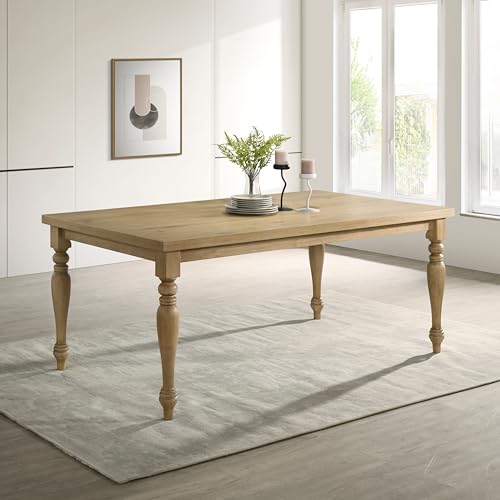
Roundhill Furniture Verta Solid Wood Leg Dining Table with Oak Veneer Top and Turned Legs
Check price on Amazon