
Elm Wood Dining Table: A Complete Buyer's Guide
From bold grain patterns to everyday durability, discover why elm wood is one of the most characterful choices for a dining table — and how to choose, style, and care for yours.
Explore Elm TablesWhy elm deserves a closer look: Elm is a hardwood with interlocking grain that resists splitting and takes stains beautifully. Its dramatic cathedral patterns and warm honey-to-chestnut tones make every table visually distinct — which is exactly why elm has been used in furniture making for centuries across Europe and Asia.
Recommended Elm Wood Dining Tables
⚠️ AFFILIATE DISCLOSURE: This website contains affiliate links. As an affiliate Associate, we earn from qualifying purchases. If you make a purchase through these links, we may receive a small commission at no additional cost to you. Read our full affiliate policy.

Tribesigns Modern Dining Table for 6 to 8 People, 71" Large Kitchen Dining Table with Wood Pedestal Base, Rectangular Long Dinner Table for Kitchen, Dining Room, Living Room, Rustic Brown
Check price on Amazon
Christopher Knight Home Ace 70.28'L Solid Wood Dining Table for 6-8 People, Rubber Wood Dining Room Table, Minimalist Modern Rectangular Kitchen Table, Easy Assembly Dining Room Furniture, Natural
Check price on Amazon
Garvee 71" Wood Dining Table for 2/4/6/8, Large Rectangular Kitchen Table | Anti-Collision Curved Corner Dinner Table with Recessed Footrest for Dining Room, Study & Home Office, Walnut Brown & Black
Check price on Amazon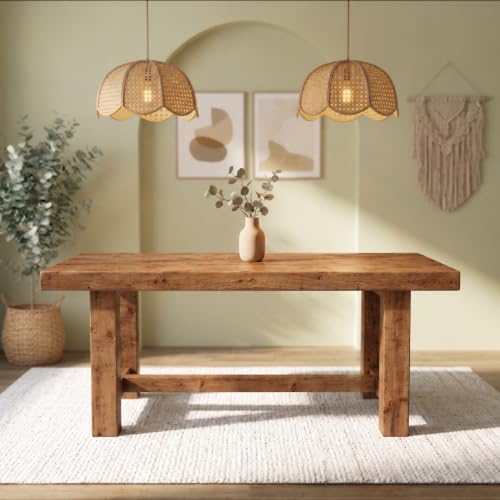
TRIBEWOOD 63-Inch Solid Wood Rectangular Dining Table for 4-6 People | Farmhouse Kitchen Table with Trestle Base, Real Wood Dining Tables for Dining Room,Apartment ,Elegant Details, Easy Assembly
Check price on Amazon
Dining Table for 6, Farmhouse Rectangular Kitchen Table, Walnut Wood | Modern Dinner Table for Family Gathering & Home Office - Sturdy Furniture
Check price on Amazon
LUXOAK 6 Piece Solid Wood Dining Table Set with 60" Farmhouse Chairs | Solid Wood Table, Upholstered Chairs, Bench Seat, Seating for 6, Brown and Black Finish
Check price on Amazon
Squireewo 71 Inch Solid Wood Dining Room Table, Walnut | Rustic Kitchen Table, Large Wooden Rectangular Dinner Table for Dining Room, Home Office, Living Room
Check price on Amazon
IDEALHOUSE 62" Long Dining Table for 6-8, Wooden Kitchen Dinner Table | Rectangle Table with Double Robust Pedestal, Grille Design, Modern Table for Dining Room, Kitchen & Living Area, Light Oak
Check price on AmazonWhat Is an Elm Wood Dining Table?
An elm wood dining table is a dining table built from timber harvested from elm trees, most commonly the Ulmus genus found across Europe, North America, and East Asia. Elm is classified as a hardwood (though technically a soft hardwood), with a density and hardness somewhere between oak and pine. That middle ground makes it practical for daily dining use while still being workable for furniture makers.
Elm's defining characteristic is its interlocking grain. Unlike straight-grained woods such as maple or ash, elm fibers zig-zag and weave together. This structure is what gives elm its famous resistance to splitting and its striking visual patterns — swirls, cathedral arches, and sometimes a "feathered" look when quartersawn.
In a dining room, elm often reads as warmer and more rustic than walnut, and more characterful than oak. If you're weighing options across wood species, our guide to elegant wood dining tables breaks down how each type compares in tone and feel.
Elm at a Glance: Key Characteristics
| Property | What It Means for a Dining Table |
|---|---|
| Grain pattern | Bold, swirling, cathedral-style patterns; highly individual from table to table |
| Color range | Light honey to medium chestnut brown; darkens slightly with age and oil finishes |
| Hardness | Moderate — harder than pine, softer than oak; suitable for daily use with a protective finish |
| Split resistance | High — interlocking grain makes elm notably resistant to splitting |
| Movement | Moderate; responds to humidity changes, so indoor climate control matters |
| Workability | Good for furniture makers; takes stains, oils, and waxes well |
Why Choose an Elm Wood Dining Table?
Buyers researching elm are usually comparing it against oak, walnut, and pine. Here's where elm genuinely stands out.
1. Unmatched Visual Character
No two elm tables look alike. The interlocking grain produces swirls and "feather" patterns that are difficult to replicate in other species. If you want a dining table that functions as a conversation piece rather than a neutral backdrop, elm is a strong candidate. This is especially true in farmhouse-style dining rooms, where bold grain and warm tones are part of the aesthetic.
2. Excellent Split Resistance
The interlocking grain that gives elm its looks also gives it structural integrity. Elm is famously resistant to splitting — historically it was used for wagon wheels, ship keels, and butcher blocks for exactly this reason. For a dining table that will see years of daily use, that's a meaningful durability advantage.
3. A Warm, Versatile Palette
Elm's honey-to-chestnut tones sit comfortably between the pale blond of ash and the deep chocolate of walnut. That middle ground makes elm easy to pair with both light and dark dining chairs, and it works across transitional dining sets as well as more modern layouts.
4. A More Sustainable Choice in Many Markets
Elm grows relatively quickly compared with slow-growing hardwoods like walnut, and reclaimed elm is widely available — particularly from old barns and industrial buildings. If sustainability is a priority, reclaimed elm tables are worth seeking out.
Elm vs. Other Dining Table Woods
The comparison below uses universal tier descriptors rather than specific figures, so it stays useful over time.
| Wood | Tier Positioning | Grain & Look | Best For |
|---|---|---|---|
| Elm | mid-tier | Bold swirls, cathedral patterns, warm honey-brown | Rustic, farmhouse, organic modern, statement pieces |
| Oak | mid-to-premium tier | Straight grain, ray fleck, pale to golden | Traditional, Scandinavian, everyday family use |
| Walnut | premium tier | Rich chocolate brown, subtle swirls | Modern, luxury, formal dining rooms |
| Pine | entry-level | Knotty, pale, soft grain | Casual, cottage, starter homes |
If you're comparing specific species, our guides on solid oak dining tables and walnut dining tables offer deeper side-by-side detail. For elm specifically, the key takeaway is that it offers more character than oak and more split resistance than pine, at a mid-tier market position.
How to Evaluate an Elm Wood Dining Table Before Buying
Elm quality varies significantly depending on how the timber was cut, dried, and finished. Use the checklist below when reviewing listings or inspecting a table in person.
Check the Grain Orientation
- Plain-sawn elm shows wide cathedral arches and is the most common cut. It's visually dramatic but moves slightly more with humidity.
- Quartersawn elm shows tighter, more linear grain and is more dimensionally stable — a better choice for large tables in rooms with variable humidity.
- Live-edge elm slabs preserve the natural edge of the tree and are typically top-tier in visual impact. Our solid wood slab dining table guide covers what to check on these pieces.
Inspect the Finish
A well-finished elm table should have an even, satin-or-matte surface with no tacky spots or visible sanding marks. Oil-and-wax finishes feel more natural and are easier to repair; lacquered finishes offer more surface protection but are harder to touch up. Our oiled dining table guide explains the trade-offs in more detail.
Look at the Construction
- Joint type: Mortise-and-tenon and doweled joints are stronger than screwed or stapled construction.
- Tabletop thickness: Thicker tops (generally 1.5 inches and up) resist warping better and feel more substantial.
- Base design: A pedestal base offers more legroom than four corner legs, which matters for larger households.
- Movement allowance: Quality tables use tabletop fasteners that allow the wood to expand and contract rather than rigidly screwing the top down.
Confirm the Wood Is Solid, Not Veneered
Many tables marketed as "elm" are actually engineered wood with an elm veneer. Veneer isn't inherently bad — it can be stable and attractive — but it should be priced and described honestly. Check the edge of the tabletop: solid elm shows end grain, while veneer shows a thin layer over a core material.
Sizing an Elm Wood Dining Table for Your Room
Elm is often used for larger statement tables, so getting the dimensions right matters. As a rule of thumb, allow 24 inches of table width per seated diner and at least 36 inches of clearance between the table edge and any wall or furniture behind the chairs.
| Seating Capacity | Typical Table Length | Best For |
|---|---|---|
| 4 people | 60–72 inches | Small dining rooms, kitchens, apartments |
| 6 people | 72–84 inches | Standard family dining rooms |
| 8 people | 84–96 inches | Larger families, frequent entertaining |
| 10+ people | 96 inches and up, or extendable | Formal dining rooms, holiday hosting |
If your room is on the smaller side, a round elm table can work well — our sturdy round dining table guide covers the trade-offs between round and rectangular layouts. For larger households, compare our 8-person dining table guide (the sizing logic applies across wood types).
Styling an Elm Wood Dining Table
Elm's strong grain means it doesn't need much decoration to look good. The styling principles below work across most rooms.
Pair With Neutral or Muted Chairs
Because elm is visually busy, chairs with simpler profiles — Windsor, ladder-back, or plain upholstered dining chairs — let the table stay the focal point. If you want contrast, black or dark-stained chairs create a striking modern look against elm's warm tones.
Choose a Rug That Anchors Without Competing
A solid or subtly textured rug in a neutral tone lets the table stand out. Avoid rugs with busy patterns that fight the grain. Our dining table rug placement guide covers sizing and positioning in detail.
Keep Centerpieces Simple
A single ceramic vessel, a low bowl of fruit, or a linen runner is usually enough. For seasonal looks, our dining table centerpiece guide has ideas that won't overwhelm the wood grain.
Light It Warmly
Warm-toned pendant lighting flatters elm's honey and chestnut tones. A pendant light over a round dining table is a classic pairing if you go that route.
Caring for an Elm Wood Dining Table
Elm is durable but not indestructible. A consistent care routine will keep it looking good for decades.
Daily Care
- Dust with a soft, dry microfiber cloth.
- Wipe spills immediately with a slightly damp cloth, then dry.
- Use coasters and placemats under hot or wet items.
- Avoid harsh chemical cleaners, ammonia, and silicone-based polishes.
Periodic Maintenance
- Oiled finishes: Reapply a thin coat of furniture oil every 6–12 months, depending on use. Our wood dining table wax and polish guide walks through the process.
- Lacquered finishes: Wipe with a damp cloth and mild soap; avoid abrasive pads.
- Scratches: Light scratches can be treated with a touch-up marker or wax stick. Our scratch touch-up guide covers the steps.
Humidity and Temperature
Elm moves with humidity changes. Keep indoor relative humidity between 40 and 60 percent, and avoid placing the table directly over heating vents or in front of radiators. Our humidity care guide explains why this matters for all solid wood tables.
Sunlight
Direct sunlight will fade and unevenly darken elm over time. Rotate the table or use window treatments during peak sun hours. For a deeper look, see our sunlight fade prevention guide.
Common Mistakes to Avoid
- Buying veneer without realizing it. Confirm whether the table is solid elm or elm veneer, and pay accordingly.
- Ignoring humidity. Solid elm tables need a stable indoor climate; basements and sunrooms without climate control are risky.
- Over-decorating. Elm's grain is busy enough without a patterned runner, patterned rug, and patterned centerpiece all competing.
- Skipping the finish check. A poorly finished elm table will show water rings and scratches quickly; a well-finished one will not.
- Underestimating chair clearance. Measure your dining room before committing to a large elm table.
Frequently Asked Questions
Is elm wood good for a dining table?
Yes. Elm is a hardwood with interlocking grain that resists splitting, making it a durable and visually striking choice for dining tables. It holds up well to daily use when properly sealed and maintained.
How do you care for an elm wood dining table?
Dust regularly with a soft cloth, wipe spills immediately, avoid harsh chemical cleaners, and reapply a protective oil or wax finish every six to twelve months depending on use. Keep the room's humidity between 40 and 60 percent.
Does elm wood warp easily?
Elm is more dimensionally stable than many softwoods but can still react to humidity swings. Keeping indoor humidity stable and avoiding direct heat sources prevents most warping. Quartersawn elm is the most stable cut.
What style of dining room suits an elm wood table?
Elm's bold grain pairs beautifully with rustic, farmhouse, industrial, and organic modern interiors. It also works as a statement piece in minimalist spaces where the table is the focal point.
Is elm harder or softer than oak?
Elm is generally softer than oak but harder than pine. That puts it in a practical middle ground: durable enough for daily dining use, and easier to work with for furniture makers.
Can I use an elm table outdoors?
Standard indoor elm dining tables are not designed for outdoor use. If you want an outdoor table, look for weather-treated hardwood specifically rated for exterior conditions. Our outdoor garden dining table guide covers suitable materials.
Ready to Find Your Elm Wood Dining Table?
Browse our curated selection of elm wood dining tables — from compact four-seaters to statement live-edge slabs. Each listing includes key construction details so you can compare confidently.
View Elm Table OptionsFurther Reading
If you're still comparing options, these guides may help: