
Small Dining Table and Chairs for 2: The Complete Guide
Everything you need to choose a compact two-person dining set — sizes, materials, space planning, styling, and practical features for apartments, breakfast nooks, and cozy kitchens.
START EXPLORINGWhy a two-person dining table makes sense: A dedicated dining space for two is one of the most efficient furniture investments you can make. It turns a corner of a studio apartment, a breakfast nook, or a small kitchen into a real place to eat, work, and host. The right small dining table and chairs for 2 balances footprint, comfort, and durability — and this guide walks you through every decision so you can buy with confidence.
Who This Guide Is For
This guide is written for people who already know they want a compact two-person dining set and are now in the research phase before purchasing. You may be furnishing a first apartment, downsizing after children leave home, setting up a breakfast nook, or converting a corner of a studio into a dining zone. In each case, the questions are similar:
- What table dimensions actually fit two people comfortably?
- Which shape — round, square, or rectangular — works best in a tight space?
- Which materials hold up to daily meals without demanding constant care?
- How do I position the table so chairs can be pulled out without blocking walkways?
- Which chairs pair well with a small table without overwhelming the room?
By the end of this guide, you will have a clear checklist and a shortlist of table types that match your room, your habits, and your design taste — ready to compare specific products.
Recommended Small Dining Table and Chairs for 2
⚠️ AFFILIATE DISCLOSURE: This website contains affiliate links. As an affiliate Associate, we earn from qualifying purchases. If you make a purchase through these links, we may receive a small commission at no additional cost to you. Read our full affiliate policy.

IRONCK Dining Table Set for 2, Rustic Brown | Small Kitchen Table with Upholstered Chairs, Compact Dining Set for Small Spaces, Kitchen & Dining Room
Check price on Amazon
AWQM 3 Piece Dining Table, Small Kitchen Table Set for 2 with Chairs(Brown) | Wood Breakfast Nook Table and Chairs Set of 2,Dinette Set for Small Space,Dining Room,Office, Apartment
Check price on Amazon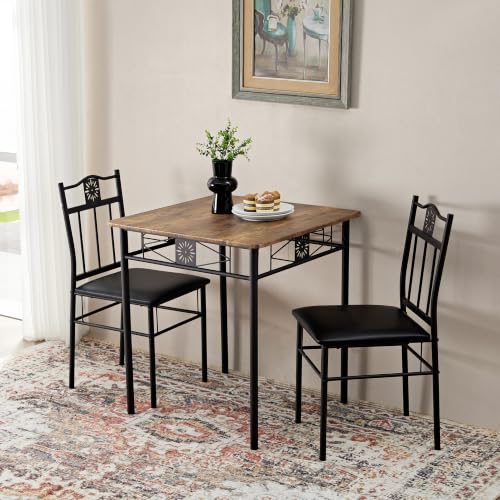
VECELO 3 Piece Small Dining Table Set for 2 with Upholstered Chairs, Brown | Wood Tabletop, Faux Leather Padded Seat, for Kitchen, Breakfast Nook, Small Space
Check price on Amazon
VINGLI 3 Piece Dining Set,Small Kitchen Table Set for 2,Breakfast Table Set,Kitchen Wooden Table and 2 Chairs for Small Space/Dining Room/Apartment,Metal Frame,Wine Rack,Black
Check price on Amazon
Best Choice Products 3-Piece Dining Set W/ Storage Rack - Med Brown/Black | Modern space saving steel frame dinette built for kitchens, dining rooms & small spaces
Check price on Amazon
VECELO 3 Piece Small Dining Table Set for 2 with Upholstered Chairs, Wood Tabletop with Faux Leather Padded Seat, for Kitchen, Breakfast Nook, Small Space, Oak White
Check price on Amazon
JUMMICO 3-Piece Wooden Round Table & Chair Set (Walnut/Black) | Kitchen Breakfast Nook Wood Grain Tabletop with Metal Frame and Built-in Wine Rack for Kitchen, Dining Room
Check price on Amazon
VINGLI 3 Piece Dining Set,Small Kitchen Table Set for 2,Breakfast Table Set,Kitchen Wooden Table and 2 Chairs for Small Space/Dining Room/Apartment,Metal Frame,Wine Rack,White&Light Oak
Check price on AmazonHow Much Table Space Do Two People Really Need?
The single most common mistake when buying a two-person dining set is choosing a table that looks right in the showroom but feels cramped at home. The fix is simple: plan from the person outward, not from the table inward.
Minimum and comfortable dimensions
- Per-person width: allow at least 24 inches (60 cm) of table width per person; 28–30 inches is more comfortable for plates, glasses, and elbows.
- Table depth: a depth of 28–30 inches (70–75 cm) is enough for two place settings facing each other with a small centerpiece between them.
- Round tables: a diameter of 30–36 inches (76–91 cm) seats two comfortably; 36 inches leaves room for serving dishes.
- Square tables: 30×30 inches is the compact minimum; 36×36 inches feels noticeably more generous.
- Rectangular tables: 30×48 inches is a comfortable two-seater and leaves room to add a third chair for a guest.
Clearance around the table
Dimensions are only half the story. You also need room to use the table:
- 30–36 inches (76–91 cm) between the table edge and a wall or large furniture piece so chairs can be pulled out.
- 36–44 inches (91–112 cm) for a walkway behind seated diners.
- If the table sits against a wall, consider a bench dining table against the wall arrangement to save depth.
If you are still mapping out your room, our guide on how much room you should have around a dining table breaks down clearance rules by room type and traffic pattern.
Choosing the Right Shape for a Small Space
Shape affects both how the table fits and how the room feels. For two-person setups, three shapes dominate.
Round tables
Round tables are the default choice for tight corners and small rooms. There are no sharp corners to navigate, and the circular shape allows smoother traffic flow around the table. A 36-inch round table seats two easily and can seat three in a pinch. If you love the look, explore retro round dining table and chairs or a glass and chrome round dining table for a lighter visual footprint.
Square tables
Square tables maximize seating along walls and work well in square rooms or corners. A 30 x 30 dining table is the classic compact square for two. Square tables also pair naturally with banquette or corner nook seating.
Rectangular tables
Rectangular tables are the best fit for narrow, linear spaces such as galley kitchens, balconies, and breakfast bars. They hug walls efficiently and can double as a work surface. A long slender dining table works well along a wall, while a mini dining table is a good option for very small footprints.
Space-Saving Table Types Worth Knowing
If floor space is at a premium, the table type matters as much as the dimensions. These are the most practical options for two-person dining in small homes:
- Drop-leaf tables: one or both sides fold down, so the table can shrink to a narrow console when not in use. A small oak drop-leaf dining table is a durable classic, and a extendable drop-leaf dining table adds flexibility for guests.
- Gateleg tables: a traditional drop-leaf variant with folding legs, ideal for rooms that need to switch between dining and open floor space. See our gateleg dining table overview.
- Folding tables: fold flat or collapse entirely for storage. A folding dining table on wheels is especially practical in studios and multi-use rooms.
- Hideaway tables: designed to tuck chairs underneath or fold into a compact unit. Explore hideaway dining table and chairs options.
- Nesting tables: smaller tables that slide under a larger one, useful when you occasionally need extra surface.
- Convertible tables: coffee tables that rise to dining height or expand into a dining surface. A coffee table that turns into a dining table is a clever solution for studio apartments.
For a broader view of compact layouts, our guide on small apartment dining table ideas covers placement strategies for studios and one-bedroom units.
Materials and Finishes: What Holds Up to Daily Use
The material you choose affects durability, maintenance, and how the table ages. For a two-person table used daily, prioritize surfaces that resist scratches, moisture, and heat.
Solid wood
Solid hardwood — oak, walnut, teak, and maple — offers the best long-term durability and can be refinished if damaged. A small wooden dining table set or a small light oak dining table will age gracefully and suit both modern and traditional interiors. Solid wood requires periodic oiling or waxing and should be kept away from direct heat and standing water.
Glass
Tempered glass tops visually open up small rooms because they let light pass through. A small glass dining table or a small glass dining table set feels less bulky than solid wood, though glass shows fingerprints and requires regular cleaning. Pair glass with a sturdy metal or wood base for stability.
Metal and mixed materials
Metal frames with wood or glass tops are durable, easy to clean, and suit industrial and modern interiors. A metal frame dining table and chairs set is a practical choice for high-traffic homes, and a black metal dining table and chairs set works well in compact modern spaces.
Engineered wood and laminate
Engineered wood with a veneer or laminate finish is common in entry-level and mid-range sets. It is stable and resistant to warping, but the surface cannot be sanded and refinished the way solid wood can. Choose a reputable brand with a moisture-resistant core if the table will see daily use.
Comparing tiers at a glance
| Tier | Typical Materials | Best For |
|---|---|---|
| Entry-level | Engineered wood, laminate, thin metal frames | First apartments, occasional use, renters |
| Mid-range | Solid wood veneers, tempered glass, reinforced metal | Daily use, balanced durability and design |
| Premium | Solid oak, walnut, teak, thick tempered glass | Long-term daily use, design-focused homes |
| Luxury | Solid hardwood with hand finishes, stone tops, designer frames | Statement pieces, formal dining corners, heirloom use |
Within each tier, look for reinforced joinery, sealed edges, and a warranty that matches your intended use. A mid-range model usually offers a noticeably smoother mechanism and better finish than an entry-level one.
Choosing Chairs That Fit a Small Two-Person Table
Chairs are half the set, and in small spaces they matter just as much as the table. Oversized chairs crowd a compact table and block walkways; undersized chairs feel unstable.
- Seat height: standard dining chairs have a seat height of 17–19 inches (43–48 cm), which pairs with standard 28–30 inch tables. Bar and counter-height tables need taller chairs — see our guides on bar height dining sets if you are considering a raised option.
- Tuck-under design: chairs with low or open armrests can slide under the table, saving floor space. A round dining table with chairs that tuck under is ideal for tight rooms.
- Bench seating: a bench on one side saves space and creates an informal look. A bench for a dining table with a back adds comfort, and a bench seat with a back for a dining table suits longer meals.
- Stackable chairs: lightweight stackable chairs are easy to store when not in use and work well in multi-purpose rooms.
- Upholstery: wipe-clean performance fabrics are preferable to delicate textiles in a dining area used daily.
If you already have a favorite chair style, build the table around it. For example, a dark grey chair can anchor a light wood table, while a black table with beige chairs creates a high-contrast modern look.
Styling a Small Two-Person Dining Space
Small dining areas look best when the furniture is proportional and the decor is deliberate. A few principles make a big difference:
- Keep the tabletop light: a small centerpiece, a low vase, or a pair of candlesticks is enough. Avoid tall arrangements that block sightlines in a compact room.
- Use a runner or placemats: a dining table runner adds color and protects the surface without the bulk of a full tablecloth. A table cloth for a dining room table is a good option for formal occasions.
- Protect the surface: use dining table hot pads under hot dishes and a clear plastic sheet for the dining table if children or crafts are part of daily life.
- Anchor with a rug: a small rug under the table defines the dining zone in an open-plan room and adds warmth.
- Add wall decor: a mirror or a small gallery wall behind the table draws the eye upward and makes the space feel larger.
For more ideas, see our guides on formal dining table decoration ideas and rustic dining room table decor.
Placement Ideas for Tight Rooms
Where you place the table is as important as which table you choose. These layouts work well for two-person dining:
- Breakfast nook: a corner nook with a bench and a small table makes efficient use of a kitchen corner. A corner nook dining table set is purpose-built for this layout.
- Against a wall: push a rectangular table against a wall and use a bench on the wall side. This is one of the most space-efficient arrangements for narrow rooms.
- Under a window: natural light makes a small dining area feel larger and more inviting.
- Open-plan corner: define the dining zone with a rug and a pendant light, even when the table shares space with a living area.
- Balcony or patio: if outdoor space is available, an outdoor small dining table and chairs set extends your dining options in mild weather.
For rooms with unusual shapes, our guides on small triangle dining tables and small L-shaped dining tables cover corner and angled layouts in more detail.
A Practical Buying Checklist
Before you compare specific sets, run through this checklist. It will narrow your options quickly and prevent returns.
- Measure the room, not just the wall. Note door swings, radiators, and traffic paths.
- Decide the table shape based on the room geometry (round for corners, rectangular for narrow walls).
- Confirm clearance: at least 30 inches to walls, 36 inches for walkways.
- Choose the table type: fixed, drop-leaf, gateleg, folding, or convertible based on how often the space needs to be cleared.
- Select a material tier that matches daily use — solid wood or tempered glass for long-term durability.
- Check chair compatibility: seat height, tuck-under clearance, and armrest height.
- Review assembly and warranty: flat-pack assembly is common; check that hardware and instructions are included.
- Plan the styling with a runner, placemats, and a small centerpiece — and protect the surface with pads.
If you are also considering a slightly larger set for occasional guests, our guide on small dining table sets for 4 explains when a four-seater makes sense in a compact room.
Common Mistakes to Avoid
- Buying by looks alone. A table that photographs well may be too deep or too tall for your room. Always check dimensions against your measurements.
- Ignoring chair clearance. Chairs need room to pull out; a table that fits the wall but blocks the doorway is a daily frustration.
- Choosing a delicate finish for daily use. Untreated wood and light veneers show wear quickly in high-traffic dining areas.
- Overlooking assembly. Some compact tables ship flat-packed with multi-step assembly. Check the instructions and hardware before purchase.
- Skipping surface protection. Hot pads, placemats, and leg protectors extend the life of any table — see our guide on dining table leg protectors.
Ready to Compare Two-Person Dining Sets?
Browse curated small dining table and chair sets selected for compact spaces, durable materials, and practical layouts. Compare features and find the set that fits your room.
View Recommended SetsFrequently Asked Questions
What size dining table is best for two people?
For two people, a round table with a diameter of 30 to 36 inches works well, while a rectangular table measuring around 30 inches by 48 inches provides comfortable elbow room. Allow at least 24 inches of table width per person and 30 to 36 inches of clearance around the table for chair movement.
Can a small dining table for 2 fit in an apartment?
Yes. Compact designs such as drop-leaf, gateleg, folding, and nesting tables are specifically made for apartments and tight spaces. These tables can be folded flat or tucked against a wall when not in use, freeing up floor space for daily living.
Which material is most durable for a two-person dining table?
Solid hardwood such as oak, walnut, and teak offers the best long-term durability for daily use. For high-moisture or busy environments, premium laminate and tempered glass over a metal frame are strong alternatives. Entry-level tables often use engineered wood with veneer, which is serviceable but requires more careful handling.
Should I choose a round or rectangular table for a small dining space?
Round tables are generally better for tight corners and small rooms because they have no sharp edges and allow smoother traffic flow. Rectangular tables maximize seating along walls and work well in narrow, linear spaces such as galley kitchens or breakfast nooks.
How much clearance do I need around a two-seater dining table?
Leave at least 30 to 36 inches between the table edge and any wall or furniture so chairs can be pulled out comfortably. For a walkway behind seated diners, allow a minimum of 36 to 44 inches to maintain safe and easy movement.
Final Thoughts
A small dining table and chairs for 2 is one of the highest-impact pieces of furniture in a compact home. It turns unused square footage into a real dining ritual, and with the right shape, size, and material, it can serve for years without crowding the room. Start with measurements and clearance, choose a table type that matches how you live, then select chairs and finishes that support daily use. The curated sets above are a practical starting point for comparing features — from there, you can buy with confidence.