
Table Cloth for Dining Room Table: A Complete Selection Guide
Everything you need to choose the right tablecloth — fabric, sizing, shape, care, and styling — so your dining room table looks its best for everyday meals and special occasions alike.
Why a table cloth matters: A well-chosen tablecloth does more than cover a surface. It protects your dining room table, sets the tone for the room, and makes every meal feel a little more considered. Whether you are dressing a long rectangular table for a holiday gathering or refreshing a compact round table for weeknight dinners, the right cloth balances practicality with presentation. This guide walks you through the decisions that matter — from fabric performance and drop length to shape matching and long-term care — so you can choose with confidence.
What a Table Cloth Actually Does
Before comparing fabrics and finishes, it helps to understand the three jobs a dining room tablecloth performs. Each one influences which type you should choose.
- Protection: A cloth shields the tabletop from heat, spills, scratches, and everyday wear. This matters most on wood and veneer surfaces, where moisture rings and heat marks can be difficult to reverse.
- Presentation: The cloth establishes the visual foundation for your table setting. Color, texture, and drape all shape how formal or relaxed the room feels.
- Comfort and acoustics: A fabric layer softens the sound of dishes and cutlery and creates a warmer, more inviting surface for guests to sit around.
If protection is your priority, pair the cloth with a separate protective layer. A felt-backed dining table hot pad or a dedicated table pad underneath will extend the life of both the cloth and the tabletop. For tables that see heavy daily use, it is also worth reviewing your broader dining table routine upkeep so the surface stays in good condition beneath the linen.
Choosing the Right Fabric
Fabric is the single biggest factor in how a tablecloth looks, feels, and performs. The table below compares the most common options across the qualities that matter most at the dining table.
| Fabric | Best For | Drape & Feel | Care Level | Tier |
|---|---|---|---|---|
| Cotton | Everyday meals, casual family dining | Soft, natural, holds a gentle fold | Machine washable; may need ironing | Essential tier |
| Linen | Relaxed entertaining, warm-weather tables | Textured, breathable, elegant natural crease | Gentle wash; iron while slightly damp | Balanced tier |
| Cotton-linen blend | Versatile all-purpose use | Soft with structure; resists heavy wrinkling | Machine washable; moderate ironing | Balanced tier |
| Polyester blend | Frequent entertaining, high-traffic tables | Smooth, wrinkle-resistant, consistent drape | Easy care; quick to dry | Essential tier |
| Damask / jacquard | Formal dinners, holiday settings | Rich pattern, structured drape, subtle sheen | Delicate wash; careful ironing | Premium tier |
| Vinyl / coated | Families with children, outdoor-adjacent dining | Firm, wipe-clean, minimal movement | Wipe with damp cloth | Starter tier |
As a general rule, mid-range fabrics such as cotton-linen blends offer a noticeable step up in drape and longevity compared with entry-level synthetic options, while remaining practical for regular washing. Premium damask and jacquard weaves are best reserved for occasions where presentation leads and laundering is infrequent.
Quick Fabric Match
- Daily family meals: polyester blend or cotton for easy washing.
- Weekend hosting: cotton-linen blend for a relaxed but polished look.
- Holidays and formal dinners: damask or jacquard for a structured, celebratory drape.
- Mess-prone households: coated or vinyl options for wipe-clean convenience.
How to Size a Table Cloth for Your Dining Room Table
Sizing is where most tablecloth purchases go wrong. The goal is to cover the tabletop fully and achieve a consistent drop on every side. Start by measuring your table, then decide how far you want the fabric to hang.
Step 1: Measure Your Table
- Rectangular and square tables: measure the length and the width of the tabletop in inches.
- Round tables: measure the diameter across the widest point.
- Oval tables: measure the longest length and the widest width.
If your table has an irregular shape, measure at the widest points and size up rather than down. For help matching your table to a seating plan first, the dining table size chart is a useful companion reference.
Step 2: Choose Your Drop Length
The drop is how far the cloth hangs below the tabletop edge. Add twice the drop to each dimension to find the finished cloth size.
| Drop Length | Look | Best For |
|---|---|---|
| 6–8 inches | Casual, neat | Everyday dining, breakfast nooks, benches |
| 10–12 inches | Balanced, semi-formal | Weekend hosting, family dinners |
| 15–20 inches | Formal, floor-adjacent | Holiday dinners, formal dining rooms |
| Floor-length (30+ inches) | Dramatic, banquet-style | Weddings, banquets, statement settings |
Worked example: a rectangular table measuring 72 × 40 inches with an 8-inch drop needs a cloth of 88 × 56 inches (72 + 8 + 8 by 40 + 8 + 8). For a round table 48 inches in diameter with a 10-inch drop, choose a 68-inch round cloth (48 + 10 + 10).
Sizing Tips That Save Returns
- Always measure the table itself, not the old cloth — fabrics shrink and stretch over time.
- If your table has an extension leaf, measure both configurations and choose a cloth that fits the larger one; use clips or a runner for the smaller setup.
- Allow for chair placement: with a long drop, tuck chairs under neatly so the fabric is not trapped or pulled.
- For oval tables, an oval cloth looks more tailored than a rectangular one draped over the curve.
Matching Cloth Shape to Table Shape
The cloth should follow the silhouette of the table. A round cloth on a square table creates awkward corners, while a rectangular cloth on a round table leaves uneven drapes.
- Rectangular tables: rectangular cloths are the most versatile; square cloths work on small square tables.
- Round tables: round cloths give the cleanest drape and are well suited to compact dining areas.
- Oval tables: oval cloths follow the curve and avoid bunching at the ends.
- Square tables: square cloths align with the edges; a round cloth can work for a softer, informal look if the drop is short.
If you have a small or unusually shaped table, the guidance in dining table for tight spaces can help you plan the surrounding layout before you settle on a cloth size.
Styling Your Dining Room Table with a Cloth
A tablecloth is the base layer of your table setting. How you build on it determines the overall mood of the room.
Everyday Styling
- Choose a neutral solid — oatmeal, soft grey, or warm white — for a calm, uncluttered look.
- Keep accessories minimal: a low bowl or a single vase is enough.
- Pair with simple placemats or none at all to reduce laundry.
Formal and Holiday Styling
- Use a longer drop and a richer fabric such as damask for a ceremonial feel.
- Layer a contrasting dining table runner down the center to add depth and structure.
- Anchor the setting with a low formal dining table centerpiece that does not obstruct conversation.
- For seasonal inspiration, see these formal dining table decoration ideas and rustic dining room table decor approaches.
Color and Pattern Guidance
- Neutrals are the safest long-term choice and work with changing decor.
- Stripes and checks add casual character and hide small marks well.
- Florals and damask suit traditional rooms and formal occasions.
- Dark solids hide stains but show lint and dust more readily.
- Light solids brighten the table but require more frequent laundering.
Care, Cleaning, and Storage
A tablecloth that is cared for properly will last for years and look better each time it is used. The routines below cover the essentials for the most common fabrics.
Routine Care
- Shake out crumbs after each meal and fold the cloth loosely rather than crumpling it.
- Rotate between two cloths if you use one daily, so each has time to rest and air.
- Follow the care label precisely; when in doubt, wash cool and air dry.
Stain Removal Basics
- Blot, do not rub, spills immediately with a clean, dry cloth.
- Pre-treat with a gentle detergent before washing; avoid hot water on protein-based stains such as dairy or egg.
- For wax, let it harden fully, then lift it off before treating any residue.
- Test any cleaning product on a hidden hem or corner first.
- For a broader reference, see the dining table stain removal guide.
Storage
- Store clean and fully dry to prevent mildew and set-in creases.
- Roll rather than fold for long-term storage to avoid permanent fold lines.
- Keep away from damp basements and direct sunlight.
Pairing a Cloth with Table Protection
A tablecloth is a protective layer, but it is not a complete one. Heat, sharp edges, and heavy serving dishes can still transfer through a single fabric layer. A dedicated pad underneath adds a buffer and helps the cloth lie flat.
- Use a felt-backed dining table pad protection under the cloth for heat and scratch resistance.
- Place dining table hot pads under serving dishes during meals.
- For wood tables, check the surface regularly and follow a dining table surface leveling check if the cloth begins to sit unevenly.
- If you use a clear protective sheet for messy activities, the guidance on a clear plastic sheet for dining table explains when it is appropriate.
Common Tablecloth Mistakes to Avoid
- Buying by table size, not cloth size: always add the drop to both dimensions.
- Ignoring shrinkage: natural fabrics can shrink; pre-wash or size up slightly.
- Mismatching shape: a square cloth on a round table will never drape evenly.
- Overlooking care requirements: a delicate fabric that needs hand washing is a poor fit for daily family use.
- Skipping the pad: without an underlayer, heat and spills can still reach the table.
- Not accounting for extensions: measure the table in its largest configuration if you host regularly.
A Simple Decision Framework
Use these questions in order to narrow your choice quickly:
- How often will it be washed? Frequent washing points to polyester blends or cotton; occasional use allows linen or damask.
- Who uses the table? Households with young children benefit from coated or easy-care fabrics.
- What is the table shape? Match the cloth shape directly — rectangular, round, oval, or square.
- How formal is the room? Formal dining rooms suit longer drops and richer weaves; casual rooms suit shorter drops and simpler fabrics.
- Will it be used with an extension? Size for the largest configuration and use a runner for smaller setups.
Recommended Table Cloths for Dining Room Tables
⚠️ AFFILIATE DISCLOSURE: This website contains affiliate links. As an affiliate Associate, we earn from qualifying purchases. If you make a purchase through these links, we may receive a small commission at no additional cost to you. Read our full affiliate policy.

Smiry Rectangle Waterproof Heavy Duty Vinyl Tablecloths, 60 x 84 Inch | Wipeable Washable Floral Embossed Table Cover for Thanksgiving, Kitchen and Dining Room, Indoor & Outdoor Use, Beige
Check price on Amazon
Deep Dream Tablecloths, 55 x 86 Inch Waterproof Table Cloth, Linens Wrinkle Free Anti-Fading, Rustic Table Cover Decoration for Kitchen Dinning Christmas (Rectangle/Oblong,6-8 Seats, Light Coffee)
Check price on Amazon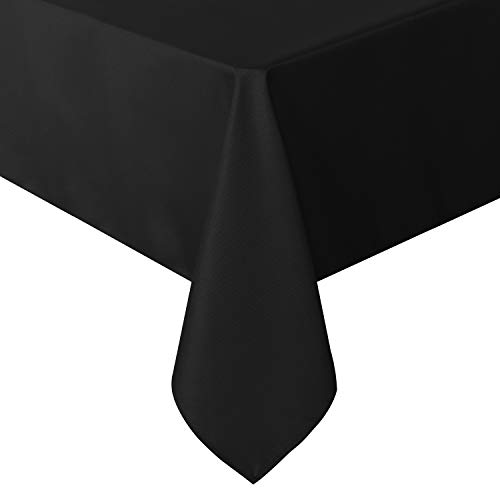
sancua Rectangle Tablecloth, 60 x 84 Inch, Black | Stain and Wrinkle Resistant, Washable Polyester Cloth, Decorative Fabric Cover, For Dining Tables, Buffet Parties and Camping
Check price on Amazon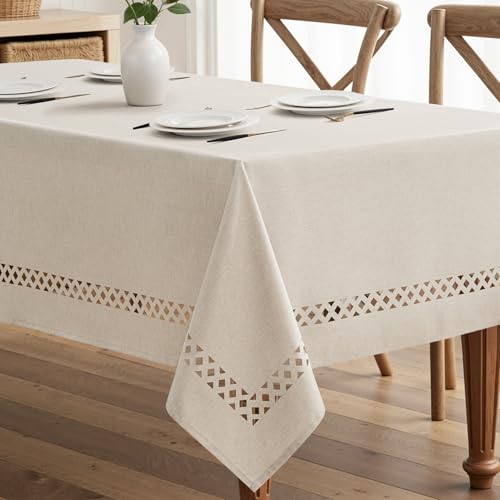
MIULEE Beige Rectangle Tablecloth with Decorative Cutouts 52x70 Inch | Waterproof Stain Resistant & Shrink-Proof Table Cloth, Farmhouse Style, for Dining Wedding Kitchen Party Outdoor
Check price on Amazon
BALCONY & FALCON Rectangle Table Cloth Waterproof Beige 118"x57" | Rectangular Washable Wrinkle Resistant Table Cloth Linen Fabric Tablecloths for Dining Party Kitchen Wedding and Outdoor Use
Check price on Amazon
Deep Dream Tablecloths, Waterproof Table Cloth, Linens Wrinkle Free Anti-Fading, Rustic Table Cover Decoration for Kitchen Dinning Christmas (Rectangle/Oblong, 55''x70'',4-6 Seats, Light Coffee)
Check price on AmazonFrequently Asked Questions
How do I measure my dining room table for a table cloth?
Measure the length and width of your tabletop, then add the desired drop length to both sides. For a formal look, a 10 to 15 inch drop works well; for a casual look, 6 to 8 inches is typical. For round tables, measure the diameter and add twice the drop length.
What is the best fabric for a dining room table cloth?
Cotton and linen blend tablecloths are popular for everyday use because they are breathable and durable. Polyester blends are wrinkle-resistant and suited to frequent entertaining. For formal occasions, damask or jacquard weaves offer a refined drape.
How do I remove stains from a dining table cloth?
Blot spills immediately with a clean cloth. For washable fabrics, pre-treat stains with a gentle detergent before laundering according to the care label. Avoid hot water on protein-based stains, and always test any cleaning product on a hidden area first.
Should I use a table pad under my table cloth?
Yes, a table pad adds protection against heat, scratches, and spills. It also helps the tablecloth drape more smoothly. Felt-backed pads are a common choice for wood tables.
Final Thoughts
Choosing a table cloth for your dining room table comes down to three decisions: the right fabric for how you live, the right size for your table and desired drop, and the right shape to match your tabletop. Get those three right, add a protective pad underneath, and follow a simple care routine, and your tablecloth will serve you well for years — through weeknight dinners, weekend hosting, and every celebration in between.
If you are still planning the rest of your dining setup, explore the dining table runner guide for layering ideas, or browse table types to confirm your table shape before you buy.