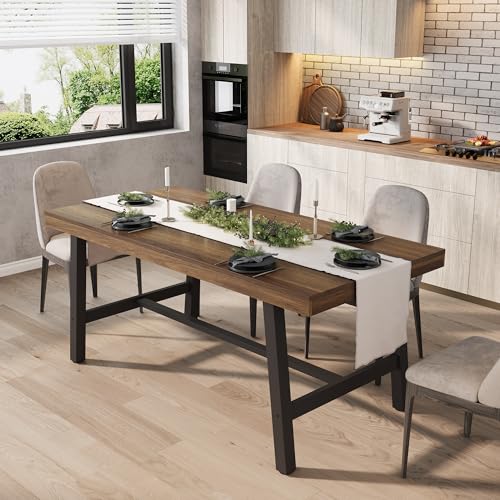
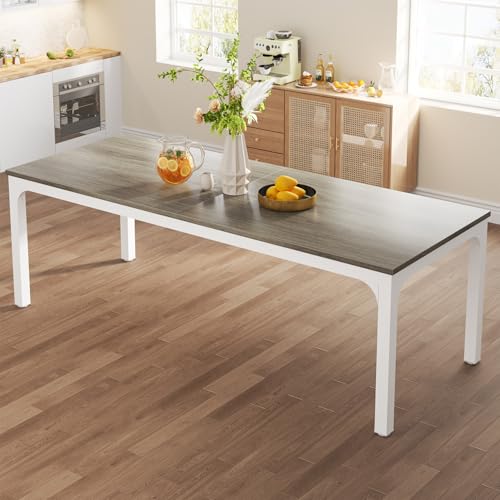
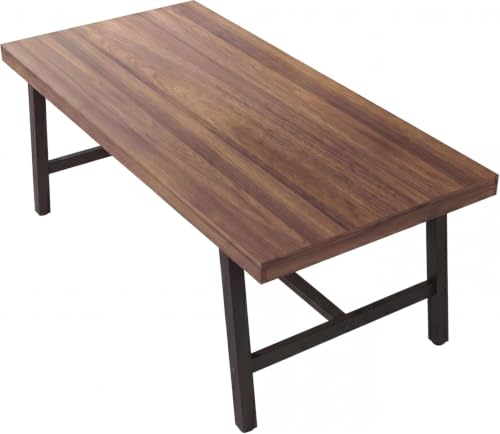
What Is a Long Slender Dining Table?
A long slender dining table is a table with an elongated, narrow top, typically measuring 28 to 36 inches in width and 60 to 96 inches in length. Compared with a standard rectangular dining table, which is often 36 to 40 inches wide, a slender table trims several inches from the depth while keeping the seating length intact.
The result is a table that seats the same number of diners along its length but takes up far less floor space in the perpendicular direction. That extra room translates directly into wider walkways, easier chair pull-out, and a less cramped dining experience in compact rooms.
Long narrow dining tables are especially relevant for people searching for a dining table for tight spaces, a long slender dining table, or a small kitchen dining table. They solve a specific geometry problem: a room that is long but not wide.
Standard Dimensions and Seating Capacity
Understanding the numbers before you shop prevents the most common mistake: buying a table that looks right in a showroom but crowds your actual room. The table below summarizes typical long slender dining table sizes and how many people each comfortably seats.
| Table Length | Typical Width | Comfortable Seating | Best For |
|---|---|---|---|
| 60 inches | 28–30 inches | 4 people (2 per side) | Small kitchens, two-person households, breakfast nooks |
| 72 inches | 30–32 inches | 6 people (2 per side + 2 ends) | Standard dining rooms, families of four to six |
| 84 inches | 30–34 inches | 6–8 people | Long narrow rooms, open-plan layouts, entertainers |
| 96 inches | 32–36 inches | 8 people (3 per side + 2 ends) | Large families, holiday hosting, formal dining rooms |
As a rule of thumb, each diner needs 24 inches of linear table edge. If you plan to seat people at the ends, allow 12 to 15 inches of table depth per end seat and make sure the table legs are positioned so they do not block knee space. For a deeper breakdown of how table length maps to seat count, see our guide on the length of an 8-seater dining table and dining table sizes for 4.
Key Benefits of a Long Narrow Dining Table
A slender table is not a compromise; it is a deliberate design choice with concrete advantages. Here is what you gain.
1. Better Walkway Clearance
In a narrow room, every inch of depth matters. A table that is 6 inches slimmer than a standard option frees up 6 inches of walking space behind the chairs on both sides, or 12 inches if you center the table. That is often the difference between squeezing past a chair and walking comfortably. Our guide on how much room you should have around a dining table explains the clearance math in detail.
2. More Seating in the Same Footprint
Because seating is distributed along the length rather than the width, a long narrow table packs more diners into a smaller total floor area. A 72-inch by 30-inch table seats six people while occupying roughly 15 square feet. A round table seating six typically needs a 60-inch diameter, which consumes about 20 square feet. The slender table is the more space-efficient geometry.
3. Strong Visual Flow in Open-Plan Rooms
A long, low-profile table creates a clean horizontal line that guides the eye through an open-plan space. It reads as less visually heavy than a deep rectangular or round table, which helps a combined kitchen-dining-living area feel cohesive rather than cluttered.
4. Natural Fit Along a Wall or Window
Placed parallel to a wall, a long slender table can function like a built-in banquette table. Pair it with a bench dining table against the wall or a bench for a dining table with a back to reclaim floor space and create a restaurant-style nook.
Pros of a Long Slender Dining Table
- Maximizes seating in narrow rooms
- Preserves walkway clearance
- Encourages conversation along the length
- Works well with benches on one or both sides
- Visually lighter than deep or round tables
- Easy to pair with runners and linear centerpieces
Trade-Offs to Consider
- Narrower depth limits large platters and serving dishes
- End seats can feel cramped if leg placement is poor
- Not ideal for round platters or family-style buffets
- Requires careful chair selection to avoid crowding
- Less forgiving of oversized centerpieces
Materials That Suit a Slender Profile
A narrow tabletop has less width to resist downward force, so material and frame construction matter more than on a wide table. The table needs enough rigidity to avoid sagging over its span.
Solid Wood
Solid oak, walnut, and teak are the strongest choices for a long slender dining table. Hardwood resists bending over long spans and can be refinished if the surface wears. An oak table in a mid-range or premium tier is a long-term investment that holds its shape for decades. Look for tables with an apron or stretcher for added rigidity. If you prefer a lighter visual weight, a small light oak dining table or a minimalist dining table for 2 shows how slim oak profiles can look airy without sacrificing strength.
Metal and Glass
A metal frame with a glass or stone top is an excellent fit for a slim profile. Steel or aluminum legs provide stiffness, and glass keeps the table visually light. A glass and chrome round dining table is a different shape but demonstrates the same principle: metal plus glass equals a lighter footprint. For slender rectangular versions, prioritize tempered glass at least 10mm thick.
Engineered and Veneer Tops
High-grade engineered wood with a veneer finish is a solid choice in the entry-level to mid-range tiers. It resists warping better than some solid softwoods and keeps the tabletop flat over long spans. Check that the core is dense, not hollow, and that the edges are properly banded.
Stone and Composite
Marble, quartz, and sintered stone tops are heavy and rigid, so they resist sagging well. The trade-off is weight: a long stone top needs a robust base with cross-bracing. For narrow tables, a thinner stone slab over a steel frame is a common premium construction.
How to Lay Out a Narrow Dining Table
Placement determines whether a slender table feels elegant or awkward. Follow these layout principles.
Run It Parallel to the Longest Wall
In a narrow room, orient the table lengthwise along the longer dimension. This keeps the short dimension of the room open for walkways. If the room is a galley kitchen, place the table along one wall and leave the opposite side open for traffic.
Allow 36 Inches Behind Pulled-Out Chairs
The standard recommendation is 36 inches of clearance from the table edge to the nearest wall or obstacle when a chair is pulled out. If space is limited and chairs stay tucked in, you can reduce this to 24 inches, but 36 inches is the comfortable target. Our dining table space planning guide walks through the measurement process step by step.
Choose Chairs That Tuck Under
A table with an apron or thick edge limits how far chairs can slide in. For slender tables, choose armless chairs with a low back profile, or use benches. A round dining table with chairs that tuck under shows the tuck-under principle in a different shape, but the concept applies to narrow tables too: every inch of tuck-in space is an inch of walkway regained.
Use a Bench on One Side
A bench slides fully under the table when not in use and seats more people per linear foot than individual chairs. Pair a bench seat with a back for a dining table on the wall side and chairs on the open side. This is the classic narrow-room configuration.
Keep Centerpieces Linear and Low
A slender table leaves limited depth for decor. Use a dining table runner to define the centerline, then add low-profile elements: a slim vase, a row of candles, or a shallow bowl. Avoid tall or wide centerpieces that block sightlines across the table. For more ideas, see formal dining table centerpiece ideas and formal dining table decoration ideas.
Seating Strategies for Long Slim Tables
The seating you choose affects both comfort and how much floor space the table consumes.
Two Per Side, Plus Ends
On a 72-inch table, two chairs per side plus one at each end is the standard six-seat configuration. Make sure the end seats have at least 12 inches of table depth and that the legs are inset enough to allow knee room.
Three Per Side on Longer Tables
On 84- to 96-inch tables, three chairs per side becomes comfortable. Three per side on an 84-inch table means 28 inches of edge per person, which is tight but workable for casual dining. On a 96-inch table, it gives 32 inches each, which is comfortable.
Benches for Flexible Seating
Benches are the most space-efficient option for narrow tables. A bench seats two or three people with no armrests or gaps, and it stores fully under the table. For wall-side placement, a bench with a back adds comfort. For the open side, a backless bench keeps the visual line clean.
Stools for Counter-Height Versions
If you choose a counter-height or bar-height slender table, confirm the stool seat height matches the table. Counter-height tables (around 36 inches tall) need stools with a 24- to 26-inch seat height. For a broader overview of height compatibility, see our dining chair selection guide.
Styling a Long Slender Dining Table
A narrow table rewards linear styling. The goal is to draw the eye along the length rather than across the width.
Start With a Runner
A table runner anchors the centerline and makes a slim table look intentional rather than undersized. Choose a runner that leaves 6 to 8 inches of bare table at each end so the edges stay usable.
Layer With Low Centerpieces
A row of small candle holders, a shallow ceramic bowl, or a single slim vase with tall branches keeps the sightline open. Avoid broad floral arrangements that crowd the place settings.
Use Placemats to Define Settings
Rectangular placemats reinforce the linear geometry. On a narrow table, placemats also protect the surface and visually separate each diner's space, which helps the table feel less cramped.
Protect the Surface
Use dining table hot pads under serving dishes to protect the finish. For glass tops, a clear plastic sheet for a dining table can protect against scratches while preserving the look.
Common Mistakes to Avoid
Buyers often run into the same problems with narrow tables. Here is what to watch for.
- Buying too wide. A 36-inch table sounds narrow, but in a room that is only 8 feet wide, it leaves just 24 inches on each side after accounting for a 36-inch walkway. Measure the room and subtract walkway clearance before you decide on width.
- Ignoring leg placement. Legs at the extreme corners block end seats. Look for tables with inset legs or a trestle base that leaves the ends open.
- Choosing chairs that do not tuck. Thick arms and high backs prevent chairs from sliding under the table, eating into your walkway. Measure the chair depth against the table apron height.
- Overloading the surface. A narrow table has less room for serving platters. Plan to serve from a sideboard or kitchen counter rather than family-style on the table.
- Skipping the runner. Without a runner, a long narrow table can look bare and unbalanced. The runner is the cheapest fix with the biggest visual payoff.
Who Should Choose a Long Slender Dining Table?
A slim dining table is the right fit for specific situations.
- Galley and narrow kitchens. The table runs along the long axis and leaves the traffic path clear.
- Open-plan apartments. A long low table defines the dining zone without blocking sightlines.
- Rooms that are long but shallow. A slim table uses the length and preserves the depth.
- Hosts who seat six to eight regularly. A long table distributes seating efficiently.
- People who want a bench-and-chair mix. A slim table pairs naturally with one bench on the wall side.
If your room is square rather than narrow, a round or square table may serve you better. If you need a table for a very tight corner, consider a small corner booth dining table or a corner nook dining table set. For rooms that need flexibility rather than a fixed footprint, a hideaway dining table and chairs or a folding dining table on wheels may be a better fit.
Alternatives Worth Comparing
Before committing to a long slender table, compare it with these related options.
Drop-Leaf Tables
A drop-leaf table is narrow when folded and wide when extended. If you only occasionally need width, a extendable drop-leaf dining table or a small oak drop-leaf dining table offers more flexibility than a fixed narrow table.
Extendable Tables
If you need the narrow profile day-to-day but want to seat more guests occasionally, an extendable table gives you both. See our extendable outdoor teak dining table for a weather-resistant example of the extendable concept.
Bar-Height and Counter-Height Tables
Taller tables can be even more space-efficient because stools tuck underneath. A tall dining table for 2 or a tall square dining table for 4 shows how height changes the space equation. For a narrow footprint at counter height, a counter height glass dining table set is a useful comparison point.
Convertible Tables
If your space serves double duty, convertible designs may beat a fixed narrow table. A coffee table that turns into a dining table or a adjustable-height coffee table to dining table can replace a dedicated dining surface in a studio apartment.
Frequently Asked Questions
How narrow can a long slender dining table be?
Most long slender dining tables range from 28 to 36 inches in width. The 30- to 32-inch range is the practical sweet spot: it allows comfortable place settings on both sides while preserving walkway clearance. Below 28 inches, dinner plates begin to crowd the center and serving dishes become difficult to place.
How many people can a long slender dining table seat?
It depends on length. A 60-inch table seats four; a 72-inch table seats six; an 84-inch table seats six to eight; and a 96-inch table seats eight. The rule of thumb is 24 inches of table edge per person, with end seats requiring 12 to 15 inches of table depth.
What is the best material for a long slender dining table?
Solid hardwood, especially oak or walnut, is the strongest choice for a narrow span because it resists sagging and can be refinished. Metal frames with glass or stone tops are also excellent and keep the visual footprint light. Engineered wood with a veneer finish is a solid mid-range option if the core is dense and the edges are banded.
Do long slender dining tables work in small dining rooms?
Yes, they are often the best choice for narrow rooms. Placed parallel to the longest wall, a slim table leaves more room for walkways and chair pull-out. Allow at least 36 inches of clearance behind pulled-out chairs for comfortable use.
Should I use a bench or chairs with a long narrow table?
A mix works best. Put a bench on the wall side, where it slides fully under the table, and chairs on the open side. Benches seat more people per linear foot and store compactly; chairs offer more back support and are easier to pull out for individual diners.