
Bench for Dining Table with Back: The Complete Seating Guide
A backrest dining bench blends comfort, style, and space efficiency. Learn how to choose the right one for your table, room, and lifestyle.
EXPLORE BENCH OPTIONSWhy a Dining Bench with a Backrest Deserves Your Attention
A bench for dining table with back is one of the most practical seating upgrades you can make. Unlike a standard backless bench, a backrest model supports proper posture through long meals, family gatherings, and everyday use. It also delivers the clean, linear look that makes dining rooms feel intentional and spacious.
If you have been comparing seating types, you may already know that backless benches offer flexibility but sacrifice lumbar support. A backrest bench closes that gap. It gives you the sociable, space-saving footprint of bench seating while adding the ergonomic comfort normally associated with dining chairs. For households that host frequently, this combination is hard to beat.
This guide walks you through backrest styles, frame materials, upholstery choices, sizing math, and pairing rules so you can select a bench that fits your table and your room without guesswork. If you want to compare this option against a simpler format, the bench dining table against wall layout guide is a useful companion read.
Recommended Benches for Dining Table with Back
⚠️ AFFILIATE DISCLOSURE: This website contains affiliate links. As an affiliate Associate, we earn from qualifying purchases. If you make a purchase through these links, we may receive a small commission at no additional cost to you. Read our full affiliate policy.
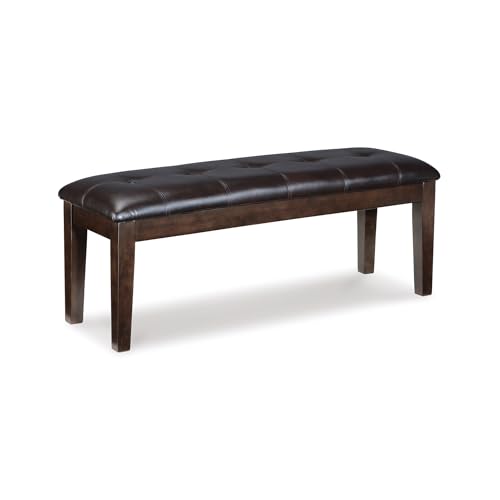
Signature Design by Ashley Haddigan 1-Piece Dining Bench, Faux Leather | Classic button tufted seat, Wood and engineered wood frame, 18.75 in seat height, 2-person capacity, Dark brown finish
Check price on Amazon
Wisuce Bamboo Dining Bench, Entryway Bench with Spindle Back (Black) | Bamboo & H-Shaped Support, Ergonomic Tilted Spindle Back, Multi-Scene Use, Easy Assembly & Maintenance
Check price on Amazon
LITTLE TREE Solid Wood Bench with Back, 47-Inch Long Farmhouse Wooden Indoor Window Bench Seat for Entryway, Mudroom, Living Room, Easy Assembly, Rustic Brown
Check price on Amazon
Madison Park Accent Bench, Plush Upholstered, Nailhead Trim, & Padded Seat Entryway Bench Small, End of Bed Bench with Back, 49.5" W x 19.25" D x 23" H, Green
Check price on Amazon
Beige Velvet Dining Bench with Back, Tufted Banquette Seating, Gold Legs | Upholstered loveseat bench; tufted back; nailhead trim; 500 lb capacity; foam and spring seat; dining room or entryway
Check price on Amazon
Grey Velvet Dining Bench with Back, Tufted Banquette Seating, Silver Legs | Upholstered loveseat bench; tufted back; nailhead trim; 500 lb capacity; foam and spring seat; dining room or entryway
Check price on Amazon
Christopher Knight Home Wally Boucle Upholstered Dining Bench, Modern Large Dining Room Chair, Entryway Ottoman Bench, Bedroom End of Bed Seating, Armless Desing and Wooden Frame, Light Gray+Natural
Check price on AmazonBackrest Styles: Which Profile Suits Your Dining Room
The backrest is the defining feature of this seating category, and its shape changes both comfort and visual weight. Before you shortlist a bench, decide which profile matches your table and room architecture.
Full Upholstered Back
A fully upholstered backrest wraps the sitter in fabric or leather from seat to top rail. This is the most comfortable option for long dinners and the most forgiving for rooms with hard flooring and echo. It reads as soft and residential, which makes it a natural fit for transitional and contemporary dining rooms. Pair it with a Scandinavian design dining table set for a calm, textural look, or contrast it against a black metal dining table and chairs for a softer industrial edge.
Slatted or Spindle Back
Slatted backs use vertical or horizontal wood slats to support the spine while keeping sightlines open. They are lighter in visual weight than upholstered backs, which helps in compact dining areas. Spindle backs follow the same principle with turned wood elements. Both styles suit farmhouse, cottage, and traditional interiors. A small cottage dining table pairs especially well with a spindle-back bench.
Low Profile Back
A low backrest rises only a few inches above the seat. It offers gentle lumbar support without blocking views across an open-plan space. This is the right choice when your dining area sits beside a living zone or window. Low-profile benches keep the room feeling connected, which matters in open-concept layouts.
Tapered or Curved Back
Curved backrests follow the natural line of the spine, while tapered backs narrow toward the top for a sculptural silhouette. These designs sit at the premium and luxury end of the market and often appear in designer dining sets. They work best as a focal seating piece rather than a background element.
Design tip: Match backrest height to table height. A bench used with a standard 30-inch dining table should have a backrest that rises 12 to 18 inches above the seat. For counter-height tables, scale the backrest down slightly so the proportions stay balanced.
Frame and Upholstery Materials Compared
Durability in a backrest bench depends on two things: the frame that carries the load and the material that meets daily wear. The table below groups options by market tier so you can match expectations to construction quality.
| Tier | Frame Construction | Upholstery Options | Best For |
|---|---|---|---|
| Entry-level | Engineered wood or thin tubular metal | Basic polyester fabric | Occasional seating, guest rooms, light daily use |
| Mid-range | Solid rubberwood or reinforced metal | Woven fabric, faux leather | Everyday family dining, moderate traffic |
| Premium | Solid oak, walnut, or high-grade steel | Performance fabric, top-grain leather | High-traffic homes, long-term daily use |
| Luxury | Kiln-dried hardwood, hand-finished joinery | Full-grain leather, designer textiles | Statement dining rooms, formal entertaining |
Wood Frames
Solid hardwood frames resist wobble and hold screw joints longer than engineered alternatives. Oak and walnut are the most common premium choices, while rubberwood dominates the mid-range. If your dining table is wooden, a matching wood bench creates cohesion. A small oak drop leaf dining table is a natural partner for an oak-framed bench with a slatted back.
Metal Frames
Steel and aluminum frames suit industrial, modern, and minimalist interiors. Powder-coated finishes resist rust and scratches, making them a solid choice for households with children. A metal frame dining table and chairs set can be extended with a matching metal bench for a unified look.
Upholstery Choices
Performance fabrics repel spills and resist fading, which makes them the practical pick for family dining. Leather and faux leather wipe clean easily but can feel cold in winter. For a softer, more tactile finish, choose a tightly woven linen-blend or boucle. Whichever you pick, confirm that the cushion cover is removable or at least spot-cleanable.
Sizing a Backrest Bench to Your Table and Room
Bench sizing is where most buyers make mistakes. A bench that is too long crowds the table legs; one that is too short leaves awkward gaps. Use these rules to get the fit right the first time.
Bench Length vs. Table Length
As a general rule, a dining bench should be 12 to 18 inches shorter than the table it serves. This leaves room at each end for chair placement and prevents knees from colliding with table legs. For a four-person table with chairs at the ends, a bench along one long side works well. If you are seating six, consider a full-length bench on one side and chairs on the other.
Seat Depth and Backrest Height
Seat depth of 15 to 18 inches supports comfortable sitting without forcing the sitter to lean forward. Backrest height of 12 to 18 inches above the seat keeps the spine supported. Deeper seats suit taller users; shallower seats suit compact dining areas.
Clearance and Walkway Space
A backrest bench does not need pull-out space behind it, which is its biggest spatial advantage over chairs. Still, allow 4 to 6 inches between the backrest and the wall for airflow and to avoid scuffing. Between the bench seat and the table edge, keep at least 12 inches of clearance. For a broader planning framework, the guide on how much room you should have around a dining table covers clearance in detail.
Matching Bench to Table Shape
Rectangular tables pair naturally with straight benches. Round and oval tables need curved benches or two shorter benches placed at an angle. If your table is round, a round dining table with chairs that tuck under can be complemented by a curved backrest bench on one side. For square tables, a single bench along one edge keeps the layout symmetrical.
Sizing shortcut: Multiply the number of people you want to seat by 24 inches to estimate bench length. A 48-inch bench comfortably seats two adults; a 72-inch bench seats three. Always confirm against your table's actual dimensions before ordering.
Pairing a Backrest Bench with Your Dining Table
A bench is rarely a standalone purchase. It works best when it visually and functionally connects to the table and chairs around it. These pairing principles keep the composition balanced.
Mix Bench and Chairs Deliberately
The most popular configuration places a bench on one long side and chairs on the opposite side and ends. This mix gives each seat a distinct role: the bench becomes the casual family side, while chairs serve guests and head-of-table seating. Keep chair and bench seat heights within an inch of each other so the tabletop experience feels consistent.
Coordinate Finish, Not Exact Match
Exact matching sets can look flat. Instead, echo the table's finish in the bench frame while choosing an upholstery tone that complements the chairs. For example, a walnut table pairs well with a walnut-framed bench in a warm neutral fabric, even if the chairs are a slightly different wood tone. The guide on dark grey chairs for a dining table shows how contrast seating can anchor a room.
Respect the Room's Proportions
A heavy, fully upholstered backrest bench can overwhelm a compact dining nook. In tighter rooms, choose a slatted or low-profile back and a lighter frame. In generous dining rooms, a full upholstered back adds the visual weight needed to balance a large table. If your space is limited, the ideas in small apartment dining table ideas can help you plan seating without crowding the room.
Consider Traffic Flow
Place the bench on the side of the table that faces away from the main walkway. Because bench users slide in rather than pull out, the bench side can sit closer to a wall or window. Keep the chair side open for easy access. This simple placement decision improves daily flow more than almost any other styling choice.
Comfort, Safety, and Everyday Practicality
A bench is only as good as its third year of use. These details separate benches that age well from those that loosen, sag, or stain.
- Cushion density: High-resilience foam holds its shape longer than low-density padding. Sit-test if possible, or look for specifications that mention density or firmness.
- Joint construction: Corner blocks, mortise-and-tenon joinery, and reinforced brackets reduce wobble over time.
- Weight capacity: Check the stated load rating and confirm it suits your household. Heavy-duty frames matter in busy family homes.
- Stability: A backrest bench should not tip when someone leans back. Wide feet and a low center of gravity improve stability.
- Child safety: Backrest benches without armrests are easier for children to climb in and out of, but confirm there are no sharp edges or pinch points.
- Floor protection: Felt pads under the legs prevent scratches. The guide on dining table leg protectors covers options for both tables and benches.
If you plan to use the bench daily, prioritize cushion quality and frame joinery over decorative details. Those two factors drive long-term comfort more than any other specification.
Care and Maintenance for Backrest Benches
Maintenance needs depend on the materials you choose, but a few habits apply across the board.
- Vacuum upholstery weekly to remove crumbs and grit that wear down fabric fibers.
- Blot spills immediately with a clean cloth rather than rubbing, which can push stains deeper.
- Rotate cushions if the bench has removable pads, so wear distributes evenly.
- Check fasteners every few months and tighten any loose bolts or screws.
- Keep wooden frames away from direct heat and wipe with a slightly damp cloth, then dry immediately.
For a deeper routine, pair your bench care with the table care guidance in the dining table care and maintenance hub. Protecting both surfaces together keeps the whole dining set looking consistent.
Final Buying Checklist
Before you commit to a bench, run through these questions. A yes to each one means you have a bench that will serve your dining room well for years.
- Does the bench length leave 12 to 18 inches of table space at each end?
- Is the seat depth between 15 and 18 inches for comfortable sitting?
- Does the backrest rise 12 to 18 inches above the seat?
- Is the frame material appropriate for your household's daily traffic?
- Is the upholstery cleanable or removable?
- Does the bench height match your table height within an inch of your chairs?
- Is there at least 12 inches of clearance between the bench and the table edge?
- Does the bench sit stable when someone leans back?
- Does the style complement your table and room without exact-matching?
- Have you confirmed the load rating suits your household?
If you are still narrowing down your table choice, the dining table shopping and reviews hub is a good next stop. And if you are considering a bench against a wall rather than a freestanding setup, the bench seat with back for dining table guide offers additional layout context.
Frequently Asked Questions
What is the ideal depth for a dining bench with a backrest?
A comfortable dining bench with a backrest typically has a seat depth between 15 and 18 inches, with a backrest height of 12 to 18 inches above the seat. This range supports proper posture during meals without feeling cramped.
How much space should I allow between a dining bench and the table edge?
Allow at least 12 inches of clearance between the bench seat and the table edge for comfortable legroom and easy access. For benches placed against a wall, add 4 to 6 inches of buffer so the backrest does not press against the wall.
Can a dining bench with a back be used in a small dining room?
Yes. A backrest bench can actually improve small-space efficiency because it eliminates chair-pull clearance behind the seating area. Look for benches with slim profiles and tapered backs to keep the visual footprint light.
Which materials work best for a backrest dining bench?
Solid wood frames with upholstered seat pads offer the best balance of durability and comfort. For high-traffic homes, choose tightly woven performance fabrics or wipeable leather options. Metal frames work well for industrial and modern styles.