
Gateleg Dining Table: The Complete Space-Saving Guide
Master the folding leaf mechanism, compare materials, and choose the right gateleg table for compact kitchens, apartments, and flexible dining rooms.
START EXPLORINGGateleg Dining Table Essentials: A gateleg table uses hinged drop leaves supported by swinging leg assemblies. Fully folded, it can occupy roughly one-third of its open footprint — making it one of the most efficient dining solutions for tight spaces. This guide covers mechanism types, materials, seating capacity, stability factors, and styling so you can decide with confidence.
What Is a Gateleg Dining Table?
A gateleg dining table is a drop-leaf table whose leaves are held up by pivoting leg frames that swing outward like gates. When the leaf is raised, the gate leg rotates to a perpendicular position and locks underneath to support the surface. When the leaf is lowered, the gate folds flat against the table's central frame, reducing the table to a narrow console-like footprint.
This mechanism has been used in furniture making for centuries, and it remains one of the most practical solutions for homes where a single room serves multiple purposes. Unlike a drop-leaf dining table with chairs that may rely on a single folding panel, gateleg designs typically support each leaf with its own independent gate, which improves load distribution and stability when fully extended.
How the Gateleg Mechanism Works
Understanding the mechanism helps you evaluate build quality before purchasing. A gateleg table consists of four core components:
- Central fixed frame: The stationary section that anchors the table and houses the hinge points.
- Drop leaves: Hinged panels on one or both sides that fold down vertically when not in use.
- Gate legs: Swinging leg assemblies connected to the central frame via pivot joints. They rotate outward to support a raised leaf.
- Locking hardware: Latches or friction mechanisms that hold the gate leg firmly in place when the leaf is raised.
Premium and mid-range gateleg tables often use brass or steel hinges with reinforced pivot points, while entry-level models may rely on lighter hardware. The quality of the gate leg locking system directly influences how stable the table feels during meals. If the gate does not lock firmly, the leaf can wobble — a common complaint in lower-tier folding tables. For a broader look at folding mechanisms across table styles, see the folding dining table guide.
Space-Saving Performance: What to Expect
The primary appeal of a gateleg table is its ability to shrink dramatically. A typical two-leaf gateleg table with a fully extended width of around 120–140 cm can fold down to roughly 40–50 cm when both leaves are lowered. That means the table can function as a narrow side console or workspace against a wall, then open into a full dining surface when guests arrive.
This flexibility makes gateleg designs particularly useful in:
- Compact kitchens and breakfast nooks
- Studio apartments and open-plan living areas
- Multi-purpose rooms that shift between dining and work
- Tight entryways or corridors where a dining table for tight spaces is required
If you are planning the layout around a compact table, the guide to room clearance around a dining table explains the walkway distances that keep a small dining zone comfortable.
Seating Capacity Across Configurations
Gateleg tables are available in several seating configurations. The table below maps common setups to their typical use cases.
For a closer look at a single-leaf compact design, the 36-inch drop leaf dining table guide covers dimensions and seating in detail.
Materials and Construction Tiers
Gateleg tables are built across a wide range of quality tiers. The material and hinge quality determine how smoothly the table folds, how stable it feels when open, and how long the mechanism lasts.
Entry-Level Tier
Entry-level gateleg tables often use engineered wood with a veneer top and lighter metal hardware. They are functional for occasional use and lightweight enough to move easily, but the folding mechanism may feel less precise and the table may show wear sooner under daily use. These models suit guest-room overflow seating or short-term needs.
Mid-Range Tier
Mid-range gateleg tables typically use solid wood for the legs and frame, with hardwood veneer or solid panels for the top. Hinges are heavier, gate locks engage more firmly, and the overall construction is more rigid. This tier represents the balanced choice for daily dining in a compact home, and it is where most buyers find the best combination of durability and smooth operation. For a material comparison focused on a popular hardwood, see the solid oak dining table guide.
Premium and High-End Tier
Premium gateleg tables use solid hardwood throughout — oak, walnut, or teak — with precision-machined hinges, concealed hardware, and hand-finished surfaces. The gate legs lock with a satisfying firmness, and the table remains stable even when fully extended. These are long-term investments for design-conscious buyers who want a folding table that does not compromise on feel or appearance.
If you are weighing a wooden gateleg against other compact materials, the small oak drop leaf dining table guide and the small pine dining table guide provide material-specific perspective.
Stability Factors to Check Before Buying
A folding table is only useful if it feels solid when open. When evaluating a gateleg table, check these points:
- Gate lock engagement: The gate leg should lock with a clear, firm action — not a loose friction fit.
- Hinge quality: Heavier hinges with reinforced plates distribute stress better than thin stamped hinges.
- Leg thickness: Thicker gate legs resist lateral sway during meals.
- Central frame rigidity: A cross-braced central frame prevents the table from flexing when leaves are loaded.
- Top thickness: Thicker tops (typically 2 cm or more on mid-range models) reduce bounce and surface flex.
If you already own a folding table that wobbles, the wobbly dining table fix guide covers hardware tightening and shimming techniques.
Styling a Gateleg Table in Small Spaces
Because a gateleg table often sits against a wall when folded, its styling should work in both open and closed states. A few practical approaches:
- Keep the folded profile clean: A narrow dining table runner or a small tray keeps the surface purposeful without crowding it.
- Use wall-adjacent seating: A bench against the wall frees floor space and tucks neatly under the table when folded.
- Choose chairs that tuck: Chairs with low backs or stackable frames slide under the leaves more easily.
- Layer with restraint: A single centerpiece or a pair of candles is enough for a compact surface; see the centerpiece ideas guide for scale guidance.
For broader compact-room inspiration, the small apartment dining table ideas collection covers layout and styling combinations.
Gateleg Dining Table Buying Checklist
Use this checklist to evaluate any gateleg table before committing:
- Measure the fully folded width and confirm it fits your intended wall or corner.
- Measure the fully extended width and confirm seating clearance around the table.
- Test the gate lock — it should engage firmly with no wobble.
- Check the hinge material and mounting plate thickness.
- Confirm the top material and whether it is solid wood, veneer, or engineered.
- Verify the table's weight if you plan to move it frequently.
- Check whether the chairs you own will tuck under the folded or open table.
For a step-by-step purchase framework that applies to all table types, see the first dining table checklist and the dining table buying mistakes guide.
Gateleg vs Other Space-Saving Tables
Gateleg tables compete with several other folding and compact designs. The comparison below highlights where each excels.
For a direct comparison of folding approaches, the extendable vs fixed dining table guide and the folding dining table guide go deeper.
Care and Maintenance for Gateleg Tables
The folding mechanism is the defining feature of a gateleg table, so maintenance should focus on both the surface and the hardware.
- Lubricate hinges periodically: A small amount of silicone or dry lubricant keeps the gate pivots moving smoothly.
- Tighten hardware: Check the gate lock screws and hinge plates every few months; loose hardware is the main cause of wobble.
- Protect the surface: Use dining table hot pads under warm dishes and a table cloth for heavy use periods.
- Clean the hinge area: Crumbs and dust in the pivot joints can stiffen the folding action over time.
For surface-specific care, the routine upkeep guide and the seasonal deep cleaning guide cover wood, veneer, and painted finishes.
Who Should Choose a Gateleg Dining Table?
A gateleg table is a strong fit for:
- Apartment dwellers who need a table that disappears against a wall
- Households that host occasionally and need to expand seating on demand
- Homeowners setting up a dual-purpose room (dining plus workspace)
- Buyers who want a classic folding silhouette with more structural support than a basic drop-leaf
It is a weaker fit for buyers who need a permanent large dining surface or who prefer a fully rigid table with no moving parts. If you are planning a full dining room around a fixed table, the dining table space planning guide is the better starting point.
Recommended Gateleg Dining Tables
⚠️ AFFILIATE DISCLOSURE: This website contains affiliate links. As an affiliate Associate, we earn from qualifying purchases. If you make a purchase through these links, we may receive a small commission at no additional cost to you. Read our full affiliate policy.

Drop Leaf Folding Dining Table with Storage, Wheels, Space Saving, Walnut | Foldable Design, 18mm Thick Plywood, 300lbs Capacity, Locking Wheels, Farmhouse, for Living Room Kitchen Small Spaces, Walnut
Check price on Amazon
JNNXZZ Solid Bamboo Drop Leaf Dining Table for Small Spaces, No Assembly | Space Saving Folding Dining Table with Storage for 4, Foldable Gateleg Table with Drawers, Braking Wheels for Kitchen -Walnut
Check price on Amazon
COMUHOME Drop Leaf Folding Dining Table with Storage, Wheels, Space Saving | Foldable Design, 18mm Thick Plywood, 300 lbs Capacity, Locking Wheels, Farmhouse Style, for Living Room Kitchen Small Spaces
Check price on Amazon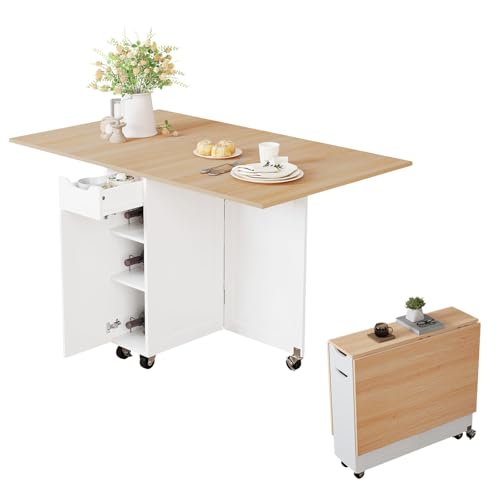
Folding Dining Table, Space Saving Kitchen Table with 6 Wheels(Light Brown) | Dinner Table with Drawer and Storage and Shelves, Space Saving Dining Table with 6 Wheels for Small Spaces
Check price on Amazon
Folding Dining Table with Drawer and Storage Shelves, 53" Space Saving Foldable Dining Table with 6 Wheels, Drop Leaf Table for Small Spaces
Check price on Amazon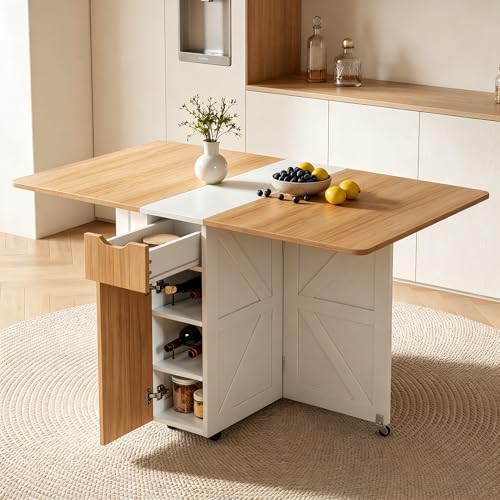
53“ Folding Dining Table Space Saving Foldable Dining Table with Drawer | Space-saving dining table for small rooms; use it fully open, half open or folded, with a drawer, shelves and wine racks.
Check price on Amazon
23.6''-118.11'' Extendable Dining Table with Sideboard for 2-10 People | This Save space Extendable table with Sideboard Storage with glass doors and fluted base Kitchen Table for parties
Check price on Amazon
60" Extendable Drop Leaf Dining Table Set with 4 Leather Chairs,Storage,5 Pcs Rectangle Foldable Kitchen Table and Chairs Set for 4-8 People,6 Wheels,Folding Table Set for Small Space Saving,Brown
Check price on AmazonFrequently Asked Questions
What is a gateleg dining table?
A gateleg dining table is a space-saving table with hinged drop leaves supported by swinging leg assemblies that resemble gates. When the leaves are folded down, the table occupies a narrow footprint; when extended, it provides full seating capacity.
How much space does a gateleg dining table save?
A gateleg table can shrink to roughly one-third of its fully extended width when both leaves are folded. This makes it a strong choice for compact kitchens, apartments, and multi-purpose rooms where floor space is at a premium.
Are gateleg tables stable enough for daily dining?
Mid-range and premium gateleg tables with reinforced hinges, solid wood construction, and locking gate mechanisms are stable for everyday meals. Entry-level models with thin tops and basic hardware may feel less rigid, so inspect the build quality before committing.
What materials are best for a gateleg dining table?
Solid oak, walnut, and pine are popular for their durability and warm appearance. Engineered wood with veneer offers a more consistent surface at a lower tier. Metal-framed gateleg designs provide a modern industrial look and dependable structural rigidity.
Can a gateleg table be used as a permanent dining table?
Yes. Many households keep a gateleg table open for daily use and fold it only when extra floor space is needed. Choosing a mid-range or premium model with solid hardware makes permanent daily use comfortable.
Explore Related Compact Dining Solutions
If a gateleg design is not quite the right fit, these related guides cover alternative space-saving approaches:
- Small oak drop leaf dining table — a single-leaf hardwood alternative
- 36-inch drop leaf dining table — compact dimensions and seating
- Extendable drop leaf dining table — combining extension and folding
- Small convertible dining table — multi-mode compact designs
- Hideaway dining table and chairs — storage-integrated solutions
- Small kitchen dining table — kitchen-specific compact picks
- Dining table for tight spaces — clearance and layout guidance
- Folding dining table on wheels — mobility-focused folding designs