
Legs for a Dining Room Table: The Complete Guide
Everything you need to know about choosing, replacing, and upgrading dining table legs — from wood and metal styles to height standards, mounting methods, and stability tips.
Explore Replacement LegsWhy table legs matter: The legs of a dining room table are more than a structural necessity. They determine stability, seating comfort, floor protection, and the entire visual character of the table. A well-chosen set of legs can rescue a wobbling heirloom table or transform a plain tabletop into a statement piece. This guide walks you through every decision — material, style, height, attachment, and finish — so you can choose with confidence.
Understanding Dining Table Leg Anatomy
Before comparing styles, it helps to understand the parts that work together. A typical leg assembly includes the leg post itself, an apron or rail that connects legs beneath the tabletop, and a mounting plate or bracket that attaches the leg to the table structure. On pedestal tables, a central column replaces individual legs and spreads the load through a base plate.
If you are working with a glass tabletop, the attachment method matters even more, since glass cannot accept screws directly. A dedicated leg set for glass tabletops uses suction cups or metal plates with protective pads. Similarly, a modern dining table base often combines a slim metal frame with a central spine, which is a popular choice for minimalist interiors.
Standard Height Reference
Most dining tables place the tabletop surface at roughly 28 to 30 inches (71 to 76 cm) above the floor. That means the leg itself is usually 27 to 29 inches tall after subtracting the tabletop thickness. Counter-height tables sit higher at about 34 to 36 inches, and bar-height tables reach 40 to 42 inches. Always confirm the intended surface height before ordering replacement legs, because mismatched leg height is the single most common upgrade mistake.
Wood vs Metal vs Pedestal: Choosing Your Leg Type
Each leg material brings a distinct personality and performance profile. The table below summarizes the main options using universal quality tiers rather than numeric figures.
| Leg Type | Best For | Durability Profile | Style Character | Tier |
|---|---|---|---|---|
| Solid Hardwood | Traditional, farmhouse, and transitional dining rooms | Excellent; resists wear and can be refinished | Warm, natural grain, classic turned or tapered profiles | mid-tier to high-end |
| Steel & Cast Iron | Industrial, modern, and heavy tabletop support | Heavy-duty; high load capacity, rust-proof finishes available | Sleek, geometric, hairpin or square-tube looks | mid-tier to commercial-grade |
| Aluminum | Lightweight tables, outdoor or patio setups | Weather-resistant, lighter load capacity | Contemporary, often paired with composite tops | entry-level to mid-tier |
| Pedestal Base | Round and oval tables, small dining nooks | Solid build; central column spreads weight evenly | Space-saving, elegant, no corner leg obstruction | mid-tier to premium |
| Trestle Base | Long rectangular and rustic farm tables | Reinforced construction; excellent anti-sag support | Rustic, handcrafted, architectural | mid-tier to high-end |
For readers comparing specific wood options, our guide to wooden dining table legs details grain behavior, finishing, and joinery. If you already own a round table and want to keep its footprint compact, round dining table legs deserve a closer look because the leg count and splay angle affect chair clearance considerably.
Matching Legs to Your Tabletop and Room
The best leg choice balances four factors: tabletop weight, seating arrangement, floor type, and interior style. A heavy stone or solid oak top needs reinforced legs or a pedestal with a wide base plate. A glass or veneered top is lighter and can pair with slimmer profiles. On hardwood floors, felt pads and rounded foot profiles reduce scratching, while on tile or concrete, rubberized feet improve grip.
Quick Compatibility Checklist
- Tabletop weight: heavy tops need heavy-duty legs or a pedestal; lightweight tops suit slim profiles.
- Apron depth: measure the apron before buying; legs must clear it or attach to a mounting plate.
- Seating clearance: corner legs can block chair tucking; pedestal bases free up foot space.
- Floor protection: add felt or rubber glides matched to your flooring.
- Finish harmony: match or intentionally contrast the leg finish with the tabletop and surrounding furniture.
Leg Styles and Their Visual Effect
Turned legs with curves and rings read as traditional and work beautifully in farmhouse or cottage settings. Tapered square legs feel clean and mid-century. Hairpin and angled metal legs create an airy, industrial look. Trestle bases add architectural weight and suit long tables. For a handcrafted statement, a hand-carved dining table often pairs carved legs with a matching apron for a cohesive silhouette.
Color also matters. A white and dark wood dining table can be refreshed with contrasting legs, while a metal farmhouse dining table typically uses a steel frame base that is integral to its design. If you are shopping for a full set rather than legs alone, browse our dining table set for six options to see how different leg designs read in a complete arrangement.
How to Replace Dining Table Legs Safely
Replacement is a manageable DIY project with the right preparation. Work on a padded surface, flip the table carefully with a helper, and photograph the existing attachment before removal.
- Identify the attachment method. Look for mounting plates, corner brackets, threaded inserts, or bolts recessed into the apron.
- Measure twice. Record the leg height, top width, mounting hole spacing, and apron depth.
- Remove the old legs. Support the tabletop, then unscrew or unbolt each leg. Keep hardware organized.
- Test-fit the new legs. Check that mounting holes align and that the legs clear the apron.
- Attach and level. Tighten gradually in a cross pattern, then add adjustable glides to compensate for uneven floors.
- Check stability. Apply gentle pressure at each corner; add a center support or cross-brace if the table rocks.
If your table wobbles after installation, our guide to fixing a dining room table leg problem covers shimming, bracket reinforcement, and surface leveling in more depth. For tables that convert between uses, such as a box coffee-to-dining table, leg height and folding hardware must be matched precisely to preserve the conversion mechanism.
Stability, Load Capacity, and Long-Term Care
Stability is a system property, not just a leg property. A four-leg rectangular table relies on the apron and corner joinery to resist racking. Long tables benefit from a fifth center leg or a trestle structure. Pedestal tables depend on a wide, heavy base plate. When upgrading, choose legs rated for your tabletop weight and use reinforced brackets if the original hardware feels light.
Care routines extend leg life. Wipe wooden legs with a damp cloth and re-oil or wax annually. Inspect metal legs for finish chips and touch up with matching paint to prevent corrosion. Tighten bolts every few months, especially on tables used daily. For a broader maintenance schedule, see our care guidance linked from related articles such as the solid pine dining table and chairs overview, where softwood leg care is discussed.
Matching Legs to Special Table Formats
Not every table follows the standard four-corner layout. Folding and convertible tables often use hinged or removable legs, and the leg geometry must accommodate the folding action. For example, a small dining table with fold-down sides may use gateleg hardware rather than fixed posts. Similarly, a flip-top dining table requires legs positioned to avoid the pivot path.
Small-space formats also benefit from thoughtful leg selection. A corner small dining table often uses a wall-mounted or three-leg design to maximize seating clearance. A narrow flip-top console dining table pairs slim legs with a folding top so the unit can double as a console. For apartment dwellers, an apartment-size dining table and chairs set usually favors pedestal or tapered legs to keep the footprint tight.
Choosing Between Fixed and Removable Legs
- Fixed legs: strongest and simplest; best for permanent dining rooms.
- Removable legs: easier to move and store; ideal for apartments and convertible tables.
- Folding legs: best for occasional-use and space-saving tables; check hinge quality carefully.
- Pedestal base: maximum legroom and no corner obstruction; requires a stable floor and wide base.
Finishes, Protection, and Aesthetic Pairing
Finish choice affects both looks and maintenance. Oiled wood feels natural and can be spot-repaired, while lacquered or painted legs offer a uniform surface that is easy to wipe clean. Powder-coated steel resists chipping and suits busy households. On light floors, dark legs create contrast; on dark floors, natural wood or brushed metal keeps the room from feeling heavy.
Pairing legs with the rest of the room is where design instinct matters. A Danish teak dining table and chairs typically calls for tapered wooden legs with a warm finish. A retro chrome dining table depends on polished tubular legs to complete its look. Even a simple pink dining table can be grounded with white or brass-toned legs for a playful but balanced result.
Shopping Tips Before You Buy Replacement Legs
When comparing options, focus on specifications rather than labels. Look for leg diameter or profile width, load rating, mounting hardware included, and finish warranty. Mid-range and premium sets typically include adjustable glides and reinforced mounting plates, which make leveling and long-term stability easier. Entry-level sets may require you to source hardware separately.
Measure your existing setup before ordering, and keep a small allowance for floor unevenness. If the table is a family heirloom or a vintage pine dining table, consider professional restoration for the top while replacing legs yourself. For modern builds, a modern dining room table decoration plan often pairs slim metal legs with a neutral palette for a clean, gallery-like feel.
Recommended Dining Table Legs & Bases
⚠️ AFFILIATE DISCLOSURE: This website contains affiliate links. As an affiliate Associate, we earn from qualifying purchases. If you make a purchase through these links, we may receive a small commission at no additional cost to you. Read our full affiliate policy.

KaKaBB Metal Table Legs 28 inch, Dining Table Legs Heavy Duty, DIY Modern Desk Legs, Industrial Furniture Legs Set of 2(28" Height, 23.6" Wide) (Black)
Check price on Amazon
CHICAURA 28" Heavy Duty Square Metal Dining Table Legs, 28x28, Set of 2 | For 6-8 Person Dining Table, Fits 30-36" Tops, True 14-Gauge Steel, M12 Feet, Welded 1-Piece Frame, 1000lb Capacity
Check price on Amazon
TIEOU Metal Legs for Table V Shape 28" H Tall Metal Black Table Leg Heavy Duty Industrial Desk Legs Set of 2
Check price on Amazon
LCSDLHLSY 30 Inch Square Metal Table Legs,DIY Furniture Legs,Black Set of 4 | Heavy Duty Desk legs for DIY Side Table, Dining Table,with Screw and Adjustment Feet Pads,Easy to Install‑Robust and Durable.
Check price on Amazon
KaKaBB 28 Inch Metal Table Legs Heavy Duty, Dining Table Legs with Crossbar Slot, X-Frame Furniture Desk Legs for DIY Project
Check price on Amazon
VEVOR Set of 2 Steel Table Legs, 28”Height 23”Wide Dining Table Legs,Heavy Duty 3.1" Square Box Section Square Table Legs, 28x23x3.1 Inch Black Industrial Country Style Metal Dining Legs
Check price on Amazon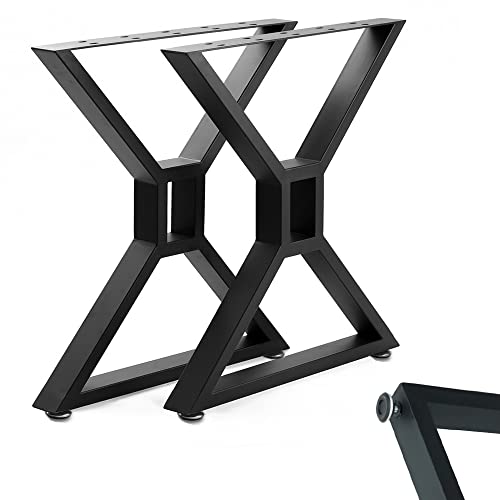
HEONITURE Metal Table Legs - Heavy Duty Desk & Furniture Legs, Modern Industrial Set of 2 (28" Height, 23.6" Wide)
Check price on Amazon
TIEOU Metal Table Legs Heavy Duty T Shape Metal Desk Legs 28” Height 35” Wide Industrial Table Legs, Black Table Legs, Modern Table Legs Set of 2
Check price on AmazonReady to Upgrade Your Table?
Compare leg styles, materials, and mounting options in one place. Check availability and explore the options that fit your tabletop and room.
Explore OptionsFrequently Asked Questions
What is the standard height for dining table legs?
Most standard dining tables use legs that create a tabletop height of about 28 to 30 inches (71 to 76 cm). The leg itself is usually 27 to 29 inches tall once the tabletop thickness is accounted for. Bar-height tables use taller legs, typically reaching 40 to 42 inches at the surface.
Can I replace the legs on my existing dining table?
Yes, replacing legs is a common upgrade. Check the mounting method first, such as a plate, bracket, or threaded insert. Measure the apron and tabletop thickness, then choose replacement legs with a compatible attachment style and the correct height for your intended surface level.
Are metal or wooden dining table legs more durable?
Both can be highly durable. High-grade steel and cast iron legs offer excellent load capacity and stability, especially for heavy tops. Solid hardwood legs such as oak and maple resist wear well and suit traditional interiors. The right choice depends on the tabletop weight, style, and environment.
How many legs does a dining table need?
Most rectangular tables use four corner legs, while long tables may add a center support leg or use a trestle base. Round tables often use three or four legs, or a single pedestal. Larger tables generally benefit from additional bracing to prevent sagging and wobbling.
How do I stop a dining table from wobbling after changing legs?
First, confirm all mounting hardware is fully tightened in a cross pattern. Then check floor level with a spirit level and add adjustable glides or shims at the low corner. If the table still racks, add a diagonal brace or a center support leg for longer tables.