
Hand Carved Dining Table: Complete Buying Guide & Styles
Explore the artistry, wood selection, carving techniques, and practical care of hand carved dining tables so you can choose a centerpiece that lasts for generations.
START THE GUIDEWhy hand carved dining tables stand apart: A hand carved table is more than furniture — it is a functional work of art. Each table carries the individual tool marks, rhythm, and subtle variations of the artisan who shaped it, making every piece truly one of a kind. This guide explains what to look for, how carving affects durability, and how to match a carved table to your dining room and lifestyle.
Recommended Hand Carved Dining Tables
⚠️ AFFILIATE DISCLOSURE: This website contains affiliate links. As an affiliate Associate, we earn from qualifying purchases. If you make a purchase through these links, we may receive a small commission at no additional cost to you. Read our full affiliate policy.

World Interiors Vallarta 60" Round Mango Wood Two Tone Dining Table in Brown
Check price on Amazon
EDHAS Mango Wood Decorative Wooden Bowl Hand Carved Home Decor for Dining Table Center, Living Room, Kitchen Décor (12" x 12' x 4.75")
Check price on Amazon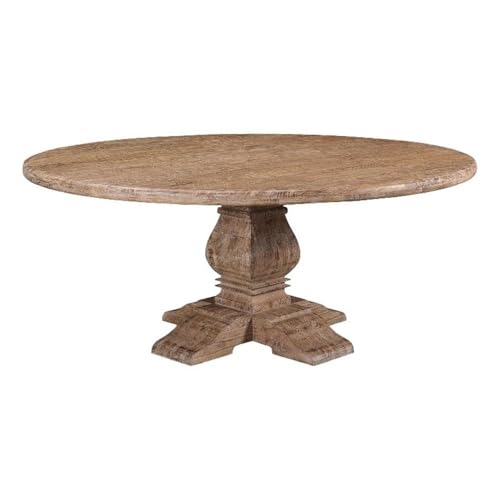
World Interiors Pengrove 72" Round Mango Wood Dining Table in Light Brown
Check price on Amazon
FANDOS Wooden Dough Bowl for Decor - 17¾ in Long Hand Carved Paulownia, Large Rustic Decorative Bowl for Home Table Centerpiece, Keys, Entryway Table, Catchall Tray & Wooden Dining Room Centerpiece
Check price on Amazon
Oval Wood Dining Table for 4-8 with Double Pedestal Base, Kitchen Furniture | Wood kitchen table, oval tabletop, double pedestal base, seating for 4 to 8, dining room table, living room
Check price on AmazonWhat Is a Hand Carved Dining Table?
A hand carved dining table is a solid wood table whose decorative elements — legs, apron, stretchers, tabletop borders, or the entire base — are shaped by hand using chisels, gouges, rasps, and carving knives rather than by CNC machines or automated presses. The result is a table with depth, texture, and personality that mass-produced furniture rarely achieves.
Hand carving appears in many furniture traditions, from ornate Victorian and Baroque revival styles to rustic farmhouse tables with simple chamfered edges and floral motifs. The level of carving can range from a subtle hand-shaped leg profile to fully sculpted pedestals and relief-carved aprons. If you appreciate artisan woodwork, you may also enjoy exploring solid wood dining table legs and the best wood types for dining tables to understand how the base and material choices shape the final look.
Hand Carved vs. Machine Carved: Key Differences
Machine carving produces consistent, repeating patterns with near-perfect symmetry. Hand carving introduces small irregularities — a slightly deeper gouge here, a softer curve there — that many buyers consider the hallmark of authentic craftsmanship. Neither is inherently better; the right choice depends on whether you prefer precise uniformity or organic character.
| Aspect | Hand Carved | Machine Carved |
|---|---|---|
| Character | Unique tool marks, organic variation | Uniform, highly repeatable patterns |
| Detail Depth | Deep relief possible; artisan-controlled | Consistent depth; limited by tooling |
| Craft Tradition | Strong artisan heritage | Modern manufacturing efficiency |
| Repair | Localized touch-up by a carver | Often requires replacement parts |
| Position in Market | Premium to luxury tier | Entry-level to mid-range tier |
Best Woods for Hand Carved Dining Tables
The wood species determines how crisply the carving holds detail, how the table ages, and how much maintenance it needs. Carvers generally prefer tight-grained hardwoods that resist splintering and hold fine edges.
Oak
Oak is a classic choice for carved furniture because its dense grain holds relief carving well and develops a rich patina over time. It is heavy, durable, and widely available. Tables in the mid-range to premium tier often use oak for carved legs and aprons. For a deeper look, see our guide to tiger oak dining tables.
Walnut
Walnut carves cleanly and takes detail beautifully, making it a favorite for high-end artisan pieces. Its deep chocolate tones and graceful grain suit both traditional and contemporary carved designs. Walnut tables typically sit in the premium to luxury tier.
Mahogany and Teak
Mahogany has a long history in carved furniture, especially in colonial and Georgian styles. Teak offers excellent weather and moisture resistance, which matters for carved tables in humid climates. Both are dense hardwoods that reward careful finishing.
Pine and Softer Woods
Pine and other softwoods are easier to carve and suit rustic farmhouse designs with simpler motifs. They are lighter and more prone to dents, so carving tends to be broader rather than finely detailed. These tables typically occupy the entry-level to mid-range tier. If you prefer a rustic aesthetic, a unfinished farmhouse dining table can be a good starting point before applying your own finish.
Mango and Acacia
Mango and acacia are popular in globally inspired and boho carved furniture. They offer striking grain patterns and good durability at a mid-range tier, though their grain can be interlocked, requiring skilled carving to avoid tear-out.
Popular Hand Carving Styles
The carving style you choose should harmonize with your dining room's architecture and your existing furniture. Here are the most common approaches.
Traditional and Ornate Relief Carving
Floral motifs, acanthus leaves, scrollwork, and geometric borders carved in relief across aprons and legs. This style suits formal dining rooms and period-inspired interiors. Ornate hand carved tables are typically in the premium to luxury tier because of the labor involved.
Rustic and Farmhouse Carving
Simpler hand-shaped details: chamfered edges, hand-hewn trestle bases, carved initials, or lightly incised patterns. This style pairs well with farmhouse rustic dining table sets and relaxed, casual dining spaces.
Pedestal and Baluster Carving
Sculpted pedestals and turned or carved balusters create a strong visual anchor. A carved pedestal works especially well under round or oval tops. Explore round dining table legs and bases for round dining tables if you are considering a pedestal design.
Boho and Global Carving
Geometric patterns, tribal-inspired motifs, and textured surfaces that celebrate imperfection. These tables often feature mixed materials and pair beautifully with a small boho dining table aesthetic.
Contemporary Minimal Carving
Subtle hand-shaped curves, soft chamfers, and understated texture rather than figurative motifs. This style fits modern dining table bases and open-plan interiors where the table reads as sculpture.
Sizing and Placement Considerations
Carved tables often have thicker aprons and more substantial legs than plain tables, which affects seating clearance and visual weight. Measure carefully before you commit.
- Seating clearance: Allow at least 24 inches (61 cm) of table width per diner. Carved aprons reduce knee clearance, so check that chairs tuck in comfortably.
- Legroom: Thick carved legs can intrude on legroom at the corners. Sit at the table (or simulate it) before finalizing a rectangular carved design.
- Walkway space: Leave 36 inches (91 cm) between the table edge and walls or other furniture to pull chairs out comfortably.
- Visual weight: A heavily carved table is a focal point. In small rooms, choose lighter carving or a smaller footprint — a cute dining table for small spaces can still feature hand-carved details.
- Room shape: Round and oval carved tables soften rectangular rooms; rectangular carved tables anchor long dining rooms. See standard round dining table sizes for dimension guidance.
For compact apartments, consider designs that combine carving with flexibility, such as a small dining table with fold-down sides or a corner small dining table with hand-shaped details.
How to Assess Carving Quality Before Buying
Not all "hand carved" claims are equal. Use these checks to separate genuine artisan work from machine-assisted pieces marketed loosely.
Inspect the Tool Marks
Genuine hand carving shows subtle variations in depth, angle, and surface texture. Uniform, glass-smooth patterns repeated identically across multiple pieces usually indicate machine work.
Check the Joinery
Carved legs should connect to the apron with solid joinery — mortise-and-tenon or similarly robust construction. Look for tight seams and no gaps. A carved table with weak joinery will wobble regardless of how beautiful the carving is.
Examine the Finish
Carving creates recesses where finish can pool or be missed. A quality finish reaches into the deepest grooves evenly. Oiled finishes highlight the wood's natural character; lacquered finishes offer more surface protection. Learn more in our oiled dining table guide and lacquered dining table guide.
Test Stability
Place both hands on opposite corners and apply gentle pressure. A well-built carved table should not rock or flex. Check that the tabletop is flat and that carved elements do not protrude into seating areas.
Ask About the Carver
Reputable sellers can often tell you who carved the piece, where the workshop is located, and what techniques were used. Provenance adds both confidence and long-term value.
Caring for a Hand Carved Dining Table
Carved surfaces trap dust and crumbs in their recesses, so maintenance requires slightly more attention than a flat table. With consistent care, a hand carved table can remain beautiful for decades.
- Dust weekly with a soft brush: Use a soft-bristled brush or vacuum with a brush attachment to lift dust from carved grooves before wiping with a microfiber cloth.
- Clean gently: Wipe with a barely damp cloth and a mild wood-safe cleaner. Avoid soaking the carving, which can swell the wood.
- Re-oil or wax periodically: Oiled tables benefit from reapplication every few months. Follow our guides on wood dining table wax and polish and routine dining table upkeep.
- Protect from heat and moisture: Use coasters, trivets, and a table pad. Carved recesses are especially vulnerable to water rings. See dining table pad protection and water ring removal.
- Control humidity: Solid wood expands and contracts. Keep indoor humidity stable to prevent carving from cracking. Our humidity care guide explains the details.
- Address scratches early: Small chips in carving can be touched up before they worsen. See dining table scratch touch-up and wood filler guidance.
For seasonal deep cleaning, follow a seasonal deep cleaning routine that reaches into carved details without damaging the finish.
Styling a Hand Carved Dining Table
A carved table is already a statement piece, so styling should complement rather than compete. Keep centerpieces low and textural, choose linens that contrast with the wood tone, and let the carving breathe.
- Centerpieces: Low floral arrangements, ceramic bowls, or a single sculptural object work well. Browse beautiful dining table centerpieces and centerpiece guides.
- Linens: A simple table runner or placemats add color without hiding the carving.
- Seating: Pair ornate carving with simpler chairs to avoid visual clutter. See dining chair selection and seating benches for dining tables.
- Lighting: A pendant or chandelier centered over the table highlights the carved texture. Review dining table lighting placement.
- Rugs: A rug frames the table and protects the floor. See rug placement guidance.
For seasonal inspiration, explore holiday tablescape ideas that let carved details shine.
Market Tiers for Hand Carved Dining Tables
Hand carved tables span a wide range of craftsmanship and material quality. The table below uses universal tier descriptors to help you understand where a given table sits in the market relative to others.
| Tier | Typical Characteristics | Best For |
|---|---|---|
| Starter Tier | Simpler motifs, softer woods, partial hand carving on legs or apron, basic joinery | First artisan table, casual dining, rustic interiors |
| Mid-Tier | Solid hardwood construction, consistent hand carving, reinforced joinery, quality finish | Everyday family dining, traditional and transitional rooms |
| High-End Tier | Dense hardwoods, detailed relief carving, mortise-and-tenon joinery, refined finishes | Formal dining rooms, design-focused interiors |
| Luxury Tier | Full artisan carving, rare woods, signed or documented provenance, heirloom construction | Collectors, statement dining rooms, long-term investment |
Tier placement reflects relative craftsmanship and material quality, not a fixed position. A well-made mid-tier table can outperform a poorly finished high-end tier piece, so always inspect construction and finish quality directly.
Frequently Asked Questions
Is a hand carved dining table durable enough for daily use?
Yes, when it is built from a dense hardwood with solid joinery and a protective finish. Carving itself does not weaken a table if the wood is thick enough and the recesses are finished properly. Avoid very deep carving on thin aprons or legs, and keep the table away from extreme humidity swings.
How can I tell if a table is truly hand carved?
Look for subtle irregularities in depth, angle, and texture, and ask the seller about the carving process and the carver. Identical patterns repeated with machine-like precision across multiple units usually indicate machine carving or machine-assisted production.
Which wood is best for a carved dining table?
Oak and walnut are excellent all-around choices because they hold detail well and age beautifully. Mahogany and teak suit humid climates and traditional styles. Pine and mango work well for rustic and boho designs at a more accessible tier.
How do I clean dust out of carved grooves?
Use a soft-bristled brush or a vacuum with a brush attachment weekly, then wipe with a microfiber cloth. Avoid soaking the carving with wet cloths, and dry any moisture promptly.
Can a carved table work in a small dining room?
Yes, if the carving is restrained and the footprint is compact. Choose a smaller round or square table with hand-shaped legs or a lightly incised apron. A small-space dining table for six or a folding dining table for small spaces can combine carving with flexibility.
Should I choose a carved pedestal or carved legs?
Carved pedestals suit round and oval tables and free up legroom at the corners. Carved legs suit rectangular tables and traditional styles. Consider your seating arrangement and room traffic before deciding.
How often should a carved table be re-oiled or waxed?
Oiled tables typically benefit from reapplication every three to six months, depending on use and climate. Waxed finishes may need refreshing once or twice a year. Always follow the finish manufacturer's guidance and test on a hidden area first.
Ready to Bring Artisan Craftsmanship to Your Dining Room?
Compare hand carved dining tables, review construction details, and find the right piece for your space.
EXPLORE RECOMMENDED TABLES