
White and Dark Wood Dining Table: A Complete Guide
Explore the striking contrast of white and dark wood dining tables. Learn how two-tone designs combine style and versatility, and discover what to look for before you buy.
Start ReadingWhat Is a White and Dark Wood Dining Table?
A white and dark wood dining table is a two-tone furniture piece that pairs a white-finished surface — often the tabletop — with dark wood elements such as legs, aprons, or a pedestal base. This deliberate contrast creates a visual anchor in the dining room while keeping the overall look bright and airy. The combination is popular because it bridges traditional and modern aesthetics: the white surface feels clean and contemporary, while the dark wood adds warmth and grounding.
Two-tone dining tables come in several configurations. Some feature a white-painted top with solid dark wood legs, while others use a dark wood top with a white-painted base. The most common design is a white tabletop paired with dark walnut, espresso, or black-stained legs. This guide focuses on the white-and-dark-wood combination as a whole, covering materials, styling, care, and buying considerations. For a broader look at table structures, see our dining table frame guide.
Why Choose a Two-Tone White and Dark Wood Table?
The contrast between white and dark wood offers practical and aesthetic benefits that make it a versatile choice for many homes.
- Visual interest without clutter: The two-tone design adds depth to a room without requiring bold colors or patterns.
- Versatile styling: It works with modern, farmhouse, Scandinavian, coastal, and transitional interiors. You can lean into the white for a fresh look or emphasize the dark wood for warmth.
- Hides wear in strategic areas: A dark wood base is less likely to show scuffs from chairs and feet, while a white top can be easier to inspect for cleanliness.
- Space perception: A white top reflects light and makes a dining area feel larger, while the dark base adds visual weight and stability.
If you are still deciding on the overall shape, our rectangular dining table guide and round dining table guide can help you narrow down the form before committing to a finish.
Common Design Variations
White and dark wood dining tables are not a single style. The proportion and placement of each material dramatically change the final look.
White Top with Dark Wood Legs
This is the most common configuration. The white top keeps the table feeling light, while the dark legs anchor it. It suits rectangular and oval tables especially well. If you prefer a softer silhouette, consider an oval dining table guide for shape-specific advice.
Dark Wood Top with White Base
Here, the dark wood top provides a rich, grounded surface, and the white base lightens the visual weight. This works well in smaller dining rooms where a fully dark table might feel heavy.
White and Dark Wood Mixed in the Top
Some designs incorporate both finishes within the tabletop itself, such as a white-painted center with dark wood borders, or a dark wood top with white-painted apron details. These are more decorative and often found in farmhouse or cottage styles.
Tip: The contrast is most effective when one finish dominates. A 50/50 split can look busy, while a 70/30 or 80/20 ratio keeps the design intentional.
Materials and Finishes
The durability and appearance of a two-tone table depend on the underlying materials and how each finish is applied.
White Finishes
White table surfaces are typically achieved with:
- Painted solid wood: A classic choice with a smooth, opaque look. Quality paint and a protective topcoat are essential for resistance to stains and scratches.
- Lacquered wood: Offers a durable, easy-to-clean surface. Our lacquered dining table guide explains the benefits and care requirements.
- White oak or ash with a whitewash: A more natural, textured look that still reads as white but shows wood grain.
- White marble or quartz: A luxurious option for the top, paired with dark wood legs. See our marble dining table guide for maintenance details.
Dark Wood Elements
Dark wood legs and bases are commonly made from:
- Walnut: Rich, dark brown with elegant grain. Our walnut dining table guide covers its characteristics.
- Oak stained dark: A durable, heavy wood that takes dark stains well.
- Teak: Naturally dark and weather-resistant; often used in mid-century designs. See the teak dining table guide.
- Mango wood: An eco-friendly option with varied grain; the mango wood dining table guide provides more detail.
For a deeper dive into wood choices, visit our materials and finishes hub.
Sizing and Shape Considerations
Two-tone tables are available in all common dining table shapes. Your choice should be driven by room size, seating needs, and traffic flow.
| Shape | Best For | Considerations |
|---|---|---|
| Rectangular | Formal dining rooms, larger families | Works well with white top/dark legs contrast; see rectangular guide |
| Round | Smaller spaces, sociable dining | Dark pedestal base with white top is a classic combo; round guide |
| Oval | Softening rectangular rooms | White top draws attention to the curve; oval guide |
| Square | Compact dining areas, game nights | Visual symmetry is key; square guide |
Make sure to measure your space and account for chair pull-out and walkway clearance. Our space planning guide provides a step-by-step method.
Styling a White and Dark Wood Dining Table
The two-tone foundation gives you a head start on styling. Here are some approaches that work well:
Modern Minimalist
Keep the table mostly clear. Use a simple white or dark ceramic centerpiece, and choose dining chairs that echo one of the table’s finishes. For inspiration, see our modern dining table styling article.
Farmhouse Warmth
Add a linen runner, a wooden bowl, and seasonal greenery. The dark wood legs pair naturally with rustic elements. Our farmhouse dining table styling guide can help you build the look.
Scandinavian Simplicity
Choose light wood or white chairs, a simple vase, and a neutral rug. The white top will blend with the airy palette, while the dark legs provide contrast. See Scandinavian dining table styling for more ideas.
For centerpiece ideas that suit this contrast, explore our dining table centerpiece guide and beautiful dining table centerpieces.
Care and Maintenance
Because the table combines two different finishes, care routines should address each material appropriately.
Routine Cleaning
- Wipe the white top with a soft, damp cloth and a mild pH-neutral cleaner. Avoid abrasive sponges.
- Dust the dark wood legs regularly with a microfiber cloth. Use a wood-specific cleaner or a slightly damp cloth for deeper cleaning.
- Dry both surfaces promptly to prevent water marks.
Protection
- Use coasters, placemats, and trivets to protect the white finish from heat and staining.
- Apply a wood conditioner or furniture wax to the dark wood parts every few months, depending on use.
- Avoid placing the table in direct sunlight for extended periods, as this can fade or discolor both finishes.
Stain and Damage Response
- For white surfaces, remove food stains quickly with a damp cloth. For tougher marks, a mild dish soap solution usually works.
- For dark wood, address water rings and scratches promptly. Our water ring removal guide and scratch touch-up guide offer practical steps.
For a complete maintenance schedule, see the care and maintenance hub.
Buying Checklist for a White and Dark Wood Dining Table
Before you commit, run through these key points to ensure the table meets your needs.
- Check the finish quality: Look for smooth, even paint on the white areas and a consistent stain or seal on the dark wood. Thin or uneven finishes may wear quickly.
- Inspect the joinery: Solid connections between the top and legs or base are critical. Our dining table frame guide explains what to look for.
- Confirm the material of each part: Some tables use MDF or engineered wood under the paint. This can be durable if well-sealed, but solid wood generally offers better longevity.
- Measure your space: Use our dining table size chart to match seating capacity to room dimensions.
- Consider extendability: If you host occasionally, an extendable dining table may be more practical than a fixed table.
- Plan for chairs: Choose chairs that complement both finishes. Our dining chair selection guide can help.
Tier guidance: Entry-level two-tone tables often use engineered wood and simpler joinery. Mid-range models typically offer solid wood legs and better paint durability. Premium and luxury tiers focus on solid hardwood construction, hand-finished details, and superior surface protection.
Recommended White and Dark Wood Dining Tables
⚠️ AFFILIATE DISCLOSURE: This website contains affiliate links. As an affiliate Associate, we earn from qualifying purchases. If you make a purchase through these links, we may receive a small commission at no additional cost to you. Read our full affiliate policy.

Furniture Dash Wood Dining Table White Distressed
Check price on Amazon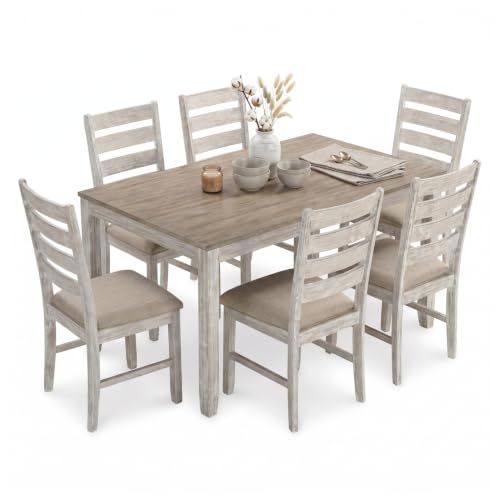
Signature Design by Ashley Skempton 7-Piece Dining Table Set for 6 | Solid wood, engineered wood & acacia veneer construction, 60-in table, Cushioned polyester seating, Two-tone finish
Check price on Amazon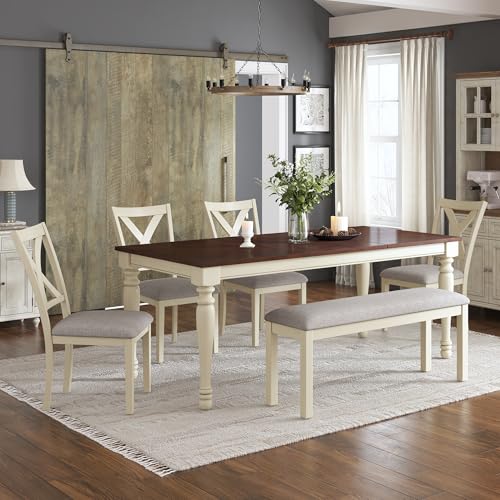
AMERLIFE 6 Piece Farmhouse Dining Table Set with 71" Solid Wood Table | 71" Solid Wood Table, Upholstered Chairs, Bench Included, Seating for 6 to 7, Rustic White Finish
Check price on Amazon
Tribesigns Farmhouse Dining Table for 6 People, 70.8-Inch Rectangular Wood Dining Table, Rustic Kitchen Table with Heavy Duty Metal Legs for Dining Room (Brown/White)
Check price on Amazon
Lexicon 7-Piece Dining Set, Wooden Dining Table and 6 Chairs, Cherry/White | Farmhouse Dining Set, Rectagular Table, Cross Back Chairs, Easy Assembly Seater for Indoor Home, Dinner, Kitchen, 2-Tone
Check price on Amazon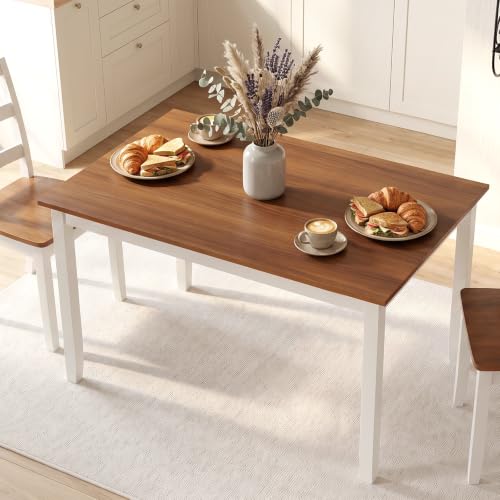
48 Inch Farmhouse Wooden Dining Table, Rectangular Kitchen Table | Wood Grain Tabletop and White Rubber Wood Legs, Dining Room Table for Apartment Breakfast Nook, (Table Only)
Check price on Amazon
Lexicon 60" Farmhouse Wood Dining Table for 4-6 People, Antique White | Solid Wood Frame Acacia Veneer Rectangular Kitchen Table, for Kitchen, Dining Room, Living Room, Assembly Required
Check price on Amazon
ChooChoo 47.2 Inch Round Dining Table for 4 | Farmhouse Wood Kitchen Table, Circle Dinner Table for Kitchen & Dining Room, White
Check price on AmazonFrequently Asked Questions
What is a white and dark wood dining table?
A white and dark wood dining table is a two-tone piece that combines a white-painted or white-finished surface with dark wood elements, such as legs, apron, or base. This contrast creates a modern, versatile look that suits many interior styles.
How do I care for a two-tone white and dark wood dining table?
Use a soft, damp cloth for routine cleaning. Avoid abrasive cleaners on the white finish, and use a wood conditioner or wax on the dark wood parts. Always use coasters and placemats to protect both surfaces from heat and moisture.
What interior styles work best with a white and dark wood dining table?
This two-tone design works well with modern, farmhouse, Scandinavian, coastal, and transitional interiors. It adds visual interest without overwhelming a space, making it a flexible choice for many dining rooms.
Is a white and dark wood dining table durable?
Durability depends on the materials and construction. Solid wood legs and a well-sealed white top offer good longevity. Look for reinforced joinery and quality finishes to ensure the table withstands daily use.
Related Reading
Expand your knowledge with these related guides from our site:
- Dining Table Types — Compare shapes, sizes, and configurations.
- Materials & Finishes Hub — Understand wood, stone, glass, and metal options.
- Shopping & Reviews Hub — Find buying checklists and head-to-head comparisons.
- Style & Design Hub — Get inspired by different interior aesthetics.
- Care & Maintenance Hub — Protect and preserve your table.