
Dining Table Legs for Glass Top: The Complete Buyer's Guide
Choosing the right base for a glass dining table is about much more than looks. Discover how leg type, material, weight distribution, and mounting method determine safety, stability, and long-term satisfaction.
Explore Recommended OptionsWhy the base matters more than you think: A glass tabletop is beautiful, but it relies almost entirely on its legs and base for safety. Unlike a solid wood top, glass offers no structural rigidity of its own—so the base you choose controls how stable, quiet, and safe your dining table feels every single day. This guide walks you through every decision, from pedestal versus four-leg designs to plate thickness, mounting hardware, and floor protection.
Recommended Dining Table Legs & Bases for Glass Tops
⚠️ AFFILIATE DISCLOSURE: This website contains affiliate links. As an affiliate Associate, we earn from qualifying purchases. If you make a purchase through these links, we may receive a small commission at no additional cost to you. Read our full affiliate policy.

Metal Table Legs 28 Inch, Round Dining Table Base Fits Glass Marble Wood | 1000LBS Capacity, Golden Ratio Easy To Install with Suction Cups, 4 Adjustment Pads, Suitable for Indoor and Outdoor Use
Check price on Amazon
28 Inch Metal Dining Table Base, 1200 LBS Load Suitable for Glass Tops | Heavy Duty Industrial Table Legs with Height-Adjustable Foot Pads and Suction Cups for Fits Glass Marble Wood Top
Check price on Amazon
BOTAOYIYI 30 Inch Modern Table Base | Metal Dinning Table Legs with Suction Cups, Heavy Duty Desk Base for Marble,Glass,Wood Top, Set of 4 Furniture Legs for Home
Check price on Amazon
FUSHIAIPTC 28 Inch Metal Dining Round Table Legs Only for Wood/Glass/Marble | Heavy Duty Load-bearing 1000LB Artistic Curve Table Base with Suction Cups & Pre-drilled Holes
Check price on Amazon
Metal Table Legs 28 Inch, Round Dining Table Base Fits Glass Marble Wood | 1000LBS Capacity, Golden Ratio Easy To Install with Suction Cups, 4 Adjustment Pads, Suitable for Indoor and Outdoor Use
Check price on Amazon
TIEOU Metal Legs for Table V Shape 28" H Tall Metal Black Table Leg Heavy Duty Industrial Desk Legs Set of 2
Check price on Amazon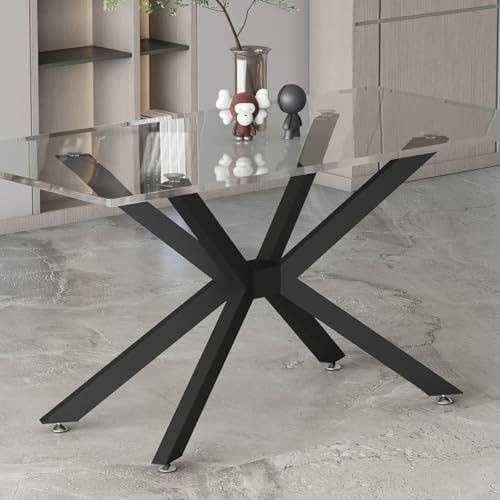
Modern Table Base Black 29" Metal Dining Table Legs with Suction Cups, Desk Base for Marble,Glass,Wood Top, Furniture Legs for Coffee Table, End Table, Home,Kitchen, Office
Check price on Amazon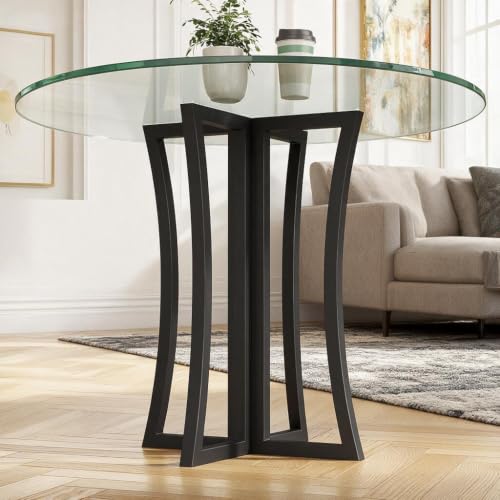
LBSLMJB Metal Table Base, 28 Inch, Black, for Glass and Wood Tops | DIY dining table and desk projects; suction cups and pre-drilled mounting holes for different tabletop materials
Check price on AmazonWhy Glass Tops Demand a Purpose-Built Base
A glass dining table can look effortless, but the engineering underneath is anything but. Tempered glass is strong in compression but vulnerable to point loads, uneven support, and torque. That means the legs you select must distribute weight evenly across the entire top—not just at four corner points. The wrong base can create stress concentrations that shorten the life of the glass or, in the worst case, cause cracking.
When you shop for a dining table legs for glass top configuration, look for bases designed specifically for glass. These usually include a metal or wood frame with rubber or felt pads at the contact points, plus wider top plates that spread the load. If you are also considering the material for the legs themselves, our guide to dining table legs in wood explains how different species handle weight and vibration.
It also helps to understand the relationship between the top and the base as a system. A glass dining table only purchase often leaves you to source a separate base, while a 3-piece glass dining table set bundles a matched base and top. Knowing which route you are taking shapes every decision in this guide.
Base Types: Pedestal, Four-Leg, and Trestle
The three dominant base styles each solve a different problem. Choose based on seating count, room shape, and how often the table gets bumped or leaned on.
Pedestal Bases
A pedestal base uses a single central column with a broad foot and a broad top plate. It is the most popular choice for round and oval glass tops because it eliminates corner legs that catch knees and chair arms. Good pedestal bases use a wide, heavy foot—often cast iron or thick steel—to resist tipping. For a round top, a base for a round glass dining table should have a foot diameter at least half the tabletop diameter for safe stability.
Pedestal bases shine in small spaces and are easy to slide chairs under from any side. The trade-off is that a single column can wobble if the foot is too light or the top plate is too small. Look for bases with an internal leveling foot or adjustable glides.
Four-Leg Bases
Four-leg frames are the most familiar and widely available. They offer excellent weight distribution when the top plates are generous and the legs are splayed slightly outward. For a rectangular glass top, four legs give predictable support and make it easy to add a leaf. However, corner legs can interfere with chair placement, especially on smaller tables. If you are shopping for a compact setup, a small glass dining table for 2 often pairs best with a slim four-leg frame or a compact pedestal.
Four-leg frames are also the easiest to replace or upgrade. If you already own a glass top, a set of legs for a dining room table can be matched to the top's dimensions and mounting pattern.
Trestle and Twin-Pedestal Bases
For longer glass tops—think six to eight seats—trestle and twin-pedestal bases provide the most even support. Twin pedestals place two columns under the top, reducing the unsupported span that causes glass to flex. Trestle bases use two A-frame or slab ends connected by a stretcher. These designs are heavier and more complex to assemble, but they deliver the most stable feel for large dining surfaces. If you are planning a bigger table, explore glass dining tables with a leaf to see how extension mechanisms interact with base design.
Base Type Comparison at a Glance
| Base Type | Best For | Stability Profile | Chair Clearance | Tier Guidance |
|---|---|---|---|---|
| Single Pedestal | Round and oval tops, small rooms | Good when foot is wide and weighted | Excellent on all sides | Entry-level to premium; heavy cast foot marks the higher tier |
| Four-Leg Frame | Rectangular tops, everyday family use | Very good with splayed legs and wide plates | Moderate; corner legs intrude | Essential to mid-range; reinforced steel moves up a tier |
| Twin Pedestal | Long tops, six-plus seats | Excellent; minimizes unsupported span | Excellent along the length | Mid-range to professional-grade |
| Trestle | Farmhouse and large rectangular tops | Excellent; heavy and grounded | Good at the ends, tighter at sides | Mid-tier to high-end tier |
Materials: Metal, Wood, and Mixed Construction
Glass tops are heavy—often 50 to 100 pounds or more depending on thickness and size. The base material must carry that load without flexing. Here is how the main options compare.
Steel and Iron
Powder-coated steel is the workhorse material for glass-top bases. It is rigid, resists flexing, and can be shaped into slim profiles that keep sightlines open. Cast iron feet add mass exactly where you need it—low and wide—which lowers the center of gravity. Look for rust-proof finishes and welded joints rather than bolted-only connections on load-bearing points. A metal indoor dining table base often uses this same construction philosophy.
Solid Wood
Wood bases bring warmth and pair beautifully with glass in Scandinavian and modern farmhouse interiors. Hardwoods like oak, ash, and walnut resist compression better than softwoods. The key is joint quality: mortise-and-tenon or doweled joints outperform simple screws. If you prefer a wood look, a round dining table leg set can be paired with a glass top for a softer aesthetic. Avoid thin, spindly wood legs under large glass tops—they flex and transfer vibration.
Mixed and Chrome Constructions
Chrome and polished steel bases are popular for retro and contemporary looks. They are rigid and easy to clean, but check that the finish resists fingerprints and that the feet have protective caps. A smoked glass dining table and chairs set often uses chrome or matte black steel for contrast. For outdoor-adjacent spaces, a frosted glass top dining table may pair with weather-resistant coated steel.
Glass Thickness, Mounting Hardware, and Load Distribution
The base is only half the equation. The glass itself and the way it attaches to the base determine how safe the finished table feels.
Recommended Glass Thickness
Tempered glass is the standard for dining tables because it breaks into small, blunt pieces rather than sharp shards. For most residential dining tables, 10 mm to 12 mm tempered glass is the practical range. Larger tops and tables that see heavy use benefit from 12 mm or more. If you are sourcing the top separately, read our guide to tempered glass for dining tables to understand edge polishing, beveling, and safety marking requirements.
Mounting Methods
There are two common approaches. The first uses suction cups or rubber pads with metal brackets that clamp the glass without drilling. The second uses pre-drilled holes and metal standoffs or pucks bolted through the glass. Drilled mounting is more secure and is standard on premium bases, but it requires the glass to be tempered after drilling—never drill tempered glass yourself. Clamp-style mounts are easier to retrofit but must be checked periodically for tightness. Whichever method you choose, insist on rubber or felt interfaces between metal and glass to prevent point loading.
Load Distribution
Weight should travel from the glass into wide top plates, then down through rigid legs, then into broad feet. Any gap in that chain—a small top plate, a thin leg, a tiny foot—creates a weak link. When evaluating a base, check the surface area of the top plate and the footprint of the feet. A base with a top plate smaller than one-third of the tabletop area is a warning sign for larger tops.
Stability and Safety Checklist
Glass tables have a reputation for feeling less stable than wood tables, but that reputation comes from poorly matched bases—not from glass itself. Run through this checklist before you commit.
- Footprint rule: The base footprint should be at least two-thirds the width of the tabletop in the direction most likely to tip.
- Weighted feet: Cast iron or filled steel feet lower the center of gravity and resist tipping when someone leans on the edge.
- Even contact: Rubber or felt pads at every contact point prevent point loads and reduce slipping.
- No sharp edges: Any metal edge touching glass should be rounded or covered.
- Level floor: Use adjustable glides to compensate for uneven floors rather than forcing the table flat.
- Child and pet safety: Avoid bases with exposed bolts at knee height, and choose rounded corners on rectangular tops.
If you are building a compact dining nook, a small-space dining table for 6 with a glass top and pedestal base can maximize clearance while keeping the footprint predictable. For open-plan rooms, a modern dining table base only purchase lets you match the base to an existing glass top and room style.
Matching the Base to Your Room and Tabletop
A glass top is a neutral canvas, so the base carries most of the style weight. Here is how to align base choice with common interiors.
Modern and minimalist: Slim black steel or brushed chrome frames with geometric profiles. Keep the top plate hidden and the legs thin but rigid. A glass dining table only top pairs well with this look.
Scandinavian: Light oak or ash wood bases with tapered legs and a warm oil finish. Pair with a Danish dining table and chairs aesthetic for a cohesive room.
Industrial: Heavy steel trestle bases with visible welds and matte powder coating. A retro metal dining table or retro chrome dining table base can anchor a glass top in an industrial loft.
Farmhouse: Painted wood trestle bases with a distressed finish. A farmhouse rustic dining table set often uses a glass top over a wood base for easy cleaning.
Small apartments: Folding and flip-top mechanisms are worth considering if space is tight. A flip-top dining table or folding dining table for small spaces can use a glass top with a compact folding base, though you must confirm the base is rated for glass loads.
How to Shop for Glass-Top Table Legs
When you are ready to buy, treat the base as a structural component first and a design element second. Use this sequence.
- Measure the top: Record length, width, thickness, and weight. Confirm whether the glass is tempered and whether it has pre-drilled mounting holes.
- Choose the base type: Pedestal for round and small spaces, four-leg for rectangular everyday tables, twin pedestal or trestle for long tops.
- Verify the load rating: Check the manufacturer's stated weight capacity and confirm it exceeds your glass weight with margin.
- Check the top plate size: Wider plates spread load better. Avoid bases with small plates under large tops.
- Confirm mounting compatibility: Match the base's mounting pattern to your glass—clamp-style for undrilled glass, bolt-through for pre-drilled glass.
- Plan for assembly and leveling: Look for adjustable glides and clear instructions. A modern dining table base only listing should state the hardware included.
For a quick visual reference on proportions, our standard round dining table sizes guide helps you match top diameter to base footprint. If you are furnishing a compact apartment, an apartment-size dining table and chairs set with a glass top and pedestal base is a common and practical combination.
Care and Maintenance for Glass-Top Bases
Glass-top bases need less maintenance than wood, but a few habits keep them safe and quiet.
- Re-tighten mounting bolts every few months, especially on clamp-style bases.
- Inspect rubber pads and replace them when they harden or crack.
- Clean metal frames with a damp cloth and mild soap; avoid abrasive pads on powder coating.
- Use a clear dining table cover if the table sees heavy daily use or craft projects.
- For wood bases, re-oil annually to prevent drying and cracking.
If you are pairing a glass top with an outdoor-adjacent setup, a outdoor dining table with glass top base should use rust-proof coated steel and drainage-friendly feet. Always confirm the base is rated for outdoor humidity before use.
Frequently Asked Questions
Can I use any table legs with a glass top?
No. Glass tops need bases that distribute weight evenly and protect the glass from point loads. Look for wide top plates, rubber or felt contact pads, and a load rating that exceeds the glass weight. Standard wood legs designed for solid tops often have small plates and may not be safe.
What is the most stable base for a glass dining table?
Twin-pedestal and trestle bases are the most stable for long tops because they reduce the unsupported span. For round tops, a single pedestal with a wide, weighted foot is the most stable option. Four-leg frames are stable when the legs splay outward and the feet are broad.
How thick should the glass be for a dining table?
Most residential dining tables use 10 mm to 12 mm tempered glass. Larger tops and tables with heavy use benefit from 12 mm or more. Always use tempered glass and confirm safety markings on the edge.
Do glass table legs need to be bolted through the glass?
Not always. Clamp-style mounts with rubber pads work for undrilled glass, while bolt-through standoffs are more secure and require pre-drilled holes. Never drill tempered glass yourself—drilling must happen before tempering.
Can I replace the base on an existing glass dining table?
Yes, if you match the new base to the glass dimensions, weight, and mounting pattern. Measure the top carefully and check whether it has pre-drilled holes. A replacement leg set for a dining room table is a practical way to refresh the look without replacing the glass.
Are metal or wood legs better for glass tops?
Metal bases are generally more rigid and better at carrying heavy glass with slim profiles. Wood bases are warmer visually and work well in Scandinavian and farmhouse rooms, but require hardwood and strong joints to avoid flexing.
Final Thoughts
Choosing dining table legs for a glass top is a decision about safety as much as style. Prioritize even load distribution, wide top plates, weighted feet, and a base type that matches your tabletop shape and seating needs. Once the structural basics are right, you can choose metal, wood, or mixed construction to match your room. For more inspiration on pairing tops and bases, explore our guides on mirrored dining tables and large circle dining table and chairs to see how glass tops are styled in different interiors.