
Small Dining Table With Fold Down Sides: The Complete Space-Saving Guide
Learn how drop-leaf and fold-down dining tables turn tight kitchens, apartments, and multi-use rooms into flexible dining spaces — without compromising stability or style.
EXPLORE TOP PICKSWhy fold-down sides matter: A small dining table with fold down sides solves one of the most common home dilemmas — the need for a full dining surface without permanent floor-space commitment. When the leaves are lowered, the table becomes a slim console or sideboard; when raised, it converts into a proper dining table for family meals and guests. This guide explains the mechanics, seating math, material trade-offs, and layout rules so you can choose with confidence before you buy.
Recommended Small Dining Tables With Fold Down Sides
⚠️ AFFILIATE DISCLOSURE: This website contains affiliate links. As an affiliate Associate, we earn from qualifying purchases. If you make a purchase through these links, we may receive a small commission at no additional cost to you. Read our full affiliate policy.

VASAGLE Folding Dining Table, Kitchen Table | Drop Leaf Extendable Table for Small Spaces, Seats 2-4 People, Industrial, Rustic Brown and Black UKDT077B01
Check price on Amazon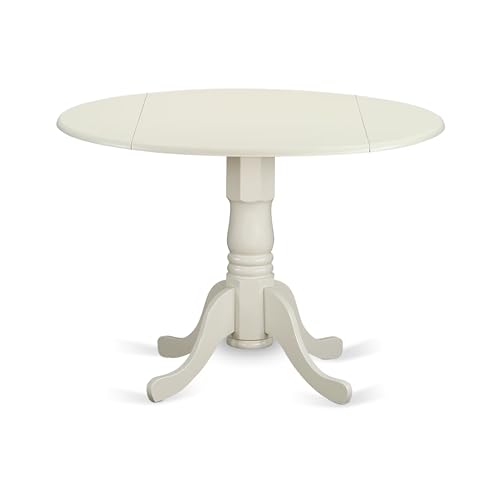
East West Furniture DLT-WHI-TP Dublin Modern Kitchen Table - a Round Dining Table Top with Dropleaf & Pedestal Base, 42x42 Inch, Linen White
Check price on Amazon
Merax Wooden Small 29"- 47" Extendable Dining Table with Drop Leaf,Brown | Farmhouse Folding Kitchen Table for 2- 4, Rounded Edges Dinner Table for Studio Apartment Breakfast Nook, Easy Assemble
Check price on Amazon
CHOEZON Folding Dining Table, Movable Dining Table, Expandable Kitchen Table, Versatile Table with 6 Wheels and 2-Tier Shelf, for Dining, Living Room, Apartment, Rustic Brown TCZ01BF
Check price on Amazon
Best Choice Products 42" Round Drop Leaf Dining Table for 4, Solid Wood Expandable Small Dining Table W/Storage Shelf, Space Saving Kitchen Table for Kitchen, Dining Room, & Small Spaces - Chestnut
Check price on Amazon
Harper & Bright Designs 3-Piece Wood Drop Leaf Dining Table Set with 2 X-Back Chairs, Space-Saving Breakfast Nook Dining Set, Brown
Check price on Amazon
Drop Leaf Dining Table, 31.5"-55.1" Foldable Solid Pine Wood Kitchen Table | Expandable,Dual Hinged Leaves, Brown And White Finish, Seats 4 To 6, Compact Layout For Apartments, Farmhouse, Small Space
Check price on AmazonWhat Is a Small Dining Table With Fold Down Sides?
A small dining table with fold down sides — commonly called a drop-leaf table or fold-down dining table — uses hinged panels attached to the table's short ends or long sides. These leaves swing upward and lock into a horizontal position to extend the usable surface, then fold vertically downward when you need floor space back. The mechanism is simple, but the engineering quality varies significantly across market tiers.
The design dates back to 16th-century gateleg tables and remains popular because it directly addresses modern spatial constraints. Unlike a standard folding table that collapses entirely, a drop-leaf table keeps a fixed central frame, so the table always feels like real furniture rather than a temporary setup. If you are comparing this format against other compact options, our guide to folding dining room tables for small spaces explains the differences between full-folding, gateleg, and drop-leaf designs.
One-Leaf vs. Double-Leaf Configurations
Drop-leaf tables come in two main configurations, and the choice affects both seating capacity and daily usability:
- Single drop leaf: One hinged panel on one end. The table stays anchored against a wall with the leaf down, functioning as a console or desk. Raise the leaf for two to three diners. This is the most space-efficient option for studio apartments and narrow kitchens.
- Double drop leaf: Hinged panels on both ends, and occasionally on the long sides as well. With both leaves raised, seating expands to four or six people. With both down, the table is extremely compact — often under 20 inches wide. This is the better choice if you regularly host guests.
A related format is the narrow flip-top console dining table, which flips the entire tabletop rather than hinging side leaves. It suits very tight entryways where a side-hinged leaf would block a doorway.
Seating Capacity and Size Planning
Before choosing a model, measure your room and calculate realistic seating. The standard rule is 24 inches (about 60 cm) of table edge per person for comfortable dining. A drop-leaf table with both leaves raised and a 30-inch width can typically seat four people — two per long side — while a wider model with side leaves can seat six.
| Configuration | Typical Seating | Best For | Tier Notes |
|---|---|---|---|
| Single drop leaf, 30" wide | 2–3 people | Studio apartments, kitchen nooks, desks | Entry-level to mid-range tiers dominate |
| Double drop leaf, 32–36" wide | 4 people | Small family kitchens, breakfast areas | Mid-range tier; solid wood options common |
| Double drop leaf + side leaves, 38–42" wide | 4–6 people | Apartments that host guests regularly | Premium tier; heavier hardware and reinforced aprons |
| Gateleg drop leaf, 36–40" wide | 4–6 people | Traditional and cottage-style interiors | Premium to luxury tiers for solid hardwood builds |
If your room is particularly tight, a corner small dining table paired with drop-leaf mechanics can maximize an awkward footprint. For families needing more seats, the small space dining table for six guide covers extendable and folding alternatives that outperform fixed drop-leaf designs at higher seat counts.
Clearance Rules You Should Not Skip
- Allow 30–36 inches between the table edge and walls or furniture when leaves are raised, so chairs can pull out comfortably.
- Keep at least 18 inches of walkway clearance when leaves are down, especially in galley kitchens.
- If you use bench seating on one side, measure the bench depth — a seating bench for dining table can save several inches compared with individual chairs.
- Account for the hinge arc: the leaf swings upward, so nothing should be mounted directly above the table edge at leaf height.
Materials, Hinges, and Build Quality
The hinge is the single most important component in a fold-down dining table. A weak hinge causes sagging leaves, wobble at the table edge, and eventual failure. When evaluating a model, check the hinge type, the apron reinforcement, and the leg support mechanism (gateleg vs. swing-leg vs. cantilever).
Hinge Types Compared
- Butterfly hinges: Two interlocking plates; common on entry-level and mid-range tables. Adequate for light daily use, but check for locking tabs.
- Locking drop-leaf hinges: Include a locking mechanism that holds the leaf rigidly in the raised position. This is the minimum standard for a table used daily. Mid-range models typically include these.
- Gateleg support: A swinging leg gate supports the leaf from underneath. This is the most stable design and is common on premium and luxury solid-wood tables, but it requires more floor clearance when the leaf is raised.
For material durability, solid wood such as oak, pine, or walnut offers repairability and holds hinge screws firmly over decades. Engineered wood with veneer is stable and lighter, but repeated folding can loosen screw holes over time unless the hinge plate is reinforced. Metal-framed tables with wood or glass tops suit industrial and modern interiors; our metal indoor dining table guide covers frame quality checks. If you are weighing wood species, the good wood for dining table reference explains hardness ratings and movement behavior in humid rooms.
Where to Place a Drop-Leaf Table
The biggest advantage of a fold-down table is that it supports multiple room functions. Common placement scenarios include:
- Against a wall in a kitchen: The table doubles as a prep surface and a two-person breakfast spot. Keep the leaf side facing the open room.
- Behind a sofa in an open-plan living room: With the leaf down, it acts as a console; raise it for dinner. This is the most popular arrangement in studio apartments.
- In a hallway or entryway: A narrow model functions as a console table that converts to a dining surface when guests arrive.
- In a dedicated small dining nook: Pair with a bench on one side and two chairs on the other to maximize seating in a corner.
For styling ideas that work in compact rooms, our modern dining room table decor guide covers centerpiece scale and lighting placement. If you prefer a softer, curated look, the small boho dining table reference shows how texture and color work in tight spaces.
How to Choose: A Practical Checklist
Buyers researching a fold-down dining table usually fall into one of three tiers. Use this checklist to match features to your tier and usage pattern:
- Measure twice: Record the table's fully extended length, fully folded width, height, and the leaf arc. Compare against your room's walkways.
- Test the hinge in person if possible: Raise and lower the leaf several times. It should lock firmly without rattling and fold without pinching.
- Check the seating edge comfort: Thick aprons reduce knee clearance. A table with a 24–25 inch apron height under the edge is comfortable for adults.
- Match the finish to your routine: Matte and oiled finishes hide fingerprints and resist daily wear better than high-gloss surfaces in family kitchens.
- Confirm the warranty covers hardware: Premium-tier tables typically warranty hinges and folding mechanisms for several years; entry-level models often limit coverage to the frame.
If you need a table that also converts between living and dining functions, the adjustable coffee table to dining table and box coffee to dining table guides explain conversion mechanisms that pair well with fold-down designs. For apartment-specific sizing, the apartment-size dining table and chairs guide covers matched sets.
Fold-Down Sides vs. Other Space-Saving Tables
Drop-leaf is not the only compact solution. Understanding the alternatives helps you avoid buying the wrong mechanism for your routine:
| Table Type | How It Saves Space | Best For | Trade-Off |
|---|---|---|---|
| Drop-leaf / fold-down sides | Hinged leaves fold vertically at the ends | Wall placement, dual-use rooms | Leaf edge can feel less rigid than a fixed top |
| Gateleg table | Leaves supported by swinging leg gates | Traditional interiors, heavier use | Leg gates intrude on floor space when raised |
| Extendable table | Butterfly or pull-out leaves stored inside the top | Rooms with wall clearance but occasional guests | Requires storage space and a larger base footprint |
| Flip-top console table | Entire top flips from console to dining size | Hallways and entryways | Limited seating depth; narrower surface |
| Folding table | Legs collapse and top folds flat | Temporary or occasional use | Less furniture-grade stability and finish |
For a deeper comparison of extendable options, see the small space expandable dining table guide. If storage and portability matter more than permanent placement, the folding dining table for small space reference covers models that collapse fully.
Care and Maintenance for Fold-Down Tables
Drop-leaf tables need slightly different care than fixed tables. The hinges and the leaf seams are the vulnerable points:
- Lubricate hinges annually with a dry silicone or paraffin lubricant. Avoid oil-based products that attract dust.
- Keep the leaf seam dry. Wipe spills immediately; moisture that seeps into the seam can swell engineered cores or stain solid wood.
- Tighten hinge screws every few months. If screw holes loosen, insert a hardwood toothpick with wood glue to restore grip before re-driving the screw.
- Use a table pad under hot dishes — the leaf edge conducts heat differently than the fixed top on some builds.
For surface-specific care routines, the dining table routine upkeep guide covers wood, stone, and glass finishes. If you notice wobble, the wobbly dining table fix guide explains how to diagnose leg and hinge issues.
Frequently Asked Questions
What is a small dining table with fold down sides?
A small dining table with fold down sides — also called a drop-leaf table — features hinged panels on one or both ends that fold vertically when not in use. This lets the table shrink to a narrow console or expand to full dining size, making it ideal for compact kitchens, apartments, and multi-use rooms.
How many people can a drop-leaf dining table seat?
Seating depends on the leaf configuration. A one-leaf drop-leaf table typically seats two to four people, while a double drop-leaf table can seat four to six when both sides are raised. Always check the manufacturer's recommended seating capacity and allow at least 24 inches of table width per person.
Are fold down dining tables sturdy enough for daily use?
Yes, when built with quality hinges and reinforced aprons. Mid-range and premium drop-leaf tables use heavy-duty locking hinges and solid wood or high-grade engineered cores that hold up to daily family meals. Entry-level models may use lighter hardware, so inspect hinge quality before purchase.
What materials work best for a small folding dining table?
Solid wood such as oak, pine, and walnut offers durability and repairability. Engineered wood with veneer provides a stable core, while metal frames with wood or glass tops suit industrial and modern styles. For humid climates, sealed hardwood or powder-coated metal resists warping best.
How much clearance do I need around a drop-leaf table?
Allow roughly 30 to 36 inches of clearance between the table edge and walls or other furniture when the leaves are raised. When the leaves are down, you can push the table closer to a wall, but keep at least 18 inches of walkway for comfortable movement.
Ready to Compare Fold-Down Table Options?
Browse curated models sorted by configuration, material, and tier — each with key specification details to help you shortlist the right table for your space.
Compare FeaturesRelated Buying Guides
Explore more compact dining solutions to compare before you decide: