
Base for Round Glass Dining Table: The Complete Buyer's Guide
Choosing the right base is the single most important decision for a round glass dining table. This guide explains base styles, material tiers, sizing rules, stability factors, and compatibility checks so you can pair your glass top with a base that looks right and performs safely.
Explore Recommended BasesWhy this page exists: Most shoppers already know they want a round glass dining table, but the base is often treated as an afterthought. In reality, the base determines stability, legroom, weight capacity, and the overall visual weight of the table. This guide walks you through every base type, the materials behind them, and the exact compatibility rules you should verify before buying — so you can make a confident, well-informed purchase.
Why the Base Matters More Than the Glass
A round glass top is visually light and can feel almost weightless. That impression is created entirely by the base beneath it. A well-matched base distributes the load across a wide footprint, keeps the glass level, and provides enough clearance for chairs. A poorly matched base can wobble, create stress points at the mounting points, or simply look out of proportion.
Because glass tops are usually sold separately from bases, pairing the two correctly is your responsibility as the buyer. The good news is that the rules are straightforward once you understand the four variables that matter: diameter, thickness, weight, and mounting hardware. If you are still deciding on the table itself, our overview of modern dining table bases sold separately is a useful starting point for style and structure.
The Five Main Base Styles for Round Glass Tops
Almost every round glass dining table base falls into one of five categories. Each has a distinct footprint, visual character, and stability profile. Below is a comparison of the most common styles, including a neutral tier descriptor that reflects its position in the market rather than any currency figure.
Tripod Base
Three angled legs meeting under the center of the glass. A classic mid-century silhouette that works well with smaller tops.
- Strong tripod stability
- Small footprint
- Best for 30–42 inch tops
- Less suited to very large diameters
Tulip / Pedestal Base
A central column flaring into a round or oval foot. The most popular choice for round glass dining tables because it maximizes legroom.
- Unobstructed legroom
- Elegant, sculptural look
- Best for 36–54 inch tops
- Check weight rating carefully
X-Frame Base
Two crossed supports forming an X under the glass. Contemporary and architectural, often in powder-coated steel.
- Excellent lateral rigidity
- Wide footprint for large tops
- Best for 42–60 inch tops
- Chairs may bump the frame
Four-Leg Base
Four separate legs connected by an apron or crossbars. Familiar, stable, and easy to match with traditional or transitional interiors.
- Very stable on all four corners
- Easy to level
- Best for 36–48 inch tops
- Legs limit chair placement
Double Pedestal Base
Two connected pedestals supporting a larger glass top. Chosen when the diameter exceeds what a single column can safely handle.
- Handles wide diameters
- Spreads load across two points
- Best for 54–72 inch tops
- Heavier and harder to move
Column + Spoke Base
A central column with radiating spokes or a star foot. A hybrid design that combines a small footprint with a wide support ring.
- Great stability-to-footprint ratio
- Modern visual character
- Best for 40–54 inch tops
- Verify spoke length vs. top diameter
Sizing Rules: Matching the Base to Your Glass Top
The most common mistake buyers make is choosing a base that is too small for the glass top. An undersized base creates a tipping risk and stresses the mounting points. The table below summarizes the practical sizing relationship between the glass diameter and the base footprint.
| Glass Top Diameter | Recommended Base Footprint | Typical Seating | Base Styles That Fit |
|---|---|---|---|
| 30–36 inches | 14–20 inches | 2 people | Tripod, small tulip, single pedestal |
| 36–42 inches | 18–24 inches | 2–4 people | Tulip, tripod, four-leg, column + spoke |
| 42–48 inches | 20–28 inches | 4 people | Tulip, X-frame, four-leg, column + spoke |
| 48–54 inches | 24–32 inches | 4–6 people | X-frame, wide tulip, double pedestal |
| 54–72 inches | 30–42 inches | 6–8 people | Double pedestal, heavy X-frame |
The general rule of thumb is that the base footprint should be at least one-third to one-half of the glass diameter. For a 48-inch top, a base spread of roughly 20 to 26 inches is a safe target. Wider is safer, but a footprint that is too wide can interfere with chair legs. If your top is on the larger side, our guide to standard round dining table sizes can help you confirm the seating capacity you actually need before committing to a diameter.
Glass Thickness, Weight, and Weight Rating
Base manufacturers publish a recommended top weight range and a maximum diameter. These numbers are not marketing fluff — they reflect the load the mounting plate and column can safely carry, including the dynamic load of people leaning on the table edge. A few practical benchmarks:
- Tempered glass is the standard for dining tables and is far more resistant to impact than annealed glass. Our explainer on tempered glass for dining tables covers why this matters for safety.
- Thickness typically ranges from 3/8 inch to 3/4 inch. Thicker glass adds weight and stiffness, which actually improves stability on a pedestal base.
- Weight distribution is handled by the base's mounting plate. A small central plate on a large glass top concentrates stress — a base with a wider mounting ring spreads it more evenly.
- Edge profile affects both comfort and perceived thickness. A beveled or polished edge on a medium-thickness top reads as more substantial than a flat edge on the same glass.
If you are purchasing the glass separately, our guide to buying a glass dining table top on its own covers thickness, edge finishing, and how to specify the mounting holes correctly.
Material Tiers for the Base
Base materials determine durability, weight, and how the table feels in the room. Each material sits at a different point in the market, but the descriptors below reflect position and performance rather than any currency value.
| Material | Tier | Best For | Notes |
|---|---|---|---|
| Powder-coated steel | Balanced tier | Most homes, mid-size tops | Durable, rust-resistant, easy to clean |
| Cast aluminum | Premium tier | Tulip and pedestal designs | Lighter than steel, strong cast shapes |
| Stainless steel | High-end tier | Modern and large tops | Excellent load capacity, crisp finish |
| Solid hardwood | Mid-range | Warm, traditional interiors | Needs a stable floor; check moisture care |
| Chrome-plated steel | Premium tier | Retro and contemporary looks | Reflective finish; requires gentle cleaning |
Material choice should follow function first. A heavy glass top on a lightweight base is a stability risk regardless of how good it looks. For a broader look at leg and support options, see our guide to dining table legs for glass tops and the wider article on wooden dining table legs if you are leaning toward a warmer, natural look.
Stability Factors Buyers Overlook
Stability is not just about the footprint. Several smaller details compound to determine whether a round glass table feels rock-solid or slightly nervous when someone leans on it.
- Center of gravity: A weighted foot or a wide flared base lowers the center of gravity and dramatically reduces wobble.
- Mounting hardware: Bolts should pass through or clamp a metal plate rather than pressing directly on glass. Never use hardware that contacts the glass edge.
- Floor contact: Adjustable glides let you compensate for uneven floors. Felt pads protect hard floors and add a small amount of grip.
- Chair clearance: A base that is too wide forces chairs outward and creates a cramped seating ring. Balance footprint against seating comfort.
- Assembly torque: Over-tightening fasteners can crack glass. Follow the base manufacturer's torque guidance exactly.
Pre-Purchase Compatibility Checklist
- Confirm the glass diameter falls within the base's rated range.
- Confirm the glass thickness matches the base's recommended range.
- Check the base's maximum top weight rating against your glass weight.
- Verify the mounting plate or ring diameter spreads load away from the glass center.
- Measure your room's chair clearance with the base footprint in mind.
- Confirm the base height plus glass thickness equals a comfortable dining height (usually 28–30 inches total).
- Check that glides or pads are included or available for your floor type.
- Review the assembly instructions for torque guidance before you start.
Matching the Base to Your Room and Chairs
A base is a visual anchor. On a round glass top, the base carries nearly all of the table's visual weight, so its style should echo the rest of the room. A slim pedestal suits minimalist and Scandinavian interiors; a four-leg or X-frame base fits transitional and industrial spaces; a cast tulip base sits comfortably in both classic and modern rooms. If your room is compact, our look at small glass dining tables for two shows how base choice changes the perceived footprint. For the top itself, the guide to a frosted glass top dining table explains how surface finish interacts with base style.
Chair height matters too. Most dining chairs are designed for a 28–30 inch table surface height. When you add a glass top to a base, total height = base height + glass thickness + any mounting plate thickness. Confirm this sum before purchase, and use our guide to adjustable dining chairs if you need flexibility.
Assembly and Setup Tips
Most base assemblies take under an hour with basic tools. A few habits make the result safer and longer-lasting:
- Assemble the base upside down on a padded surface to avoid scratching the finish.
- Place the glass top only after the base is fully assembled and level.
- Use two people to lower the glass onto the mounting plate — glass is heavier than it looks.
- Tighten mounting hardware in a star pattern rather than one at a time.
- Re-check levelness after the top is in place and adjust glides as needed.
- Wait 24 hours before placing heavy objects on the table.
When to Choose a Different Top Entirely
Glass is a beautiful surface, but it is not the only option. If you are still weighing materials, our comparison of wood versus glass dining tables puts the trade-offs in plain terms. If you decide glass is right for you but want a round top with a different edge treatment, the guide to a 3-piece glass dining table set shows how coordinated sets handle the base-top pairing for you. And for anyone starting from scratch, the dining table size chart is the fastest way to confirm the diameter your room can realistically hold.
Frequently Asked Questions
What type of base works best for a round glass dining table?
Pedestal and tulip bases are the most popular because they keep legroom unobstructed and look visually light. Tripod and X-frame bases offer strong stability and a more architectural look. The best base depends on your table diameter, glass thickness, and room layout.
How wide should the base be for a round glass table top?
As a general rule, the base footprint should be at least one-third to one-half of the glass top diameter. A 48-inch round glass top pairs well with a base spread of roughly 20 to 26 inches.
Can I use any glass top with a pedestal base?
Not automatically. Glass thickness, edge profile, and weight capacity all matter. Most pedestal bases are rated for tempered glass within a specific thickness range, so always confirm the base manufacturer's recommended top weight and diameter before pairing components.
What material is best for a round glass table base?
Powder-coated steel and cast aluminum are the most durable and stable choices. Solid wood bases suit warmer interiors but need a stable, level floor. Stainless steel offers a modern look with strong load capacity.
How do I stop a round glass dining table from wobbling?
Check that the base is level, tighten all fasteners, and use adjustable glides or felt pads to compensate for uneven floors. A base with a wider footprint and a lower center of gravity reduces wobble significantly.
Recommended Base for Round Glass Dining Table
⚠️ AFFILIATE DISCLOSURE: This website contains affiliate links. As an affiliate Associate, we earn from qualifying purchases. If you make a purchase through these links, we may receive a small commission at no additional cost to you. Read our full affiliate policy.
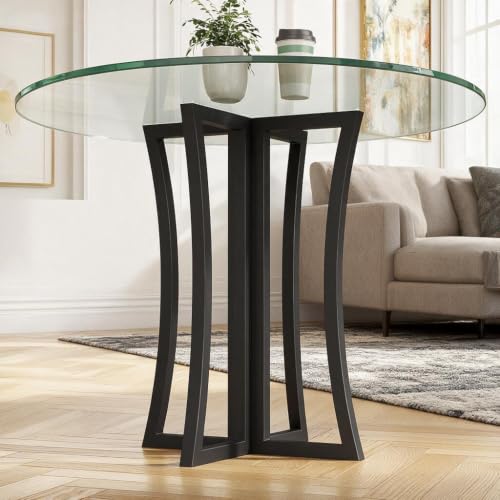
LBSLMJB Metal Table Base, 28 Inch, Black, for Glass and Wood Tops | DIY dining table and desk projects; suction cups and pre-drilled mounting holes for different tabletop materials
Check price on Amazon
SIZOTA Round Dining Table, 47" Glass Dining Table for 4-6, Glass Kitchen Table with Robust Pedestal for Apartment Home Kitchen Living Room(Black)
Check price on Amazon
Coaster Home Furnishings - Paxton - Wood Dining Table Base - Four Angular Legs, Open Square Shelf, Boomerang Curved Design - Dining Room - Nutmeg - 122180
Check price on Amazon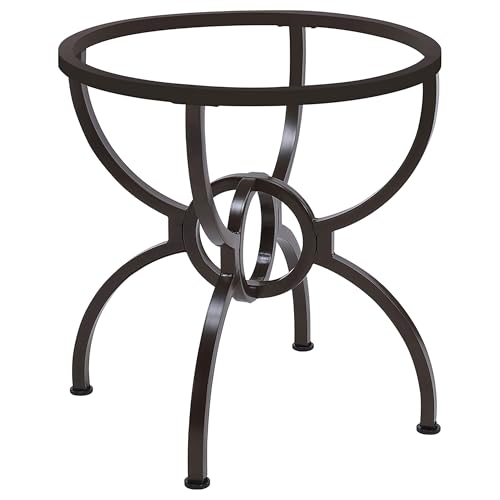
Coaster Aviano Transitional Dining Table Base, Gunmetal 108291 | Sculptural interlocking ring motif, Four curved legs, Metal, Floor levelers, Transitional style for dining room settings
Check price on Amazon
30 Inch Metal Dining Table Base 1500lbs, for Glass Wood Marble Table Tops | Heavy Duty Round Modern Thicker Steel Office Table Legs Easy 15 Minute Installation
Check price on AmazonReady to Pair Your Glass Top With the Right Base?
Use the compatibility checklist above, confirm your diameter and thickness, then explore the recommended bases in the product section.
Explore Base Options