

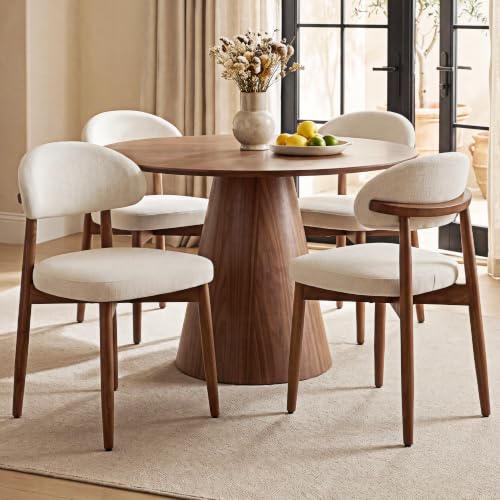


Understanding Danish Dining Furniture
Danish dining furniture emerged from a mid-century design philosophy that placed human comfort and everyday function at the center of furniture making. Unlike ornate styles that prioritize decoration, Danish design favors simplicity, craftsmanship, and materials that age beautifully. A well-made Danish dining table and chairs set is an investment in long-term usability rather than a short-lived trend.
The hallmarks of Danish design include slim tapered legs, organic curves, and a restrained palette of natural woods. Chairs often feature woven paper cord, sculpted wooden frames, and ergonomic backrests. Tables lean toward clean rectangular or softly rounded profiles with subtle joinery details. Together, these elements create a dining space that feels calm, warm, and inviting.
Core Design Principles
- Function first: Every curve and joint serves a practical purpose, from comfortable seating angles to stable table supports.
- Honest materials: Solid wood, paper cord, leather, and wool are celebrated for their natural character rather than hidden beneath synthetic finishes.
- Craftsmanship: Visible joinery and durable construction are valued over decorative veneers or artificial ornamentation.
- Timeless form: Designs avoid fleeting trends so they remain relevant and stylish for decades.
- Light and space: Slim profiles and raised legs create visual openness, making Danish furniture especially suited to smaller rooms.
Common Wood Types in Danish Dining Sets
The wood you choose affects the tone, durability, and long-term appearance of your dining set. Danish furniture makers historically favored woods that were readily available and easy to work, and those same woods remain popular today.
| Wood Type | Character | Best For | Tier Positioning |
|---|---|---|---|
| Teak | Warm golden-brown tone, natural moisture resistance, ages to a rich patina | Classic mid-century dining sets, humid climates, heirloom pieces | Mid-range to premium tier |
| Oak | Light to medium tone, prominent grain, very durable and hard-wearing | Modern Scandinavian interiors, busy family dining rooms | Essential to high-end tier |
| Walnut | Dark, rich brown with elegant grain; slightly softer than oak | Sophisticated dining spaces, statement tables | Premium to luxury tier |
| Ash | Pale blonde tone, flexible and shock-resistant | Bright, airy rooms, bentwood chair frames | Mid-tier to premium tier |
| Pine | Lightweight, light-colored, develops character over time | Casual or rustic-leaning Scandinavian interiors | Entry-level to essential tier |
For a deeper look at wood selection, see our guide to good wood for a dining table. If you are specifically drawn to teak, the Danish teak dining table and chairs overview covers patina, care, and typical configurations in more detail.
Choosing the Right Table Shape and Size
Danish dining tables come in several shapes, and the right choice depends on your room layout and household size. Rectangular tables are the most common and work well in defined dining rooms. Round and oval tables soften tight spaces and encourage conversation.
Sizing tip: Allow roughly 60 cm of table edge per diner, plus at least 75–90 cm of clearance around the table for chairs to pull out comfortably. For a four-person set, a table around 120–140 cm long is a reliable starting point. For larger households, review our guidance on the right length for a six-person dining table.
If your dining area is compact, consider a small-space dining table for six or a corner small dining table to maximize flow. Extendable designs are another practical option when you occasionally host guests; our article on the small-space expandable dining table explains how leaf mechanisms work in Scandinavian-style furniture.
Danish Dining Chairs: Comfort and Craft
Danish dining chairs are often the most recognizable part of a Scandinavian dining set. Classic designs combine a sculpted wooden frame with a woven paper cord or upholstered seat. The result is a chair that supports good posture while remaining visually light.
What to look for in Danish dining chairs
- Seat height: Standard dining chairs sit around 45 cm from floor to seat, pairing with tables around 74–76 cm high. If you prefer a higher setup, explore high dining table sets or adjustable seating like an adjustable dining chair.
- Frame joinery: Look for reinforced joints, especially at the backrest and leg attachments, which indicate durable construction.
- Seat material: Paper cord is breathable and repairable; leather develops a patina; upholstery offers extra softness for long meals.
- Stackability: Some Danish chair designs stack for storage, useful in apartments or multi-use dining rooms.
To coordinate seating with your table, see our dining chair selection guide and the table and chair height guide.
Pairing Tables and Chairs: Practical Combinations
A Danish dining set does not need to be a matching factory set. Mixing a clean-lined wooden table with sculptural chairs is common in Scandinavian interiors. However, if you prefer a coordinated look, complete sets offer visual harmony and predictable proportions.
- Teak table with paper-cord chairs: The classic mid-century pairing, warm and characterful.
- Oak table with upholstered chairs: A slightly more contemporary look suited to modern family homes.
- Round table with four sculpted chairs: Ideal for compact dining nooks and conversation-friendly layouts.
- Extendable table with six chairs: A flexible setup for households that entertain regularly.
For a complete set overview in a related style, explore the dining table set for six and the apartment-size dining table and chairs guides.
Materials, Finishes, and Care
Danish furniture finishes are typically matte or satin, designed to let the wood grain show through. Oiled finishes are common on teak and oak because they can be refreshed over time. Lacquered finishes offer more surface protection but can look glossier than the typical Danish aesthetic.
To keep a Danish dining set looking its best:
- Wipe spills promptly with a soft, damp cloth and dry immediately.
- Use coasters and placemats to protect oiled surfaces from heat and moisture rings.
- Re-oil wooden surfaces periodically according to the manufacturer's guidance.
- Keep the set away from direct radiators and prolonged harsh sunlight.
- Check and tighten chair frame fixings a few times a year.
For a full maintenance routine, see our dining table care and maintenance hub, including the wood wax and polish guide.
Styling a Danish Dining Space
Danish design is about restraint and warmth. A few well-chosen elements are usually enough: a simple ceramic vase, a linen runner, or a single pendant lamp above the table. Keep the palette neutral with natural wood tones, off-whites, and muted earth colors, and let the furniture's silhouette be the focal point.
Explore our modern dining room table decor ideas, the table runner guide, and the Scandinavian dining table styling article for more inspiration. If you are planning lighting, the dining table lighting placement guide explains pendant height and spacing.
Budget Tiers and What They Typically Include
Danish dining sets span several quality tiers. Understanding what each tier generally offers helps you align expectations with the level of craftsmanship and longevity you want.
| Tier | Typical Construction | Best For |
|---|---|---|
| Entry-level | Veneered surfaces, simpler joinery, basic finishes | First apartments, occasional-use dining areas, renters |
| Essential tier | Solid wood in key parts, reinforced joints, matte finish | Everyday family dining, compact dining rooms |
| Mid-range | Solid wood throughout, paper-cord or upholstered seats, smoother mechanisms | Long-term daily use, design-conscious households |
| Premium | Select hardwood, refined joinery, hand-finished surfaces | Heirloom-quality purchases, dedicated dining rooms |
| Luxury | Rare woods, artisanal construction, collector-grade designs | Design collectors, statement interiors |
Mid-range and premium tiers typically offer smoother extension mechanisms and more refined chair frames than entry-level models. For related value guidance, see our entry-level dining table picks and mid-range dining table picks.
Where Danish Dining Furniture Fits in Your Home
Danish dining sets suit a wide range of interiors: modern apartments, open-plan living-dining spaces, and classic family homes alike. The slim profiles help smaller rooms feel less crowded, while the solid materials give larger rooms warmth and presence.
If you are planning a compact dining nook, our compact dining nook arrangement guide and the dining table space planning guide cover layout basics in depth. For open-plan homes, the open concept dining layouts article explains how to define a dining zone without walls.
Comparing Danish Design with Other Styles
Danish dining furniture shares some traits with other mid-century styles but has its own identity. Compared with industrial designs, Danish pieces favor wood over metal and softer lines over raw edges. Compared with farmhouse styles, Danish design is more restrained and less decorative.
If you are weighing options, our comparisons on round vs rectangular dining tables and wood vs glass dining tables can help you decide on the core format before narrowing down to specific designs.
Final Checklist Before You Buy
- Measure the room: Confirm table length, width, and clearance for chairs and walkways.
- Confirm seating count: Match the table to your household size, plus one or two extra seats for guests if space allows.
- Choose your wood: Teak for warmth and patina, oak for durability and light tone, walnut for a darker statement.
- Check the chairs: Verify seat height, frame stability, and seat comfort for longer meals.
- Review the finish: Oiled finishes need periodic upkeep; lacquered finishes need less frequent care but can show scratches more visibly.
- Plan delivery and assembly: Confirm access through doorways and stairwells, and check whether assembly is required.
- Read care guidance: Follow the maker's instructions for cleaning and re-oiling to protect your investment.