
Against Wall Dining Table: The Complete Space-Saving Guide
Learn how to choose, place, and style a dining table against the wall to reclaim floor space, improve flow, and keep your dining area open and functional.
Explore Buying FactorsWhy an against wall dining table works: Pushing a dining table against a wall is one of the most effective space-planning moves for compact apartments, narrow kitchens, and open-plan living areas. It frees up a walkway, creates a clear sightline, and turns an awkward corner into a usable dining zone. This guide covers sizing, placement distances, seating strategies, material choices, and the design details that make wall-placed tables practical for daily use.
What Is an Against Wall Dining Table?
An against wall dining table is a dining table positioned with one long edge (or one side) nearly touching a wall, rather than floating in the center of the room. This arrangement typically uses benches, settees, or chairs on the wall side and standard chairs on the open side. It is a classic solution for narrow dining rooms, galley kitchens, studio apartments, and breakfast nooks where every square foot counts.
The strategy pairs well with a range of table types. A slender dining table keeps the footprint narrow, while a drop-leaf console that converts to a dining table offers flexibility for households that only occasionally host meals. For truly tight spaces, a wall-mounted folding dining table can fold flat when not in use.
Wall placement is not only about saving space. It also changes how a room feels. A table anchored to a wall creates a defined dining zone without the visual weight of a fully floating table, which is why designers often use this layout in open-plan living areas and small modern apartments.
Key Benefits of Placing Your Dining Table Against a Wall
- Reclaims circulation space: Moving the table to the wall opens up a clear path for walking, which matters in narrow rooms and pass-through kitchens.
- Defines an open-plan zone: A wall-anchored table visually separates the dining area from the living or kitchen zone without adding walls or room dividers.
- Improves seating efficiency: A bench on the wall side seats more people per linear foot than individual chairs, and it tucks under the table when not in use.
- Creates a focal point: The wall behind the table becomes a natural backdrop for art, lighting, and a modern dining table centerpiece.
- Simplifies cleaning: With fewer open sides, there is less floor area to sweep around and fewer chair legs to navigate.
Design tip: If your room is wide enough, you do not have to push the table fully flush against the wall. Leaving a 2 to 4 inch gap prevents scuff marks, allows chairs and benches to tuck in cleanly, and lets air circulate behind the table to reduce moisture buildup on wood and stone surfaces.
How to Choose the Right Size for a Wall-Placed Table
Sizing is the single most important decision when a table sits against a wall. The goal is to seat the number of people you need without blocking walkways or making the open side feel cramped. The table's length runs parallel to the wall, and the open side must have enough clearance for chairs to pull out.
As a rule of thumb, allow 24 inches of table length per person seated along a side, and keep at least 36 inches of clearance on the open side for chair pull-out and walkway traffic. In very tight rooms, 30 inches is the absolute minimum, but it will feel snug during meals. For a deeper breakdown of seating math, the standard size dining table for 4 guide is a useful reference.
| Seating Goal | Recommended Table Length | Best For |
|---|---|---|
| 2 people (one per side) | 30 to 36 inches | Breakfast nooks, studio apartments |
| 3 people (two + one end) | 42 to 48 inches | Small kitchens, couples who host occasionally |
| 4 people (two + two ends) | 48 to 60 inches | Compact dining rooms, apartments |
| 4 people on the open side | 72 inches or longer | Long narrow rooms, bench seating layouts |
| 6 people (bench wall side) | 72 to 84 inches | Family kitchens, open-plan dining zones |
If your room is especially narrow, consider a space-saving dining table set for 4 or a small dining table for 2. Both are designed with compact footprints and work well when pushed to a wall.
Clearance and Walkway Rules for Wall-Placed Tables
Clearance is where most wall-placed dining setups succeed or fail. The open side of the table needs enough room for a chair to slide out and for a person to walk behind it. Measure from the table edge to the nearest obstruction—an island, a sofa, a doorway, or a cabinet.
- 36 inches minimum: A chair can pull out and a person can pass behind it with moderate comfort.
- 42 to 48 inches: Comfortable for everyday use, hosting, and serving from the open side.
- 30 inches: Workable only in very tight rooms, and only if the chair is pushed in when not in use.
For rooms with a narrow walking path, a space-saving dining table and chair set can help by pairing a compact table with chairs that tuck fully underneath. If the table sits near a doorway, keep the open side clear so the table does not become an obstacle.
Seating Options: Benches, Chairs, and Settees
The seating mix is what makes a wall-placed table practical. The wall side typically uses a bench or settee, while the open side uses chairs. This combination maximizes seating per linear foot and keeps the open side uncluttered.
- Dining bench: Seats more people than individual chairs and tucks under the table. A curved bench seat for a dining table softens the look and works well in corners.
- Chairs on the open side: Choose chairs with a low or open back so the table does not feel walled in. Lightweight chairs are easier to pull out in tight clearances.
- Settee or banquette: Built-in or freestanding banquettes create a cozy, restaurant-style feel and are ideal for breakfast nooks.
- Chairs at the ends: If the table is long enough, one chair at each end adds two seats without widening the footprint.
For a cohesive look, coordinate the bench and chairs by finish or fabric rather than matching them exactly. A light wood dining table with black chairs is a reliable combination that keeps a compact dining area visually open.
Table Shapes and Styles That Work Against a Wall
Rectangular tables are the most natural fit for wall placement because their long, straight edge aligns neatly with the wall. However, other shapes can work in the right context.
- Rectangular: The default choice for wall placement. A slender dining table or a 5-chair dining table set keeps the profile narrow.
- Round: A round table can sit against a wall in a corner or nook, but it wastes some of its space advantage. A compact round dining table is the best fit for corner placement.
- Oval: Softer than rectangular and still wall-friendly. Works well in transitional and traditional dining rooms.
- Drop-leaf and folding: Ideal for multi-use rooms. A wall-mounted folding dining table or a small folding dining table for 4 can fold flat when not in use.
- Convertible: A convertible coffee table to dining table can serve as a coffee table most of the day and a wall-adjacent dining table at mealtimes.
Style matters too. A modern farmhouse dining table anchored to a wall with a bench reads as a cozy family hub, while a white bistro dining table suits a small urban kitchen. For a statement look, a gold and glass dining table set adds a reflective, open feel that keeps a small room from feeling heavy.
Materials and Finishes for Wall-Placed Tables
Because a wall-placed table sits close to the wall, the material and finish affect both durability and maintenance. Walls trap dust and moisture more than open floor areas, so choose finishes that are easy to wipe down and resistant to humidity.
- Wood: A solid oak dining table top is durable and ages well. Oiled or lacquered finishes protect against scuffs from benches and chairs.
- Marble and stone: A large quartz dining table or a marble-top dining set offers a premium look. Seal stone surfaces regularly, especially near a wall where moisture can linger.
- Glass: A glass dining table for 2 or a high-top glass dining table keeps a compact room feeling open and reflective.
- Painted finishes: A painted dining table hides scuffs well and suits farmhouse and cottage interiors. Touch-ups are straightforward with matching paint.
If you plan to place the table near a window, a natural teak outdoor dining table moved indoors can work, but check that the finish is suitable for interior humidity before committing.
Layout Ideas for an Against Wall Dining Table
The best layout depends on the room's shape and how many sides of the table are open. Here are the most common configurations:
- Single-wall layout: The table sits against one wall with chairs on the open side and one chair at each end. This is the classic small-apartment arrangement and works well with a small dining table and chairs.
- Corner nook: The table is pushed into a corner, often with a bench along one wall and chairs on the open sides. A small kitchen dining table and chairs fits this layout well.
- Banquette with a freestanding table: A built-in or freestanding banquette runs along the wall, and a standard table pulls up to it. This works well in open-plan kitchens.
- Window-side table: The table sits under a window with the short end against a wall. A dining table for 4 in a small space is a good fit.
- Floating wall-adjacent table: The table sits a few inches from the wall to create a visual gap, often with a bench behind it. This is a good compromise in slightly larger rooms.
If the table sits in a narrow room with limited light, a vintage brass and glass dining table reflects light and keeps the space feeling bright. For a warmer, grounded look, a timber slab dining table adds natural texture.
Lighting and Wall Decor Above the Table
Because one side of the table is against a wall, the wall becomes a natural backdrop for lighting and decor. A pendant or chandelier centered over the table is the most common choice, but the sizing depends on the table's width and the room's ceiling height.
As a general rule, the fixture should be about half to two-thirds the width of the table, and the bottom of the fixture should hang 30 to 36 inches above the tabletop. For a rectangular wall-placed table, a linear pendant or a pair of smaller pendants works better than a single round fixture. The width of chandelier over dining table guide covers the math in more detail.
Wall decor should be sized to the table. A single large piece or a gallery of smaller frames centered over the table creates a focal point. Keep the bottom edge of the art at least 12 to 18 inches above the tabletop so it does not feel crowded when people are seated. If you prefer a softer look, a long centerpiece for a dining room table can bridge the gap between the table and the wall decor.
Rugs and Floor Protection
A rug under an against wall dining table is optional, but it helps define the dining zone and protects the floor from chair legs and bench scuffs. Choose a rug that extends 18 to 24 inches beyond the table's open edges and slides at least 6 inches under the wall side so the table does not wobble.
Low-pile and flatweave rugs are easiest to maintain in compact dining zones. Avoid thick, high-pile rugs under benches and chairs, because they can make it harder to tuck seating in and can trap crumbs. If you use a round dining table plastic cover for messy meals, pair it with a washable rug or a hard floor for easy cleanup.
Quick Buying Checklist for a Wall-Placed Dining Table
- Measure the wall length and the open-side clearance before choosing a table.
- Confirm the table seats the number of people you need with the bench-and-chair mix.
- Check that chairs can pull out with at least 30 inches of clearance (36 inches is better).
- Leave a 2 to 4 inch gap between the table and the wall.
- Choose a finish that is easy to wipe down and resistant to humidity.
- Plan lighting and wall decor around the table's width and height.
- Decide whether you need a fixed, drop-leaf, folding, or convertible table.
- Check the return policy and assembly requirements before ordering.
Market Tiers: How to Compare Against Wall Dining Tables
Wall-placed dining tables span the full market, from essential-tier folding tables to flagship-tier solid wood designs. Instead of focusing on numerical figures, compare tables by their tier and the features that matter for a wall placement: stability, finish durability, seating flexibility, and assembly complexity.
Entry-Level Wall Tables
Typically folding, drop-leaf, or lightweight fixed tables with basic finishes. Best for renters, studio apartments, and occasional use. Check stability and hardware quality carefully, since entry-level folding mechanisms vary.
Mid-Range Wall Tables
Solid wood or wood-veneer tops with reinforced legs and smoother folding or extension mechanisms. A solid choice for daily family use, with better finish durability than entry-level models.
Premium and Luxury Tables
Flagship-tier designs in solid oak, walnut, or stone, often with hand-finished details, heavy-duty hardware, and commercial-grade stability. A long-term investment for a permanent dining zone.
If the table will be used daily, a mid-range or premium tier usually offers better long-term stability and a more durable finish. If the table is a temporary or occasional solution, an essential-tier drop-leaf or folding model is often the practical choice. For a deeper comparison of folding versus fixed designs, see the drop-leaf console to dining table guide.
Common Mistakes to Avoid
- Choosing a table that is too long for the wall: The table should leave breathing room at each end so chairs can sit at the ends if needed.
- Skipping the open-side measurement: A beautiful table that blocks the main walkway will be frustrating every day.
- Ignoring bench depth: A bench that is too deep pushes the table farther into the room. Look for benches with a depth of 14 to 16 inches.
- Placing the table flush against a textured wall: Textured or painted walls can scuff, and the table can trap dust. A small gap solves both problems.
- Forgetting lighting height: A pendant that hangs too low will block sightlines across a wall-placed table.
If you are still deciding between a wall-placed table and a floating table, the dining table against wall layout guide and the small two-person dining table guide can help you compare options for very tight rooms.
Care and Maintenance for a Wall-Placed Dining Table
Tables placed against a wall need a little extra attention. Dust and moisture can accumulate in the gap behind the table, and the wall side is harder to inspect. Wipe the wall-facing edge every few weeks, and check for condensation on stone or glass surfaces if the table is near an exterior wall.
For wood tables, use coasters and trivets to prevent heat marks and water rings, and re-oil or re-wax the finish according to the manufacturer's schedule. For stone and glass tables, use a pH-neutral cleaner and avoid abrasive pads. If you use a tablecloth, shake it out after meals and wash it regularly to prevent crumbs from accumulating in the wall gap. A dining table tablecloth can also protect the finish from everyday wear.
Frequently Asked Questions
How much space should I leave between a wall dining table and the wall?
Leave a gap of 2 to 4 inches between the table edge and the wall so chairs and benches can tuck in without scraping paint, and so air can circulate to prevent moisture buildup. For benches with an angled backrest, a slightly larger gap may be needed.
Is an against wall dining table suitable for four people?
Yes. A rectangular table placed against a wall comfortably seats two on the open long side and one at each end for a total of four. For four people on the open side alone, choose a table at least 72 inches long.
Can I use a round dining table against a wall?
A round table can be pushed against a wall, but it wastes some of its space advantage. Round tables work best in corners or in small nooks where one side touches a wall. A drop-leaf round table is a flexible compromise.
What is the minimum walkway clearance for a wall-placed dining table?
Keep at least 36 inches of clearance on the open side so a chair can pull out and a person can walk behind it. In tight spaces, 30 inches is the absolute minimum, but 36 to 42 inches is comfortable for daily use.
Do I need a rug under an against wall dining table?
A rug is optional but helpful. Choose one that extends 18 to 24 inches beyond the table's open edges and slides at least 6 inches under the wall side. A low-pile or flatweave rug is easiest to maintain in compact dining zones.
Recommended Against Wall Dining Tables
⚠️ AFFILIATE DISCLOSURE: This website contains affiliate links. As an affiliate Associate, we earn from qualifying purchases. If you make a purchase through these links, we may receive a small commission at no additional cost to you. Read our full affiliate policy.

LUXOAK 3-Piece Wood Corner Dining Table Set for 4, Black & Walnut | Breakfast Nook, L-Shaped Corner Bench, Hidden Storage, Space-Saving Design for Small Spaces, Farmhouse Kitchen & Dining
Check price on Amazon
IRONCK Dining Table Set for 4, Kitchen Table and Chairs Set, Rustic Brown | Kitchen Table with Upholstered Bench and 2 Chairs for Small Space, Apartment
Check price on Amazon
Sora Wood 3-Piece Counter Height Dining Set, Taupe
Check price on Amazon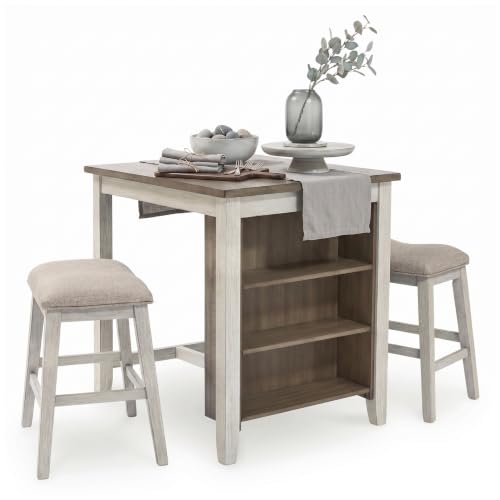
Signature Design by Ashley Skempton 3-Piece Counter Height Dining Table Set | Two-tone acacia wood set, 3 built-in open shelves, 2 upholstered saddle stools, Space-saving tuck-away design, Dining room
Check price on Amazon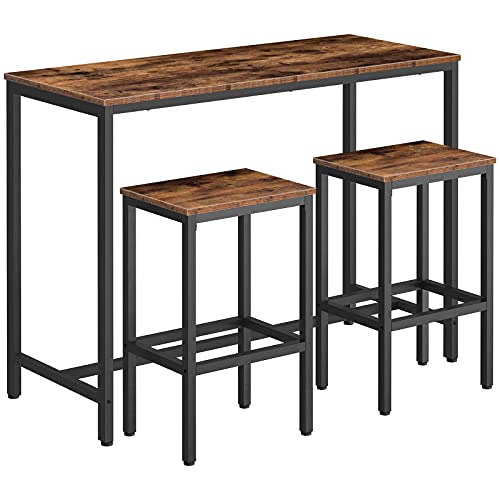
HOOBRO Bar Table and Chairs Set, 47.2” Rectangular Pub Table with 2 Stools for Small Space, 3-Piece Breakfast stools Set, Sturdy Metal Frame, Easy to Assemble, Rustic Brown BF52BT01
Check price on Amazon
allamazing 4-Piece Counter High Bar Table Set with Socket and 3 Fabric Padded Bar Stools, Tall Kitchen Breakfast Nook with Stool (1+3 Natural)
Check price on Amazon
AWQM 3-Piece Bar Table and Chairs Set, Modern White Faux Marble Table with 2 PU Cushion Bar Stools, Kitchen Counter with 3 Tier Storage Shelves, Space Saving Table for Home & Kitchen, Black Frame
Check price on Amazon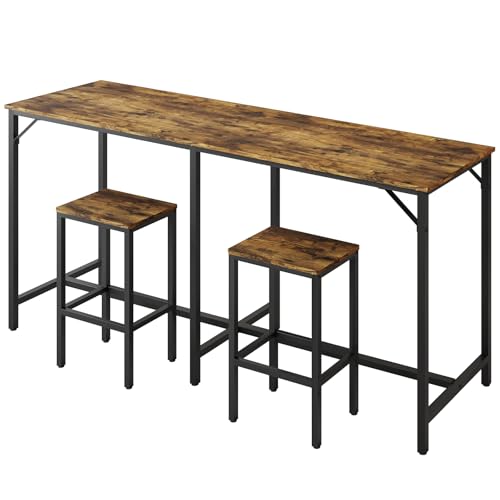
YATINEY 70.9" Bar Table and Chairs Set, Dining Table and Chair Sets, 3 Piece Counter Height Table and 2 Stools, Kitchen Table for Home Restaurant, Bar, Rustic Brown BT09BR
Check price on AmazonReady to Plan Your Wall-Placed Dining Space?
Use the checklists and clearance rules above to choose a table that fits your wall, your seating needs, and your daily routine. Start with a measurement of the wall and the open-side clearance, then compare table shapes, finishes, and seating options.
View Recommended Tables