
Dining Table Against Wall: The Complete Space-Saving Layout Guide
Discover how to position a dining table against a wall to maximize floor space, improve traffic flow, and create a cozy eating area in compact rooms — with expert clearance rules, seating strategies, and table recommendations.
Explore Table OptionsWhy place a dining table against a wall? Pushing a dining table against a wall is one of the most effective ways to reclaim floor space in a small kitchen, studio apartment, or narrow dining room. This layout works especially well for two- to four-person households and for anyone who wants a dedicated eating area without sacrificing walkway clearance. In this guide, we break down the clearance math, the best table shapes for wall placement, seating do's and don'ts, and the styling details that make the setup feel intentional rather than cramped.
Who Should Consider a Wall-Placed Dining Table
A wall-adjacent dining table isn't just a compromise — for many homes it's the smartest possible arrangement. It suits households that eat casually, host infrequently, or simply need the floor back for daily movement. The setup shines in these scenarios:
- Studio apartments and open-plan lofts where the dining zone must double as a work or lounge area.
- Small kitchens that need a dedicated eating spot without an island or peninsula.
- Narrow dining rooms where a centered table would block the only walkway.
- Apartments with strict furniture footprints where every square foot of floor matters.
- Two-person households that prefer a compact bistro-style setup over a full dining set.
If you regularly seat six or more guests, a wall-placed table can still work — but it typically becomes a semi-permanent arrangement that's pulled out only for entertaining. In that case, an extendable model or a drop-leaf design gives you flexibility without a fixed large footprint.
The Clearance Rules You Must Respect
The single biggest mistake when pushing a table against a wall is ignoring chair clearance. You need enough room to slide chairs in and out, and enough space on the open side for comfortable movement. Use these minimums as your planning baseline:
| Zone | Recommended Clearance | Notes |
|---|---|---|
| Between table edge and wall (seated side) | Minimal — table can touch the wall if no one sits there | Only push fully to the wall if that side is permanently unused |
| Between table edge and wall (with a sitter) | At least 30–36 inches (76–91 cm) | Allows a chair to be pulled out and sat in comfortably |
| Open side / main walkway | 36–44 inches (91–112 cm) | Keep walkway clear for chairs, serving, and general traffic |
| Between table and adjacent furniture | 36 inches (91 cm) minimum | More if the furniture has drawers or doors that open |
| Chair pull-out space | 12–18 inches (30–46 cm) behind the chair | Required so the chair can slide back without hitting the wall |
Measure your room and mark the table outline with painter's tape before you buy. This simple step prevents the most common regret: a table that technically fits but leaves no room to actually use the chairs.
Best Table Shapes for Wall Placement
Not every table shape behaves well against a wall. The ideal pick depends on how many people you seat and whether the wall side is fixed or flexible.
Rectangular Tables
A rectangular table is the most natural fit against a wall. Its straight edge sits flush, and the long side parallel to the wall typically seats two to three people comfortably. A narrow rectangular model — around 30 inches (76 cm) deep — keeps the footprint lean while still giving each diner elbow room. This is the go-to shape for galley kitchens and narrow dining zones.
Round Tables
Round tables trade flush placement for better flow. A round top can be nudged against a wall, but you lose usable surface on the wall side and gain awkward triangular gaps. That said, a small round table in a corner can feel charming and sociable — just confirm the chair nearest the wall has pull-out clearance. A compact round dining table is a strong option for tight breakfast nooks.
Square Tables
Square tables are essentially short rectangles. Pushed against a wall, a square top seats one person per open side plus one on the wall side — ideal for two to four diners. They work well when the table also serves as a workspace during the day.
Drop-Leaf and Folding Tables
If the wall-adjacent position is a permanent compromise, a drop-leaf or folding table is the most space-efficient choice. Keep one leaf down against the wall for everyday use, then raise both leaves and pull the table into the room when guests arrive. A wall-mounted folding dining table takes this further by folding flat entirely.
Seating Strategies That Actually Work
How you seat people around a wall-placed table determines whether the layout feels clever or cramped. These strategies keep the arrangement comfortable:
1. Leave the wall side empty (or use a bench)
The simplest approach: push the table fully to the wall and seat everyone on the open sides. For a two-person setup, this means one chair on each end or two chairs along the open long side. If you want to use the wall side, a built-in or freestanding bench is the best solution — benches don't need pull-out clearance because users slide in sideways.
2. Use a bench along the wall
A backless bench tucked against the wall maximizes seating without requiring chair pull-out space. Pair it with two chairs on the open side and you have comfortable seating for four with a minimal footprint. Benches also visually anchor the table to the wall.
3. Choose armless, low-back chairs
On the open side, armless chairs with low or open backs keep sightlines clear and let you push chairs in tightly. Avoid high-backed armchairs that crowd the walkway and block light.
4. Float the table slightly off the wall
If you need seating on the wall side, leave a 30–36 inch gap between table and wall. This turns a "wall table" into a peninsula-style arrangement — still space-efficient but fully functional on all sides.
Quick rule of thumb
- 2 people: table against wall, one chair per end or two on the open side.
- 4 people: bench on the wall side + two chairs opposite.
- 6 people: float the table 30+ inches from the wall and use chairs on both long sides.
Table Types That Excel Against a Wall
Certain table designs are purpose-built for tight placement. Here are the categories worth prioritizing when shopping for a wall-adjacent dining table:
Space-Saving and Convertible Tables
Convertible designs let the table serve multiple roles in one footprint. A convertible coffee table to dining table or a coffee table that converts to a dining table is ideal for studio apartments where the wall zone shifts between living and eating functions. A space-saving dining table and chair set often includes nesting or hideaway chairs that tuck completely under the top.
Slender and Narrow Profiles
Depth matters more than length when the table sits against a wall. A slender dining table or a small two-person dining table keeps the walkway open while still providing a proper eating surface. For galley kitchens, look for depths under 32 inches.
Hideaway and Nesting Seating
A round dining table with hideaway chairs is a clever solution: the chairs store underneath the top, so the entire set hugs the wall when not in use. Nesting sets achieve a similar effect with stackable stools or chairs.
Folding and Drop-Leaf Models
A small folding dining table for 4 or a drop-leaf console that converts to a dining table gives you a slim console against the wall most of the day and a full dining surface when needed. These are the most versatile picks for wall placement.
Styling and Practical Details for Wall Tables
A wall-placed table can look deliberate and stylish rather than like a fallback. A few details make the difference:
- Anchor the table visually. A round dining table plastic cover or a fitted tablecloth in a solid tone helps the table read as a designed zone rather than a floating object. A dining table tablecloth also protects the surface in high-traffic areas.
- Use wall space above the table. Art, a slim shelf, or a mirror above the table draws the eye upward and makes the zone feel taller and more intentional.
- Keep the wall side clear of clutter. Since the wall side is hard to reach, use it for decorative items only — a small vase, a lamp, or a low bowl — and keep functional items on the open side.
- Choose a light, airy chair on the open side. Open-back or cane chairs keep the sightline to the wall from feeling blocked.
- Protect the wall. Chairs and table edges can scuff paint; a slim wall protector or a slightly off-wall placement prevents damage.
Common Mistakes to Avoid
Avoid these planning errors
- Forgetting chair pull-out space. A table that fits flush but leaves no room to slide a chair back is unusable on that side.
- Buying a deep rectangular table. Depth over 36 inches (91 cm) eats walkway space; favor 30–32 inch depths for wall placement.
- Ignoring the walkway. The open side needs 36–44 inches for comfortable traffic. Measure the full path, not just the table.
- Over-seating the wall side. If guests sit against the wall, they need a gap to get in and out — or use a bench instead.
- Blocking heat sources or outlets. Keep the table clear of radiators, baseboard heaters, and frequently used outlets.
Recommended Dining Tables for Wall Placement
These compact and space-saving dining tables are well suited to wall-adjacent layouts. Each option is selected for a lean footprint, practical seating, and durable construction.
⚠️ AFFILIATE DISCLOSURE: This website contains affiliate links. As an affiliate Associate, we earn from qualifying purchases. If you make a purchase through these links, we may receive a small commission at no additional cost to you. Read our full affiliate policy.

IRONCK Dining Table Set for 4, Kitchen Table and Chairs Set, Rustic Brown | Kitchen Table with Upholstered Bench and 2 Chairs for Small Space, Apartment
Check price on Amazon
Sora Wood 3-Piece Counter Height Dining Set, Taupe
Check price on Amazon
Tatub Dining Table Set for 4, 3-Piece Kitchen Table with 2 Benches | Kitchen Table and Chair Set,Dining Table with Chair, Space-Saving Dining Room Set for Breakfast Nook, Apartment, Metal Frame
Check price on Amazon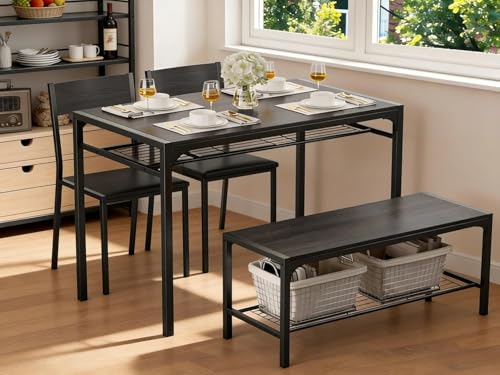
Gizoon 4-Piece Dining Table Set for 4, Kitchen Table | Space-saving black 4-piece dinette set with metal storage rack. Includes 2 ergonomic chairs and 1 bench. Easy to clean.
Check price on Amazon
allamazing 4-Piece Counter High Bar Table Set with Socket and 3 Fabric Padded Bar Stools, Tall Kitchen Breakfast Nook with Stool (1+3 Natural)
Check price on Amazon
AWQM 3-Piece Bar Table and Chairs Set, Modern White Faux Marble Table with 2 PU Cushion Bar Stools, Kitchen Counter with 3 Tier Storage Shelves, Space Saving Table for Home & Kitchen, Black Frame
Check price on Amazon
Karl home Corner Dining Table Set with Storage Bench, PU Cushions, Black | Breakfast Nook Table Set , Built-In Power Outlet, L-Shaped Layout with Hidden Storage, Space-Saving, Breakfast Nook
Check price on Amazon
Winsome Suzanne Kitchen Table Set with Stools, Coffee, 33" | Convenient Sturdy Mobile Kitchen & Dining Room Table & Chairs with Storage for Small Spaces, Dorms, Apartments
Check price on AmazonRelated Space-Saving Dining Guides
Explore more layouts and table types that work in tight footprints:
Frequently Asked Questions
Can you push a dining table completely against a wall?
Yes, but only if no one needs to sit on the wall side. Pushing the table fully to the wall frees maximum floor space, but the wall-side seats become unusable. If you need seating on the wall side, leave 30–36 inches (76–91 cm) of clearance so chairs can be pulled out.
What is the best table shape for a wall-adjacent layout?
A rectangular table with a shallow depth (around 30–32 inches) is the most natural fit, because its straight edge sits flush against the wall and its long side provides efficient seating. Square tables are the next best choice. Round tables work in corners but waste surface on the wall side.
How much space do I need between the table and the wall?
If no one sits on the wall side, zero to a few inches is fine. If someone sits there, allow at least 30–36 inches so a chair can be pulled out and occupied. On the open side, keep 36–44 inches for walkway traffic.
Is a bench better than chairs for the wall side?
For wall placement, yes — a backless bench is often better. Users slide in sideways, so the bench doesn't need pull-out clearance. Benches also seat more people in less width and visually anchor the table to the wall.
Can I use a large dining table against a wall?
It's possible but rarely ideal. A large table pushed against a wall blocks access to the wall-side seats and eats the walkway. If you need seating for six or more, consider an extendable table that stays compact day to day and grows only when entertaining.
How do I keep a wall-placed table from looking cramped?
Keep the wall side visually light: use open-back or armless chairs, add art or a mirror above the table, choose a light tablecloth or cover, and avoid bulky centerpieces. A bench on the wall side and two slim chairs opposite creates a balanced, airy look.
Final Takeaway: Make the Wall Work for You
A dining table against a wall is one of the smartest ways to create a functional eating zone in a compact home — provided you respect chair clearance, choose a shallow table, and use a bench or hideaway chairs on the wall side. Measure your walkway, tape out the footprint, and pick a table depth that leaves room to move.
Ready to shop? Browse our curated selection of against-wall dining tables and space-saving dining sets, or explore dining tables for 4 in small spaces to find the right fit for your room.