
Wooden Extendable Dining Table 4-6 Seater: Complete Buying Guide
Everything you need to know about choosing a wooden extendable dining table that seats four to six people comfortably. Compare wood types, extension mechanisms, space planning, and design considerations before you decide.
Why a wooden extendable dining table for 4-6 seats? This configuration hits a practical sweet spot. It stays compact for daily family meals, then expands when friends or relatives visit. A wooden build brings warmth, character, and long-term durability that synthetic materials often lack. This guide walks you through the decision factors that matter most: wood species, leaf mechanisms, dimensions, seating clearance, and finish options, so you can purchase with confidence.
Why Choose a Wooden Extendable Dining Table for 4-6 People?
A wooden extendable table solves a common household dilemma: limited floor space paired with occasional hosting needs. Instead of choosing between a cramped permanent table and a large one that dominates the room, an extendable design adapts to both scenarios. The 4-6 seat range is particularly versatile because the closed footprint fits modest dining areas, while the extended configuration welcomes two extra guests without requiring a separate table.
Wood as a material adds another layer of practicality. Solid hardwood tables resist daily wear, develop character over time, and can be refinished when the surface shows signs of use. Compared to glass or metal tops, wood offers a warmer visual tone and better sound dampening during meals. The tactile quality of a wooden surface also feels more inviting for family dining and everyday use.
Space Efficiency
Keep a compact footprint for everyday meals, then extend only when guests arrive. Ideal for apartments, condos, and smaller dining rooms.
Material Longevity
Hardwood construction handles the mechanical stress of extension and retraction far better than softer materials or veneered composites.
Design Flexibility
Wood tones range from pale ash to deep walnut, fitting modern, farmhouse, Scandinavian, and transitional interiors alike.
Hosting Ready
Expand from four to six seats in seconds when friends or family arrive. No need to store a separate table for occasional use.
Resale and Refinishing
Quality wooden furniture holds its usefulness for decades and can be sanded and refinished to refresh its appearance.
Stability When Extended
Well-engineered wooden extendable tables maintain stability across the full extension range, thanks to reinforced aprons and sturdy legs.
Wood Types for Extendable Dining Tables
The wood species you choose affects weight, hardness, grain appearance, and how well the table tolerates seasonal humidity changes. Hardwoods generally outperform softwoods for extendable tables because the mechanism places stress on the frame and leaf joints. Below is a comparison of common wood types used in 4-6 seat extendable dining tables.
| Wood Type | Best For | Durability Tier | Characteristics |
|---|---|---|---|
| Solid Oak | Families seeking long-term durability | Top-tier / premium | Hard, dense, open grain with strong character. Excellent for extension frames and leaves. Responds well to oil and lacquer finishes. |
| Walnut | Contemporary and mid-century interiors | Premium / high-end tier | Dense and stable with rich chocolate tones. Less prone to seasonal movement than oak. Often used in designer extendable models. |
| Teak | Humid climates and moisture-prone areas | Premium / luxury tier | Natural oils resist moisture and pests. Heavy and stable, ideal for extendable tables that see frequent use. |
| Ash | Scandinavian and minimalist designs | Mid-range / balanced tier | Light color, straight grain, good hardness. Takes paint and stain well. Common in pale-wood extendable models. |
| Pine | Farmhouse and casual interiors | Entry-level / starter tier | Softer wood, warmer tone, visible knots. Acceptable for low-traffic dining areas; less ideal for frequent extension cycles. |
| Mango Wood | Rustic and eclectic settings | Mid-tier | Dense grain with varied color. Sustainable option. Requires a protective finish to prevent moisture absorption. |
For an extendable table, hardwood is the safer investment. The extension mechanism relies on stable leaf edges and consistent frame alignment; softer woods may warp or compress at the joints under repeated use. If your dining area experiences seasonal humidity swings, choose a hardwood with low movement characteristics such as walnut or teak. Explore our solid pine extendable dining table guide if you prefer a softer, farmhouse-style wood, and our white oak extendable dining table guide for a lighter hardwood alternative.
Extension Mechanisms Explained
The extension mechanism determines how easy the table is to operate, how often you will actually use the extension, and how well the table holds up over years of opening and closing. For 4-6 seat tables, three main types are common.
Butterfly Leaf
A butterfly leaf folds in half and stores inside the tabletop. When you need extra space, you unfold it and slide the table halves apart to accommodate the leaf. This design is popular in 4-6 seat tables because it keeps the leaf protected and hidden during everyday use. The mechanism is relatively simple, which reduces the likelihood of mechanical failure. However, the folding joint can become a weak point on lower-tier models, so check that the hinge hardware is metal rather than plastic.
Self-Storing Leaf
A self-storing leaf slides underneath the tabletop when not in use. The table frame includes a dedicated compartment that holds the leaf flat and protected. This mechanism offers a cleaner closed appearance because there is no visible seam from a folded leaf. It tends to be more expensive than butterfly designs because the frame requires additional engineering. The sliding rails should be steel or aluminum for durability; plastic rails wear quickly and can cause the leaf to bind.
Removable Leaf
The simplest and most robust option: a solid leaf that you lift out of storage and insert between the table halves. Removable leaves do not rely on hinges or folding joints, so they are less prone to mechanical failure. The trade-off is storage: you need a closet or under-bed space to keep the leaf when it is not in use. For infrequent hosting, this is often the most reliable choice.
Advantages of Extendable Designs
- Adapts to both daily and occasional use
- Saves floor space compared to a fixed large table
- Wood construction handles extension stress well
- No need to purchase a second table for hosting
- Available in a wide range of wood species and finishes
Considerations Before Buying
- Extension mechanisms add weight and complexity
- Some leaf designs require storage space
- Seams between leaves can collect crumbs over time
- Lower-tier mechanisms may loosen with heavy use
- Extended tables need additional walkway clearance
Dimensions and Space Planning for 4-6 Seats
Getting the dimensions right is the difference between a table that feels spacious and one that crowds the room. For a 4-6 seat wooden extendable dining table, plan around two configurations: the closed size and the extended size.
Closed Configuration (4 Seats)
A comfortable 4-seat rectangular table typically measures around 120 cm to 140 cm in length and 75 cm to 90 cm in width. This allows each diner roughly 60 cm of edge space, which is the standard comfort allowance for place settings. Round tables in this range usually measure 90 cm to 110 cm in diameter, offering a sociable layout with no head-of-table hierarchy.
Extended Configuration (6 Seats)
To seat six, the table should extend to approximately 160 cm to 180 cm in length. Each additional leaf typically adds 30 cm to 50 cm depending on the model. Check the extension increment: some tables extend in one large jump, while others accept two smaller leaves for more granular control. If you frequently host exactly five or six people, a single-leaf extension to the 160-170 cm range is usually the most practical.
Clearance Requirements
Beyond the table dimensions, account for chair pull-out and walkway space. Allow at least 75 cm to 90 cm of clearance on the sides where chairs are used, and 100 cm to 120 cm on main walkways. When the table is extended, verify that the extra length does not block doorways or pinch the path to the kitchen. Our guide on dining table space planning covers measurement techniques in detail, and the dining table size chart provides a quick-reference overview of standard dimensions.
Buying Checklist for a Wooden Extendable Dining Table 4-6
Before finalizing your purchase, run through these checkpoints to avoid common oversights.
- Measure both configurations: Confirm that the closed footprint fits your everyday space and the extended length fits your maximum guest count without blocking walkways.
- Inspect the leaf mechanism material: Prefer steel or aluminum rails and metal hinges over plastic components, which wear faster under repeated use.
- Test stability when extended: A well-built table should not wobble or sag at full extension. Look for reinforced aprons and sturdy leg joinery.
- Verify the wood species and finish: Solid hardwood is preferable to veneered MDF for extendable tables because the leaf edges see more handling.
- Check the seam quality: The joint between the leaf and the tabletop should sit flush with minimal gap. Poorly aligned seams catch crumbs and feel uneven under the hand.
- Consider storage for removable leaves: If you choose a removable-leaf design, confirm you have a safe, flat storage spot that protects the leaf from warping.
- Match chair height to table height: Standard dining tables sit around 75 cm high; confirm that your chairs provide 25 cm to 30 cm of clearance between seat and table underside.
- Review the finish type: Oiled finishes are easier to spot-repair; lacquered finishes offer more surface protection but require professional refinishing if damaged.
- Plan for seasonal humidity: Solid wood expands and contracts. A humidity range of 40% to 60% helps prevent leaf misalignment over time.
- Confirm the weight: Extendable hardwood tables are heavy. Verify that the delivery route and floor can accommodate the table's weight and that assembly is manageable.
Recommended Wooden Extendable Dining Tables for 4-6 Seats
⚠️ AFFILIATE DISCLOSURE: This website contains affiliate links. As an affiliate Associate, we earn from qualifying purchases. If you make a purchase through these links, we may receive a small commission at no additional cost to you. Read our full affiliate policy.

Extendable Dining Table for 4-6, 47"-63" Wooden Kitchen Table | Rectangular Extendable Table with Wooden Legs, Space Saving Modern Kitchen Table for Dining Room Kitchen Office Living Room
Check price on Amazon
Einhomn Extendable Dining Table for 4-6, 63" Modern Kitchen Table, Farmhouse Dining Room Tables for Dining, Kitchen, Office, Living Room, Rectangular Wooden Tables, Space Saving (Walnut)
Check price on Amazon
Feonase 5-Piece Dining Table Set for 4-8 People, 63" Extendable Kitchen Table with 2 Benches and 2 Square Stools, Mid-Century Modern Wooden Dining Room Table, Space-Saving, Walnut
Check price on Amazon
Extendable Dining Table for 4-6, 47"-63" Wooden Kitchen Table | Rectangular Extendable Table with Wooden Legs, Space Saving Modern Kitchen Table for Dining Room Kitchen Office Living Room
Check price on Amazon
GarveeHome Farmhouse Dining Table for 4-6 People, 63" Long Kitchen Tables | Wooden Sturdy Frame, 5 ft Large Rectangular Dinner Table for Dining Room, Kitchen, Black, 63" Non-extendable
Check price on Amazon
71-87 Inch Extendable Dining Room Table, Rustic Wooden Kitchen Table 6-10 | STHOUYN Expandable Dining Table, Farmhouse Rustic Style, Rectangular Wooden Top, Seats 6-10, Brown Kitchen or Dining Room
Check price on Amazon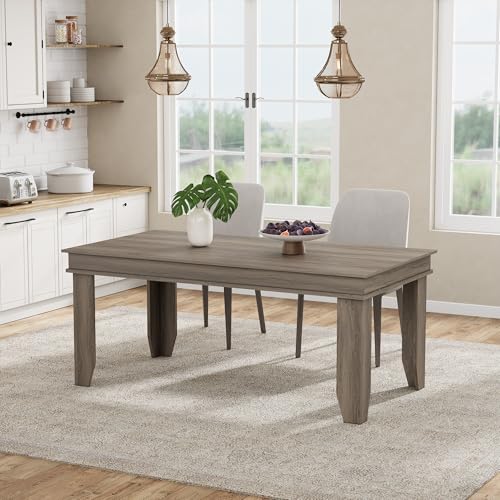
GarveeHome Farmhouse Dining Table for 4-6 People, 63" Long Kitchen Tables | Wooden Sturdy Frame, 5 ft Large Rectangular Dinner Table for Dining Room, Kitchen, Grey Walnut, 63" Non-extendable
Check price on Amazon
Memobarco 47.2"-63" Extendable Dining Table for 4-6 People with Storage | Rectangular Expandable Kitchen Table, Modern Wooden Kitchen Table for Dining Room Kitchen Living Room (Walnut)
Check price on AmazonStyling a Wooden Extendable Dining Table
A wooden extendable table provides a versatile foundation for dining room styling. The natural grain and warm tone pair well with a range of decor approaches. For a modern look, pair a pale ash or oak table with slim metal-framed chairs and a minimalist centerpiece. For a farmhouse feel, combine a pine or reclaimed wood table with bench seating and woven placemats. Transitional interiors benefit from a mid-tone walnut table with upholstered chairs and a soft table runner.
Consider the extension seams when styling. A table runner can visually bridge the leaf joint and create a cohesive look whether the table is closed or extended. Centerpieces should be easy to relocate when the table expands, so avoid heavy permanent arrangements. Our dining table vignette ideas guide offers layout inspiration for both everyday and hosted settings.
Caring for Your Wooden Extendable Table
Maintenance for a wooden extendable table centers on two areas: the wood surface and the extension mechanism. For the surface, dust regularly with a soft cloth and use a slightly damp cloth for deeper cleaning, drying immediately to prevent moisture penetration. Apply a wood conditioner or wax every few months depending on the finish type. Avoid placing hot dishes directly on the wood; use trivets or table pads to prevent heat marks.
For the mechanism, keep the rails and hinges free of crumbs and debris. A vacuum with a brush attachment works well for clearing the track area. Lubricate metal rails sparingly with a dry silicone spray if the extension action becomes stiff. Avoid oil-based lubricants, which attract dust and can gum up over time. Our dining table routine upkeep guide and care and maintenance hub provide more detailed schedules for wooden furniture.
Frequently Asked Questions
What size wooden extendable dining table is best for 4 to 6 people?
For 4 people, a table extended to around 120 cm to 140 cm works well. For 6 people, aim for an extension range that reaches approximately 160 cm to 180 cm. Choose a model where the closed size fits your everyday space and the extended size comfortably seats your maximum guest count. Allow roughly 60 cm of edge space per diner for comfortable place settings.
Which wood type is most durable for an extendable dining table?
Solid oak, walnut, and teak are among the most durable hardwoods for extendable dining tables. Oak offers excellent hardness and grain character, walnut provides dense stability with rich tones, and teak resists moisture exceptionally well. These hardwoods handle the mechanical stress of extension mechanisms more gracefully than softer woods like pine.
How do butterfly leaf and self-storing leaf mechanisms differ?
A butterfly leaf folds in half and stores inside the table, making it convenient for frequent extension. A self-storing leaf slides underneath the tabletop when not in use, keeping the surface clean and the leaf protected. Butterfly mechanisms are generally simpler to operate, while self-storing leaves offer a more seamless closed appearance.
Can a wooden extendable dining table be used in a small apartment?
Yes. Extendable tables are ideal for compact spaces because they remain small during daily use and expand only when guests arrive. Look for models with a compact closed footprint, such as 4-seater tables that extend to 6, and consider round or oval shapes that reduce corner clearance requirements.
What should I check on the extension mechanism before buying?
Inspect the mechanism's material and construction. Steel or aluminum rails with smooth glides are preferable to plastic components. Test the extension action if possible, checking for smooth movement without binding or wobble. Look for locking mechanisms that secure the leaf in place and verify that the table remains stable when fully extended.
Ready to choose your wooden extendable dining table? Browse our curated selection above to compare configurations, wood types, and extension mechanisms. Each model is selected for its fit in the 4-6 seat range, with attention to build quality and practical function.
All product links are affiliate links. We may earn a commission on qualifying purchases at no additional cost to you.
Related Guides
Deepen your research with these related articles:
- Wooden Extendable Dining Table 4-6 Guide — This page
- Solid Pine Extendable Dining Table Guide — Softer wood option for farmhouse settings
- White Oak Extendable Dining Table Guide — Lighter hardwood alternative
- Designer Extendable Dining Table Guide — Premium design-led options
- French Country Extendable Dining Table Guide — Classic European styling
- Round Walnut Extendable Dining Table Guide — Sociable round configuration
- Solid Oak Farmhouse Dining Table Guide — Rustic hardwood construction
- Dining Table Space Planning Guide — Measurement and layout advice
- Dining Table Size Chart — Quick-reference dimensions
- Dining Table Routine Upkeep Guide — Maintenance schedules