
Retro 60s Dining Table: Complete Buying & Styling Guide
Bring the bold spirit of mid-century design to your home. Discover iconic shapes, materials, and practical buying advice for an authentic 1960s dining table that works beautifully in modern spaces.
START EXPLORINGWhy the 1960s Still Inspires: The retro 60s dining table captures a design era defined by optimism, experimentation, and clean lines. Whether you choose an original vintage piece or a faithful modern reproduction, understanding the era's materials, proportions, and styling cues helps you invest wisely and create a dining space that feels timeless rather than dated.
What Makes a Dining Table "Retro 60s"?
The 1960s was a pivotal decade for furniture design. Post-war optimism fueled experimentation with new materials, and dining tables became a canvas for bold expression. A true retro 60s dining table typically combines several recognizable traits: tapered wooden legs, organic curves, and a mix of natural wood veneers with vivid laminates or molded plastics.
Unlike the heavier, ornate designs of earlier decades, 1960s tables embraced a lighter visual footprint. Designers favored geometric forms — round, oval, and surfboard-shaped tops — supported by slender, angled legs that gave furniture an almost floating appearance. This approach aligned with the mid-century modern philosophy that good design should be both functional and accessible.
Today, the appeal of a retro 60s dining table lies in its versatility. These pieces sit comfortably in contemporary homes, blending nostalgia with practicality. If you are exploring broader table styles, our guide to dining table types can help you compare shapes and configurations before narrowing down to a retro design.
Key Design Characteristics of 1960s Dining Tables
Understanding the signature details of the era helps you identify authentic pieces and evaluate reproductions. The following characteristics are hallmarks of retro 60s dining table design:
Tapered & Angled Legs
Slender legs that taper toward the floor are a defining feature. They often angle outward slightly, creating a dynamic, airy stance that distinguishes 60s pieces from earlier styles.
Organic & Geometric Shapes
Round, oval, and surfboard-shaped tops were popular. Some designs featured playful kidney or boomerang forms that added personality to the dining room.
Warm Wood Veneers
Teak, walnut, and rosewood veneers brought warmth and richness. These woods were prized for their grain patterns and ability to age gracefully.
Bold Laminates & Plastics
Formica tops in bright colors — mustard, teal, orange, and white — brought a playful, practical edge that defined many 1960s kitchens and dining spaces.
Mixed Materials
Combinations of wood, chrome, steel, and molded fiberglass reflected the era's embrace of industrial innovation alongside natural materials.
Compact Proportions
Many 60s tables were designed for smaller homes, with clever space-saving features like drop leaves and extendable mechanisms.
Materials & Construction: What to Look For
The materials used in a retro 60s dining table directly affect its durability, maintenance needs, and visual authenticity. When evaluating a piece — whether vintage or new — consider these material categories:
Solid Wood and Veneer
High-quality mid-century tables often used solid wood for legs and frames, with veneers on the tabletop to showcase prized woods like teak and walnut. Veneer construction is not inherently inferior; in fact, it allowed designers to use rare woods efficiently. The key is the quality of the substrate and the bonding. A well-made veneer table can last decades. For a deeper look at wood options, explore our guide to the oak butcher block dining table as a comparison point for solid-wood construction.
Laminate and Formica Tops
Laminate tops were a hallmark of 1960s practicality. They resisted stains and were easy to clean, making them ideal for family dining. Original Formica tables from the era often feature distinctive patterns — boomerang motifs, speckles, or solid pastel colors. Modern reproductions use updated laminates that offer similar visual appeal with improved durability.
Chrome and Steel Accents
Chrome legs and trim added a sleek, futuristic touch to many 60s designs. Check for pitting or rust on vintage chrome, especially on lower legs where moisture may have accumulated. Modern reproductions typically use powder-coated steel or polished stainless steel for better longevity. Our guide to rustic wood dining tables with metal legs explores how mixed-material construction can work in different design contexts.
Fiberglass and Molded Plastics
Some iconic 60s tables used molded fiberglass or plastic tops, often in white or bright colors. These are lightweight and easy to move but can be susceptible to scratching. For outdoor or patio settings, consider a plastic outdoor dining table as a practical alternative that captures a similar retro spirit.
How to Choose the Right Retro 60s Dining Table
Buying a retro-style dining table involves balancing authenticity, practicality, and your space requirements. Use the following framework to guide your decision.
1. Determine Your Size and Seating Needs
Measure your dining area carefully, allowing at least 36 inches of clearance around the table for chair pull-out and walkways. Round tables are excellent for conversation and work well in compact spaces. Rectangular and oval tables offer more seating capacity for larger households. If you regularly host guests, an extendable model provides flexibility. Our article on the 32-inch wide extendable dining table shows how compact tables can expand for entertaining.
2. Decide Between Vintage and Reproduction
Original vintage tables carry authenticity and character but may require restoration and careful maintenance. Reproductions offer modern durability and often come with warranties. For a balanced approach, look for "mid-range" or "premium" reproductions that use solid wood frames and high-grade veneers. Entry-level models may use engineered wood with thinner veneers — acceptable for light use but less suited to heavy daily wear.
3. Evaluate the Frame and Legs
Check the joinery where legs meet the tabletop. Dovetail, mortise-and-tenon, and reinforced corner blocks indicate solid construction. Tapered legs should feel sturdy without wobbling. If you are considering a table with a pedestal base, our guide to the small pedestal dining table explains the stability considerations for that style.
4. Consider the Finish and Maintenance
Oiled and waxed finishes highlight natural wood grain but require periodic reapplication. Lacquered and polyurethane finishes offer better protection against spills and heat but can look less natural. Laminate tops are the most forgiving for families with children. Whichever finish you choose, use coasters and placemats to extend the table's life.
5. Plan for Chairs and Accessories
The right chairs complete the retro look. Tulip chairs, spindle-back chairs, and molded plastic seats are all era-appropriate. If you are furnishing a compact space, a compact dining table and chairs set can simplify your search. For a coordinated retro aesthetic, explore our guide to the retro dining table set.
Retro 60s Dining Table Styles Compared
The table below summarizes common retro 60s dining table configurations by tier and best-use scenario. Use it to match your needs with the right style.
| Style | Typical Tier | Best For | Key Considerations |
|---|---|---|---|
| Round Laminate Kitchen Table | Entry-level to mid-range | Casual family dining, retro kitchens | Easy to clean; check edge banding quality |
| Teak Veneer Oval Table | Mid-range to premium | Mid-century dining rooms, formal settings | Veneer condition is critical on vintage pieces |
| Chrome & Formica Dining Table | Entry-level to mid-range | Retro diners, open-plan spaces | Inspect chrome for pitting; laminate for scratches |
| Drop-Leaf Retro Table | Mid-range | Small apartments, flexible layouts | Test hinge mechanisms for smooth operation |
| Surfboard-Shaped Walnut Table | Premium to luxury | Statement dining rooms, collectors | Rare originals may need professional restoration |
Styling Your Retro 60s Dining Table
A retro dining table is a natural focal point. Styling it well means honoring the era without turning your home into a museum. Here are practical approaches:
Color Palette
Stick to a cohesive mid-century palette: warm woods (teak, walnut), muted earth tones (mustard, olive, burnt orange), and cool accents (teal, aqua, charcoal). Avoid mixing too many bold colors at once — let the table be the star. If your table has a bold laminate top, keep surrounding decor neutral. For a softer look, consider a round beige dining table as a versatile alternative that still reads as retro.
Chairs and Seating
Pair your table with era-appropriate chairs. Tulip chairs, molded fiberglass seats, and spindle-back designs all work well. Mixing chair styles is acceptable in mid-century design, but keep wood tones and metal finishes consistent. For a space-saving approach, a dining table and chair set for two can create an intimate retro nook.
Lighting and Decor
A statement pendant lamp — such as a Sputnik chandelier or a globe pendant — reinforces the 60s aesthetic. Add a simple centerpiece: a ceramic vase, a bowl of fruit, or a sculptural object. Avoid clutter; the era favored clean surfaces with intentional accents.
Table Linens and Tableware
Embrace the retro spirit with patterned table runners and colorful plates. A long dining table runner in a geometric print can tie the look together. Keep glassware simple and let the table's surface shine.
Retro 60s Tables for Small Spaces
Many original 60s homes were modest in size, and designers responded with clever space-saving tables. If you live in an apartment or have a compact dining area, look for these features:
- Drop leaves: Fold down one or both sides when not in use.
- Extendable mechanisms: Add seating for guests without permanent footprint.
- Pedestal bases: Reduce leg clutter and allow chairs to tuck in easily.
- Round tops: Improve flow in tight corners compared to rectangular tables.
For more inspiration, browse our guides to the compact dining table, the fold-away dining table with chairs, and the small space dining table set for 4. These solutions prove that retro style and practicality can coexist.
Caring for a Retro 60s Dining Table
Proper care preserves both the appearance and structural integrity of your table. Follow these guidelines based on your table's material:
Wood and Veneer
- Dust regularly with a soft, dry cloth.
- Use coasters and placemats to prevent heat and moisture damage.
- Apply a wood conditioner or furniture wax every few months for oiled finishes.
- Avoid direct sunlight, which can fade veneers and dry out wood.
- Maintain indoor humidity between 40–60% to prevent cracking.
Laminate and Formica
- Wipe spills promptly with a damp cloth and mild detergent.
- Avoid abrasive cleaners and scouring pads, which can dull the surface.
- Use trivets under hot dishes to prevent scorching.
- Check edge banding periodically for lifting; repair with contact adhesive if needed.
Chrome and Metal
- Wipe with a soft cloth and mild soap solution.
- Dry immediately to prevent water spots.
- Use a chrome polish occasionally to maintain shine.
- Inspect for rust on vintage pieces and treat with a rust converter if necessary.
For comprehensive material care guidance, visit our hub on dining table care and maintenance.
Recommended Retro 60s Dining Tables
⚠️ AFFILIATE DISCLOSURE: This website contains affiliate links. As an affiliate Associate, we earn from qualifying purchases. If you make a purchase through these links, we may receive a small commission at no additional cost to you. Read our full affiliate policy.
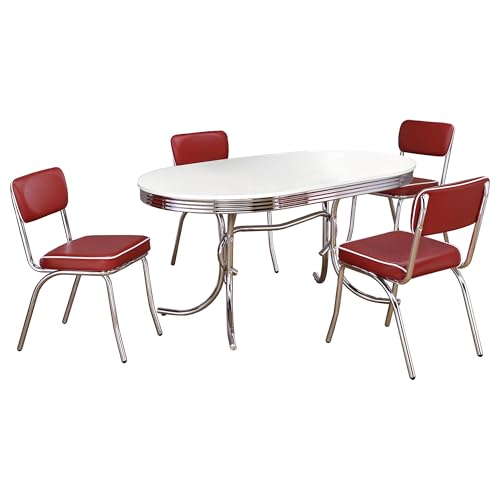
Coaster Retro Diner 5-Piece Oval Dining Table Set, White and Red 2065-S5R | 60-inch oval white table with four red padded faux-leather chairs and bright chrome frames
Check price on Amazon
Coaster Retro Diner 5-Piece Round Dining Table Set, White and Red 2388-S5R | 42-inch round white table with four red padded faux-leather chairs and bright chrome frames
Check price on Amazon
Coaster Retro Diner 60-Inch Oval Dining Table with Chrome Legs, White 2065 | Oval white laminate top with chrome trim and metal legs; 60 inches wide and 29.5 inches high
Check price on Amazon
Coaster Retro Diner 42-Inch Round Dining Table with Chrome Legs, White 2388 | Round white laminate top with chrome trim and metal legs; 42 inches wide and 30 inches high
Check price on Amazon
Mid Century Table Runner,Retro 50s 60s Abstract Geometric Kitchen Dining Décor Farmhouse Style Table Décor for Coffee Table Dining Room Table Bedroom Party 13 x 36 Inch
Check price on Amazon
Hansweld Round Dining Table, 31.5" Tulip Table (Faux Walnut) | with Thickened Tabletop & Metal Pedestal, Mid Century Modern Bistro Circle Table for Kitchen, Small Places, Dinner Room, Cafe
Check price on Amazon
Tribesigns Modern Dining Table for 6 to 8 People, 71" Large Kitchen Dining Table with Wood Pedestal Base, Rectangular Long Dinner Table for Kitchen, Dining Room, Living Room, Rustic Brown
Check price on AmazonFrequently Asked Questions
What defines a retro 60s dining table?
A retro 60s dining table typically features tapered legs, organic curves, bold laminates, teak or walnut veneers, and playful geometric shapes. These elements reflect the mid-century modern design philosophy of combining clean lines with warm materials and experimental forms.
Are retro 60s dining tables practical for daily use?
Yes. Mid-range and premium retro tables often use durable veneers, solid wood frames, and laminate tops that handle daily meals well. Entry-level reproductions may need more care with heat and moisture, so consider your household's usage patterns before deciding.
How do I style a retro 60s dining table?
Pair with tulip or spindle chairs, use warm wood tones, add a statement pendant lamp, and keep tableware simple with bold color accents like mustard, teal, or burnt orange. Avoid overcrowding the surface — the era favored intentional, clean styling.
Should I buy vintage or a reproduction?
Vintage pieces offer authenticity and character but may require restoration and careful maintenance. Reproductions provide modern durability and warranties. For a balance of style and practicality, look for premium reproductions that use solid wood frames and high-grade veneers.
What size retro dining table is right for my space?
Allow at least 36 inches of clearance around the table for chair pull-out and walkways. Round tables suit compact spaces and conversation, while rectangular or oval tables offer more seating capacity. Extendable models are ideal if you host guests occasionally.
Ready to Find Your Retro Dining Table?
Explore our curated selection of retro and mid-century inspired dining tables. Compare styles, materials, and configurations to find the perfect centerpiece for your home.
VIEW RECOMMENDED TABLESContinue Exploring
Deepen your knowledge with these related guides from our library:
- Retro dining table and chairs — coordinate your set for a cohesive look.
- Vintage oval dining table — explore the elegance of oval mid-century designs.
- Round country dining table — compare rustic and retro round styles.
- Drop-leaf dining table — space-saving solutions with period appeal.
- Dining table size chart — find the right dimensions for your room.
- Dining table materials and finishes — understand wood, laminate, and metal options.