
Compact Dining Table: The Complete Space-Saving Buying Guide
Everything you need to choose a compact dining table that fits your kitchen, apartment, or small dining nook — without compromising on style, comfort, or durability.
EXPLORE TOP PICKSWhy a compact dining table deserves careful thought: A compact dining table is more than a scaled-down version of a standard table. It is a deliberate design solution for tight floor plans, where every inch matters and functionality must work harder. This guide walks you through sizing, shapes, materials, mechanisms, and real-world buying considerations so you can make a confident decision the first time around — whether you are furnishing a studio apartment, a breakfast nook, or a dual-purpose kitchen-dining area.
What Exactly Counts as a Compact Dining Table?
A compact dining table is generally defined as a table with a footprint small enough to fit comfortably in a kitchen, apartment, or multipurpose room while still seating two to four people. In practical terms, that usually means a table width of 24 to 36 inches, a length of 30 to 48 inches, and a seating capacity of two to four diners. Beyond raw measurements, compact tables are engineered around efficiency: slim profiles, clever leg placement, folding or extendable mechanisms, and shapes that maximize usable surface without wasting walkway space.
It is important to distinguish a compact dining table from a standard table that simply has a smaller top. True compact designs account for chair tuck-in, legroom, and traffic flow. A table that looks small in a showroom but has bulky pedestals or splayed legs can actually consume more floor space than its dimensions suggest. The best compact tables are those where the base and the top are both optimized for tight quarters.
Why Choose a Compact Dining Table?
Efficient Floor Use
Compact tables reclaim valuable square footage in apartments, kitchens, and open-plan living areas where every inch serves multiple purposes.
Better Traffic Flow
A smaller footprint leaves more clearance for walkways, door swings, and appliance access — a critical factor in galley kitchens and narrow dining rooms.
Flexible Seating
Many compact designs seat two to four people comfortably and can be paired with benches, stools, or folding chairs to adapt to different occasions.
Dual-Purpose Potential
Compact dining tables often double as workstations, homework spots, or craft surfaces, making them a smart investment for multipurpose rooms.
Visually Lighter
Smaller tables with open bases or glass tops keep sightlines clear, making even the tightest dining nook feel more spacious and breathable.
Easier to Move
Lightweight compact tables are simpler to reposition for cleaning, redecorating, or reconfiguring a room for guests and gatherings.
Compact Dining Table Sizing Guide
Getting the size right is the single most important decision when buying a compact dining table. Too small and the table feels cramped for daily meals; too large and it dominates the room and blocks circulation. Use the following guidelines as a starting point, then adjust based on your actual room dimensions and the number of regular diners.
Seating Capacity and Typical Dimensions
| Seating | Typical Width | Typical Length | Best For |
|---|---|---|---|
| 2 people | 24–30 in | 30–36 in | Kitchen nooks, studio apartments, breakfast corners |
| 3–4 people | 30–36 in | 42–48 in | Small dining rooms, open-plan apartments, family kitchens |
| 4–6 people (extendable) | 32–36 in (closed) | 48–60 in (extended) | Everyday compact use with occasional hosting needs |
Clearance and Walkway Rules
- 30 inches of clearance on all sides is the gold standard for comfortable chair pull-out and walk-behind space.
- 24 inches minimum is workable in tighter rooms, especially when the table sits against a wall or in a corner.
- 36 inches is recommended between the table edge and any doorway, appliance, or cabinet that opens toward the dining area.
- Bench seating on the wall side can reduce required clearance by several inches compared to chairs.
- Round tables often need less clearance than rectangular tables of the same seating capacity because there are no sharp corners to navigate.
Height Considerations
Standard dining table height is 28 to 30 inches, which pairs with standard 18-inch seat-height chairs. Counter-height tables (34 to 36 inches) and bar-height tables (40 to 42 inches) are popular in compact spaces because they create a more vertical, space-efficient dining zone and can double as prep surfaces or casual work areas. If you are choosing a compact table for a dual-purpose kitchen, a counter-height model can be a smart way to align the dining surface with surrounding counters. For a deeper dive into matching table and chair heights, see our guide on the ideal height of a dining table.
Best Table Shapes for Small Spaces
Shape influences how a table feels in a room just as much as its dimensions. The right shape can make a compact table feel generous; the wrong one can make an adequate table feel bulky. Here is how the main shapes perform in tight quarters.
Round Compact Tables
Round tables are the classic choice for compact dining because they have no corners to bump into and they distribute seating evenly. A 36-inch round table comfortably seats two to four people and often feels more sociable than a rectangular table of similar footprint. In a small breakfast nook or a corner of an open-plan apartment, a round compact table can be a highly efficient use of space. If a round shape appeals to you, explore options like a small round dining table and chairs set or a round wooden dining table with four chairs.
Square Compact Tables
Square tables offer a slightly more formal look than round tables and can be pushed into corners more neatly. A 30-inch square table seats two comfortably and four in a pinch. Square tables pair well with banquette seating and are a natural fit for compact kitchen layouts where the table aligns with cabinetry.
Rectangular Compact Tables
Rectangular tables maximize seating per unit of width, making them a good choice for narrow rooms where the table runs parallel to a wall or window. A 24-by-48-inch rectangular table seats four with reasonable elbow room. Just be mindful of the corners: in very tight rooms, a rectangular table can create pinch points that a round or oval table avoids.
Drop-Leaf and Folding Tables
Drop-leaf tables have hinged sections that fold down, allowing the table to shrink dramatically when not in use. A drop-leaf table can function as a slim console against a wall and then open into a full dining table for meals. Folding tables go a step further, often collapsing entirely for storage. These mechanisms are ideal for studio apartments and rooms that need to switch functions throughout the day. Browse our drop-leaf dining table guide and fold-away dining table with chairs options for inspiration.
Compact Dining Table Tiers: What to Expect at Each Level
Compact dining tables span a wide range of construction quality and design sophistication. To help you calibrate expectations without relying on arbitrary figures, here is a tier-based framework that describes what each level of the market typically delivers.
| Tier | Typical Materials | Construction Notes | Best For |
|---|---|---|---|
| Essential Tier | Laminate tops, engineered wood, basic metal frames | Simple assembly, lighter weight, basic folding or fixed mechanisms | First apartments, temporary setups, casual everyday use |
| Balanced Tier | Wood veneer, solid wood legs, powder-coated steel | Sturdier joinery, smoother folding and extension hardware, better finishes | Long-term daily use in family kitchens and small dining rooms |
| Premium Tier | Solid hardwood, tempered glass, brushed metal accents | Refined mechanisms, tighter tolerances, durable finishes, design-forward profiles | Design-conscious homes, frequent hosting, multi-year investment |
| Luxury Tier | Premium hardwoods, natural stone, designer hardware | Heirloom-grade joinery, bespoke sizing options, signature detailing | Statement small dining spaces, architect-designed interiors |
As a general rule, moving up a tier tends to bring smoother mechanisms, more consistent finishes, and longer service life rather than dramatic changes in basic function. A mid-range compact table often represents the sweet spot for households that use the table daily and want a mechanism that will hold up over years of folding and unfolding.
Material Comparison for Compact Dining Tables
Material choice affects durability, maintenance, visual weight, and how well the table suits its environment. In compact spaces, materials also influence how large the table feels: lighter tones and reflective surfaces visually expand a room, while dark, heavy materials can make a small table feel denser and more anchored.
Solid Wood and Wood Veneer
Wood is the most versatile choice for compact dining tables, offering warmth, repairability, and a wide range of finishes. Solid wood is durable and can be refinished over time; veneer offers a similar look at a lighter weight and often with more consistent grain patterns. In small spaces, lighter wood tones such as oak, ash, and maple keep the room feeling airy. If you like the natural look, a solid oak butcher block dining table combines durability with a warm, tactile surface.
Glass Tops
Glass is a favorite for compact dining because it visually recedes, making the table appear to occupy less space. Tempered glass is durable and easy to clean, though it shows fingerprints and smudges more readily than wood. A glass-top compact table can be an excellent choice for a small, light-starved apartment where visual openness matters. Consider a small glass dining table and chairs set if you want a modern, airy look.
Laminate and Engineered Surfaces
Laminate and engineered wood tops are practical, easy to clean, and resistant to everyday wear. They are common in entry-level and balanced-tier compact tables and work well in family kitchens where spills and craft projects are part of daily life. Modern laminate finishes can convincingly mimic wood grain, stone, and concrete, giving you design flexibility without the maintenance demands of natural materials.
Metal Frames and Bases
Metal legs and frames are common in compact tables because they allow slim, space-efficient profiles. Powder-coated steel is durable and resistant to chipping, while brushed or polished finishes add a contemporary touch. If you are mixing materials, a wood top with a metal base is a popular combination that balances warmth and industrial edge. For more on base styles, see our guide to dining table legs.
Compact Dining Tables: Pros and Cons
Advantages
- Fits comfortably in apartments, kitchens, and small dining rooms
- Encourages better traffic flow and easier circulation
- Often available with space-saving mechanisms like drop leaves and folding frames
- Easier to move, clean around, and reconfigure
- Can double as a workspace or homework station
- Lighter visual footprint keeps small rooms feeling open
Limitations to Consider
- Limited seating capacity for larger gatherings without an extension
- Some mechanisms add complexity and potential wear points
- Surface area can feel tight for elaborate meals or entertaining
- Very small tables may not accommodate large serving platters
- Entry-level models can sacrifice stability for portability
Compact Dining Table Buying Checklist
Before you commit to a compact dining table, run through this checklist to make sure the table will work in your space and for your lifestyle.
- Measure twice: Record the length, width, and height of your available space, including doorways, walkways, and any appliances that open into the area.
- Confirm seating needs: Count regular diners versus occasional guests. Choose a table that seats your daily household comfortably and consider an extension for hosting.
- Check chair tuck-in: Make sure chairs can slide fully under the table when not in use, especially in tight walkways.
- Test the mechanism: If buying a drop-leaf or extendable table, confirm the mechanism operates smoothly and locks securely.
- Review the base design: Pedestal bases free up legroom and chair placement; four-leg designs offer stability but can interfere with chair tuck-in.
- Match the material to your routine: Busy family kitchens benefit from easy-clean laminate or glass; design-focused spaces may prefer solid wood or stone.
- Consider assembly and weight: Lighter tables are easier to move but may need extra care for stability; heavier tables feel more solid but are harder to reposition.
- Plan for dual use: If the table will serve as a desk or craft surface, confirm the height and depth are comfortable for seated work.
Popular Compact Dining Table Configurations
The market offers several well-established compact configurations, each suited to different room shapes and lifestyles. Understanding these archetypes will help you narrow your search quickly.
Two-Seater Kitchen Tables
Two-seater compact tables are the smallest mainstream category and are ideal for singles, couples, and breakfast nooks. They often measure around 30 inches square or 36 inches round and can be paired with two chairs or a small bench. For a dedicated two-person setup, explore our dining table and chair set for 2 or a kitchen dining table for 2.
Four-Seater Compact Sets
Four-seater compact sets are the workhorses of small-space dining. They typically feature a 42-to-48-inch rectangular table or a 36-to-42-inch round table paired with four chairs. Many of these sets are designed with slim profiles and tucked-in seating to keep the footprint manageable. Browse options like a compact dining table and chairs set or a small space dining table set for 4.
Extendable Compact Tables
Extendable tables offer a small closed footprint and expandable capacity for guests. Butterfly-leaf and self-storing leaf designs are especially space-efficient because the extension hardware lives inside the table. A 32-inch wide extendable dining table is a good example of how a narrow profile can still offer flexibility.
Corner and Nook Tables
Corner dining tables are shaped to slot into a corner or bay window, reclaiming space that might otherwise be wasted. They are often paired with banquette seating or corner benches. If your dining area has an awkward corner, a corner dining table or dining corner table can turn dead space into a cozy dining spot.
Convertible and Folding Tables
Convertible tables shift between dining, coffee table, and desk modes, making them ideal for micro-apartments and multipurpose rooms. Folding tables collapse for storage and are a practical choice for occasional dining. Explore a coffee-to-dining table convertible or a convertible dining table desk if your room needs to serve multiple functions.
Recommended Compact Dining Tables
⚠️ AFFILIATE DISCLOSURE: This website contains affiliate links. As an affiliate Associate, we earn from qualifying purchases. If you make a purchase through these links, we may receive a small commission at no additional cost to you. Read our full affiliate policy.

IDEALHOUSE FoldingTable, Drop Leaf Dining Table with 6 Wheels and 2-Layer Storage Shelf, Space Saving Table for Small Spaces (Slate Oak, 47.2" D x 23.6" W x 29.5" H)
Check price on Amazon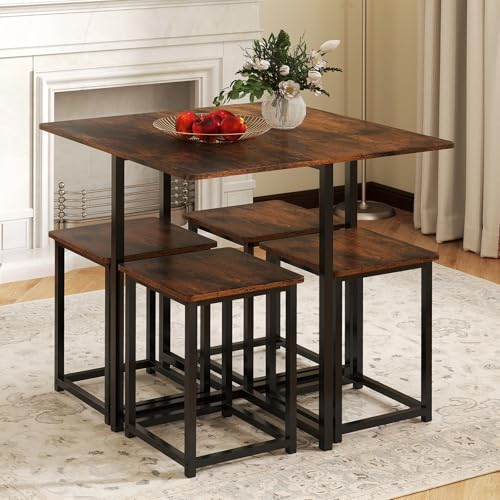
Tangkula Compact Dining Table Set for 4, Small Kitchen Table Set with Square Stools and Metal Frame, Perfect for Small Spaces, Home Kitchen Bar and Apartments
Check price on Amazon
Winsome Suzanne Kitchen Table Set with Stools, Coffee, 33" | Convenient Sturdy Mobile Kitchen & Dining Room Table & Chairs with Storage for Small Spaces, Dorms, Apartments
Check price on Amazon
Best Choice Products 3-Piece Dining Set W/ Storage Rack - Med Brown/Black | Modern space saving steel frame dinette built for kitchens, dining rooms & small spaces
Check price on Amazon
JUMMICO 3-Piece Wooden Round Table & Chair Set (Walnut/Black) | Kitchen Breakfast Nook Wood Grain Tabletop with Metal Frame and Built-in Wine Rack for Kitchen, Dining Room
Check price on Amazon
DONGMUWUJEE Solid Wood Small Dining Table for 2-6, 23.6"L-47.2"L Expandable Kitchen Table, Designed for Small Spaces, Easy Assembly, Suitable for Kitchen, Dining Room, Living Room, Apartment (Walnut)
Check price on Amazon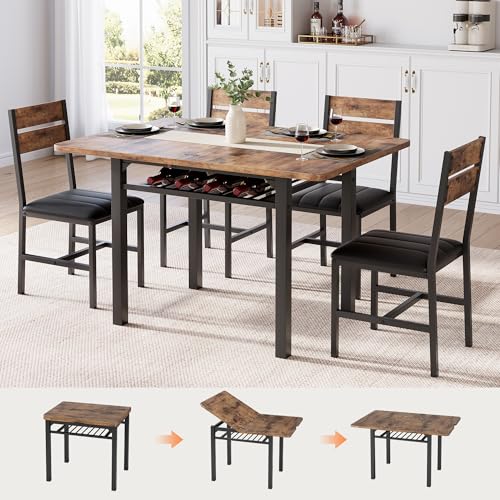
MapleGrace Extendable Dining Table Set for 4 with Built-in Shelf Rack Brown | Kitchen Table Set with 4 PU Leather Upholstered, Wood Dining Room Chairs for Dining & Small Spaces
Check price on Amazon
IRONCK Dining Table Set for 4, Kitchen Table with Upholstered Bench and 2 Chairs, Kitchen Table and Chairs Set for Small Space, Apartment, Grey
Check price on AmazonStyling and Layout Tips for Compact Dining Tables
A compact dining table can feel surprisingly generous with the right styling. The goal is to reduce visual clutter, keep sightlines open, and make the table feel intentional rather than squeezed in.
- Choose lightweight seating: Slim chairs, benches, and stools with open backs or legs keep the visual footprint light and make the table area feel less crowded.
- Use a mirror or reflective surface nearby: A mirror or glass art piece on the adjacent wall can visually double the apparent space around the table.
- Keep the tabletop mostly clear: A single small centerpiece or a narrow runner adds character without consuming usable surface.
- Lean into vertical storage: Floating shelves or a tall narrow cabinet near the table can hold dinnerware without intruding on floor space.
- Pick a wall-mounted light: A sconce or pendant instead of a floor lamp saves floor space and creates a focused dining zone.
- Choose a rug that fits: In small rooms, a rug that is slightly smaller than the clearance zone can define the dining area without overwhelming it.
Frequently Asked Questions About Compact Dining Tables
For small apartments, a compact dining table between 24 to 36 inches wide is ideal. Round or square shapes work best because they use floor area more efficiently. A two-seater table measuring roughly 30 by 30 inches fits comfortably in a kitchen nook, while a four-seater compact table around 42 to 48 inches long suits open-plan studio layouts. Always measure clearance zones before committing.
Yes. Extendable compact dining tables offer the best of both worlds: a small footprint for daily use and extra seating when guests arrive. Look for butterfly-leaf or drop-leaf mechanisms that store the extension inside the table, keeping the closed profile slim and walkway-friendly. Mid-range and premium extendable models tend to have smoother, longer-lasting hardware than entry-level versions.
Plan for at least 30 inches of clearance on all sides of the table so chairs can pull out and people can pass behind seated diners. In tighter rooms, 24 inches is workable if the table sits against a wall or in a corner and you use benches instead of chairs on the wall side. Keep at least 36 inches between the table edge and any doorway or appliance that opens toward the dining area.
Solid wood and wood veneer offer warmth and durability, glass tops make small rooms feel more open and airy, and laminate or engineered surfaces provide easy-clean practicality for everyday family use. For tight spaces, lighter finishes and glass or acrylic tops visually expand the room. Consider how much maintenance you are willing to do: wood needs occasional polishing, glass shows smudges, and laminate is the most forgiving.
Absolutely. Many compact dining tables serve as dual-purpose desks, especially convertible and drop-leaf models. Choose a table with a comfortable 28 to 30 inch height, a sturdy frame, and enough depth (at least 30 inches) to accommodate a laptop, monitor, and paperwork during the workday. If you plan to work at the table daily, prioritize stability and legroom over ultra-light portability.
Ready to Choose Your Compact Dining Table?
Now that you understand sizing, shapes, materials, and mechanisms, the next step is to match your shortlist against your actual room measurements and daily routine. A well-chosen compact dining table can make a small kitchen or apartment feel purposeful, comfortable, and ready for everyday meals and occasional gatherings alike.
View Top Compact Picks