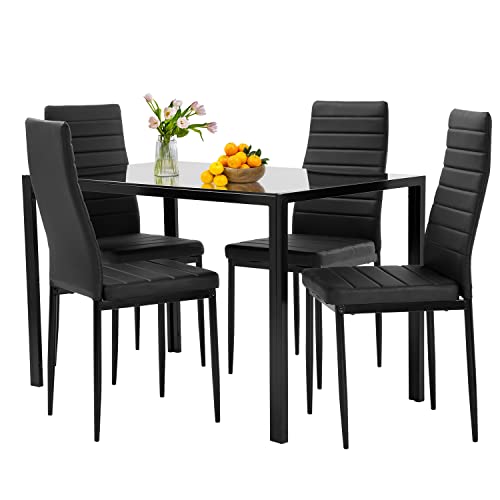
Small Space Dining Table Set for 4: The Complete Guide
Everything you need to choose a compact, comfortable, and stylish four-person dining set that fits your apartment, kitchen nook, or studio without sacrificing function.
EXPLORE TOP PICKSWhy a Small Space Dining Table Set for 4 Matters: A four-person dining set is the sweet spot for couples, small families, and city dwellers. It gives you enough room to host a casual dinner without dominating your floor plan. This guide walks you through the exact measurements, layout rules, material choices, and design trade-offs that separate a cramped setup from a genuinely comfortable compact dining area.
What Counts as a Small Space Dining Table Set for 4?
A small space dining table set for 4 typically measures between 30 and 36 inches wide and 42 to 48 inches long for rectangular models, or 36 to 44 inches in diameter for round and square options. The footprint matters more than the seat count. A well-designed four-seater can fit into a 6-by-6-foot nook while still leaving 36 inches of walkway clearance on the active sides of the table.
The key is understanding that "small space" is not a single measurement. It depends on your room dimensions, door swing, traffic flow, and whether the table sits against a wall or floats in the middle of an open-plan area. If you are working with a tight footprint, a compact dining table paired with slim chairs can transform an awkward corner into a functional eating zone.
Standard Dimensions to Know Before You Shop
| Shape | Typical Width / Diameter | Typical Length | Best For |
|---|---|---|---|
| Rectangular | 30–36 in | 42–48 in | Long, narrow rooms and banquette seating |
| Square | 30–36 in | 30–36 in | Corners and symmetrical layouts |
| Round | 36–44 in (diameter) | — | Square rooms and flow-around layouts |
| Oval | 30–36 in | 42–48 in | Softening hard rectangular rooms |
Seat width matters just as much as table width. Allow at least 24 inches of table edge per person for comfortable dining. For four seats, that means a minimum of 48 inches of usable table edge if all four sides are occupied, which is why square and round tables often feel more generous than their rectangular counterparts in compact rooms.
Layout Rules That Make or Break a Compact Dining Set
Measure twice and buy once. The most common mistake buyers make is underestimating how much room chairs need when pulled out. A chair in use extends roughly 18 to 24 inches beyond the table edge. That means a 36-inch-wide rectangular table needs 36 inches of clearance on the seating sides to allow someone to slide in and out comfortably.
- Walkway clearance: Keep at least 36 inches between the table edge and walls or other furniture on the main traffic path.
- Chair pull-out: Reserve 18–24 inches beyond the table edge on every side where a chair is used.
- Wall-side seating: If you push one long side against a wall, you free up substantial floor space but lose a seat. Consider a bench for wall-side seating.
- Door swing: Make sure the table does not block cabinet doors, refrigerator doors, or room entryways.
- Lighting clearance: Hang a pendant or chandelier 30 to 36 inches above the table surface so it does not obstruct sightlines.
For rooms with irregular shapes, a corner dining table or a small dining table arrangement can solve layout problems that a standard rectangular set cannot. Likewise, if your space doubles as a workspace, a convertible dining table desk lets you switch functions without buying two pieces of furniture.
Rectangular vs. Round vs. Square in Tight Rooms
Rectangular tables maximize seating along a wall and suit narrow galley kitchens. Round tables eliminate sharp corners, improve traffic flow, and create a more sociable feel, which is why a small round dining table and chairs is often the best choice for square rooms. Square tables split the difference and work well in corner placements. If you are uncertain, choose the shape that matches your room's proportions: long and narrow rooms favor rectangles, while squarish rooms favor rounds and squares.
Materials and Construction: What to Prioritize
In a small space, every material choice is amplified because the table is a focal point. You want a surface that resists daily wear, hides minor scratches, and does not require elaborate maintenance. Solid wood, engineered wood with veneer, glass, and laminate each offer different trade-offs.
- Solid wood: Durable, repairable, and ages gracefully. Oak, maple, and walnut hold up well in high-use dining areas. A round wooden dining table and 4 chairs is a classic compact combination.
- Engineered wood and veneer: Stable and resistant to seasonal movement, often with a more uniform appearance. Good for rooms with humidity swings.
- Glass: Visually lightweight and makes small rooms feel larger. A small glass dining table and chairs is an excellent visual-space solution, though glass requires more frequent cleaning.
- Laminate and composite: Practical for high-traffic households and easy to wipe down. Modern laminate designs can convincingly mimic wood and stone.
Pay attention to the base, not just the top. A pedestal base frees up legroom and reduces visual clutter, which is why a small pedestal dining table is a smart pick for tight rooms. Splayed or tapered legs also help the table feel less bulky. If you plan to move the set often, check that the frame is reinforced and the joints are tight.
Seating Choices for Four in a Compact Footprint
Chairs consume more floor space than the table itself. Slim-profile chairs, armless designs, and benches are your best allies in a small room. A dining table with bench for small spaces can seat two or three people on one side while freeing up floor area because benches tuck completely under the table.
If you prefer chairs, look for models with a seat height that matches your table height. The ideal height of a dining table is typically 28 to 30 inches, with chair seats at 17 to 19 inches. Mismatched heights cause discomfort and make a small set feel awkward. Stackable or foldable chairs are useful for occasional extra guests, and a foldable dining table and chair set can be packed away when not in use.
- Armless chairs: Save 2–4 inches per chair and tuck under the table more easily.
- Benches: Ideal for wall-side seating and visual lightness.
- Stools: A small dining table with stools works well in kitchens and breakfast nooks.
- Folding chairs: Great for occasional hosting, but less comfortable for daily use.
Space-Saving Features Worth Considering
Extendable and drop-leaf tables give you the footprint of a two-seater with the capacity of a four-seater when needed. A drop-leaf dining table folds down on one or both sides, making it ideal for studio apartments and multipurpose rooms. If you regularly host but live in a small space, an extendable model offers the best of both worlds, though the extension mechanism adds weight and complexity.
Storage-integrated designs are another option. A corner dining table with storage or a bar height dining table with storage can hold linens, placemats, or small appliances, reducing the need for separate storage furniture. For ultra-tight spaces, a wall bed dining table or a fold-away dining table with chairs can disappear entirely when not in use.
Ready to Compare Compact Dining Sets?
Browse our curated selection of small space dining table sets for 4 and check availability on your preferred retailer.
View Recommended SetsStyle and Aesthetic Considerations for Small Rooms
In a small room, visual weight matters as much as physical dimensions. Light wood tones, white finishes, and glass tops make the space feel airier. Dark woods and heavy bases can anchor a room but may overwhelm a tight footprint. If you love a modern look, a 4 chairs modern dining table set with slim metal legs keeps sightlines open. For a softer, eclectic feel, a retro dining table set adds personality without bulk.
Pair your table with a rug that extends at least 24 inches beyond the table edge on all sides so chairs stay on the rug when pulled out. Keep the centerpiece low and narrow to preserve sightlines across the table. A long dining table runner adds color without occupying usable surface area.
Common Mistakes to Avoid
- Buying without measuring chair pull-out: A table that fits the room may still be unusable if chairs cannot slide out.
- Choosing style over scale: An oversized table in a small room creates a cramped, hard-to-navigate space.
- Ignoring the base: Thick pedestals and four-post bases can eat into legroom and chair clearance.
- Overlooking traffic flow: Blocking the path between the kitchen and living room turns a dining set into an obstacle.
- Skipping material maintenance: Porous stone and untreated wood need sealing; glass needs regular cleaning; laminate needs gentle care.
A Quick Buyer's Checklist
Before You Buy, Confirm:
- Room dimensions and the largest table footprint that fits with 36-inch walkway clearance
- Chair pull-out space of 18–24 inches on every seating side
- Table height and chair seat height compatibility
- Material durability and care requirements
- Whether an extendable or drop-leaf design would serve you better
- Base design that maximizes legroom and tucks chairs neatly
- Delivery dimensions, especially for stairwells and narrow doorways
- Assembly requirements and included tools
Frequently Asked Questions
What is the smallest table that can seat 4 people?
A 36-inch round table or a 30-by-42-inch rectangular table can seat four adults, though space will feel tight. A 42-inch round or a 36-by-48-inch rectangular table is more comfortable for daily use.
How much space do I need for a 4-seater dining table?
Plan for a minimum 6-by-6-foot area for the table and chairs, plus an additional 36 inches of clearance on the main traffic sides. A 7-by-7-foot area gives comfortable circulation.
Is round or rectangular better for small spaces?
Round tables are generally better for square rooms and tight corners because they eliminate sharp edges and improve flow. Rectangular tables suit narrow rooms and wall placements.
Can I use a bench instead of chairs to save space?
Yes. Benches tuck fully under the table and reduce visual clutter. They work best on wall sides or in banquette-style layouts.
Should I choose an extendable table for a small space?
If you occasionally host more than four people, an extendable table adds flexibility. However, extension mechanisms add weight and require slightly more storage space when extended.
Recommended Small Space Dining Table Sets for 4
⚠️ AFFILIATE DISCLOSURE: This website contains affiliate links. As an affiliate Associate, we earn from qualifying purchases. If you make a purchase through these links, we may receive a small commission at no additional cost to you. Read our full affiliate policy.

IRONCK Dining Table Set for 4, Extendable Kitchen Table Chairs Set of 4 | Dining Room Table with 4 Upholstered Chairs, Folding for Small Space, Apartment, Walnut
Check price on Amazon
Best Choice Products 5-Piece Padded Dining Set - Walnut/Cream | Compact mid-century modern table & 4 chairs w/ cushioned seats, padded backrests & wooden frame
Check price on Amazon
IRONCK Dining Table Set for 4, Rustic Brown | Wood Kitchen Table with Upholstered Chairs for Kitchen Room and Small Spaces
Check price on Amazon
Dining Table Set for 4,Kitchen Table and Chairs for 4, Round Dining Room Table with Upholstered Chairs, 5 Piece Space Saving Circle Wood Kitchen & Dining Room Dinner Dinette Table Set (Vintage, 42In)
Check price on Amazon
COSTWAY Dining Table Set for 4 w/Bench & 2 Chairs, Storage Racks, Brown | 4-Piece Kitchen Table Set, Metal Frame, Anti-Slip Foot Pads, Industrial Dinette Set for Small Space, Apartment, Home Office
Check price on Amazon
IRONCK Dining Table Set for 4, Grey | Wood Kitchen Table with Upholstered Chairs for Kitchen Room and Small Spaces
Check price on Amazon
IRONCK Dining Table Set for 4, Kitchen Table with Upholstered Bench and 2 Chairs, Kitchen Table and Chairs Set for Small Space, Apartment, Grey
Check price on Amazon