
Small Pedestal Dining Table: The Complete Compact Guide
Everything you need to know about choosing a small pedestal dining table — base types, space planning, stability, seating capacity, and material options for compact dining areas.
Why a small pedestal dining table works so well: a single central column removes the four corner legs that normally eat into legroom. That means more chairs can tuck underneath, floors look less cluttered, and small rooms feel more open. This guide walks you through the details that matter most before you commit to a model.
What Defines a Small Pedestal Dining Table?
A small pedestal dining table is a compact dining surface supported by one central column or base rather than four separate legs. In the small-space category, these tables typically have round or square tops ranging from roughly 30 to 42 inches across, and they are designed to seat two to four people comfortably.
The defining feature is the single-footprint base. Because there are no legs at the corners, the space underneath the table is completely open. That is a genuine practical advantage in tight rooms: chairs can be positioned anywhere along the perimeter, and feet do not collide with table legs. It is a design detail that makes these tables a natural fit for breakfast nooks, apartments, and open-plan kitchens where every inch counts. If you are comparing shapes more broadly, our compact dining table guide covers how pedestal designs stack up against leg-based options.
Pedestal tables also tend to read as visually lighter. A narrow column draws the eye up rather than out, which can make a small dining zone feel less crowded. That quality is why designers often recommend them for corners, bay windows, and transitional spaces between a kitchen and living area.
Pedestal Base Types: Which One Fits Your Space?
Not all pedestal bases behave the same way. The shape of the foot determines how stable the table feels, how much floor space it claims, and how easy it is to clean around. These are the main types you will encounter in the small-table category.
1. Round Disc Base
A flat circular plate sits on the floor and supports the central column. This is the most common base on small round pedestal tables because it distributes weight evenly and looks tidy. A wider disc improves stability; a narrower one keeps the footprint minimal. On entry-level models, the disc may be fairly thin, so check that it has enough surface area for the top it supports.
2. Cross or X-Shaped Base
Four feet extend outward in a cross pattern. This design offers strong resistance to tipping and often looks more architectural. The trade-off is that the extended feet can catch toes or interfere with chair placement if the table is very small. It works best when the table has a bit of breathing room.
3. Tapered Column Base
The column widens toward the floor in a tapered profile, sometimes with a small foot ring. This style is common on traditional and mid-century-inspired designs. It is stable when well-weighted, and the tapered line keeps the table from looking bulky in a compact room.
4. Tripod Base
Three legs splay outward from the central column. Tripod bases are stable on uneven floors and have a lighter visual footprint, but they can be less resistant to side-to-side wobble if the build is not rigid. They suit casual, bistro-style small tables.
Whichever base type you choose, the practical test is the same: the base footprint should be wide enough relative to the top that the table does not feel tippy when someone leans on an edge. A table with a 36-inch top typically needs a base spread of at least 20 to 24 inches for confident everyday use.
Sizing a Small Pedestal Table for Your Room
Getting the dimensions right matters more with compact furniture, because there is less margin for error. Use the table below as a starting reference for round pedestal tops.
| Top Diameter | Typical Seating | Best For |
|---|---|---|
| 30–32 inches | 2 people | Tiny breakfast corners, kitchen nooks, balcony dining |
| 36 inches | 2–3 people | Small apartments, casual everyday meals |
| 40–42 inches | 3–4 people | Compact family dining, open-plan kitchen zones |
| 44–48 inches | 4 people | Small dedicated dining rooms with comfortable clearance |
Clearance is the other half of the equation. Allow at least 30 inches from the table edge to any wall or fixed furniture so a chair can pull out without scraping. For a main walkway behind seated diners, 36 inches is a more comfortable target. If your room is genuinely tight, our guide to small dining table ideas explores layout tricks that pair well with a pedestal base.
Also check ceiling height and chair back height. A pedestal table with a tall column can feel cramped under a low pendant light, and tall chair backs can visually crowd a small top. Keeping chair backs below the tabletop line, or choosing low-back stools, preserves the open feel that makes pedestal tables appealing in the first place.
Stability: What Separates a Solid Pedestal Table from a Wobbly One
Pedestal tables concentrate all the support into one point, so build quality shows up quickly. A well-made small pedestal table should feel planted when you press down on the edge, with no rocking and no noticeable flex in the column.
Several construction details drive that feeling:
- Base weight and footprint. Cast-iron or heavily weighted bases resist tipping far better than thin stamped metal. The base spread should be proportional to the top.
- Column-to-base connection. Look for bolted or welded joints rather than friction-fit connections. A reinforced connection is a hallmark of mid-range and premium builds.
- Top attachment. The top should be secured with a mounting plate or threaded inserts, not just screws into thin material.
- Leveling feet. Adjustable glides let you compensate for slightly uneven floors, which is common in older homes.
A useful in-store or at-home test: place both hands on opposite edges of the top and apply gentle downward pressure. A stable table barely moves. If the top flexes or the base lifts, the build is likely entry-level. For related construction details, our guide to the dining table leg and its alternatives explains how single-column support compares to traditional leg frames.
Quality Tiers: What to Expect at Each Level
Small pedestal tables span a wide range of construction quality. Rather than focus on figures, it helps to understand what each tier typically delivers so you can match the table to how hard it will be used.
Entry-Level
Lighter bases, simpler joints, and basic finishes. Suitable for occasional use, guest rooms, or short-term setups. Check the base footprint carefully — stability is the first thing that improves as you move up a tier.
Mid-Range
Heavier base plates, bolted column connections, and better surface finishes. This tier is the sweet spot for daily family dining in a compact space, with noticeably better resistance to wobble.
Premium
Cast or weighted bases, precise joinery, and durable finishes such as oiled solid wood or sealed stone. Built for long-term daily use and often backed by longer structural warranties.
Luxury / Commercial-Grade
Flagship materials and reinforced internals designed for heavy use. Relevant if the table will serve a busy household or a hospitality setting where the base takes constant stress.
The practical takeaway: if the table will be used every day, the mid-range tier is usually where stability and finish durability become reliable. Entry-level models can work well in low-traffic spots, while premium and luxury tiers make sense when the table is a long-term investment piece.
Top Materials for Small Pedestal Tables
The material of the top affects weight, maintenance, and how the table fits the room's style. Here is how the common options behave in a compact pedestal format.
Solid Wood
Wood tops bring warmth and can be refinished over time. Oak and walnut are common choices; oak is harder and more forgiving, while walnut offers a darker, richer tone. Solid wood is heavier, which actually helps stability on a pedestal base. Keep it oiled or waxed to protect against rings and heat. Our oak butcher block dining table guide covers care in more detail.
Marble and Stone
Stone tops add visual weight and a premium feel, and they pair naturally with a pedestal column. They are heavy, so the base must be rated for the load, and they need sealing to resist staining. A round stone top on a disc base is a classic compact luxury configuration.
Glass
Glass tops keep a small room feeling open because light passes through them. They are easy to wipe clean but show smudges, and they need a well-balanced base to avoid a top-heavy feel. Tempered glass is the standard for safety.
Laminate and Engineered Surfaces
These offer consistent finishes and easy cleaning, and they are common on entry-level and mid-range compact tables. They resist scratches better than unfinished wood but cannot be refinished. They are a sensible choice for households with young children.
Pairing Chairs with a Small Pedestal Table
Because the base is central, chair choice has a big effect on how usable the table feels. A few guidelines help:
- Match seat height to table height. Standard dining height is around 30 inches; counter height is around 36 inches; bar height is around 42 inches. Seats should sit roughly 10 to 12 inches below the tabletop.
- Choose chairs that tuck in. Armless chairs or low-arm chairs slide under the top more easily, which matters in a tight room.
- Keep the visual weight light. Slim frames and open backs preserve the airy look that a pedestal table creates.
- Consider a bench on one side. A small bench can seat two people along one edge and stores neatly underneath, which suits nooks. Our small bench style dining table guide explores that pairing.
If you are furnishing a very small apartment, a two-seat configuration is often the most comfortable. Our guide to a dining table and chairs for small apartment layouts walks through complete setups.
Placement Ideas for Compact Rooms
A small pedestal table is flexible about where it lives. These are the placements that work best in practice:
- Kitchen breakfast nook. Tuck a 36-inch round pedestal table into a corner or bay window. The single base means no leg obstruction when people slide in from the open side.
- Open-plan transition zone. Use the table to define a dining area between kitchen and living space without building a visual wall. A round top keeps traffic flowing around it.
- Small dedicated dining room. Center the table and add a pendant light above the column. With no corner legs, the room reads larger and chair placement is unrestricted.
- Balcony or sunroom. Choose a weather-appropriate top and a weighted base; the compact footprint suits narrow outdoor spaces.
For corner-specific layouts, our corner dining table guide covers how pedestal models compare with built-in bench arrangements. If you are working with a genuinely tiny footprint, the super small dining table guide narrows down the most compact options available.
Recommended Small Pedestal Dining Tables
⚠️ AFFILIATE DISCLOSURE: This website contains affiliate links. As an affiliate Associate, we earn from qualifying purchases. If you make a purchase through these links, we may receive a small commission at no additional cost to you. Read our full affiliate policy.

Jocoevol Round Dining Table for 4,Kitchen Dining Room Circle Dinner Pedestal Table,Space Saving Wood Kitchen & Dining Room Furniture (Vintage, 46In)
Check price on Amazon
Hansweld Round Dining Table, 31.5" Tulip Table (Faux Walnut) | with Thickened Tabletop & Metal Pedestal, Mid Century Modern Bistro Circle Table for Kitchen, Small Places, Dinner Room, Cafe
Check price on Amazon
East West Furniture ANT-ABK-TP Antique Dining Room Table - a Round kitchen Table Top with Pedestal Base, 36x36 Inch, Wirebrushed Black
Check price on Amazon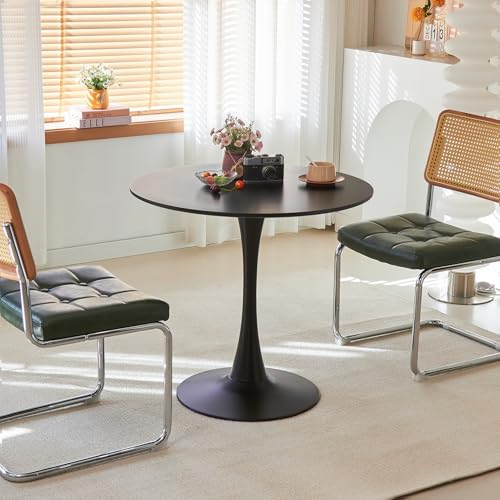
Hansweld Round Dining Table, 31.5" Tulip Table (Black) | with Thickened Tabletop & Metal Pedestal, Mid Century Modern Bistro Circle Table for Kitchen, Small Places, Dinner Room, Cafe
Check price on Amazon
MECHYIN Round Table for 2-4,31.5" Small Fluted Kitchen Table with Pedestal Base,Wood DinnerTable for Apartment,Restaurant,Kitchen
Check price on Amazon
MECHYIN Small Round Table for 2-4, 31.5" Fluted Dinner Table with Pedestal Base, Space-Saving Circle Table for Apartment, Restaurant, Kitchen
Check price on Amazon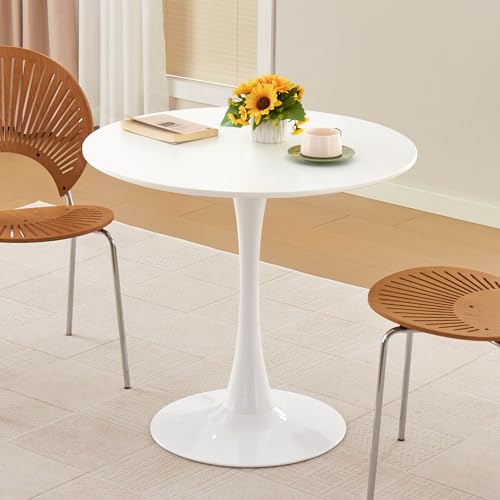
Hansweld Round Dining Table, 31.5" Tulip Table (White) | with Thickened Tabletop & Metal Pedestal, Mid Century Modern Bistro Circle Table for Kitchen, Small Places, Dinner Room, Cafe
Check price on Amazon
Tribesigns 31.5-Inch Round Dining Room Table for 2-4, Farmhouse Small Kitchen Dinner Table with Square Base for Dining Room Living Room, Rustic Brown
Check price on AmazonBuying Checklist Before You Decide
Run through these points before committing to a model. They cover the details that are easy to overlook but hard to fix later.
- Measure the room, not just the table. Confirm at least 30 inches of clearance on the sides where chairs will be used, and 36 inches for main walkways.
- Check the base spread. The base footprint should be wide enough that the table does not feel tippy at the edges.
- Confirm the seating count. A 36-inch round top suits two to three people; go to 42–48 inches for four.
- Match the material to your household. Glass and laminate for easy cleaning, solid wood for refinishability, stone for a premium feel with sealing upkeep.
- Verify the height pairing. Standard, counter, or bar height must match your chairs or stools.
- Inspect the joints. Bolted or welded column connections outperform friction-fit ones for long-term stability.
- Plan the light. A pendant centered over the column looks intentional; an off-center fixture over a round top can look unbalanced.
If you are still weighing table shapes, the comparison in our round wooden dining table and 4 chairs guide is a useful next read, as is the overview of a dining table for 4 set for family-sized configurations.
Frequently Asked Questions
What is a small pedestal dining table best suited for?
It is ideal for compact kitchens, breakfast nooks, apartments, and open-plan living areas where floor space is limited. The single central base removes corner legs, making it easier to slide chairs in and out and to walk around the table.
How much clearance do I need around a small pedestal table?
Plan for at least 30 inches of clearance from the table edge to walls or nearby furniture so chairs can pull out comfortably. For a main walkway, aim for 36 inches or more so people can pass behind seated diners.
Are pedestal tables stable for everyday dining?
Yes, when the base is properly weighted and the top is balanced. Mid-range and premium pedestal tables typically use wider or heavier bases, cast-iron plates, or cross-shaped feet to improve stability. Entry-level models may feel lighter, so check the base footprint before deciding.
How many people can a small pedestal dining table seat?
Most small pedestal tables seat two to four people. A 36-inch round top comfortably seats two to three, while a 42- to 48-inch round top can seat four. Because there are no corner legs, chairs can be placed all around the perimeter.
Can I use a small pedestal table as a kitchen table?
Yes. Pedestal tables are a common choice for kitchen dining zones because the open base lets chairs tuck in from any side. Choose a top material that suits kitchen use — laminate or sealed stone for easy cleaning, or oiled solid wood if you prefer a natural finish with routine upkeep.