
Dining Table with Chairs That Fit Underneath
Discover the clearance heights, apron depths, and chair profiles that let your seating tuck in completely — for a cleaner look and smarter use of space.
Why tuck-in clearance matters: A dining table that lets chairs slide fully underneath keeps walkways open, protects seat cushions from sunlight and dust, and gives small dining rooms a tidier silhouette. But "fits underneath" is more than a visual detail — it depends on precise measurements of apron height, chair back height, and arm clearance. This guide breaks down every dimension you need to check before pairing a table with its chairs.
Understanding Tuck-In Clearance Dimensions
For a dining chair to slide underneath a table, three measurements must align: the vertical opening under the table apron, the horizontal depth from the table edge to the legs or pedestal, and the chair's own back and arm height. A table may look spacious at a glance, yet a deep apron can block the chair back from passing through. Conversely, a table with a shallow apron can let even taller-backed chairs tuck in neatly.
The most common standard for comfortable tuck-in seating is roughly 24 to 26 inches of clearance from the floor to the lowest point of the table apron. Chairs with a seat height of about 18 inches and a back height up to roughly 36 inches generally fit under a table with this opening. Armchairs need extra attention because the arms must clear the apron on their way in — usually requiring an apron height that exceeds the arm height by at least an inch.
If you are still weighing which height works for your room, our guide to the ideal height of a dining table explains how seat height, tabletop height, and legroom interact. For a compact footprint that still allows full tuck-in, a compact dining table paired with armless chairs is one of the most reliable combinations.
Tuck-In Clearance Reference by Table Type
| Table Type | Typical Apron Clearance | Chair Profile That Fits | Tier Descriptor | Best For |
|---|---|---|---|---|
| Pedestal table with slim top | High opening, minimal obstruction | Armless, mid-back chairs tuck fully | mid-tier | Small dining nooks and breakfast corners |
| Standard apron table | Moderate opening, consistent around perimeter | Standard-height armless chairs | entry-level | Everyday family dining |
| Drop-leaf table | Varies by leaf position | Compact chairs, low backs | starter tier | Apartments and multi-use rooms |
| Extendable table | Consistent apron along the extension | Armless chairs across all seats | mid-range | Hosting with flexible seating counts |
| Pedestal table with deep apron | Lower opening, tighter tuck-in | Shallow-back or bench seating | premium | Formal dining rooms with wider footprints |
| Butcher-block top on open legs | Very high opening, almost no apron | Taller backs and armchairs fit comfortably | flagship tier | Open-concept kitchens and casual dining |
The table above uses a consistent tier system — entry-level, mid-range, premium, and flagship — to describe market positioning without referencing any figures. A higher tier generally means more refined joinery, steadier construction, and better surface finishing, which often translates into more predictable clearances. For example, an oak butcher block dining table typically sits at the flagship tier with an open base that allows even tall chair backs to slide through.
Which Chair Profiles Tuck In Best
The chair itself is half of the equation. Even a generous table opening cannot compensate for a chair whose back is too tall or whose arms are too low to pass the apron. Here are the chair profiles that reliably slide underneath a table:
- Armless side chairs: The most dependable option. With no arms to catch the apron, they slide in at any standard seat height and leave the tabletop edge visually uncluttered.
- Low-back dining chairs: A back height up to roughly 36 inches passes under most standard aprons. This style works well with modern chairs for a dining room table and keeps sightlines open across the room.
- Upholstered chairs with slim frames: Padding does not affect tuck-in, but frame thickness does. Look for chairs whose backrest is narrow in profile so it passes the apron cleanly.
- Bench seating: A small bench-style dining table with a coordinating bench stores entirely beneath the tabletop, freeing up floor space and eliminating the chair-back obstruction altogether.
Chairs that tend to resist tucking in include armchairs with low arms relative to the apron, high-backed host chairs, and chairs with a pronounced backward curve at the top of the backrest. If you love the look of armchairs, place them at the table ends where they can sit slightly proud of the apron, or choose a table with an especially shallow apron.
Measure Before You Pair
Use a simple three-step check at home. First, measure from the floor to the lowest point of the table apron — this is your vertical opening. Second, measure the height of your chair back from the floor. Third, measure your chair arm height if applicable. The chair back (and arms) must sit below the apron opening for a full tuck-in. Add an inch of margin for uneven floors and rugs.
How Table Shape and Base Design Affect Tuck-In
Rectangular tables generally offer the most predictable tuck-in along their long sides because the apron runs in a straight line and the legs sit at the corners, away from seated knees. Round tables can work beautifully too, provided the pedestal is narrow enough that chairs on all sides clear it. A round wooden dining table and 4 chairs set is a classic example of a pairing designed so each chair tucks in evenly around the base.
Corner and space-conscious tables need special attention because their legs often sit closer to the seating positions. A corner dining table can be an excellent space-saver, but check that the corner leg does not intersect where a chair back would travel. Similarly, a small pedestal dining table usually delivers cleaner tuck-in than a four-leg table of the same footprint because the central column leaves the full perimeter open.
The edge profile of the tabletop also plays a subtle role. A thick, squared-off edge visually lowers the apron line even when the actual opening is adequate. Slimmer edge profiles make the opening feel more generous and are easier to pair with mid-back chairs. Our overview of dining table edge profiles explains how these details change the perceived clearance.
Space-Saving Strategies for Tuck-In Dining Sets
When floor space is limited, a dining set where every chair tucks in becomes a functional necessity rather than a design preference. The key is to choose a table and chair combination that behaves like a single compact unit when not in use, then expands into a comfortable dining space when meals begin.
- Look for nesting and folding designs. A fold-away dining table with chairs collapses into a narrow profile, and its chairs are usually sized to store inside the folded footprint.
- Favor armless chairs for every seat. In a small space dining table set for 4, armless chairs on all four sides maximize the usable walkway on every edge.
- Consider a 2-seater for daily use. A dining table and chair set for 2 tucked against a wall keeps the room open, while an extendable version handles occasional guests.
- Use the table's own storage. A bar height dining table with storage combines a tuck-in footprint with built-in organization for linens and serveware.
- Pair a convertible table with tucked chairs. A coffee-to-dining table convertible works best when the accompanying chairs can disappear underneath when the table is in its low position.
If you are planning a complete setup from scratch, a compact dining table and chairs set is often engineered as a matched pair, meaning the apron height and chair back height are already coordinated. That eliminates most of the guesswork.
Materials and Build Quality That Support Clean Tuck-In
Tuck-in clearance is partly a matter of construction discipline. Tables built with reinforced aprons and consistent joinery maintain their opening dimensions over years of use, while loosely assembled tables can sag and reduce clearance. When comparing options, look for tables described as having durable construction, solid build, and reinforced apron joints — these are the hallmarks of furniture that keeps its geometry.
Heavier materials like solid oak or butcher block tend to hold their shape and resist the warping that can narrow the apron opening over time. A solid oak butcher block dining table is a strong example of a table whose open understructure and stable top keep the tuck-in zone generous. Lighter materials can also work well, but the frame needs to be stiff enough to avoid flexing under the weight of the top.
For outdoor or covered patio use, a plastic outdoor dining table is often molded with a high, smooth apron that allows standard patio chairs to slide in without snagging. Just confirm that the chair backs are within the molded opening height.
Matching Table Style with Tuck-In-Friendly Chairs
Aesthetic coherence matters as much as measurement. A set that looks unified is more likely to have been designed with tuck-in in mind, because the manufacturer controls both the apron height and the chair profile. Here are some style pairings that consistently deliver a clean tucked-in look:
- Modern: A 4 chairs modern dining table set typically pairs a slim apron with low-profile chairs, giving a crisp line when tucked in.
- Round modern: A 4 chairs round table dining set keeps chairs evenly tucked around a pedestal base for a balanced silhouette.
- Wicker and coastal: A wicker dining table and chairs set is usually lightweight, so chairs slide in easily and the set reads as one piece.
- Vintage farmhouse: A vintage farmhouse dining table often has a high apron opening that accommodates taller, characterful chair backs.
- Glass and light: A small glass dining table and chairs combination uses a thin top edge that visually raises the apron line, making tuck-in feel effortless.
Pre-Purchase Checklist for Tuck-In Dining Sets
- Measure the floor-to-apron opening of the table you are considering — aim for at least 24 inches for standard chairs.
- Check the chair back height and confirm it sits below the apron opening with an inch of margin.
- If using armchairs, verify that arm height clears the apron with room to spare.
- Inspect the base: pedestals leave the perimeter open, while corner legs may interfere with chair backs.
- Confirm the tabletop edge profile is slim enough that the apron does not feel visually heavy.
- For small rooms, prioritize armless chairs and nesting or folding designs.
- Review construction details such as reinforced aprons and solid build quality to ensure clearance holds over time.
Frequently Asked Questions
What is the minimum clearance for chairs to fit underneath a dining table?
A standard dining chair needs approximately 24 to 26 inches of clearance from the floor to the underside of the table apron to slide underneath comfortably. Armless chairs require less horizontal clearance than armchairs.
Why is apron height important for tuck-in chairs?
The apron is the frame directly beneath the tabletop. A deep or low apron reduces the vertical opening, which can block chair backs and arms from sliding under. A shallower apron gives more room for chairs to tuck in fully.
Can armchairs fit underneath a dining table?
Armchairs can fit underneath only if the table apron sits higher than the chair arms and the tabletop edge extends far enough. Many armchair seats sit lower, so check arm height and table apron clearance carefully before pairing them.
What table shape is best for chairs that fit underneath?
Rectangular and oval tables generally offer more predictable tuck-in clearance along their long sides, while round and square tables can also work well if the pedestal or legs are positioned to avoid chair interference.
Do extendable tables maintain tuck-in clearance when extended?
Well-built extendable tables keep the apron aligned across the extension, so tuck-in clearance remains consistent. Check that the extension mechanism does not create a lower crossbar that could block chair backs in the middle positions.
Explore Tuck-In-Friendly Dining Sets
Ready to find a table and chair pairing that keeps your floor clear and your dining room tidy? Browse our recommended options below and compare features that support full tuck-in seating.
View Recommended SetsRecommended Dining Tables with Chairs That Fit Underneath
⚠️ AFFILIATE DISCLOSURE: This website contains affiliate links. As an affiliate Associate, we earn from qualifying purchases. If you make a purchase through these links, we may receive a small commission at no additional cost to you. Read our full affiliate policy.

Stella Mia 5-Piece 47" Round Dining Table Set with Chairs, Natural | U-Shaped Pedestal Base, Round Tabletop Kitchen Table w/ 4 Upholstered Chairs, Space Saving Dinner Table for Dining Room
Check price on Amazon
Dining Table Set for 4,Kitchen Table and Chairs for 4, Round Dining Room Table with Upholstered Chairs, 5 Piece Space Saving Circle Wood Kitchen & Dining Room Dinner Dinette Table Set (Vintage, 42In)
Check price on Amazon
domusdisn 63" Oval Dining Table Set for 4 with Solid Wood Legs | 5 Piece Walnut Dining Table Set for Kitchen Dining Room, 4 Beige Fabric Walnut Metal Frame Chairs, Mid Century Modern
Check price on Amazon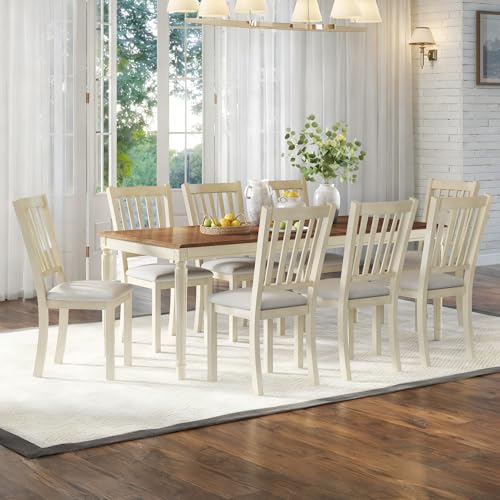
AMERLIFE 9 Piece Farmhouse Dining Table Set with 79" Table, Cream | Solid Rubberwood Frame, 8 Chairs Included, Farmhouse Design, Upholstered Seating, Rustic Cream Finish
Check price on Amazon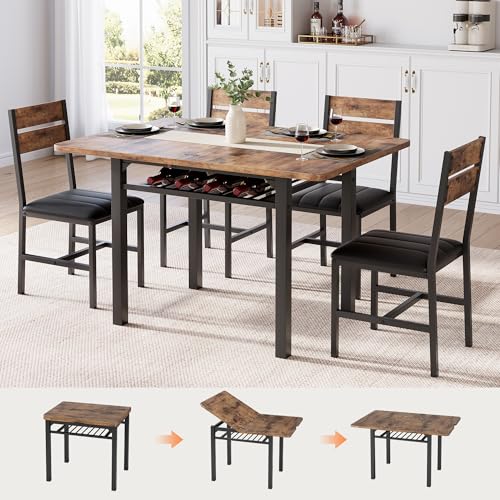
MapleGrace Extendable Dining Table Set for 4 with Built-in Shelf Rack Brown | Kitchen Table Set with 4 PU Leather Upholstered, Wood Dining Room Chairs for Dining & Small Spaces
Check price on Amazon
IRONCK Dining Table Set for 4, 47.2 inch Round Kitchen Table and 4 Chairs | 47-inch Circle Kitchen Table, 4 Upholstered Chairs. Under-Table Storage Shelf. for Dining Room and Small Space. Grey.
Check price on Amazon