
Small Bench Style Dining Table: Complete Buyer's Guide
Everything you need to know about choosing a compact bench dining table — space-saving layouts, seating comfort, material options, and practical buying advice for small homes.
Explore Bench Table OptionsWhy a Small Bench Style Dining Table Works: A bench dining table combines the footprint of a compact table with the efficient seating of a bench. Instead of several individual chairs that each need clearance to pull out, a bench tucks neatly underneath and seats multiple people along one side. For apartments, breakfast nooks, and open-plan kitchens, this is one of the most space-efficient dining arrangements available — and it looks clean and intentional rather than crowded.
What Exactly Is a Small Bench Style Dining Table?
A small bench style dining table pairs a compact tabletop — typically a rectangle or narrow oval — with a bench on one or both long sides. The bench is often the same length as the table or slightly shorter so it can slide fully underneath. The opposite side may use individual chairs, a second bench, or a mix of both. The defining characteristic is that at least one seating position is a continuous bench rather than a separate chair.
This format is especially popular in compact dining table setups and small dining table ideas, because it solves two common problems at once: it reduces the number of chair legs competing for floor space, and it allows the table to sit closer to a wall without blocking circulation.
Space-Saving Advantages of Bench Dining Tables
Bench Slides Under the Table
Unlike chairs that need room to pull out, a bench can be pushed flush against the table, freeing floor space when the table is not in use.
Seats More Per Foot
A bench seats two to three people along a side that might only accommodate one or two chairs comfortably, improving seating density in small rooms.
Wall-Friendly Placement
Benches can sit against a wall or window without the back-clearance needs of chairs, making them ideal for narrow dining nooks.
Fewer Visual Obstructions
A single bench line creates a cleaner sightline than four separate chair backs, which helps small dining areas feel less cluttered.
Flexible Seating Mix
Use a bench on one side and two chairs on the other — a common configuration for two-to-four person households that occasionally host guests.
Easy to Tuck Away
Many benches are lightweight enough to move aside temporarily, turning the table into a workspace or prep surface during the day.
Common Small Bench Dining Table Configurations
The right configuration depends on your room shape, household size, and whether the table sits against a wall or floats in the middle of the room. Here are the most practical arrangements for small spaces:
| Configuration | Best For | Seating Capacity | Notes |
|---|---|---|---|
| One bench + two chairs | Couples and small families | 4 people | Most versatile; bench against wall, chairs on the open side. |
| Bench on both long sides | Narrow kitchens and breakfast nooks | 4–6 people | Maximizes seating density; requires stepping over the bench to sit. |
| Corner bench (L-shaped) | Corner dining areas | 4–5 people | Uses dead corner space; often paired with a small square or round table. |
| Bench + chair at each end | Slightly larger small rooms | 4–6 people | End chairs add flexibility without widening the table footprint. |
If you are working with a very tight footprint, a corner dining table combined with a bench can be especially efficient. For households of two, a dining table and chair set for 2 with a single bench may be all you need.
Materials and Construction to Look For
Bench tables take more lateral stress than chair-based tables because people slide along the bench and lean on it. Construction quality matters more here than on a standard four-chair table. Look for the following:
- Solid wood tops: Oak, rubberwood, and mango are common in this category. A oak butcher block dining table style surface is durable and repairable. Solid wood resists the flexing that thinner engineered tops can develop over time.
- Reinforced bench aprons: The apron — the horizontal frame under the bench seat — is the weak point. Look for a bench with a center support leg on longer spans, or a metal cross-brace.
- Leg thickness: Thin tapered legs look elegant but can wobble on a bench that gets heavy use. Square or slightly thicker legs with corner blocks are more stable.
- Finish durability: A matte or oiled finish hides scratches better than high gloss on a bench surface that sees constant sliding contact. Learn more in our materials and finishes hub.
- Bench seat thickness: A seat at least 1.5 inches thick distributes weight better and feels less springy. Upholstered bench tops add comfort but need a removable, washable cover in family homes.
For a rustic or farmhouse look, a vintage farmhouse dining table paired with a matching bench is a classic combination that suits small country-style kitchens. If you prefer a warmer, textured look, a wicker dining table and chairs set can be adapted with a wicker or wood bench.
How to Size a Bench Dining Table for a Small Room
Getting the dimensions right is the single most important decision. A bench table that is too deep or too long will feel cramped even in a room that technically fits it. Use these guidelines:
Table Depth
Aim for 28–32 inches of depth for a bench table. Deeper tables push the bench too far from the wall and eat into walkway space.
Bench Height
Standard bench seat height is 17–19 inches for a 28–30 inch table. A comfortable rule is 10–12 inches between bench seat and tabletop underside.
Bench Length
Allow 22–24 inches of bench length per person. A 48-inch bench comfortably seats two adults; a 60-inch bench seats two to three.
Walkway Clearance
Leave at least 30 inches between the table edge and any wall or counter on the open side, and 36 inches if that path is a main walkway.
For a more detailed breakdown, see our ideal height of dining table guide, which covers the relationship between table height, seat height, and comfort. If you are planning a four-person setup, the small space dining table set for 4 article walks through dimension planning for tight rooms.
Bench Comfort: What to Check Before Buying
A bench is not inherently less comfortable than a chair, but it is less forgiving of poor design. Before choosing a bench table, consider these comfort factors:
- Seat depth: A bench seat should be 14–16 inches deep. Shallower than 14 inches feels precarious; deeper than 17 inches forces shorter users to perch forward.
- Back support: A backless bench is fine for short meals but tiring for long dinners. If the bench sits against a wall, a wall-mounted cushion or a bench with a low backrest improves comfort significantly.
- Edge profile: A gently rounded or beveled front edge on the bench seat reduces pressure on the backs of the thighs. Sharp square edges are uncomfortable over a full meal.
- Cushioning: A thin bench pad (1–2 inches) makes a noticeable difference without raising the seat height too much. Choose a pad with a non-slip base.
- Entry and exit: With a bench on both sides, diners must slide in rather than pull out a chair. This is fine for casual family meals but worth considering if you host elderly guests regularly.
If comfort is a priority, a dining table with bench for small spaces guide covers upholstered and cushioned bench options in more detail.
Style Directions for Small Bench Dining Tables
Because bench tables are visually simple, the style is largely determined by the material, finish, and bench profile. Here are the most common directions that work well in small rooms:
| Style | Typical Materials | Best For | Design Notes |
|---|---|---|---|
| Modern minimalist | White oak, ash, powder-coated steel | Apartments, open-plan kitchens | Straight lines, slim legs, backless bench that tucks fully under. |
| Farmhouse / rustic | Reclaimed pine, mango, distressed finish | Country kitchens, cottages | Thicker tops, turned or X-frame legs, bench with a low back. |
| Scandinavian | Light birch, white-painted wood | Bright, airy small dining nooks | Tapered legs, pale finishes, simple slat bench. |
| Industrial | Metal frame, reclaimed wood top | Lofts, urban apartments | Pipe or steel legs, exposed hardware, dark stained bench. |
If you are styling a compact space, the small dining table ideas collection includes layout and styling approaches that pair well with bench seating.
Buying Checklist for a Small Bench Dining Table
Use this checklist before committing to a bench table. It covers the practical details that are easy to overlook in product photos:
- Measure the room, not just the table: Confirm that the bench can slide out far enough for people to get in and out — typically 24 inches of bench movement on the open side.
- Check the bench-to-table height gap: Aim for 10–12 inches between the top of the bench seat and the underside of the table.
- Verify bench weight capacity: A bench that seats three should be rated for at least three times the weight of an average adult, with a center support leg on spans over 48 inches.
- Consider the bench material underfoot: A bench on a hard floor may need felt pads; on carpet, a heavier bench is less likely to shift.
- Plan for storage: Many small bench tables offer under-bench storage or a lift-up seat. This is a major advantage in compact homes.
- Check assembly and hardware: Bench-to-table hardware and leg brackets should be metal, not plastic. Review the assembly instructions if available.
- Think about the chair side: If you use chairs on the opposite side, ensure the chair backs do not block a walkway when pushed in.
Related Compact Table Setups to Consider
A bench table is one option among several space-saving formats. If you are still comparing layouts, these alternatives may suit a different room shape or household pattern:
- Compact dining table and chairs set — a classic four-chair alternative when bench seating is not required.
- Drop-leaf dining table — folding sides reduce footprint to near-zero when not in use.
- Fold-away dining table with chairs — the most aggressive space-saving format for studio apartments.
- Small pedestal dining table — a central column frees up legroom and allows bench seating on multiple sides.
- Tiny dining table set — for one- or two-person households with minimal floor area.
Who Should Choose a Bench Style Dining Table?
A bench table is not the right choice for every household. It works best when:
You Have a Small or Narrow Room
The bench format maximizes seating in a footprint that would feel cramped with four separate chairs.
You Want a Casual, Family-Friendly Space
Bench seating encourages side-by-side dining and works well with children, who can slide in without chair maneuvering.
You Need Occasional Extra Seating
A bench can often fit an extra person beyond its nominal capacity in a pinch, especially for children.
You Prefer a Clean Visual Line
A single bench line reads as calmer and less cluttered than a row of chair backs in a small open-plan space.
Conversely, if your household regularly includes older guests or anyone with mobility limitations, a chair-based dining table 4 seater set may be more comfortable for daily use.
Maintenance and Longevity Tips
Bench tables experience concentrated wear at the bench seat and the table edge where people slide in and out. These habits extend the life of the set:
- Use a bench pad: A removable, washable pad protects the seat surface from clothing abrasion and spills.
- Tighten hardware seasonally: Bench brackets and leg bolts loosen with use. Check and tighten them every few months, especially on solid wood tables that expand and contract.
- Re-oil or wax wood surfaces: An oiled or waxed finish on the bench seat and table edge can be refreshed without refinishing the whole piece. See our wood dining table wax and polish guide.
- Protect the table edge: The edge where diners slide in takes the most contact. A subtle edge banding or a regular touch-up with a matching wood marker prevents visible wear.
- Address wobble early: A bench that starts to wobble usually has a loose bracket or a worn foot pad. Fixing it early prevents structural stress. Our wobbly dining table fix guide covers the common causes.
Recommended Small Bench Style Dining Tables
⚠️ AFFILIATE DISCLOSURE: This website contains affiliate links. As an affiliate Associate, we earn from qualifying purchases. If you make a purchase through these links, we may receive a small commission at no additional cost to you. Read our full affiliate policy.
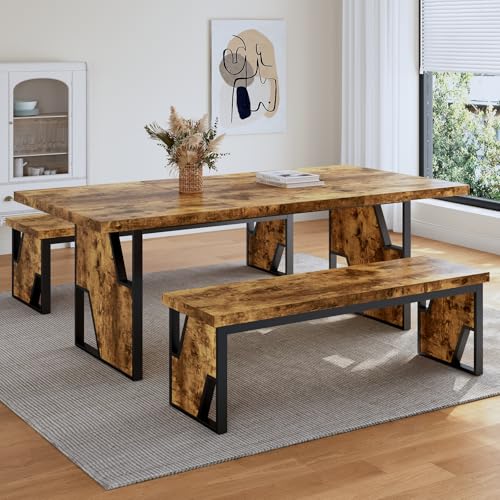
HIPIHOM 70.8" Wooden Dining Table with 2 Benches Kitchen Table and Chairs | Modern Table and Chairs set for 4-6 person, Thickened MDF Wooden Table with Dining Bench, for Living Dining Room, Office
Check price on Amazon
HUAHUU 63" Farmhouse Dining Table Set for 4-6, Kitchen Table with 2 Benches, Space Saving 3-Piece Rectangle Wooden Dinette Table Set for Dining Room, Breakfast Nook, Small Space, Brown & White
Check price on Amazon
Feonase 5-Piece Dining Table Set for 4-8 People, 63" Extendable Kitchen Table with 2 Benches and 2 Square Stools, Mid-Century Modern Wooden Dining Room Table, Space-Saving, Walnut
Check price on Amazon
VECELO 43.3" Dining Table Set for 4, Space-Saving Kitchen Table with 1 Bench and 2 Stools, Tuck-Away Seating, Rustic Farmhouse Style, Adjustable Foot Pads, Black
Check price on Amazon
Rovibek Dining Room Table Chairs Set for 4, Modern Space Saving Kitchen Table with 2 Benches & Adjustable Feet Breakfast Table, Wooden Industrial Style Farmhouse, 43", Brown
Check price on Amazon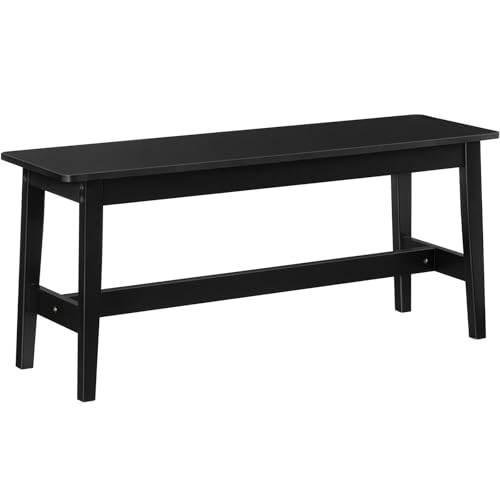
HOOBRO 39.3'' Bamboo Dining Bench, Farmhouse Kitchen Table Bench, Kitchen & Living Room Furniture, Easy to Assemble, Sturdy and Stable, Black BK03CD01G2
Check price on Amazon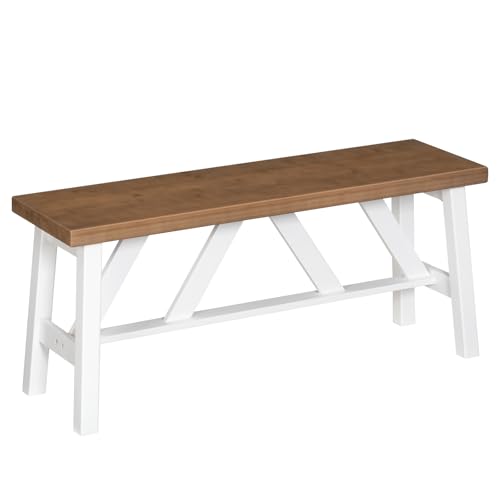
HOOBRO Bamboo Dining Bench, 39.4 inch Farmhouse Kitchen Table Bench, Solid Bamboo Dining Room Bench for Kitchen, Living Room, Bedroom, Hallway, Sturdy and Stable, Walnut and White WH17CD01
Check price on AmazonFrequently Asked Questions
Is a bench dining table comfortable for everyday use?
Yes, provided the bench seat is 14–16 inches deep, the height gap to the table is 10–12 inches, and the front edge is rounded. A backless bench is comfortable for typical meals; for long dinners, a bench with a low backrest or a wall cushion improves support.
How many people can sit at a small bench style dining table?
A typical small bench table seats four: two on the bench and two on chairs opposite. A 60-inch bench can seat three on one side, bringing capacity to five. Seating density depends more on bench length than table length — allow 22–24 inches per person.
Can a bench dining table be placed against a wall?
Yes, and this is one of its main advantages. A bench against a wall needs no back clearance, so the table can sit closer to the wall than a chair-based setup would allow. Just ensure the bench can still slide out far enough for people to get in and out.
What is the best material for a bench dining table in a small home?
Solid wood — oak, rubberwood, or mango — offers the best balance of durability and repairability for bench seating. Engineered wood tops can work in lighter-use settings, but solid wood handles the lateral stress of sliding and leaning better over time.
Should I choose a bench on one side or both sides?
One bench plus two chairs is the most versatile configuration for small rooms. Benches on both sides maximize seating density but require diners to slide in rather than pull out a chair, which is less convenient for guests with mobility limitations.
How much clearance is needed around a bench dining table?
Leave at least 30 inches between the open side of the table and any wall or counter, and 36 inches if that path is a main walkway. On the bench side, allow enough room for the bench to slide out — typically 24 inches of movement.
Ready to Choose Your Bench Dining Table?
Compare compact bench tables, review the specifications, and find the configuration that fits your space.
View Recommended Options