
Dining Table 1950s: Vintage Style Guide & Buying Tips
Discover the charm of 1950s dining tables — iconic Formica dinettes, chrome-legged kitchen tables, and mid-century modern designs. Learn what to look for and how to bring retro character to your dining room.
EXPLORE THE GUIDEWhy 1950s dining tables endure: The 1950s gave us some of the most recognizable furniture silhouettes in history — from chrome-trimmed Formica dinettes to sculptural mid-century modern designs. These tables blend nostalgia with practical durability, and their timeless appeal makes them a worthwhile long-term investment for anyone who loves retro character. Whether you are furnishing a vintage-inspired kitchen or adding a statement piece to a modern dining room, understanding the materials, shapes, and construction of 1950s tables will help you choose wisely.
Understanding the 1950s Dining Table
The 1950s was a transformative decade for home furniture. Post-war prosperity, the rise of suburban living, and a surge in manufacturing innovation produced a remarkable variety of dining tables. Two broad design movements dominated the era: the playful, practical dinette style and the sleek, forward-looking mid-century modern aesthetic.
Dinette tables — often round or rectangular with Formica laminate tops and chrome-plated steel legs — were designed for everyday family meals. They were easy to clean, resistant to spills, and visually cheerful, often featuring boomerang or starburst patterns. Mid-century modern tables, meanwhile, favored clean lines, organic shapes, and materials like walnut, teak, and birch, frequently supported by tapered wooden legs or sculptural pedestal bases.
If you are drawn to the vintage look but want a broader overview of period styles, the 1950s dining room table guide offers additional context. And if you are specifically searching for authentic or reproduction retro pieces, the dedicated 1950s dining table collection is a useful starting point.
Materials and Construction of 1950s Tables
Formica and Laminate Tops
Formica laminate was the defining surface material of 1950s dinette tables. Applied over a plywood or particleboard core, it offered a durable, easy-to-clean surface in a wide range of colors and patterns — from solid pastels to bold boomerang and starburst motifs. Original Formica tops often feature aluminum or chrome edging, a hallmark of authentic period construction.
Chrome-Plated Steel Legs and Frames
Chrome-plated tubular steel was everywhere in 1950s furniture. Dinette tables typically used chrome legs with rubber or plastic foot caps, often connected by a chrome ring or cross-brace for stability. The chrome finish can show pitting or rust over time, so inspect legs carefully when buying vintage. For a deeper look at metal-frame construction, see the metal frame dining table and chairs guide.
Solid Wood and Veneer
Mid-century modern tables often used solid walnut, teak, maple, or birch, sometimes with veneered tops for a consistent grain pattern. Wood surfaces were typically finished with oil, lacquer, or varnish. Restoring a wood top is a common project — the refinishing wood dining table guide covers the process step by step.
Glass and Mixed Materials
Glass-topped tables with chrome or brass frames also appeared in 1950s interiors, particularly in more formal dining settings. A glass and chrome round dining table captures this look beautifully, while retro round dining table and chairs sets offer a complete period-inspired package.
Popular Shapes and Styles
The 1950s produced a striking variety of table shapes, each with its own character and practical advantages:
- Round dinette tables: Space-efficient and sociable, often paired with chrome legs and vinyl chairs. A classic choice for compact kitchens and breakfast nooks.
- Rectangular Formica tables: The quintessential kitchen table, frequently with chrome edging and matching vinyl-covered chairs.
- Oval tables: A softer alternative to rectangular designs, popular in mid-century modern dining rooms.
- Kidney and boomerang shapes: Iconic mid-century modern silhouettes that added sculptural interest to the dining room.
- Drop-leaf and gateleg designs: Practical space-savers that could be expanded for guests — a concept still popular today, as seen in the small oak drop-leaf dining table guide.
For smaller spaces, period-inspired options like a small dining table and chairs for two or a mini dining table can capture the retro spirit without overwhelming a compact room. And if you love the idea of furniture that adapts, a coffee table that turns into a dining table offers a clever modern twist on 1950s multifunctionality.
Comparing 1950s Dining Table Tiers
Use this reference to understand the relative positioning of 1950s-style tables across the market. Descriptors reflect build quality and design authenticity, not numeric pricing.
| Tier | Typical Characteristics | Best For |
|---|---|---|
| Entry-level / Starter tier | Reproduction dinette tables with laminate tops and chrome-finished legs; simpler joinery and lighter frames. | First-time vintage buyers, casual kitchen nooks, rental spaces. |
| Mid-range / Balanced tier | Solid wood or high-grade laminate tops with reinforced chrome or steel legs; closer attention to period detailing. | Everyday family dining, retro-styled kitchens, small dining rooms. |
| Premium / High-end tier | Authentic or faithful reproductions using solid walnut, teak, or birch; sculptural pedestal bases and refined finishes. | Design-conscious buyers, mid-century modern interiors, statement dining rooms. |
| Luxury / Flagship tier | Restored originals or museum-quality reproductions; rare shapes, premium materials, and impeccable craftsmanship. | Collectors, period-perfect renovations, long-term investment pieces. |
What to Look For When Buying a 1950s Dining Table
Whether you are shopping for an original vintage piece or a faithful reproduction, these checkpoints will help you make a confident decision:
- Inspect the frame and joints: Look for tight, secure joints. Wobbly legs or loose aprons may indicate structural wear that needs repair.
- Check the chrome or metal finish: Light surface scratches are normal; heavy pitting or rust may require re-plating or replacement.
- Examine the tabletop surface: Formica can chip at the edges; wood tops may have water rings or heat marks. Assess whether refinishing is feasible.
- Verify dimensions for your space: Measure your dining area carefully. Round tables work well in tight spaces, while rectangular tables suit longer rooms. The guide to room around a dining table is a helpful reference.
- Look for original labels and hardware: Manufacturer marks underneath the table can confirm authenticity and help with valuation.
- Consider chair pairing: Period-correct chairs — vinyl dinette chairs, molded shell chairs, or bentwood designs — complete the look. A dining table with a set of four chairs is a convenient way to buy a coordinated set.
- Plan for protection: Vintage surfaces benefit from care. Use dining table hot pads and a table cloth for the dining room table to preserve the finish.
Styling a 1950s Dining Table in a Modern Home
A 1950s dining table can feel fresh and current when styled thoughtfully. Here are some approaches that work well:
- Keep it minimal: Let the table's shape and material be the focal point. A simple dining table runner and a small centerpiece are often enough.
- Mix eras: Pair a vintage dinette with modern chairs, or a mid-century wood table with contemporary lighting for an eclectic, collected look.
- Use color intentionally: 1950s interiors embraced bold accent colors — mustard, teal, coral. A few period-inspired accessories can tie the room together. See formal dining table centerpiece ideas for inspiration.
- Add texture: Rattan, woven placemats, and linen napkins complement the era's aesthetic. A rattan glass dining table captures this texture-rich look.
- Consider a complete set: If you love a coordinated retro look, a rustic grey dining table set or a black and gold dining table and chairs can anchor the room with vintage-inspired character.
Recommended 1950s-Style Dining Tables
⚠️ AFFILIATE DISCLOSURE: This website contains affiliate links. As an affiliate Associate, we earn from qualifying purchases. If you make a purchase through these links, we may receive a small commission at no additional cost to you. Read our full affiliate policy.
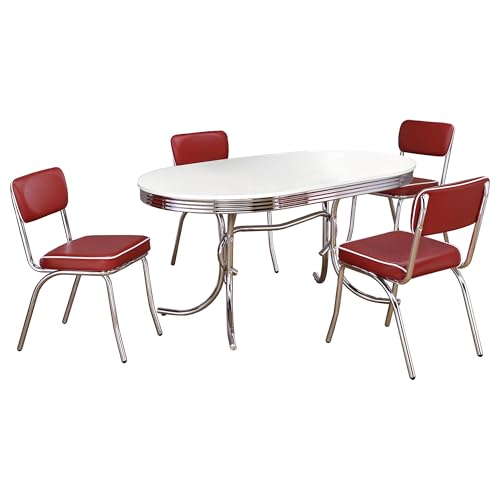
Coaster Retro Diner 5-Piece Oval Dining Table Set, White and Red 2065-S5R | 60-inch oval white table with four red padded faux-leather chairs and bright chrome frames
Check price on Amazon
Coaster Retro Diner 5-Piece Round Dining Table Set, White and Red 2388-S5R | 42-inch round white table with four red padded faux-leather chairs and bright chrome frames
Check price on Amazon
Coaster Retro Diner 5-Piece Round Dining Table Set, White and Black 2388-S5 | 42-inch round white table with four black padded faux-leather chairs and bright chrome frames
Check price on Amazon
CARTESIAN Retro Chrome 3-Piece Pub Bar Set, White Round Table with Red Leatherette Swivel Stools, 30 Inch Diameter, 1950s Diner Style
Check price on Amazon
Coaster Retro Diner 42-Inch Round Dining Table with Chrome Legs, White 2388 | Round white laminate top with chrome trim and metal legs; 42 inches wide and 30 inches high
Check price on Amazon
Coaster Retro Diner 60-Inch Oval Dining Table with Chrome Legs, White 2065 | Oval white laminate top with chrome trim and metal legs; 60 inches wide and 29.5 inches high
Check price on Amazon
CARTESIAN Retro Chrome Bar Table, Round White Top, 30 Inch Diameter, 41.75 Inch Height, 1950s Diner Style, Metal Legs with Support Rings
Check price on Amazon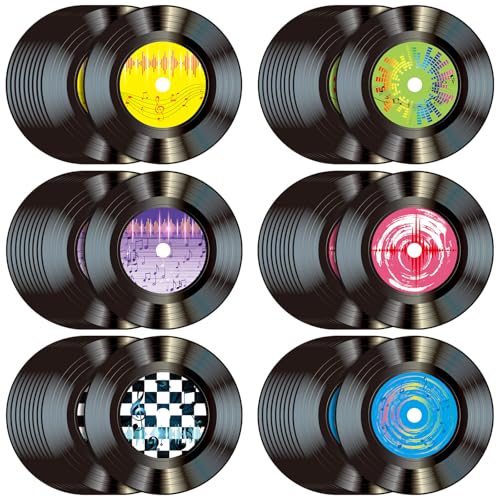
60 Pcs 13'' 1950's Rock and Roll Vinyl Record Placemat, Classic Style | Vintage Musical Table Place Mats, Paper Round Disposable Placemat, 50's Rock Party Table Mats, Dining Decorations
Check price on AmazonFrequently Asked Questions
What materials were used for 1950s dining tables?
1950s dining tables commonly featured Formica laminates on plywood or particleboard cores, chrome-plated steel legs, solid wood such as maple, birch, and oak, and vinyl upholstery on matching chairs. Glass tops with chrome frames also appeared in mid-century modern designs.
What shapes were popular for 1950s dining tables?
Round and oval tables were especially popular in the 1950s, often paired with chrome or tubular steel legs. Rectangular Formica-topped kitchen tables with chrome edging and matching vinyl chairs were a staple of dinettes, while the iconic kidney and boomerang shapes appeared in mid-century modern designs.
How can I tell if a dining table is genuinely from the 1950s?
Look for construction details such as chrome-plated tubular legs with original rubber or plastic foot caps, Formica laminate tops with metal edging, solid wood frames joined with screws rather than modern cam locks, original manufacturer labels underneath, and period-appropriate hardware. Authentic pieces often show honest wear consistent with age.
Can a vintage 1950s dining table be restored?
Yes, most 1950s dining tables can be restored. Wood tops can be sanded and refinished, chrome legs can be polished or re-plated, and Formica surfaces can often be cleaned or replaced with period-correct laminate. Structural repairs such as re-gluing joints and tightening hardware are usually straightforward. The refinishing dining table top guide walks through the process.
What chair styles pair well with a 1950s dining table?
Period-appropriate chairs include chrome-framed vinyl dinette chairs, molded plastic shell chairs, bentwood chairs, and upholstered mid-century modern designs with tapered wooden legs. Mixing a vintage table with reproduction chairs in a complementary style can also work well. Explore retro round dining table and chairs for complete set inspiration.
A 1950s dining table brings warmth, character, and a sense of history to any dining space. Whether you choose an authentic vintage find or a faithful reproduction, you are investing in a design legacy that has proven its staying power. Use the guidance above to evaluate materials, construction, and styling — and enjoy a dining room that feels both nostalgic and timeless.
EXPLORE MORE DINING GUIDES