
Small Wood Pedestal Dining Table: The Compact Centerpiece Guide
A small wood pedestal dining table pairs warm natural character with a space-saving footprint. This guide walks you through pedestal base types, wood species, sizing, placement, styling, and care so you can choose a compact table that fits your room and your daily life.
Quick summary: A small wood pedestal dining table is an excellent fit for compact kitchens, breakfast nooks, apartments, and open-plan corners. The single central base frees up legroom and chair movement, while solid wood brings warmth and long-term durability. The key is matching the pedestal shape to your seating count and the tabletop size to your available floor space.
Why a Small Wood Pedestal Dining Table Works
Pedestal tables have a long history in dining rooms and cafés because the central base solves several practical problems at once. On a small scale, those advantages become even more valuable. A compact pedestal table can seat two to four people comfortably while leaving open floor space around it, which makes a tight kitchen or breakfast area feel less crowded.
The absence of corner legs means chairs can be placed on any side without bumping into a table leg. That flexibility is especially useful in a small nook where you may want to pull a chair out at an angle or tuck stools underneath. Wood adds another layer of benefit: it is repairable, refinishable, and develops character over time, unlike many veneer or composite alternatives.
Unobstructed Legroom
A central pedestal removes the four corner legs that usually limit foot space. Everyone seated at the table gets more room to move, which matters most when the table is small.
Flexible Chair Placement
Chairs and stools can be positioned on any side without hitting a leg. This makes a compact table easier to adapt when guests arrive or when you rearrange the room.
Warm, Repairable Material
Solid wood can be sanded and refinished if it shows wear. A wooden top also brings natural texture that softens the look of small, hard-surfaced rooms.
Visual Lightness
A slender pedestal creates less visual clutter than four legs. In a small room, that openness helps the table feel intentional rather than heavy.
If your room is especially tight, the principles in this guide pair well with broader advice on small apartment dining table ideas and dining tables for tight spaces.
Pedestal Base Types Explained
The pedestal is the defining feature of this table style, and the base you choose affects stability, seating flexibility, and the visual weight of the table. Small wood pedestal tables typically use one of four base designs.
Single Column Pedestal
A single central column with a spread foot is the classic pedestal design. It offers the most open legroom and works well for round or square tops seating two to four people. Stability depends on the size and weight of the foot; a wider foot distributes weight better on hard floors.
X-Base or Cross Base
An X-shaped base uses two crossed supports under the top. It is often found on farmhouse and rustic styles. The X-base is stable and visually distinctive, but the arms can interfere slightly with chair placement compared with a single column.
Trestle-Style Pedestal
A trestle base uses two vertical supports connected by a central beam. On a small scale, a compact trestle can look elegant and provides strong support for rectangular tops. It is a good option if you prefer a rectangular table but still want the open feel of a pedestal design.
Trumpet or Tulip Base
The trumpet base flares outward from a central column, creating a sculptural silhouette. It is common in mid-century modern and Scandinavian-inspired tables. On small tables, a trumpet base looks refined and leaves generous foot space, though the flared foot needs enough floor area to sit flat.
Stability tip: On any pedestal table, check that the base foot is wide enough for the tabletop size. A small top on a narrow foot can feel tippy if someone leans on an edge. Look for a base with a spread foot or leveling glides for uneven floors.
For related reading on how base design interacts with seating, see our notes on dining table bases and round dining tables with chairs that tuck under.
Wood Species and Finish Options
The wood species determines grain character, hardness, and how the table ages. For a small pedestal table, the top is the most visible surface, so choose a species that matches your room's tone and your tolerance for maintenance.
| Wood Species | Character | Best For | Maintenance Notes |
|---|---|---|---|
| Oak | Open grain, strong and durable, light to medium tone | Family kitchens and high-use breakfast nooks | Oiled or lacquered finishes resist daily wear; wipe spills promptly |
| Walnut | Rich dark tone, smooth grain, premium appearance | Mid-range to high-end compact dining rooms | Keep out of direct sun to slow color shift; use coasters |
| Pine | Light, knotty, casual character | Rustic and cottage-style small tables | Softer surface; use pads and avoid sharp objects |
| Teak | Dense, oily, naturally weather-resistant | Tables near windows or in humid climates | Minimal care; occasional oiling maintains sheen |
| Mango Wood | Varied grain, warm medium tone, eco-friendly | Entry-level to mid-range rustic tables | Seal or oil periodically to prevent drying |
Finish choice matters as much as species. A matte oil finish feels natural and is easy to spot-repair, while a lacquered finish offers more resistance to spills and stains. Distressed finishes hide small scratches well but can look busy on a small surface. For a compact table, a clear or subtle finish usually keeps the room feeling open.
If you are comparing wood types for a light-filled room, our guide to a small light oak dining table covers tone and grain considerations in more detail. For darker interiors, a modern round walnut dining table shows how a pedestal can anchor a moodier space.
Sizing and Seating Capacity
A small pedestal table generally seats two to four people. The right size depends on how many chairs you need and how much floor space you can dedicate. Use the table below as a starting reference for compact pedestal tables.
| Seating | Typical Top Size | Best Room Context | Notes |
|---|---|---|---|
| 2 people | 24–30 inch round or square | Breakfast nook, apartment kitchen, two-person household | Compact footprint; ideal for a single pedestal column |
| 3 people | 30–36 inch round | Small kitchen with one open side | Round top makes conversation and serving easier |
| 4 people | 36–42 inch round or square | Small dining room, open-plan corner | Choose a wider base foot for stability |
| 4 people (rectangular) | 30 x 48 inch or similar | Narrow rooms where a round top wastes space | A compact trestle base can support a rectangular top |
Seat height also matters. Standard dining chairs pair with standard-height tables, while counter-height or bar-height stools require a taller pedestal. Mixing heights is possible but should be intentional. For a two-person setup, the sizing principles in our small dining table and chairs for two guide apply directly to pedestal designs.
If you want a broader reference across all table types, the dining table sizes for 4 page covers standard dimensions and chair clearance.
Space Planning and Clearance
The biggest mistake with any small table is underestimating the space needed around it. You need room to pull chairs out, walk past the table, and serve food. A pedestal table helps because there are no corner legs to catch on, but the floor clearance still matters.
- Measure the table footprint first. Note the width and depth of the top you are considering. Add a small margin for the base foot, which may extend slightly beyond the top's edge on some designs.
- Add chair pull-out space. Plan for roughly 30 inches of clearance on sides where chairs are used. On walkway sides, aim for at least 36 inches so people can pass comfortably.
- Check the base foot against the floor plan. A wide pedestal foot can interfere with nearby cabinets or a wall. Mark the base footprint on the floor with tape before placing the table.
- Test the chair tuck-under. Pedestal tables allow chairs to tuck under from any side. Confirm that your chosen chairs fit under the top's edge without hitting the pedestal column.
- Leave room for serving. Even a two-person table needs a little landing space for plates and serving dishes. Avoid pushing the table flush against two walls if you plan to serve from the table.
For a deeper walkthrough of clearance rules, read how much room you should have around a dining table. If your room is especially narrow, the layout strategies in long slender dining table arrangements can be adapted to a compact pedestal model.
Room-flow tip: In open-plan spaces, a round pedestal table usually feels less obstructive than a rectangular one because there are no sharp corners jutting into walkways.
Tabletop Shapes for Compact Rooms
The top shape changes how the table feels in a small room. Round and square tops are the most common for pedestal tables, but oval and rectangular versions also exist in compact sizes.
Round Tops
Round tops encourage conversation and have no corners to navigate around. They are the most space-efficient shape for two to four people in a tight nook.
Square Tops
A square top maximizes usable surface area in a compact footprint. It suits corner placements and pairs well with a single central pedestal.
Oval Tops
Oval tops soften a rectangular footprint and work well in narrow rooms. They offer more serving space than a round top without adding width.
Small Rectangular Tops
A compact rectangular top can fit against a wall or in a narrow galley kitchen. Choose a trestle-style base for better support across the length.
If you are weighing shapes, our guides to a small round dining table for 4 and a 30 x 30 dining table provide concrete comparisons for compact rooms.
Styling a Small Pedestal Table
Small tables benefit from restrained styling. Because the surface is limited, a few well-chosen pieces create more impact than a crowded arrangement. The pedestal base also gives you a visual anchor, so the top can stay relatively simple.
Keep the Centerpiece Low and Narrow
A tall or wide centerpiece blocks sightlines and eats into usable surface area. Choose a low bowl, a small vase, or a narrow runner that leaves room for plates and glasses. For a pedestal table, a round centerpiece echoes the base shape and looks balanced.
Use a Runner or Placemats Sparingly
A table runner can define the dining zone without covering the entire wood surface. On a small table, a short runner or a pair of placemats is usually enough. Avoid heavy tablecloths that hide the wood grain and make the table feel larger than the room allows.
Layer with Lighting
A pendant light centered over a round pedestal table creates a natural focal point and defines the dining area in an open-plan room. Keep the pendant proportional to the tabletop; an oversized fixture can overwhelm a compact table.
Choose Chairs That Complement the Base
Because the pedestal is visually open, chairs become more visible. Lightweight chairs with open backs keep the arrangement feeling airy. Upholstered chairs add comfort but can make a small setup feel heavier, so balance is key.
For more styling direction, browse rustic dining room table decor and formal dining table centerpiece ideas. A dining table runner can also help define the table's visual center without adding bulk.
Care and Maintenance Essentials
Wood pedestal tables are low-maintenance compared with many materials, but a few habits keep them looking their best. The top receives the most wear, while the base mostly needs dusting and occasional checking for looseness.
- Wipe spills promptly. Even sealed wood can be affected by standing liquid. Blot rather than rub, and dry the surface afterward.
- Use coasters and trivets. Heat and moisture are the two most common causes of marks on wooden tabletops. A small table makes it easy to keep coasters within reach.
- Dust the pedestal base regularly. Dust and grit can collect around the foot and cause scratches when the table is moved. A soft cloth is usually sufficient.
- Check the base hardware. Pedestal tables often have bolts connecting the column to the top and foot. Tighten them periodically to prevent wobble.
- Use felt pads under objects. Small decorative items and serving pieces can scratch the surface. Felt pads are a simple preventive measure.
- Avoid direct sunlight for long periods. Sun exposure can fade or shift the wood tone over time. If the table sits near a window, rotate decor and use curtains during peak sun.
For deeper cleaning and repair guidance, see our articles on refinishing a dining table top and sanding a dining table. These are especially useful if you purchase a pre-owned pedestal table and want to refresh the finish.
Common Buying Mistakes to Avoid
Even a well-made small wood pedestal table can disappoint if it is the wrong fit for the room or the household. Watch for these common pitfalls.
- Choosing a top that is too large for the base. A wide top on a narrow pedestal can feel unstable. Match the top size to the base foot and the recommended seating count.
- Ignoring chair height and tuck-under clearance. Chairs with tall arms or wide seats may not fit under a compact pedestal top. Measure before you commit.
- Underestimating walkway clearance. A table that fits the floor plan on paper can still block a doorway or make a kitchen aisle too narrow. Mark the clearance zone with tape.
- Overlooking the base foot footprint. The pedestal foot can extend beyond the tabletop's edge. Check that the foot will not interfere with rugs, floor vents, or cabinets.
- Skipping the stability check. A small table is more prone to tipping if someone leans on an edge. Look for a weighted base or a wide spread foot.
- Buying for looks alone. A delicate pedestal may suit a formal corner, but a busy family kitchen needs a sturdier build. Match the table to daily use.
For a broader checklist, our first dining table checklist and dining table buying mistakes guide cover decision points that apply to pedestal tables as well.
Recommended Small Wood Pedestal Dining Tables
⚠️ AFFILIATE DISCLOSURE: This website contains affiliate links. As an affiliate Associate, we earn from qualifying purchases. If you make a purchase through these links, we may receive a small commission at no additional cost to you. Read our full affiliate policy.

LITTLE TREE 31.5" Round Dining Table for 4, Wood Kitchen Table with Wooden Tabletop and Octagonal Base for Dining Room, Apartments, Office & Restaurants, Deep Brown
Check price on Amazon
TRUNBACK Round Dining Table, 24" Circle Pedestal Table with Thickened Top & Metal Base, Mid-Century Modern Coffee Table for Living Room, Kitchen, Small Spaces, Natural Wood
Check price on Amazon
Jocoevol Round Dining Table for 4,Kitchen Dining Room Circle Dinner Pedestal Table,Space Saving Wood Kitchen & Dining Room Furniture (Vintage, 46In)
Check price on Amazon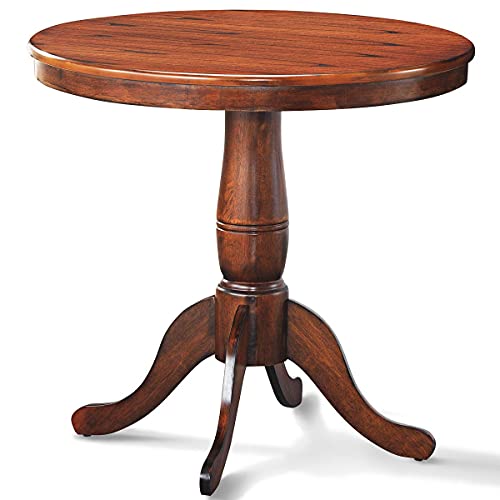
GIANTEX Round Dining Table for 2-4 People, 32" D X 30" H Wooden Kitchen Table with Spacious Table Top, Pedestal Base, Leisure End Tables for Bar, Kitchen, Dining Room, Restaurant, Walnut
Check price on Amazon
VINGLI Round Dining Table, 39.4" Tulip Table for 4, Walnut | Thickened Tabletop, Metal Pedestal, Mid Century Modern, Bistro Table for Dining Room, Kitchen,Living Room,Cafe, Easy Assembly
Check price on Amazon
MECHYIN Round Table for 2-4,31.5" Small Fluted Kitchen Table with Pedestal Base,Wood DinnerTable for Apartment,Restaurant,Kitchen
Check price on Amazon
East West Furniture EMT-OAK-TP Eden Dining Room Table - a Round kitchen Table Top with Pedestal Base, 30x30 Inch, Oak
Check price on Amazon
DM Furniture 47" Round Dining Table with Wooden Pedestal Base, Reclaimed Pine Wood Dinner Table for 4, Heavy Duty Pedestal Table for Kitchen/Dining Room/Living Room/Restaurant, Walnut
Check price on AmazonFrequently Asked Questions
What is the main advantage of a pedestal base on a small dining table?
The main advantage is unobstructed legroom and flexible chair placement. Without four corner legs, chairs can be positioned on any side, and people seated at the table have more room to move. On a small table, this makes the seating area feel more comfortable and adaptable.
How many people can a small wood pedestal dining table seat?
Most small pedestal tables seat two to four people. A 24–30 inch round or square top typically seats two, while a 36–42 inch round top can seat four. The exact capacity depends on the top size and the width of the chairs used.
Which wood species is best for a compact pedestal table?
Oak and walnut are strong choices for daily use. Oak is durable and widely available, while walnut offers a richer tone and smooth grain. Pine and mango wood are common in rustic styles but are softer, so they benefit from pads and careful use. Teak is a good option for humid climates or sunlit spots.
How much clearance do I need around a small pedestal table?
Plan for about 30 inches of clearance on sides where chairs are pulled out, and at least 36 inches on walkway sides. The pedestal base removes corner legs, but you still need room for chairs, serving, and foot traffic.
Are pedestal tables stable enough for everyday family use?
Yes, when the base is appropriately sized for the top. A wide spread foot or weighted base improves stability. Check the connection between the column and the top, and tighten the hardware periodically. On uneven floors, leveling glides help the table sit flat.
Can I use a small pedestal table in an open-plan space?
Yes. A round pedestal table often works well in open-plan layouts because it has no sharp corners and creates a clear visual center. A pendant light above the table can further define the dining zone without adding walls or partitions.
Find the Right Compact Pedestal Table for Your Space
Use the recommended table section above to compare small wood pedestal dining tables by base style, wood species, and seating capacity. Whether you need a two-person breakfast nook table or a four-person compact dining table, the right pedestal design can make a small room feel intentional and comfortable.
View Recommended Tables