
Fluted Dining Table Base: The Complete Guide
Everything you need to know about fluted and ribbed dining table bases — design styles, materials, sizing, stability, care, and how to choose the right base for your dining room.
Recommended Fluted Base Dining Tables
⚠️ AFFILIATE DISCLOSURE: This website contains affiliate links. As an affiliate Associate, we earn from qualifying purchases. If you make a purchase through these links, we may receive a small commission at no additional cost to you. Read our full affiliate policy.

41 in-78 in Extendable Dining Room Table for 4-8, Round Expandable Kitchen Table with Fluted Base, Modern Farmhouse Oval Dinner Tables for Dining Room Kitchen Living Room (Walnut)
Check price on Amazon
Tribesigns 47.24" Black Round Dining Table for 4-6 People | Modern Fluted MDF + Metal Base Kitchen Table, Sturdy Circle Dining Room Furniture, Easy Assembly, Black
Check price on Amazon
MECHYIN Round Table for 2-4,31.5" Small Fluted Kitchen Table with Pedestal Base,Wood DinnerTable for Apartment,Restaurant,Kitchen
Check price on Amazon
T4TREAM 47" Fluted Round Dining Table for 4-6, Mid-Century Modern Kitchen Table with Thickened Edge & Cylindrical Base for Dining Room, Kitchen, Living Room,Natural Oak(Table Only)
Check price on Amazon
40" Round Dining Table, Natural Wood Fluted Concrete Pedestal Base for 3-4 | Modern Farmhouse Kitchen Table with stable thick frame, elegant timeless classic look matches all home interior styles
Check price on Amazon
VASAGLE 47.2" Round Dining Table for 4-6 People, Fluted Kitchen Table | Mid-Century Modern, with Pedestal Base and 2-Tier Hidden Storage, Tambour Design, MIRIANA Collection UKDT028K101
Check price on Amazon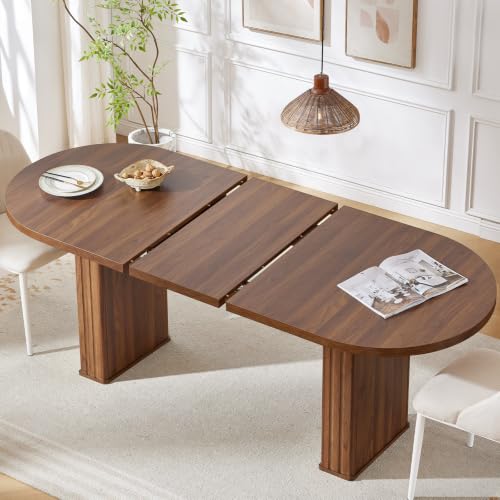
YUFAM 63-79 Inch Extendable Dining Table for 4-8 Oval Wood with Fluted Base | Thickened Table Legs Expandable Dinning Tables Modern Farmhouse Mesas de Comedor for Dining Room Kitchen Living Room
Check price on Amazon
Avenomora Extendable Natural Dining Table, 39.3-70.8", Fluted Pedestal Base | Modern Convertible Dining Table With Double-Pedestal Base and Rounded Edges for Kitchen, Flexible Space-Saving Design
Check price on AmazonWhat Is a Fluted Dining Table Base?
A fluted dining table base is a pedestal, column, or leg structure decorated with vertical grooves — also called flutes or ribs — running along its length. The result is a sculptural, textured base that reads as both architectural and decorative. The technique originates in classical architecture, where fluting appeared on columns and pilasters, and it has been adapted for furniture in Art Deco, mid-century modern, and contemporary interiors.
Unlike a plain rectangular or turned leg, a fluted base draws the eye downward and adds rhythm to the table's silhouette. Because the grooves create shadows and highlights, the base can look more substantial without needing extra bulk. Many buyers choose fluted bases when they want a dining table that feels designed rather than purely functional.
Fluting can be applied to a single central pedestal, a pair of columns under a rectangular top, a trestle-style base, or even individual legs. The term is sometimes used interchangeably with "ribbed," "reeded," or "channeled," though the exact profile and spacing vary by manufacturer. If you are researching different base constructions, our guide to modern dining table legs explains how leg profiles affect both style and stability.
Why Choose a Fluted Base for Your Dining Table
Fluted bases have grown in popularity because they solve several design problems at once. They add visual interest without overwhelming the room, they work across multiple interior styles, and the grooves help conceal minor scuffs and fingerprints that would stand out on a smooth surface.
- Visual interest without clutter: The vertical rhythm adds texture while keeping the overall shape simple.
- Hides wear: Small scratches and smudges settle into the grooves less visibly than on a flat panel.
- Style flexibility: Works in modern, transitional, Art Deco, and even farmhouse-inspired dining rooms.
- Perceived quality: Fluting usually signals a more considered construction than a plain slab base.
- Design focal point: A fluted pedestal can anchor a dining room without the need for heavy decorative pieces.
Design note: Fluted bases are often paired with stone or glass tops to create contrast. A ribbed wood pedestal under a marble top, for example, combines warmth with a crisp surface. If you are exploring stone options, our large quartz dining table guide covers durability and care considerations.
Fluted Base Design Styles
Fluting is not a single look. The width, depth, spacing, and finish of the grooves change the character of the base significantly. Below are the most common styles you will encounter when shopping.
1. Classic Narrow Fluting
Thin, closely spaced grooves that resemble classical column fluting. This style feels formal and works well with traditional, transitional, and neoclassical dining rooms. It is often paired with turned or tapered pedestals and polished or painted finishes.
2. Wide Ribbed Fluting
Broader, deeper grooves that create a bolder, more contemporary look. Wide ribbing is common in modern and Art Deco inspired tables. It reads as a statement and pairs well with thick tabletops and metallic or matte finishes.
3. Sculptural / Organic Fluting
Irregular or curved flutes that follow the shape of the base rather than running in straight lines. This style is often seen in premium and luxury furniture, where the base is carved or molded to create a flowing, organic form. It requires more skilled construction and is typically found in higher-tier pieces.
4. Fluted Trestle Base
A trestle base with fluted vertical supports. This is a practical option for rectangular tables because it leaves more legroom at the ends and distributes weight across two supports. Fluted trestle bases often appear in farmhouse and modern rustic designs.
5. Fluted Column Legs
Instead of a central pedestal, the table uses four fluted column legs. This style suits square and rectangular tops and offers a more traditional furniture silhouette. The fluting is usually narrower than on a pedestal base.
If you are still deciding between base types, the floating dining table guide explores how hidden supports and pedestal designs change the visual weight of a table, which can help you compare fluted and non-fluted options.
Fluted Base Materials & Construction
The material of a fluted base affects durability, weight, maintenance, and how the flutes are formed. Here are the main categories you will find in the market.
Solid Wood
Solid wood bases are carved, milled, or assembled with fluted profiles. Oak, walnut, ash, and beech are common choices because they hold detail well. Solid wood can be repaired and refinished, but it is sensitive to humidity and can crack if poorly sealed. A solid wood fluted base is generally a mid-range to premium choice depending on the species and joinery.
Engineered Wood with Veneer
MDF or plywood cores with wood veneer are used to create fluted profiles at a lower weight and often a lower tier. The fluting may be cut into the veneered surface or formed with applied moldings. These bases are stable and consistent, but they are less repairable than solid wood and can be damaged by moisture if the edges are not sealed.
Metal
Steel or aluminum can be formed into fluted or ribbed profiles, often finished with powder coating or brushed metal. Metal fluted bases are heavy-duty and suit modern and industrial interiors. They are less prone to humidity damage but can scratch or dent. Metal bases are typically found in commercial-grade or high-end contemporary designs.
Composite and Resin
Molded composite materials allow for complex sculptural fluting at a lower weight. These bases are often used in entry-level and mid-tier furniture. They are moisture-resistant but may not have the same tactile quality as wood or metal. Check the manufacturer's warranty and care instructions carefully.
| Material | Typical Tier | Best For | Key Consideration |
|---|---|---|---|
| Solid Wood | Premium | Traditional, transitional, heirloom-style tables | Needs humidity control and periodic refinishing |
| Engineered Wood + Veneer | Mid-Range | Modern and contemporary interiors | Consistent look; limited repairability |
| Metal | Premium | Industrial, modern, high-traffic dining rooms | Watch for scratches and dents |
| Composite / Resin | Entry-Level | Occasional-use and starter dining spaces | Check weight limits and finish durability |
For a deeper look at how base construction affects the overall table, see our guide to solid oak dining table tops, which explains how top thickness and base support work together.
Fluted Base Shapes & Sizing
Fluted bases come in several shapes, and the shape affects both stability and seating comfort. The most common configurations are:
- Single pedestal: One central fluted column with a spreading foot. Best for round and square tops up to about 60 inches in diameter.
- Double pedestal: Two fluted columns under a rectangular or oval top. Common for tables seating six to ten people.
- Fluted trestle: Two or more fluted vertical supports connected by a stretcher. Good for long rectangular tables and benches.
- Four fluted legs: Individual fluted legs at each corner. Suits square and rectangular tops and traditional layouts.
When sizing a fluted base, pay attention to the base footprint rather than just the height. A wider footprint improves stability, especially for pedestal tables. As a rule of thumb, the base footprint should be at least half the width of the tabletop for round tables, and double pedestals should be spaced so the tabletop overhang does not exceed about one-third of the top's length on each end. Our 8-chair dining table size guide provides detailed measurements that help you match base dimensions to seating capacity.
Stability & Weight Capacity
Fluting itself does not weaken a base, but the way the base is constructed matters. A fluted pedestal with a hollow core can be lighter and less stable than a solid or reinforced column. When evaluating stability, look for:
- Reinforced mounting plate: A metal plate or cross-brace where the base meets the tabletop helps prevent wobble.
- Leveling feet: Adjustable feet compensate for uneven floors and reduce rocking.
- Wide foot or spreader: A fluted pedestal should have a sufficiently wide foot to resist tipping.
- Internal structure: Solid wood or metal cores are more stable than hollow composite shells.
- Weight distribution: Double pedestals and trestle bases distribute weight better than a single narrow column under a long top.
If you are concerned about a wobbly table, our wobbly dining table fix guide walks through common causes and adjustments, including base-related issues.
Stability tip: A fluted base with a heavy stone top needs a robust mounting system. Confirm that the manufacturer's base is rated for the top's weight, and use a professional installer for large stone tops.
Matching Tabletop Shapes to a Fluted Base
The relationship between the base and the top determines whether a table looks balanced. Here are practical pairings:
- Round top + single fluted pedestal: A classic pairing. The pedestal's radial symmetry suits a round top and keeps legroom open.
- Oval top + double fluted pedestals: The two supports follow the long axis of the oval and provide stable support.
- Rectangular top + fluted trestle or double pedestal: Best for longer tables; keeps the ends clear for seating.
- Square top + single wide fluted base or four fluted legs: A single base can work if the top is not too large; four legs are more traditional.
- Glass top + fluted metal or wood base: The contrast between transparent top and textured base is a strong contemporary look.
If you are considering an oval top, our oval dining table top guide covers proportions and base compatibility in more detail.
Care & Maintenance for Fluted Bases
Fluted bases collect dust in the grooves, so routine cleaning is slightly more involved than with a flat surface. The good news is that the grooves also hide minor wear, so the base can look good for longer between deep cleans.
Routine Cleaning
- Dust weekly with a soft microfiber cloth, working along the direction of the flutes.
- Use a vacuum with a brush attachment on low suction to lift dust from deep grooves.
- For painted or lacquered finishes, wipe with a slightly damp cloth and mild soap, then dry immediately.
- Avoid abrasive pads, scouring powders, and solvent-heavy cleaners that can dull the finish.
Wood-Specific Care
- Reapply a suitable furniture oil or wax occasionally, following the manufacturer's guidance.
- Keep the table away from direct heat sources and prolonged sunlight to reduce drying and fading.
- Use felt pads under chairs and avoid dragging items across the base.
Metal-Specific Care
- Wipe with a damp cloth and dry to prevent water spots.
- Touch up scratches with a matching paint or use a metal polish suitable for the finish.
For broader maintenance routines, our dining table routine upkeep guide covers cleaning schedules for different materials.
Fluted Dining Table Base Buying Checklist
Before you commit to a fluted base table, run through this checklist to avoid common mistakes.
- Measure your space: Confirm the table's footprint plus at least 36 inches of clearance around the table for chairs and walkways. Our dining table space planning guide explains the measurements in detail.
- Decide on top shape and size: The base should suit the top's shape and support its weight. Use our dining table size chart for reference.
- Check the base material: Solid wood, metal, veneer, or composite each has trade-offs in durability and maintenance.
- Inspect the fluting quality: Grooves should be evenly spaced, smooth, and consistently finished. Rough or uneven fluting is a sign of lower manufacturing quality.
- Verify stability features: Look for leveling feet, a reinforced mounting plate, and a sufficiently wide base footprint.
- Confirm the finish: Matte, satin, gloss, oiled, or painted — choose a finish that matches your care routine and the room's style.
- Review assembly and warranty: Check whether the base arrives assembled or flat-packed, and read the warranty terms for structural components.
- Consider chair clearance: A pedestal base generally offers better legroom than corner legs, which matters if you plan to seat guests on all sides.
If you are still narrowing down your table style, the dining table types hub compares pedestal, trestle, and leg tables across seating and space requirements.
Frequently Asked Questions
What is a fluted dining table base?
A fluted dining table base features vertical grooves or ribs carved into the pedestal or legs, creating a textured, sculptural appearance. The fluting adds visual interest, hides scratches and fingerprints, and suits modern, transitional, and Art Deco inspired interiors.
Are fluted dining table bases stable and durable?
Yes. Most fluted bases use solid wood, engineered wood, or metal cores. A well-built pedestal or trestle base with fluting can support heavy tabletops. Stability depends on the base footprint, internal reinforcement, and how the top is attached. Mid-range and premium fluted bases typically include leveling feet and reinforced mounting plates.
How do I clean a fluted dining table base?
Dust the grooves weekly with a soft microfiber cloth or a vacuum brush attachment. For painted or lacquered finishes, wipe with a slightly damp cloth and mild soap, then dry immediately. For oiled wood, reapply a suitable wood oil occasionally. Avoid abrasive cleaners that can dull the finish inside the flutes.
What tabletop shapes work best with a fluted base?
Round and oval tops pair naturally with a single fluted pedestal. Rectangular tops work well with double fluted pedestals, fluted trestle bases, or fluted column legs. Square tops often suit a single wide fluted base. Consider the top's overhang and visual weight to keep the table balanced.
Can a fluted base be repaired or refinished?
Wood fluted bases can usually be sanded and refinished, though the grooves require careful hand sanding. Minor dents can be filled with wood filler and touched up. Metal fluted bases may be repainted or powder-coated. Always test any repair method on a hidden area first and consult a professional for high-end or antique pieces.
Find Your Fluted Base Dining Table
Explore our recommended fluted base dining tables and compare styles, materials, and features. Read full details and check availability through our curated listings.
Explore Fluted Base Tables