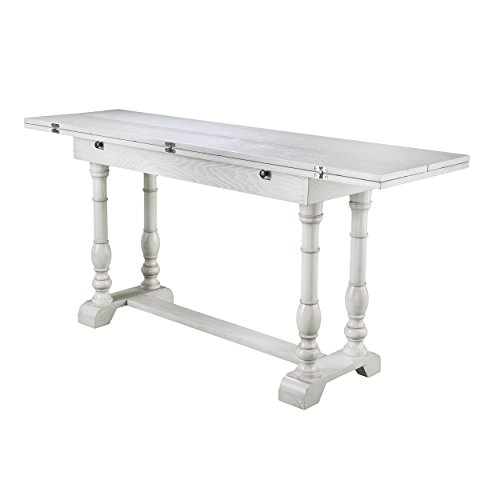
Flip Up Dining Table: The Complete Space-Saving Guide
Everything you need to know about flip up dining tables, from how the folding mechanism works to choosing the right material, size, and mounting style for compact kitchens, studios, and small dining rooms.
EXPLORE FLIP UP TABLESWhy flip up dining tables matter: In a compact home, floor space is the most limited resource. A flip up dining table solves this by letting you fold the tabletop away when it is not in use, turning a dining area back into open floor within seconds. This guide walks you through the mechanism, the materials that hold up over time, and the practical considerations that separate a good flip up table from a frustrating one, so you can decide with confidence before you buy.
What Is a Flip Up Dining Table?
A flip up dining table is a folding table whose tabletop, or one or more of its leaves, can be flipped up and locked into place for dining, then folded down or lifted against a wall when the meal is over. The mechanism relies on hinges, brackets, or a folding leg system that supports the tabletop in both the open and closed positions.
Unlike a fixed dining table, a flip up table is designed around the idea of reclaiming space. When folded, the table occupies a fraction of its open footprint, which makes it a natural fit for studio apartments, narrow kitchens, balconies, and multi-purpose rooms where the dining area doubles as a workspace or walkway. If you are weighing this format against other flexible designs, our butterfly dining room table guide explains how butterfly leaves differ from a true flip up mechanism.
Flip up tables come in two broad configurations: freestanding folding tables with legs that collapse, and wall-mounted tables that are anchored to a wall or cabinet and swing or fold upward when not in use. Both deliver the same core benefit, but they suit different rooms and installation constraints.
How the Flip Up Mechanism Works
Hinged Leaf System
The tabletop is split into a fixed base and one or two hinged leaves. When you need seating, the leaves flip up and rest on brackets or folding legs. When folded down, the leaves hang vertically against the frame, reducing the table's depth to a narrow strip.
Wall-Mounted Flip Design
A wall-mounted flip up table is fixed to a wall or cabinet via a bracket. The tabletop folds flat against the wall when closed and is held horizontal by a support arm or leg when open. This design is ideal for kitchens where floor space is at a premium.
Folding Leg Frames
Some flip up tables use a leg frame that folds inward under the tabletop, letting the entire table collapse to a slim profile. These are usually freestanding and can be moved between rooms, which adds flexibility for renters.
Locking Brackets
Quality flip up tables use locking brackets or spring-loaded hinges that hold the tabletop firmly in the open position. This is the single most important component for stability, and it is where entry-level and premium tables most visibly differ.
Benefits of a Flip Up Dining Table
Reclaims Floor Space
The most direct benefit. A folded flip up table clears the floor for walking, cleaning, or other furniture, which matters in rooms under a hundred square feet.
Flexible Seating
Many flip up designs seat two comfortably when open and disappear when closed, letting you host a quick meal without committing permanent floor area to a table.
Multi-Purpose Rooms
In a studio or open-plan apartment, the dining table can double as a desk or prep surface and fold away when the room needs to serve another purpose.
Renter-Friendly Options
Freestanding folding models require no wall drilling, making them practical for renters who cannot modify their walls.
Easy to Store
Folded tables can be tucked behind a door, into a closet, or against a wall, which is useful for seasonal or occasional dining needs.
Simple to Relocate
Freestanding flip up tables move between the kitchen, balcony, and living room without disassembly, unlike heavy fixed tables.
Flip Up vs. Other Space-Saving Table Types
| Table Type | How It Saves Space | Best For |
|---|---|---|
| Flip Up Dining Table | Tabletop folds up or down against the frame or wall | Compact kitchens, studios, balconies |
| Drop Leaf Table | Side leaves drop vertically to narrow the table | Rooms that need occasional extra seating |
| Extendable Table | Central or end leaves extend the length | Fixed dining rooms that host larger groups |
| Nesting Tables | Smaller tables tuck under larger ones | Flexible seating in open-plan spaces |
If you are comparing a flip up model against a leaf-based design, a natural wood oval dining table offers a more traditional silhouette with a softer edge profile, while a round extendable dining table for four to six is a good middle ground when you need to seat guests without giving up a compact footprint.
Materials and Construction to Look For
Tabletop Materials
Flip up tables are frequently handled, folded, and unfolded, so the tabletop material needs to tolerate repeated movement. Solid wood and engineered wood with a durable laminate finish are the most common choices. A stone-colour dining table finish can give a flip up table a more contemporary look while hiding minor scuffs, which is useful in a surface that gets touched every day.
Glass tops look sleek and are easy to wipe down, but they add weight to a folding mechanism and require careful handling during folding. If glass is your preference, check that the hinges are rated for the extra load. Our glass and wood dining table guide covers how the two materials combine in folding and fixed designs.
Hinges, Brackets, and Frames
The hardware is where a flip up table earns or loses its reliability. Look for reinforced steel hinges, locking brackets, and a frame that does not flex when the table is loaded. Entry-level flip up tables often use lighter hinges that are fine for occasional meals, while mid-range and premium models use heavier-duty hardware rated for daily use. This is the clearest dividing line between quality tiers in this category.
Wall-mounted flip up tables also depend on the mounting bracket and the wall itself. A bracket anchored into studs or a solid wall will feel far more stable than one fixed into drywall with light anchors, so factor the installation method into your decision.
Leg and Support Systems
Folding legs should lock firmly in the open position and fold without pinching. A spindle leg dining table shows how leg design affects both stability and visual style, and the same principles apply to folding frames: thicker legs and cross-bracing reduce wobble. For flip up tables, a single central support or a pair of folding legs is typical, and the support should sit flush with the floor when open.
Sizing a Flip Up Dining Table for Your Space
Sizing a flip up table is a balance between the seating you need when open and the clearance you need when closed. As a general rule, allow at least 24 inches of table width per seated person along the long edge, and leave 30 to 36 inches of clearance between the table edge and any wall or furniture so chairs can be pulled out comfortably.
- Two-seater flip up tables typically work best in kitchens under 100 square feet, where the table folds against a wall or cabinet.
- Four-seater folding tables suit open-plan apartments where the dining area doubles as a workspace during the day.
- Wall-mounted flip up tables are usually sized to seat one or two people and are ideal for narrow galley kitchens.
- Balcony and patio flip up tables should account for wind and weather; a six-seater aluminum outdoor dining table shows how weather-resistant materials are handled in larger outdoor formats.
If you are planning an outdoor or semi-outdoor setup, an 84-inch outdoor dining table gives a sense of how length scales with seating in open-air spaces, and a marble-top counter-height dining table illustrates how height affects the seating experience in compact settings.
Installation and Placement Tips
Choose the Wall Carefully
Wall-mounted flip up tables should be fixed to a solid wall or into studs. Avoid hollow drywall unless you use heavy-duty anchors rated for the table's weight when loaded.
Mind the Swing Path
Check that the table can fold up without hitting a cabinet door, window, or light fixture. The folded position should leave the wall clear.
Coordinate With Seating
Folding chairs or benches that tuck under the table when closed keep the footprint small. A 40-inch round dining table with leaf is a useful reference for how seating wraps around a compact table.
Plan for Lighting
If the folded table sits against a wall, position lighting so the open table is well lit without a pendant hanging in the swing path.
Care and Maintenance
Flip up tables need slightly more attention than fixed tables because of their moving parts. Wipe the tabletop after meals, and clean the hinge area periodically to prevent crumbs and grit from working into the mechanism. Lubricate hinges and locking brackets once or twice a year with a light household lubricant, and check the mounting screws on wall-mounted models to make sure they remain tight.
If the tabletop is solid wood, re-oil or re-wax it according to the manufacturer's schedule to keep the finish resistant to moisture. Laminate and glass tops are simpler to maintain but should still be cleaned with non-abrasive products to avoid dulling the surface. Storing the table folded for long periods is fine, but exercise the mechanism occasionally so the hinges do not seize.
Common Mistakes to Avoid
- Overlooking the hardware quality. A beautiful tabletop on weak hinges will wobble and wear out. Prioritize the mechanism.
- Underestimating clearance. Measure the open footprint plus chair pull-out space before committing to a size.
- Ignoring the wall type. Wall-mounted tables need a solid anchor point; drywall alone is rarely enough.
- Choosing weight over ease. A heavy flip up table is harder to fold daily. Match the material to how often you will move it.
- Skipping the fold test. If possible, check that the folding action is smooth and the locked position is rigid before buying.
Ready to Compare Flip Up Dining Tables?
Browse our curated selection of flip up and folding dining tables, organized by tier and use case, so you can find the right balance of stability, size, and folding convenience for your space.
View Flip Up Table OptionsRecommended Flip Up Dining Tables
⚠️ AFFILIATE DISCLOSURE: This website contains affiliate links. As an affiliate Associate, we earn from qualifying purchases. If you make a purchase through these links, we may receive a small commission at no additional cost to you. Read our full affiliate policy.

Solid Wood Flip-Top Folding Console to Dining Convertible Table
Check price on Amazon
HZLCMPY Wall Mounted Folding Table, Flip-up Dining Table Wood Drop-Leaf Desk with Support Legs, L29 x W17.7 x H29.5 Inch, Kitchen Laundry Room Restaurant Office Wall Table (Black)
Check price on Amazon
CHOEZON Folding Dining Table, Movable Dining Table, Expandable Kitchen Table, Versatile Table with 6 Wheels and 2-Tier Shelf, for Dining, Living Room, Apartment, Rustic Brown TCZ01BF
Check price on Amazon
MECHYIN 55"-71" Extendable Dining Table for 4-8 with Built-in Flip Leaf | Space‑Saving Modern Rectangle Dining Table, Built‑in Flip Leaf, Sturdy Metal Legs, for Kitchen & Dining Room,Small Apartments
Check price on Amazon
DONGMUWUJEE Solid Wood Small Dining Table for 2-6, 23.6"L-47.2"L Expandable Kitchen Table, Designed for Small Spaces, Easy Assembly, Suitable for Kitchen, Dining Room, Living Room, Apartment (Walnut)
Check price on Amazon
PVUECHADEA Wall Mounted Folding Table,Flip-up Dining Table, Fold Down Wall Mount with Support Legs,wall-Mounted Kitchen Desk,Floating Drop Leaf Desk for Office Kitchen Living Room
Check price on Amazon