
Spindle Leg Dining Table: Complete Buying & Styling Guide
Learn how turned spindle legs shape durability, style, and comfort at the table. A practical guide for anyone researching this classic silhouette before making a purchase decision.
Start With The Buying CriteriaWhy this guide exists: Spindle leg dining tables are one of the most recognizable silhouettes in furniture, yet the details that separate a sturdy, long-lasting piece from a decorative but fragile one are rarely explained. If you already know you want a turned-leg table and are now comparing options, this guide breaks down construction, materials, sizing, and styling so you can evaluate any listing with confidence.
What Defines a Spindle Leg Dining Table
A spindle leg is a table leg shaped on a lathe into a sequence of rounded bulges and narrow necks. The result is a leg that reads as decorative rather than structural, even though it performs both roles. Spindle legs appear across many furniture eras, from early cottage and farmhouse joinery to modern reinterpretations, which is why the term describes a leg profile rather than a single style.
Because the profile is turned rather than cut square, spindle legs introduce rhythm along the table's edge. That visual rhythm is the main reason people choose them: the table looks lighter and more crafted than a plain block-leg design. If you are weighing this silhouette against more conventional options, our overview of traditional dining tables explains how spindle profiles fit into the broader family of classic designs.
Spindle Leg Styles You Will Encounter
Not every spindle table looks the same. The profile, spacing, and taper of the turning vary widely, and each variation changes both the look and the structural behavior of the table.
Classic Turned Spindle
Evenly spaced beads and coves along the full leg. The most traditional profile, common in farmhouse and cottage settings.
Tapered Spindle
Wider at the top, narrowing toward the floor. Feels more refined and suits transitional and modern-traditional rooms.
Barley Twist
A spiraled turning that reads as ornate. Striking as a focal point but harder to clean and less common in everyday tables.
Bobbin / Beaded
Stacked rounded beads with pronounced necks. Highly decorative and best suited to lighter-use dining spaces.
Half-Spindle Apron
Spindle detail appears on the apron or stretcher rather than the leg itself, giving a lighter visual effect with simpler legs.
Modern Reinterpretation
Subtle turning on an otherwise clean leg. Bridges traditional character with contemporary interiors.
If you want a table that leans into character without full ornamentation, a modern reinterpretation is often the safest long-term choice. For a broader look at how these tables fit current interiors, see our guide to trendy dining tables.
Construction: Where Spindle Tables Succeed or Fail
The narrow necks between turned sections are the defining feature and the defining weakness of a spindle leg. A well-built table compensates for this with material choice and joinery. A poorly built one does not, and the result is wobble, splitting, or legs that loosen over time.
Evaluate any spindle table against these construction points:
- Leg thickness at the necks. The narrowest point of the turning should still feel substantial. Very thin necks look elegant but are the first place to crack under lateral load.
- Apron depth and joinery. A deeper apron braces the legs. Look for mortise-and-tenon or doweled joints rather than screws driven into end grain.
- Stretchers or corner blocks. Lower stretchers or corner blocks dramatically improve rigidity on spindle-leg designs, especially on longer tables.
- Grain orientation. On solid wood legs, the grain should run continuously along the length of the leg. Short-grain sections at the necks are a failure point.
- Finish coverage inside the turnings. Uneven finish inside the coves lets moisture in and causes seasonal movement that stresses the necks.
Best Wood Types for Turned Legs
Turning wood on a lathe demands a species that holds fine detail without tearing. Hardwoods with tight, interlocked grain produce crisp spindle profiles; softer or open-grained woods tend to fuzz or chip at the narrowest points.
| Wood | Turning Quality | Durability | Best For |
|---|---|---|---|
| Oak | Holds detail well, prominent grain | High | Farmhouse and cottage looks |
| Maple | Excellent, very clean cuts | High | Painted or natural fine-detail tables |
| Walnut | Excellent, warm tone | High | Premium and high-end tier tables |
| Cherry | Very good, darkens over time | Medium-high | Traditional and transitional rooms |
| Pine | Fair, prone to denting | Medium | Entry-level and starter tier tables |
| Rubberwood | Good, uniform | Medium | Mid-range and essential tier tables |
Solid hardwood legs are the benchmark. Veneered and engineered legs can look convincing, but check that the turning is cut from solid stock rather than shaped from a hollow core, because the latter will not survive the same lateral stress. For a broader comparison of species, see our guide to traditional dining tables.
Buying Criteria: A Practical Checklist
When you are comparing spindle leg dining tables, work through these criteria in order. Each one filters out tables that will not hold up in daily use.
- Confirm the leg is solid. Ask whether the spindle is turned from solid stock or assembled. Solid turned legs are the standard for durable construction.
- Check the apron and bracing. Deeper aprons and stretchers are the difference between a table that feels planted and one that wobbles.
- Match the height to your chairs. Standard dining table height is around 30 inches, and spindle tables follow that convention. Our guide to the standard height of a dining table explains how to verify compatibility with your seating.
- Confirm seating capacity against room size. Spindle tables are often visually lighter, which makes them forgiving in compact rooms. A two-seater dining table and chairs set is a natural fit for a breakfast nook.
- Inspect the finish type. Oil and wax finishes feel warmer and are easier to spot-repair; lacquer and polyurethane finishes resist spills better but are harder to touch up on turned profiles.
- Confirm the leg profile suits your cleaning routine. Deep coves collect dust. If you prefer minimal upkeep, choose a simpler turning.
Sizing and Seating for Spindle Tables
Spindle legs are used on every common table shape, but the shape changes how the legs read and how many people fit comfortably.
Rectangular spindle tables are the most common. They suit four to eight diners and pair naturally with spindle-back chairs. Keep at least 24 inches of table run per person and allow roughly 36 inches of clearance behind chairs for comfortable movement.
Round and square spindle tables are excellent for compact dining areas because the turned legs follow the curve of the tabletop and reinforce a cohesive silhouette. A square bistro dining table with slender spindle legs works well in kitchens and small dining nooks, while a square farmhouse dining table leans into the rustic character that spindle profiles are known for.
Glass-topped spindle tables are a specific case worth noting. Glass shows the legs clearly, so the turning becomes the visual focus. A square glass dining table and chairs set can look striking, but confirm the base is heavy enough to stabilize the top, since glass offers no structural bracing of its own.
Outdoor spindle tables require a different material conversation. Turned wood legs are vulnerable outdoors, so most outdoor spindle-style tables use metal or composite turnings. If you are furnishing a patio or garden, a steel outdoor dining table or a square outdoor dining table for eight with an umbrella hole is a more practical starting point.
Stability, Weight, and Everyday Use
Spindle tables are frequently described as delicate, but that is a visual impression rather than a structural one. A solid hardwood spindle table with proper bracing is stable and long-lasting. The real considerations are practical:
- Weight distribution. Turned legs taper, so the footprint at floor level is smaller than the tabletop. On soft flooring, use felt pads to distribute load and prevent indentation.
- Chair collisions. Spindle legs are more vulnerable to chair-knock than block legs. Choose chairs with a compact seat depth and keep a consistent gap around the table.
- Moving the table. Never drag a spindle table. Lift it or slide it on protective pads, because lateral force is exactly what stresses the narrow necks.
- Humidity control. Solid turned legs respond to seasonal moisture changes. Keeping indoor humidity stable reduces the risk of splitting at the necks.
Care and Maintenance on Turned Profiles
Maintenance is where spindle tables differ most from simpler designs. The coves and beads trap dust, and cleaning them requires a slightly different routine.
- Dust with a soft brush. A round brush or microfiber cloth wrapped around the leg reaches into the coves without scratching the finish.
- Wipe, do not soak. A slightly damp cloth is fine, but standing moisture inside turnings is the leading cause of finish failure.
- Recondition the finish on schedule. Oil and wax finishes need periodic reapplication. Follow the manufacturer's guidance rather than a fixed calendar.
- Address scratches early. A scratch on a curved surface is harder to blend than on a flat one, so touch up promptly with a matching wax or finish stick.
- Protect from heat and sunlight. Turned legs finish unevenly if one side is exposed to direct sun, so rotate the table periodically in bright rooms.
Styling a Spindle Leg Table
Spindle legs carry visual weight of their own, so styling works best when the table's silhouette is allowed to lead. Keep centerpieces low and open, and avoid heavy, blocky table linens that hide the apron and legs. Our guide to styling a dining room table covers layering ideas that respect decorative leg profiles.
For chair pairing, spindle-back chairs create a matched traditional look, while simple upholstered chairs create contrast and make the table the focal point. Mixed seating, such as a bench on one side, works well with rectangular spindle tables and keeps the room feeling relaxed.
Spindle Leg Tables by Market Tier
Spindle tables appear at every tier of the market, and the differences between tiers are mostly about material and joinery rather than design.
| Tier | Typical Construction | Best For |
|---|---|---|
| Entry-level / starter tier | Softer woods or engineered legs, simpler joinery | Light-use dining rooms and short-term setups |
| Mid-range / essential tier | Solid hardwood legs, doweled and screwed joints | Everyday family dining |
| Premium / balanced tier | Solid hardwood, mortise-and-tenon joinery, stretchers | Daily use with long-term expectations |
| Luxury / top-tier | Select hardwoods, hand-turned profiles, fine finish work | Design-led interiors and heirloom use |
As a general rule, mid-range and premium spindle tables offer noticeably more rigid bracing and cleaner turning than entry-level models, which is where the difference in long-term satisfaction tends to appear.
Common Mistakes to Avoid
- Choosing a table purely on the look of the leg profile without checking apron depth and bracing.
- Assuming a lighter-looking table is automatically less sturdy; construction, not appearance, determines strength.
- Buying chairs that are too deep for the table's clearance, leading to constant leg contact.
- Using heavy tablecloths that hide the spindle detail you paid for.
- Ignoring humidity and temperature swings that stress solid turned legs.
Frequently Asked Questions
What is a spindle leg dining table?
A spindle leg dining table features legs turned on a lathe into a series of slender, rounded profiles connected by narrow necks. This creates a decorative, rhythmic silhouette associated with traditional, farmhouse, and cottage interiors.
Are spindle leg dining tables sturdy?
Yes. When built from solid hardwood with properly reinforced aprons and stretchers, spindle legs are strong. The narrow necks are the weakest points, so quality joinery and material choice matter more than on simple square-leg tables.
What wood works best for spindle legs?
Hardwoods such as oak, maple, walnut, and cherry hold fine turned detail best because they resist chipping at narrow necks. Softer woods like pine can work but tend to dent and wear faster on spindle profiles.
How do I clean a spindle leg dining table?
Dust the turned profiles with a soft brush or microfiber cloth, then wipe with a slightly damp cloth. Avoid soaking the narrow necks, and reapply wax or oil according to the finish type to keep the wood conditioned.
Can spindle leg tables fit small dining rooms?
Yes. Their visual lightness makes them an excellent choice for compact spaces. A round or small rectangular spindle table with slim proportions can seat four comfortably without visually crowding the room.
Recommended Spindle Leg Dining Tables
⚠️ AFFILIATE DISCLOSURE: This website contains affiliate links. As an affiliate Associate, we earn from qualifying purchases. If you make a purchase through these links, we may receive a small commission at no additional cost to you. Read our full affiliate policy.

Jocoevol Round Dining Table for 4,Kitchen Dining Room Circle Dinner Pedestal Table,Space Saving Wood Kitchen & Dining Room Furniture (Vintage, 46In)
Check price on Amazon
VASAGLE 47-Inch Round Dining Table for 4-6 People, Pedestal Kitchen Table | Mid-Century Modern, with Wooden Pedestal Base and 3-Height Adjustable Storage Shelf, Thickened Tabletop, Chestnut Brown
Check price on Amazon
DUMOS Dining Table Set for Kitchen, Apartment and Corner Grey 3 Pack | Space-Saving Ideal, Easy Clean, Scratch Resistant, Robust Iron Frame, Anti-slip Feet Pad, Living Room, Patio
Check price on Amazon
Garvee 71" Wood Dining Table for 2/4/6/8, Large Rectangular Kitchen Table | Anti-Collision Curved Corner Dinner Table with Recessed Footrest for Dining Room, Study & Home Office, Walnut Brown & Black
Check price on Amazon
Memobarco 47.2" Dining Table for 4-6 People, Rectangular Kitchen Table | Modern Wooden Dining Room Table with Open Storage Shelf and Rounded Corners for Kitchen Living Room (Walnut)
Check price on Amazon
PeacefulHues 71''Industrial Dining Table for 6-8 People,Large Kitchen Table | Rectangular Heavy Duty Kitchen Table with MDF Wood Top & Metal Legs, Large Dining Room Table, Table Only, Grey
Check price on Amazon
CHOEZON 47.2" Dining Table for 4-6 People, Kitchen Table, Rustic Brown | Kitchen Dining Table, Dining Room Table with Metal Legs, 4 Adjustable Feet and Footrest Bar for Kitchen, Dining Room TCZ14BF
Check price on Amazon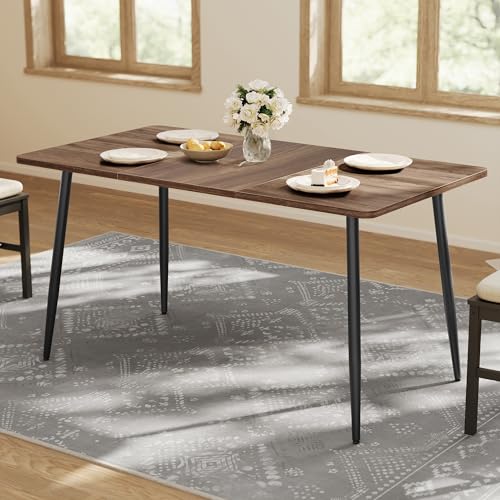
VASAGLE 55.1" Dining Table for 4-6 People, Modern Kitchen Table | Heat-Resistant Tabletop, Quick Assembly, for Dining Room, Natural Walnut and Ink Black, Island Collection UKDT100K02V2
Check price on AmazonReady to Choose Your Spindle Leg Table?
Review the construction checklist above, confirm your seating and room dimensions, then compare the recommended models to find the right fit for your dining space.
Compare Recommended Models