
Dining Table with Side Storage: Complete Buying Guide & Ideas
Maximize your dining space with smart storage. Learn how side-storage dining tables work, which designs suit your room, and how to choose a model that keeps clutter out of sight without sacrificing style.
Explore Storage DesignsWhy a dining table with side storage? If your dining area doubles as a workspace, homework station, or gathering spot, a table with built-in side storage transforms surface clutter into organized, accessible compartments. This guide walks you through every design variation, material consideration, and practical selection criterion so you can choose with confidence.
A dining table with side storage is more than a piece of furniture — it is a space-planning solution. Instead of letting napkins, cutlery, board games, or remote controls pile up on the tabletop, side storage compartments keep essentials within arm's reach while preserving a clean dining surface. For households with limited square footage, this dual-purpose approach can eliminate the need for a separate sideboard or cabinet.
The concept has evolved significantly. Early storage tables relied on simple drawers tucked beneath the apron. Today's designs integrate open cubbies, flip-top compartments, sliding bins, and even drop-leaf sections that conceal storage when the table is extended. Understanding these variations helps you match the table to your actual daily routine rather than a hypothetical one.
Before diving into specific designs, it helps to understand the broader landscape of dining table types and how storage models fit into it. Storage tables typically fall into three families: drawer-based designs, shelf or cubby designs, and hybrid models that combine both. Each family serves a different primary need, and choosing the wrong one often leads to a table that feels cramped rather than clever.
Key Benefits of Side-Storage Dining Tables
Clutter-Free Dining Surface
Everyday items move off the tabletop and into dedicated compartments. The result is a surface that stays ready for meals rather than becoming a temporary shelf for mail, keys, or chargers.
Space-Efficient Footprint
In compact dining rooms, side storage replaces a separate cabinet or shelving unit. The table occupies the same floor area while adding functional capacity — a genuine efficiency gain for small homes.
Improved Organization
Dedicated slots for cutlery, placemats, and table linens mean you spend less time searching and more time enjoying meals. Organized storage also makes it easier to reset the table between uses.
Multi-Functional Living
When the dining table doubles as a workspace or study area, side storage keeps work materials separate from dining items. This separation helps maintain boundaries between activities in open-plan rooms.
These benefits compound when the storage design matches your habits. A family that entertains frequently benefits most from quick-access open cubbies for napkins and serving tools. A household that uses the table for daily work benefits more from enclosed drawers that hide paperwork. The key is to identify which friction point matters most in your home before choosing a model.
It is also worth noting that storage tables pair naturally with other space-conscious choices. If you are furnishing a compact dining area, our guide to the small dining table with storage expands on complementary solutions, while the small dining table for 4 set covers seating configurations that work alongside storage features.
Types of Side Storage Designs
Drawer-Based Storage
Drawers built into the table apron or side panels provide enclosed, dust-free storage for cutlery, placemats, and small serving items. Models with soft-close runners feel more refined and last longer in daily use.
Drawer depth matters: shallow drawers suit flatware and linens, while deeper drawers accommodate board games or craft supplies. Consider whether the drawer opens toward the seating side or the walkway side.
Entry-level to premium tiersOpen Cubbies & Shelves
Open compartments beneath the tabletop or along the side panels offer instant access without moving parts. They suit baskets, books, and decorative items that you want visible and reachable.
Open storage demands tidiness — clutter is always on display. Baskets or fabric bins restore a clean look while keeping items grouped. This design works well in casual, farmhouse, or industrial settings.
Essential tier to mid-rangeFlip-Top & Hidden Compartments
Hidden compartments beneath a hinged or removable tabletop section conceal items completely. These designs appeal to anyone who wants storage without visual interruption.
Check the hinge quality and weight capacity — a flip-top section that holds a centerpiece needs sturdy hardware. This style suits formal dining rooms where aesthetics take priority.
Premium to luxury tiersDrop-Leaf with Storage
Drop-leaf tables with storage combine extension flexibility with hidden compartments. When the leaf is down, storage is accessible; when raised, the table expands for guests.
These models demand careful measurement — the leaf mechanism and storage cavity add depth. Review our drop-leaf dining table with chair storage guide for a deeper look at this hybrid category.
Mid-range to premium tiersEach design type carries trade-offs. Drawers offer cleanliness but add mechanical complexity and potential failure points. Open cubbies are simple and durable but require discipline to keep tidy. Hidden compartments preserve aesthetics but reduce accessibility. Drop-leaf hybrids maximize flexibility but demand more floor clearance.
For a broader comparison of how storage models fit alongside other table styles, the dining table with side storage reference page collects related configurations in one place. Meanwhile, households that prefer a bench-based arrangement should review the dining table bench with storage guide, since bench storage often complements table-side storage.
Materials & Construction Considerations
Storage adds structural demands that a plain tabletop does not impose. Drawers require reinforced aprons. Cubbies need rigid side panels. Flip-top mechanisms need precise joinery. The material choice therefore matters more than it might on a flat-top table.
Solid wood remains the most forgiving material for storage tables. It accepts screws and joinery hardware without splitting, and it can be refinished if wear appears around high-contact storage areas. Oak and walnut are common choices; both hold drawer runners well. Our solid oak dining table guide explains how oak performs under load and humidity changes.
Engineered wood with veneer offers a flatter surface for drawer fronts and consistent panel thickness for cubbies. Quality veneered panels resist warping, but edges and screw holes need careful sealing. Entry-level models often use this construction; mid-range and premium tiers typically upgrade to solid-wood frames with veneered panels.
Metal frames with wood tops suit industrial and modern designs. Steel or aluminum side frames can incorporate shelf cavities without the bulk of wooden panels. These models tend to be heavy-duty and stable, but they may scratch floors without proper feet. The metal dining table guide covers frame durability in more depth.
Glass and stone tops appear on storage models less often because the storage structure sits beneath, but they do exist — usually paired with wooden storage bases. Glass tops demand careful cleaning around compartment seams, while stone tops add significant weight that the storage frame must support.
Across all materials, inspect the storage mechanism first. Drawer runners should feel smooth at entry-level and glide silently at premium tiers. Hinges on flip-top models should hold position without wobble. Cubby joints should show no gaps. These details determine whether the storage feature remains useful after years of daily use.
Storage Designs at a Glance
| Design Type | Best For | Accessibility | Tier Range |
|---|---|---|---|
| Drawer-based storage | Cutlery, placemats, linens | Moderate — requires opening | Entry-level to premium |
| Open cubbies & shelves | Baskets, books, display items | High — instant reach | Essential to mid-range |
| Flip-top / hidden compartments | Formal dining, concealed storage | Low — requires lifting | Premium to luxury |
| Drop-leaf with storage | Flexible seating plus storage | Moderate — depends on leaf position | Mid-range to premium |
Use this table as a starting filter, not a final answer. Your room dimensions, seating needs, and daily habits will narrow the field further. For instance, a narrow dining area may rule out drop-leaf models regardless of their storage advantages. A household with young children may prefer open cubbies over flip-tops to avoid pinching hazards.
How to Choose: A Practical Checklist
Measure before you decide
- Measure your dining area's length and width, then subtract at least 36 inches of clearance on all seating sides for chair pull-out.
- Account for the storage feature's depth: side storage adds inches to the table's footprint. A model that looks compact in photos may crowd a narrow room.
- Check doorway widths and stairwell turns if the table must be delivered through tight spaces.
- Confirm the table height suits your chairs — storage structures sometimes raise the apron, reducing legroom.
- Decide on the storage access side: drawers that open toward a wall are useless. Plan which side faces the walkway.
- Match storage capacity to your actual items — count placemats, cutlery sets, and linens before choosing compartment sizes.
- Review the weight capacity of shelves and drawers if you plan to store heavier items like serving dishes.
- Consider assembly complexity: storage tables often ship in more parts than flat-top models. Check whether tools are included.
Once measurements are settled, narrow your options by lifestyle. Families with young children benefit from rounded edges and enclosed drawers. Households that entertain often benefit from open cubbies that guests can access without asking. Remote workers benefit from a dedicated drawer for cables and notebooks. There is no universal best design — only the design that fits your routine.
For households balancing multiple needs, the dining table and chairs set of 4 guide shows how storage tables integrate with seating sets. Compact apartments may also benefit from reviewing the compactable dining table options, which pair well with storage features in tight layouts.
Styling a Storage Dining Table
A storage table changes how you style the room. With clutter contained, the tabletop can carry a deliberate centerpiece rather than acting as a catch-all. A simple arrangement — a low bowl, a candle pair, or a small vase — reads as intentional when the surrounding surface is clear.
Open cubbies deserve styling attention of their own. Woven baskets in neutral tones create visual rhythm across compartments. Stacked books or folded linens in matching colors turn storage into display. Avoid overfilling cubbies; negative space keeps the design from feeling heavy.
Lighting matters more with storage tables because the storage structure can cast shadows beneath the tabletop. A pendant or chandelier positioned above the center keeps the dining surface well lit. Our dining table lighting placement guide explains spacing and height recommendations for different table shapes.
Rugs also interact with storage tables — the added depth of drawers or cubbies may require a larger rug to keep chair legs on the surface. The large rug under dining table guide covers sizing rules that apply here.
Care & Maintenance for Storage Tables
Storage adds surfaces that collect dust: drawer interiors, cubby backs, and hinge areas. A quarterly clean-out prevents debris from jamming runners or scratching stored items. Vacuum cubbies with a brush attachment, and wipe drawer interiors with a dry cloth.
Lubricate drawer runners and hinges annually with a silicone-based product — avoid oil-based lubricants that attract dust. For wooden storage structures, check the finish around high-contact areas such as drawer pulls and cubby edges. Touch-up products for wood finishes are covered in our dining table scratch touch-up guide.
Humidity swings affect storage structures more than flat tops because compartments have more surface area exposed to air. Keep the table away from direct heat sources and monitor room humidity during seasonal transitions. Our dining table humidity care guide explains target ranges and warning signs.
If a drawer begins to stick, investigate before forcing it. Swollen wood from humidity, loose screws, or debris in the runner are common causes. The wobbly dining table fix guide covers related stability issues that can affect storage alignment.
Frequently Asked Questions
Does side storage reduce legroom?
Are storage dining tables sturdy enough for daily use?
Can I add side storage to an existing dining table?
What is the best storage design for a small dining room?
How do I keep stored items from scratching the tabletop?
Recommended Dining Tables with Side Storage
⚠️ AFFILIATE DISCLOSURE: This website contains affiliate links. As an affiliate Associate, we earn from qualifying purchases. If you make a purchase through these links, we may receive a small commission at no additional cost to you. Read our full affiliate policy.

Signature Design by Ashley Counter Height Dining Table with Storage, Gray | 2 Fixed Side Shelves, Veneers, Wood and Engineered Wood, Kitchen Island Table, Caitbrook Series
Check price on Amazon
Garvee Dining Table for 4-6, 63" Wooden Rectangle Table with Foot Storage | 2-Tier Side Storage Shelves, Under Tabletop Storage, Heavy Duty Modern kitchen Tables for Home, Dining Room, Brown
Check price on Amazon
47"–78" Extendable Dining Table for 4–8 People, Modern Rectangular Kitchen Table with 2-Tier Side Storage Shelves for Dining Room, Kitchen and Living Room-Walnut
Check price on Amazon
Signature Design by Ashley Gesthaven Counter Height Dining Table, 60-Inch | Space-Saving 60-Inch Rectangular Frame, 3 Side Storage Shelves, Two-Tone Mango and Brown Finish, Seats Up to 4
Check price on Amazon
Signature Design by Ashley Gesthaven Counter Height Dining Table, Storage | 60-Inch Rectangular Top, 3 Side Storage Shelves, Rubberwood Solids, Mango Wood Veneer and MDF Substrate, Butcher Block Top
Check price on Amazon
Folding Dining Table, Space Saving Kitchen Table with 6 Wheels(Walnut) | Dinner Table with Drawer and Storage and Shelves, Space Saving Dining Table with 6 Wheels for Small Spaces
Check price on Amazon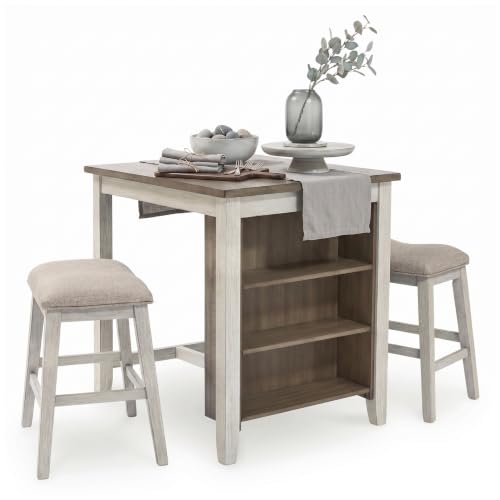
Signature Design by Ashley Skempton 3-Piece Counter Height Dining Table Set | Wood, Acacia Veneer and Engineered Wood, 3 Built-In Open Shelves, 2 Upholstered Stools, Space-Saving Design, Dining Room
Check price on Amazon
CHOEZON Folding Dining Table, Movable Dining Table, Expandable Kitchen Table, Versatile Table with 6 Wheels and 2-Tier Shelf, for Dining, Living Room, Apartment, Rustic Brown TCZ01BF
Check price on AmazonExplore Related Dining Table Guides
Ready to Organize Your Dining Space?
Compare storage dining tables, check availability, and find the model that matches your room and routine. Our recommended selection above includes options across multiple tiers and design families.
View Recommended Tables