
Large Rug Under Dining Table: The Complete Sizing & Styling Guide
Everything you need to know about choosing, sizing, and placing a large rug beneath your dining table — so your chairs glide smoothly, your floor stays protected, and your dining room looks effortlessly pulled together.
A large rug under a dining table does far more than soften the look of a room. It anchors the dining zone, protects hard flooring from chair legs and spills, reduces noise, and makes the whole space feel warmer and more intentional. Yet many buyers get the size wrong, choose a material that cannot handle daily meals, or place the rug so chairs catch on its edge every time someone sits down.
This guide walks you through the exact sizing rules, the materials that survive real dining rooms, placement strategies for different table shapes, and the styling details that make a large dining rug look deliberate rather than accidental. If you are still deciding on the table itself, our large dining table size guide pairs naturally with the rug advice below.
Why a Large Rug Works Better Than a Small One
A rug that barely peeks out from under the table is one of the most common dining room design mistakes. When chairs are pulled out, their back legs drop off the rug edge, causing a wobble, scuffing the floor, and curling the rug corner over time. A properly sized large rug keeps every chair — including its back legs in the pulled-out position — fully supported on the rug surface.
Beyond function, a generous rug visually expands the dining zone. In an open-plan space, it defines where the dining area begins and ends without the need for walls. This is especially useful in homes where the dining table sits between a kitchen and a living area, and it works hand in hand with thoughtful dining table space planning.
How to Size a Large Rug Under a Dining Table
The sizing formula is simple: measure your table, then add the chair-pullout allowance on all four sides. The allowance should cover the depth of a chair pulled out plus a little breathing room — 24 inches per side is the widely accepted minimum, and 30 inches is more comfortable for larger chairs.
Step-by-step sizing method
- Measure the length and width of your dining table.
- Add 48 inches (24 inches per side) to both the length and the width for a standard result.
- Add 60 inches (30 inches per side) if you have deep chairs, benches, or want extra comfort.
- Round up to the nearest standard rug size that meets or exceeds the result.
| Table Seating | Typical Table Size | Minimum Rug Size (24" allowance) | Comfortable Rug Size (30" allowance) |
|---|---|---|---|
| 4 seats | 36" x 48" to 48" x 60" | 8' x 10' | 9' x 12' |
| 6 seats | 60" x 72" to 72" x 84" | 8' x 10' or 9' x 12' | 9' x 12' |
| 8 seats | 84" x 96" to 96" x 108" | 9' x 12' | 10' x 14' |
| 10+ seats | 96" x 120" and larger | 10' x 14' | 12' x 15' or custom |
If your table is unusually long or narrow, a standard rectangular rug may still leave chair legs hanging off the short ends. In that case, look for oversized rectangular rugs or consider a custom-cut option. Tables with unusual proportions often pair better with a rug that matches their footprint rather than forcing a standard size — the same logic applies when you are working out how much floor space a large dining table needs.
Round and oval tables
For round tables, choose a round or square rug that extends at least 24 inches beyond the table's widest point. A square rug under a round table can look intentional and modern, while a round rug reinforces the table's shape. Oval tables sit comfortably on rectangular rugs, provided the rug extends far enough on the long sides.
Best Materials for a Dining Room Rug
A dining rug has to survive crumbs, spills, chair movement, and foot traffic. The material matters as much as the size. Here is how the main options compare:
| Material | Durability Tier | Best For | Watch Out For |
|---|---|---|---|
| Wool | Premium / top-tier | Long-term investment, natural texture, stain resistance | Higher initial outlay; needs professional cleaning occasionally |
| Synthetic blends (polypropylene, nylon) | Mid-range / balanced tier | Busy family dining, easy spot cleaning, moisture resistance | Can flatten over time in high-traffic spots |
| Jute or sisal | Entry-level / essential tier | Casual, textured, natural look; covered porches and casual dining | Rougher underfoot; not ideal for formal dining |
| Flat-weave cotton or blends | Entry-level to mid-range | Reversible use, lightweight, easy to rotate | Less cushioning; can slide without a pad |
| Viscose or rayon | Luxury tier | Sheen and softness in formal dining rooms | Delicate; prone to water marks and crushing |
For most households, a mid-range synthetic blend or a wool rug offers the best balance of durability and comfort. If the dining table sits in a high-traffic open-plan area, prioritize a low-pile or flat-weave construction — high-pile rugs make chair movement harder and trap more crumbs. Pairing the rug with a quality dining table pad protection strategy for the table surface itself keeps the whole setup looking newer for longer.
Placement Rules That Keep Chairs on the Rug
Placement is where a large rug either succeeds or fails. The rug should be centered under the table, with equal overhang on all sides. In a rectangular dining room, align the rug's long edge with the table's long edge so the lines read cleanly.
Chairs fully on, or front legs on?
For dining rooms, all four chair legs should remain on the rug in both the tucked-in and pulled-out positions. This is the single most important placement rule. If you cannot achieve it, the rug is too small.
Rug and flooring transitions
Leave a visible border of hard flooring around the rug — typically 12 to 18 inches — so the rug reads as a deliberate layer rather than wall-to-wall carpet. In smaller dining nooks, a tighter border is acceptable, but avoid pushing the rug flush against the walls. For compact layouts, see our notes on compact dining nook arrangement and how rugs interact with tight seating.
Rug thickness and door clearance
Check door swing clearance before committing to a thick rug. A high-pile rug under a dining table near a doorway can catch the door or create a tripping edge. Low-pile and flat-weave rugs are safer in tight rooms and easier to vacuum.
Styling a Large Dining Rug
Once the size and material are right, styling decides whether the rug feels integrated or dropped in. A few principles carry most of the weight:
- Coordinate with the table finish. A warm wood table pairs well with muted earthy tones; a faux marble dining table set or glass-top table often looks best over cooler neutrals or a subtle geometric pattern.
- Use the rug to define the dining zone. In open-plan rooms, a rug with a clear border or pattern creates a visual room within a room.
- Keep patterns in proportion. A large rug can carry a larger-scale pattern; small busy motifs on a big rug can look restless from across the room.
- Layer lighting over the table. A pendant or chandelier centered over the table and rug reinforces the symmetry. Our dining table lighting placement guide covers the measurements.
- Anchor with chairs and benches. A dining table bench with storage or a settee bench for the dining table can sit fully on a large rug and adds a layered, custom look.
If your table is a statement piece — a steampunk dining table, a royal dining table, or a mirror-top dining table — let the rug support rather than compete. A solid or subtly textured rug in a complementary tone keeps attention on the table.
Caring for a Large Rug Under a Dining Table
A large dining rug needs a maintenance routine that matches its exposure. Vacuum weekly, and rotate the rug every six to twelve months if one side receives more sunlight or foot traffic. Use a rug pad underneath to prevent slipping, add cushioning, and extend the rug's lifespan.
Address spills immediately with a blotting motion rather than rubbing, and keep a mild spot cleaner appropriate to the material on hand. For wool and natural fibers, professional cleaning every one to two years keeps the pile fresh. If the rug sits in a sunny room, consider UV-blocking window treatments to slow fading — the same sunlight logic applies to the table surface, as covered in our sunlight fade prevention guide.
Common Mistakes to Avoid
- Choosing a rug that only fits the table, not the chairs. This is the most frequent error and the most disruptive in daily use.
- Ignoring the extended table size. Extendable tables need rugs sized for the fully open configuration.
- Placing a high-pile rug under heavy chairs. Chairs sink and become hard to move; low-pile is better for dining.
- Skipping the rug pad. Without a pad, rugs slide, curl, and wear faster.
- Forgetting door clearance. A thick rug near a doorway creates a trip hazard and blocks the door swing.
Recommended Large Rugs for Under Dining Tables
⚠️ AFFILIATE DISCLOSURE: This website contains affiliate links. As an affiliate Associate, we earn from qualifying purchases. If you make a purchase through these links, we may receive a small commission at no additional cost to you. Read our full affiliate policy.

Boho Dining Room Rugs for Under Table - 6x9 Washable Black Area Rug For Living Room, Low Pile Non-Slip Rugs for Bedroom, Office - Charming Farmhouse Decor & Stain Resistance (6x9 Black/Multi)
Check price on Amazon
Vinyl Floor Mat Area Rug Waterproof Mat PVC Vinyl Rug Under Table,4.8'x7' | Under Dining Table Rug, Floor Protector Mat, Easy Clean Mat for Dining Room, Kitchen, Living Room, Bedroom, Hard Floor
Check price on Amazon
Vinyl Floor Mat Area Rug Waterproof Mat PVC Vinyl Rug Under Table,4'x6' | Under Dining Table Rug, Floor Protector Mat, Easy Clean Mat for Dining Room, Kitchen, Living Room, Bedroom, Hard Floor
Check price on Amazon
Luxturiy 8x10 Area Rugs Living Room: Bedroom Neutral Washable Carpet Beige | Large Vintage Boho Indoor Decor Carpets Soft Nursery Farmhouse Dining Room Office Floor Non-Slip Low Pile Under Table Rug
Check price on Amazon
OLANLY 5x7 Washable Area Rug, Soft Non Slip Carpet for Bedroom Living Room | Beige Distressed Abstract Modern Farmhouse Rug, Spill & Stain Resistant Low Pile, for Dining Room Under Table Office Bedside
Check price on Amazon
SALLOUS Vinyl Floor Mat for Home, 5' x 8' Waterproof Area Rug for Living Room, Non-Slip Area Rug for Under Dining Table, Vinyl Hard Floor Protector Mat for Bedroom, Kitchen, Bathroom (Grayish Blue)
Check price on Amazon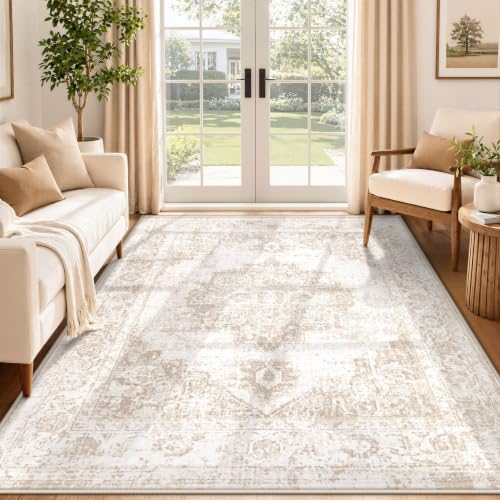
Area Rug 5x7 Vintage Rug: Washable Indoor Medallion Rugs Low Pile Distressed Floor Carpet Retro Accent Rug for Living Room Bedroom Kitchen Dining Table Home Office(Beige, 5'x7')
Check price on AmazonFrequently Asked Questions
What size rug should I use under a large dining table?
Add at least 24 inches of rug beyond every table edge. For most large dining tables seating six to eight, this means an 8x10 or 9x12 rug. Ten-seat tables often need 10x14 or larger. Always size for the fully extended table if yours extends.
Should a dining table rug be larger than the table?
Yes. The rug must extend far enough that all chair legs — including back legs when pulled out — stay on the rug. A 24-inch minimum overhang per side is the standard recommendation.
What material works best for a large rug under a dining table?
Durable, easy-to-clean materials such as wool, synthetic blends, jute, or flat-weave designs work best. They handle spills, chair movement, and daily traffic better than delicate or high-pile rugs.
Can I place a large rug under an extendable dining table?
Yes, but choose a rug size that accommodates the fully extended table. If the rug only fits the closed configuration, chairs may slip off the edge when the table is extended.
Do I need a rug pad under a dining room rug?
A rug pad is strongly recommended. It prevents slipping, adds cushioning underfoot, protects the floor finish, and helps the rug last longer by reducing friction from chair movement.