
Tall Dining Room Table: The Complete Guide to High-Top Dining
Everything you need to know about tall dining tables, counter height and bar height options, seating pairings, space planning, and how to choose a high-top table that fits your home, your family, and your lifestyle.
Explore Recommended PicksWhy tall dining tables deserve a closer look: A tall dining room table changes the way a room feels. It lifts the visual line, frees up floor space beneath, and creates an informal, conversational atmosphere that works beautifully in kitchens, breakfast nooks, and open-plan layouts. This guide walks you through every decision point so you can choose with confidence.
Recommended Tall Dining Room Tables
⚠️ AFFILIATE DISCLOSURE: This website contains affiliate links. As an affiliate Associate, we earn from qualifying purchases. If you make a purchase through these links, we may receive a small commission at no additional cost to you. Read our full affiliate policy.

63-Inch Dining Table for 4-6 People, Rustic Farmhouse Long Kitchen Dinner Table for Dining Room, Yellowish Brown
Check price on Amazon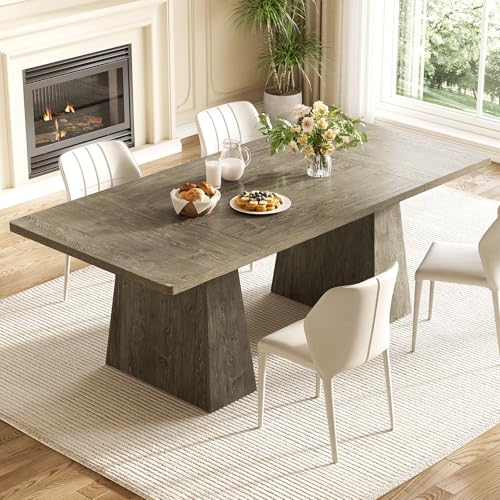
LITTLE TREE Dining Table for 4-6 People, Wooden Table, Rectangle Furniture with Heavy Duty Legs, Modern Kitchen Table for Home, Dining Room, Grey
Check price on Amazon
Garvee Farmhouse Dining Table 71", Rustic Kitchen Table for 6-8, Grey | Rectangular Dining Room Table, Heavy Duty Metal Frame & 2" Thick Legs, Sturdy Wood Top,for Dining Room Kitchen Living Room
Check price on Amazon
Tribesigns 62.2" Dining Table for 4-6, Counter Height Kitchen Table | High Top Dining Room Table with Footrest, Industrial Bar Height Table for Living Room, Pub, Rustic Brown and Dark Gray
Check price on Amazon
94" Large Faux Marble Dining Table for 10, Modern Rectangular Dining Room Table with Dual U-Shaped Stainless Steel Base, Luxury White Gold Faux Marble Kitchen Table for Kitchen Dining Room
Check price on Amazon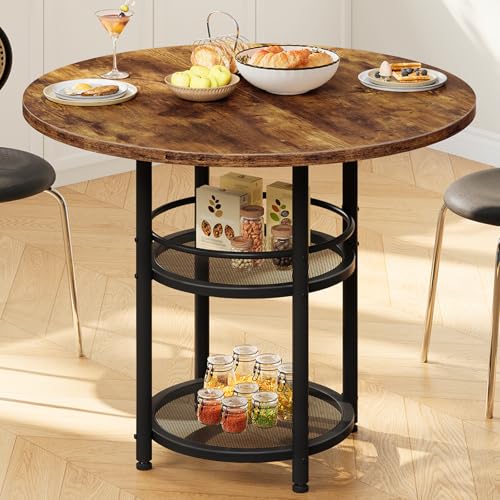
HOOBRO Dining Table, Round Dining Table for 2, 31.5" Kitchen Table for Small Spaces, Farmhouse Small Dining Room Table, 2-Tier Storage, Easy to Assemble, for Living Room, Rustic Brown BF19CZ01
Check price on Amazon
78 Inch Rectangular Dining Table for 6 to 10, Farmhouse Fluted Dining Kitchen Table, Modern Wood Long Dining Table for Kitchen Living Room, Walnut
Check price on AmazonWhat Exactly Is a Tall Dining Room Table?
A tall dining room table is any dining table whose surface sits noticeably higher than the standard 28 to 30 inch dining height. In practice, the term covers two well-defined categories that dominate the market:
- Counter height tables — usually 34 to 36 inches tall. These are the most popular tall option because they feel elevated without becoming awkward for everyday meals.
- Bar height tables — typically 40 to 42 inches tall. These create a pub-style or bistro feel and pair with taller stools, often with a footrest ring.
Beyond raw height, tall tables differ from standard tables in how they distribute weight, how seating tucks underneath, and how they interact with sightlines in open-plan spaces. A well-chosen tall table can make a compact dining zone feel intentional rather than squeezed in. If you are working with a narrow footprint, pairing a tall frame with a compact surface is a proven strategy — for example, see this guide to a dining table for 6 in a small space.
Tall, Counter, and Bar Height at a Glance
| Category | Typical Surface Height | Matching Seat Height | Best For |
|---|---|---|---|
| Standard dining | 28–30 inches | 17–19 inches | Formal dining rooms, families with young children |
| Counter height (tall) | 34–36 inches | 24–26 inches | Kitchens, breakfast nooks, casual family meals |
| Bar height (tall) | 40–42 inches | 28–30 inches | Bistro corners, entertaining zones, loft-style spaces |
If your goal is a distinctly elevated look without an overly pub-like feel, a 36 inch high dining table is often the sweet spot — tall enough to make a statement, low enough for comfortable everyday use.
Benefits of Choosing a Tall Dining Table
Tall tables are not simply a stylistic preference. They solve real spatial and functional problems in modern homes, which is why they have become a staple in kitchen and dining design.
1. Efficient Use of Compact Spaces
Because the tabletop sits higher, the visual mass of a tall table is concentrated in a smaller floor area. That makes a tall table a natural fit for apartments, townhouses, and kitchen corners where a full-size standard dining set would overwhelm the room. A compact tall frame such as a 30x30 dining table or a small round wood dining table can turn an unused corner into a genuine dining zone.
2. A More Social, Conversational Feel
Seated at a tall table, diners are closer to eye level with someone standing in the kitchen or nearby. That subtle shift encourages conversation and makes the table feel like a natural gathering point rather than a separate room. It is one reason tall tables are so common in open-concept kitchens and entertaining areas.
3. Practical for Casual, Everyday Dining
Tall tables work exceptionally well for quick breakfasts, coffee breaks, homework sessions, and casual dinners. They pair naturally with a kitchen island or peninsula, and many models offer a look that feels intentional rather than improvised. For a true bar-style setup, a dedicated bar dining table integrates the look fully into the room.
4. Strong Visual Presence
The added height creates a vertical element in the room. In spaces with high ceilings or large windows, a tall table helps anchor the dining zone visually. In smaller rooms, it draws the eye upward and can make the ceiling feel taller than it is.
Things to Consider Before Buying a Tall Table
Honest planning means acknowledging the trade-offs as well. A tall table is not the right fit for every household, and understanding its limitations early will save you from a frustrating purchase.
- Accessibility for children and older adults: Climbing onto a high stool is harder for young children and some older family members. Look for models with footrests and consider counter height rather than full bar height if accessibility matters.
- Seat-to-table clearance: Tall tables need properly matched seating. A mismatch — such as standard chairs at a bar height table — makes meals uncomfortable and undermines the table's purpose.
- Foot support matters: Dangling feet are uncomfortable over a long meal. Choose stools or chairs with footrests, or ensure the table itself has a footrest rail.
- Formal occasions: For traditional holiday dinners and formal entertaining, a standard height table remains the more conventional choice.
If your household is mixed — some diners prefer a conventional seat height — a convertible option can bridge the gap. A coffee table that opens up to a dining table or a sofa table that converts to a dining table offers flexibility without committing to a single fixed height.
Popular Styles of Tall Dining Room Tables
The style of a tall table determines how it fits into your existing decor. These are the most common directions buyers choose from:
Counter Height Sets
The most versatile tall option. A counter height table sits at roughly kitchen island height, which makes it feel like a natural extension of the kitchen. For a compact setup, a black counter height dining table set delivers a clean, cohesive look, while a 6 person high-top dining table accommodates a family without dominating the room.
Bar Height and Pub Tables
Bar height tables lean into a bistro or pub aesthetic. They are a natural choice for loft apartments, converted industrial spaces, and homes with an entertainment-first layout. A dining room pub table set is a classic example, and a high-top dining table set for 8 handles larger gatherings in the same style.
Square and Round High-Top Tables
Square high-top tables maximize conversation and work beautifully in corners. A tall square dining room table is a strong choice for kitchens and breakfast nooks. Round options soften the look and improve flow around the table — a round metal dining table and chairs set is a popular pairing.
Bar-Height Fire Pit and Outdoor Tall Tables
Tall dining has moved outdoors as well. A high dining fire pit table combines the elevated dining experience with outdoor warmth, and is an increasingly common addition to patios and decks.
Choosing the Right Seating for a Tall Table
Seating is where tall dining setups succeed or fail. The general rule is to leave 10 to 12 inches of space between the seat surface and the bottom of the table apron. Applied to tall tables, that produces clear pairings:
- Counter height tables (34–36 inches): pair with 24 to 26 inch seat-height stools or chairs.
- Bar height tables (40–42 inches): pair with 28 to 30 inch seat-height stools or chairs.
Footrests are not optional in practice. Over a full meal, feet need support. Prioritize stools with built-in footrests and consider the depth of the seat — deeper seats with a slight backrest are far more comfortable for long conversations than simple backless stools. If you want a coordinated look, a high-top dining table set for 8 usually includes matched seating with proper proportions.
Bench-style seating can also work with tall tables, but only when the bench is built for tall use. A standard dining bench will leave diners with their knees at an awkward angle. If benches appeal to you, look for purpose-built tall options or a dining table bench with back that offers proper support and height.
Space Planning for a Tall Dining Table
Tall tables reward careful planning. Because they sit higher, the proportions of the surrounding room matter more than they do with a standard table.
Measure the Room and the Path
Before committing to a table size, measure the available floor area and the walkways around it. You want a clear path of at least 36 inches between the table edge and any wall or furniture, and more if the table sits on a main traffic route. A tall table in a tight corner can work beautifully, but only if chairs can pull out without blocking doorways.
Consider the Ceiling and Sightlines
Tall tables draw the eye upward. In rooms with low ceilings, a bar height table can feel crowded unless the space is carefully balanced with lighting and open wall space. In rooms with high ceilings, tall tables help fill the vertical volume and anchor the dining zone.
Coordinate With the Kitchen
If the tall table sits adjacent to a kitchen island or peninsula, match the heights where possible. A counter height table that aligns with the island creates a continuous, intentional line. A bar height table against a standard-height counter, by contrast, can look mismatched. A kitchen design dining table approach — treating the table as part of the kitchen layout — usually produces the most cohesive result.
Lighting Overhead
Pendant lighting over a tall table should hang higher than over a standard table to avoid glare and head clearance issues. As a starting point, position the bottom of the fixture roughly 30 to 36 inches above the tabletop, then adjust for your specific fixture size and ceiling height.
Materials and Finishes for Tall Tables
The material of a tall table affects both durability and the overall feel of the room. The most common options each bring distinct strengths:
Wood
Wood remains the most popular choice for tall dining tables because it feels warm and ages gracefully. Solid hardwood — oak, maple, walnut, teak — holds up to daily use and can be refinished if needed. A teak indoor dining table and chairs set is a good example of a durable, warm-toned option, while a maple dining table offers a lighter, more contemporary look.
Metal
Metal frames suit tall tables particularly well because they handle the structural demands of a higher center of gravity. Steel and iron bases provide stability and a clean, industrial look. A glass and steel dining table is a classic tall-table pairing that keeps the room feeling open and airy.
Glass and Stone
Glass tops visually lighten a tall table, which helps in smaller rooms. Stone tops — granite, marble, quartz — add a premium feel and are highly resistant to daily wear. A granite dining table set or a marble top dining table set for 6 brings a distinctly upscale character to a tall dining setup.
Quality Tiers to Understand
Entry-Level Tier
Essential Build
Engineered wood or veneer tops with powder-coated metal bases. Good value for its tier, well suited to light daily use and first apartments.
Mid-Range Tier
Balanced Construction
Solid wood or thick glass tops with reinforced metal frames. A solid choice for the tier, offering better stability and a more refined finish.
High-End Tier
Premium Materials
Hardwood, stone, or designer glass with heavy-duty frames. Long-term investment pieces built for daily family use and entertaining.
Across every tier, prioritize stability and joint construction over surface decoration. A tall table has a higher center of gravity, so a solid frame and properly reinforced legs matter more than cosmetic details.
Quick Buying Checklist for Tall Dining Tables
- Confirm the table height category: counter height (34–36 in) or bar height (40–42 in).
- Match seat heights precisely: 24–26 in for counter height, 28–30 in for bar height.
- Check for footrests on seating, or a footrest rail on the table base.
- Measure floor space and confirm at least 36 inches of clearance on traffic sides.
- Consider accessibility for children and older family members.
- Verify frame stability and joint construction, especially with a higher center of gravity.
- Coordinate height with adjacent kitchen islands or counters.
- Plan overhead lighting height to match the taller tabletop.
- Choose a surface material that fits your daily use and cleaning routine.
- Decide whether a fixed height or a convertible design better suits your household.
Who Is a Tall Dining Table Best For?
A tall dining table is a strong fit for specific households and layouts. It tends to work best for:
- Apartment and condo dwellers who need a full dining function in a compact footprint.
- Open-plan kitchens where the dining zone needs to feel connected to the cooking area.
- Casual entertainers who prefer a relaxed, conversational atmosphere over formal seating.
- Households with teens and adults who can comfortably use elevated seating.
- Loft and industrial-style homes where bar height tables match the architecture.
It is less ideal for households with toddlers who need stable, low seating, or for buyers who regularly host formal seated dinners. In those cases, a standard height table — or a convertible design — is usually the better fit.
If you are still deciding between shapes as well as heights, it can help to compare a tall option against a compact standard-height piece such as a small black dining table for 2 or a 4ft dining table and chairs set before committing.
Common Mistakes to Avoid
Most tall-table regrets trace back to the same handful of planning errors:
- Mismatched seating height. The most common mistake. Standard chairs at a tall table are uncomfortable and look wrong. Match seat height to table height precisely.
- Ignoring foot support. Backless stools without footrests are tiring over a full meal. Prioritize footrests.
- Underestimating the footprint. A tall table still needs room for chairs to pull out. Measure the full seating envelope, not just the tabletop.
- Skipping the height check against the kitchen. A table that sits at a different height than an adjacent island can look mismatched.
- Overlooking lighting clearance. Pendant fixtures hung for a standard table can crowd a tall one.
Frequently Asked Questions
What is considered a tall dining room table?
A tall dining room table typically stands between 34 and 36 inches at counter height, or 40 to 42 inches at bar height. Standard dining tables sit at 28 to 30 inches, so tall tables are noticeably elevated and pair with taller seating.
Is a tall dining table good for small spaces?
Yes. Tall dining tables often have a smaller footprint and use vertical space efficiently, which makes them a strong option for compact dining areas, breakfast nooks, and open-plan kitchens. The key is measuring the full seating envelope before buying.
What chair height works with a tall dining table?
Counter height tables pair best with 24 to 26 inch seat-height stools or chairs, while bar height tables work best with 28 to 30 inch seat-height seating. Leave 10 to 12 inches between the seat and the table apron for comfortable legroom.
Are tall dining tables comfortable for children and older adults?
Tall tables can be less accessible for young children and some older adults. Consider models with footrests, a lower counter height version, and seating that supports the feet. If accessibility is a priority, counter height is generally more comfortable than full bar height.
Can a tall dining table work next to a kitchen island?
Yes, and it often looks best when the heights align. A counter height table that matches the island creates a continuous line, while a bar height table against a standard-height counter can look mismatched. Measure both heights before committing.
Ready to Choose Your Tall Dining Table?
Review the recommended models above, compare heights and seating pairings against the checklist in this guide, and you will be well prepared to make a confident decision for your dining space.
View Recommended Options